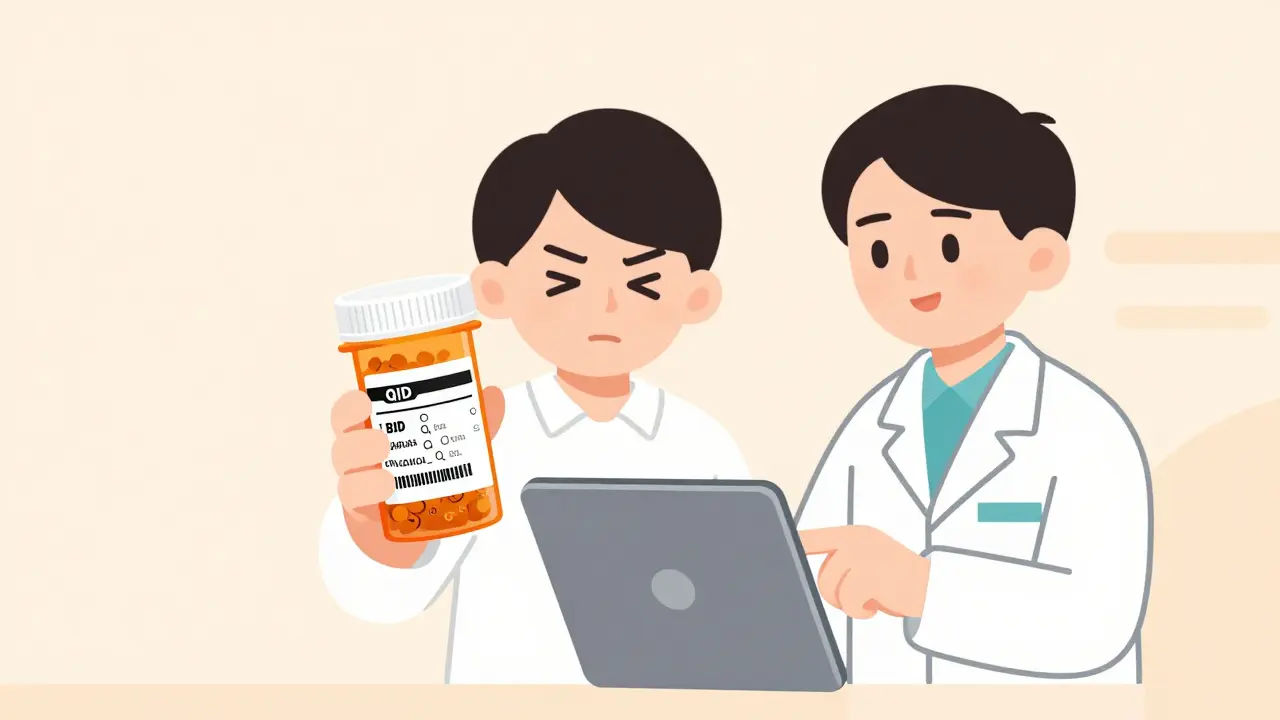
Every year, over 1.3 million medication errors happen in the U.S. - and nearly a quarter of them come from misunderstandings about your prescription label. It’s not about bad pharmacies or careless pharmacists. It’s about labels that are too busy, too small, or too confusing. You pick up your pills, glance at the label, and walk out. But what if you missed something critical? What if the tiny print said “take with food” - and you took it on an empty stomach? Or what if the expiration date was six months ago, and you didn’t notice? You don’t need to guess. You don’t need to hope you got it right. You just need to ask.
What’s the exact name of this medicine - brand and generic?
Pharmacies often print the brand name first - like Lipitor - but your doctor might have prescribed the generic - atorvastatin. These aren’t just different names. They’re different ways the same drug is labeled. If you’re used to one name and the label shows another, you might think you got the wrong medicine. Always confirm: “Is this the same as what my doctor ordered?” Some states, like Alabama, require the generic name to appear on the label unless the doctor says otherwise. California requires bilingual labels for non-English speakers. Don’t assume consistency. Ask.
Why am I taking this? What condition is it for?
Many labels don’t say why you’re taking the drug. They just say “take one tablet daily.” But if you don’t know the reason, you might stop taking it when you feel better - even if you’re supposed to finish the full course. For example, antibiotics need to be taken for the entire time, even if symptoms disappear. Blood pressure meds? You won’t feel them working - but skipping doses raises your risk of stroke. Ask: “What is this medicine supposed to do for me?” This isn’t just about safety. It’s about understanding your own health.
How and when should I take it?
“Take one by mouth twice daily” sounds simple - until you realize it means every 12 hours, not just morning and night. Some medicines need to be taken on an empty stomach. Others must be taken with food - or even with milk. One common mistake? Taking tetracycline with dairy. The calcium blocks absorption. Or taking statins with grapefruit juice - which can spike drug levels to dangerous levels. Ask: “Should I take this with food? With water? On an empty stomach? Can I take it with my coffee or supplements?” And if the label says “QD,” “BID,” or “QID” - ask what those mean. They’re Latin abbreviations that confuse most people.
How long should I take this? Is there a refill?
Some prescriptions are meant to be taken for weeks. Others for life. The label should say how many refills are allowed - but it doesn’t always explain how long you’re supposed to stay on it. If you’re on a new blood thinner or antidepressant, stopping suddenly can be dangerous. Ask: “Is this a short-term or long-term medication? What happens if I stop early?” Also check the refill count. If it says “0,” you’ll need a new prescription. Don’t assume it’s automatic.
What are the side effects I should watch for?
Labels list side effects - but they’re buried in tiny text. Some are common (nausea, dizziness). Others are rare but serious - like swelling of the face, trouble breathing, or sudden chest pain. For high-risk drugs like opioids, blood thinners, or estrogen, the FDA requires a separate Medication Guide. Ask: “Which side effects mean I need to call my doctor right away?” If you’re on one of the 107 FDA-listed high-alert medications, you should get a printed guide. If you didn’t, ask for it. Don’t wait until you’re in crisis.
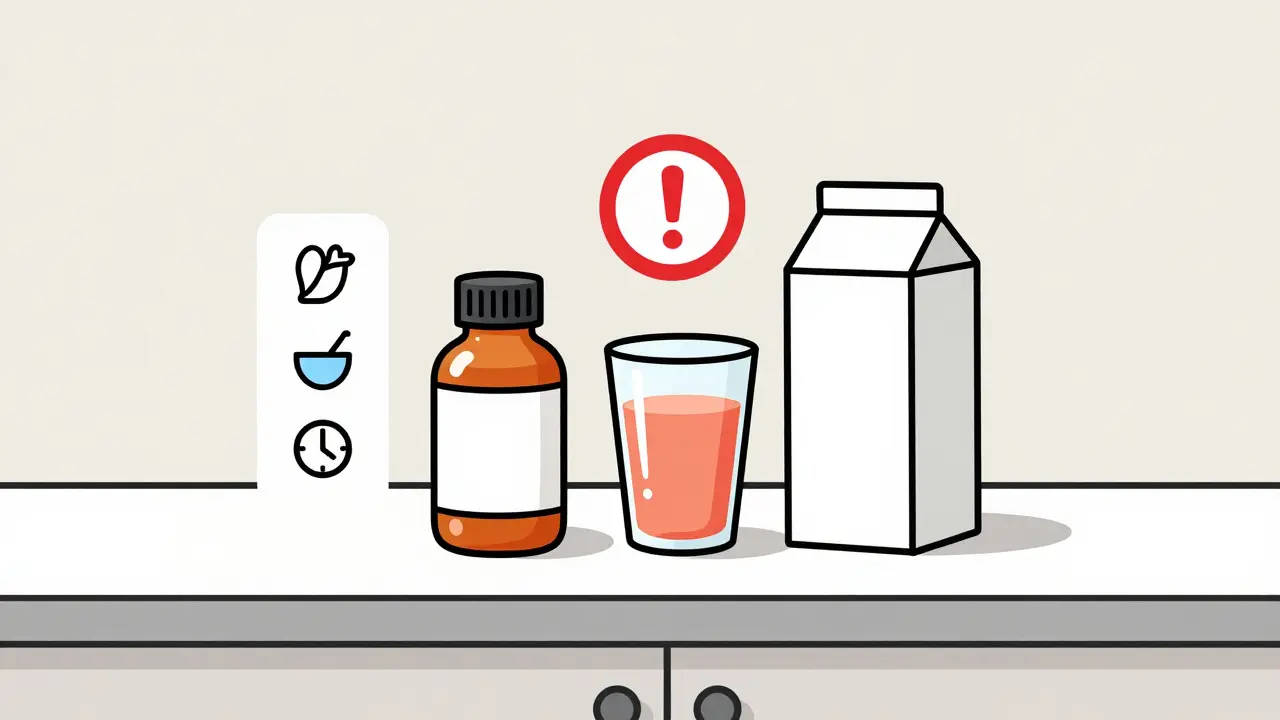
How do I store this?
Most medicines go in the cabinet. But not all. About 15% of prescriptions - including insulin, some antibiotics, and certain biologics - need refrigeration. If you leave them on the counter, they lose potency. One patient in a 2023 Consumer Reports survey kept her blood pressure med at room temperature for two weeks because the storage note was on the back of the label in 6-point font. Ask: “Does this need to be kept cold? Can I leave it in the car? What if it gets warm?” If you’re traveling, ask if you need a cooler. If you’re elderly or live in a hot climate, this isn’t optional.
What should I avoid while taking this?
Alcohol. Certain foods. Other meds. Supplements. Even sunlight. Some drugs make you sun-sensitive. Others interact with ibuprofen or St. John’s Wort. If you take multiple prescriptions, the risk goes up. Ask: “What should I not eat, drink, or take with this? Can I still have wine? Should I stop my vitamins?” A 2022 study showed that 67% of medication errors happen during administration - and many are due to hidden interactions.
What if I miss a dose?
Life happens. You forget. You’re late. The label rarely says what to do. Some drugs, like birth control or insulin, need strict timing. Others, like blood pressure meds, are more forgiving. Ask: “If I miss a dose, should I take it as soon as I remember? Or skip it and wait until tomorrow?” Taking a double dose can be dangerous. Waiting too long can reduce effectiveness. Don’t guess. Ask.
Is there a simpler way to understand this?
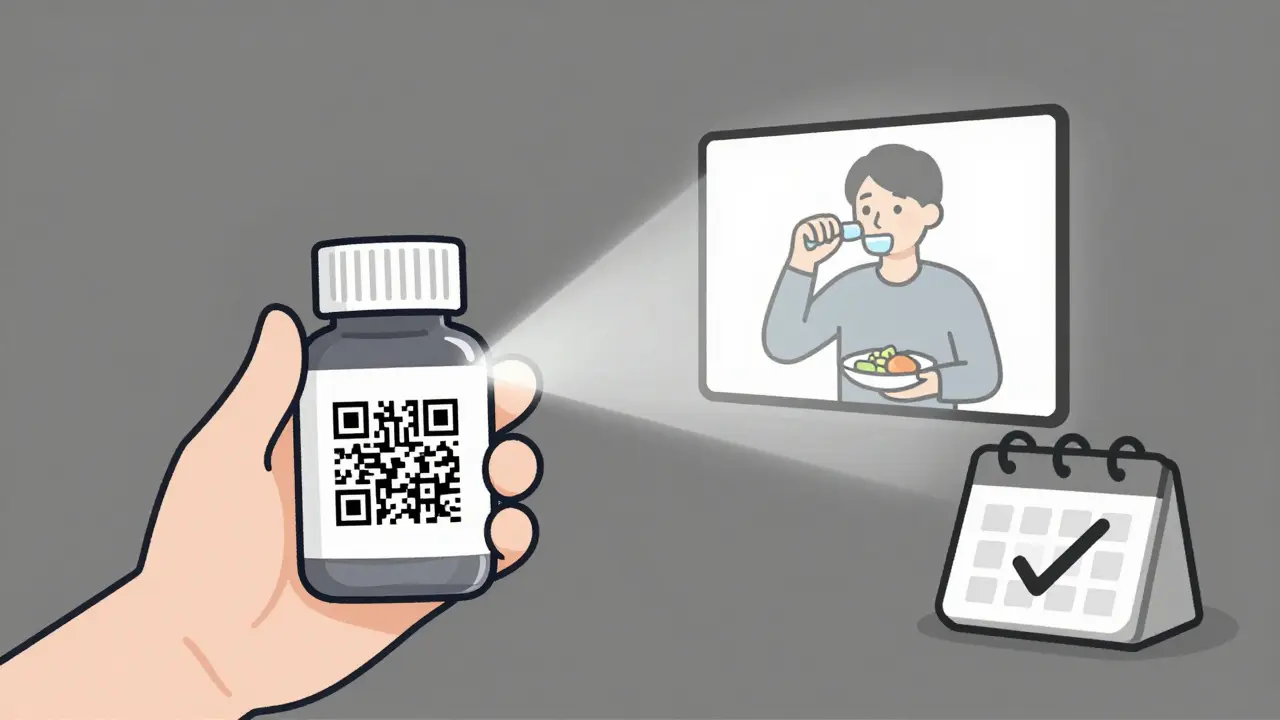
Eighty million American adults struggle to read medical instructions. If the label feels overwhelming, say so. Ask: “Can you explain this in simpler terms? Can I get a large-print version? Can you show me a video?” Over 57% of U.S. pharmacies now offer QR codes that link to short videos explaining how to take the medicine. Some even have AI-powered label readers that adjust text size based on your vision. If you’re visually impaired or have low health literacy, you’re entitled to help. Pharmacies receiving federal funds are required by law to provide translation and accessibility services.
Can you confirm the ‘5 Rights’ with me?
It’s a simple safety check used by nurses and pharmacists: Right Patient, Right Medicine, Right Dose, Right Route, Right Time. Ask the pharmacist to walk through them with you:
- Right Patient: Is this label in my name? (Not my spouse’s, not my child’s.)
- Right Medicine: Does this look like what I expected? (Color, shape, markings.)
- Right Dose: Is it 10 mg, not 50 mg? Double-check the number.
- Right Route: Is it by mouth? By injection? By inhaler? Don’t assume.
- Right Time: Once a day? Before bed? With breakfast?
Patients who do this reduce medication errors by nearly 60%, according to the American Society of Health-System Pharmacists. It takes two minutes. It could save your life.
What’s the expiration date - and is it still good?
Expiration dates aren’t arbitrary. The FDA requires drugs to remain effective until that date - if stored properly. But many people don’t check. A 2022 survey found that 31% of patients kept expired meds at home. Ask: “Is this still within its expiration date? Has it been sitting on the shelf for months?” Some drugs lose potency fast - like liquid antibiotics or epinephrine pens. If the date has passed, don’t take it. Ask for a new bottle.
Can I get a printed Medication Guide?
If you’re taking a high-risk drug - opioids, blood thinners, isotretinoin, estrogen - you’re legally entitled to a Medication Guide. It’s not part of the label. It’s a separate, easy-to-read sheet that explains risks, warnings, and what to do in emergencies. If the pharmacist doesn’t hand it to you, ask: “Do I need a Medication Guide for this?” You can also download them from the FDA’s website. Keep them in a folder with your other meds.
What if I still don’t understand?
Don’t leave the pharmacy confused. Ask for a follow-up call. Ask if they offer a free “Medication Check-Up” - a program the FDA launched in 2021 that’s available at over 8,400 pharmacies. Ask if you can schedule a 10-minute phone consultation with the pharmacist later that day. If you’re on Medicare Part D, you may qualify for a free medication therapy review. If you’re still unsure, call your doctor’s office. Better to ask twice than take a pill wrong once.
Prescription labels aren’t meant to be puzzles. They’re meant to protect you. But the system isn’t perfect. The FDA is working on better formats - digital labels, QR codes, AI helpers - but those aren’t everywhere yet. Right now, your best defense is asking the right questions. Don’t be shy. Don’t feel like a bother. You’re not. You’re doing exactly what the system was designed for: staying informed. And that’s the most powerful tool you have.
What should I do if the label looks wrong?
If the name, dose, or instructions on your label don’t match what your doctor told you, don’t take the medicine. Call the pharmacy immediately. Ask them to verify the prescription with your doctor’s office. Keep your original prescription slip or electronic copy handy. Most errors happen because of miscommunication between the doctor’s office and the pharmacy - not because the pharmacy made a mistake. Always double-check.
Can I ask for a larger print label?
Yes. Nearly all U.S. pharmacies - 92% - offer large-print labels for free. Just ask. You don’t need a doctor’s note. If the pharmacist says no, ask to speak to the manager. Under the Americans with Disabilities Act, pharmacies must provide reasonable accommodations for vision impairments. If you’re over 45, you’re not alone - 7.6 million Americans have trouble reading small print.
Why do different pharmacies give me different labels?
Because pharmacy labeling rules vary by state. One pharmacy might print the generic name first. Another might put the brand name in bold. Some include storage info on the front. Others bury it on the back. The FDA sets minimum standards, but state boards of pharmacy add their own rules. That’s why you might get confused when switching pharmacies. Always review the label carefully - even if you’ve taken the same drug before.
Do I need to keep the original prescription bottle?
Yes. The bottle often has more information than the paper label - including the lot number, manufacturer, and full expiration date. It’s also your proof of purchase if you need to return or replace the medication. Keep it until you’ve finished the course. If you’re traveling, bring the bottle - airport security may ask to see it. Don’t transfer pills to pill organizers without keeping the original container.
Can I get my prescription label in another language?
Yes. If you have limited English proficiency, federal law requires pharmacies that receive federal funds - like those that accept Medicaid or Medicare - to provide translation services. Ask for a Spanish, Mandarin, Arabic, or other language version of the label. Many pharmacies have bilingual staff or phone interpreters. You can also request printed multilingual guides from the FDA’s website. Don’t assume you’ll get it automatically - ask.
Next Steps: What to Do After You Leave the Pharmacy
Don’t wait until you’re home to realize something’s off. Right after you pick up your prescription:
- Check the label against your doctor’s written instructions.
- Take a photo of the label with your phone - so you have it if you lose the paper.
- Set a reminder to check storage conditions - especially if it needs refrigeration.
- Write down the pharmacist’s name and phone number in case you have questions later.
- Review your other meds. Are there interactions? Ask the pharmacist to do a quick med review.
If you’re managing multiple prescriptions, keep a simple list: medicine name, dose, purpose, time to take, and special notes. Update it every time you get a new script. It’s not glamorous - but it’s the difference between feeling safe and feeling anxious.


Simran Kaur
January 26, 2026 AT 07:11