Biotin Test Interference Calculator
Imagine this: you’re feeling fine, but your blood test says your heart is having a heart attack. Or your thyroid is overactive - when you’re not shaky, sweaty, or losing weight. These aren’t nightmares. They’re real cases happening right now because of something many people take every day: biotin supplements.
Biotin, also known as vitamin B7, is everywhere. It’s in your multivitamin, your prenatal pill, and especially in those hair, skin, and nail gummies. You’ve probably seen them on the shelf: "10,000 mcg per serving!" Sounds impressive, right? But here’s the catch - that much biotin doesn’t help your hair grow faster. What it does do is mess up your lab tests. And not just a little. We’re talking about life-or-death mistakes in diagnosis.
How Biotin Tricks Your Lab Results
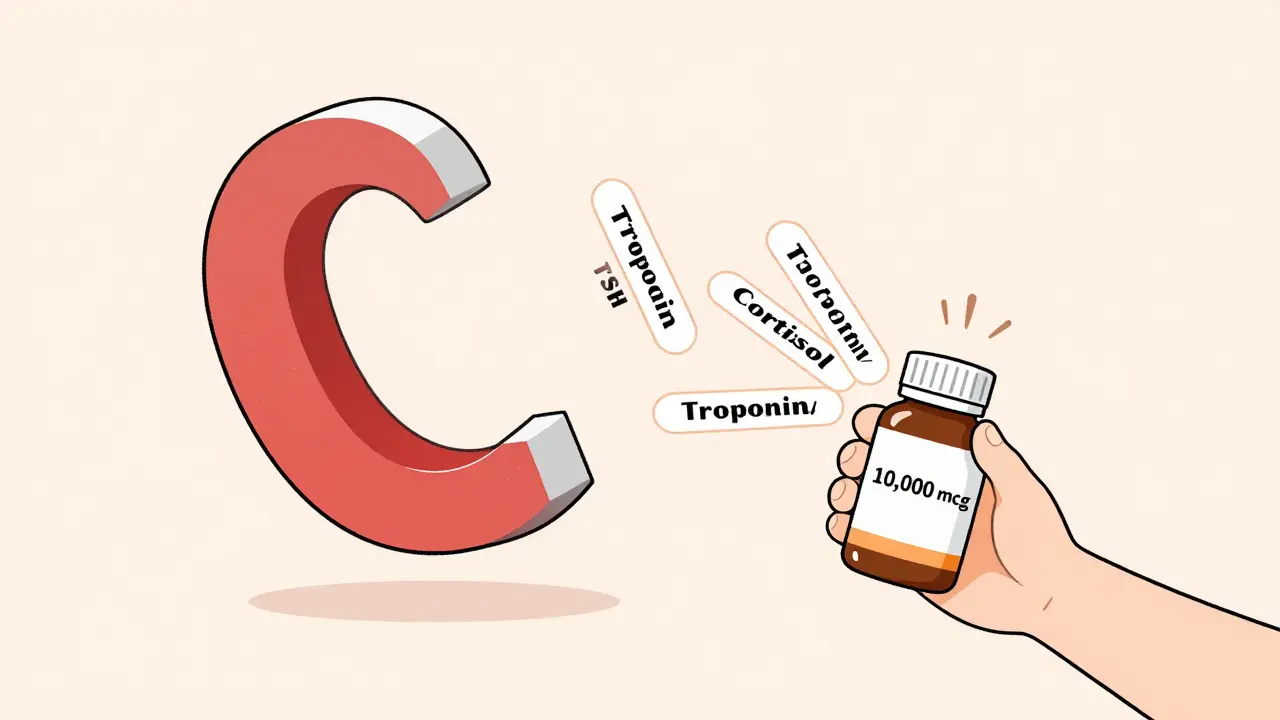
Most lab tests - about 70% of them - use a system called biotin-streptavidin binding. It’s a clever trick scientists use to detect tiny amounts of hormones, proteins, or enzymes in your blood. Think of it like a magnet and a metal clip. Biotin is the magnet. Streptavidin is the clip. They stick together tightly, and that’s how the machine knows something is there.
But if you’ve taken a high-dose biotin supplement, your blood is flooded with extra biotin. Suddenly, all those magnets in your blood are floating around, grabbing onto the clips before the test can. That throws everything off. Some tests show numbers that are way too low. Others show numbers that are way too high. And there’s no warning on the report. No asterisk. No red flag. Just a number that looks perfectly normal - but is completely wrong.
Tests Most at Risk
Not all tests are affected the same. Some are hit harder than others. Here are the ones doctors worry about most:
- Cardiac troponin - This is the gold standard test for heart attacks. Too much biotin can make troponin levels look low, even when there’s a real heart attack. That’s deadly. There have been cases where patients died because doctors didn’t realize the test was lying.
- Thyroid tests - TSH, free T4, free T3. These tell you if your thyroid is working right. Biotin can make TSH look falsely low, tricking doctors into thinking you have hyperthyroidism. One woman in Canada had radioactive iodine treatment - and nearly lost her thyroid - because of this.
- Parathyroid hormone (PTH) - Used to check calcium levels. False readings can lead to unnecessary surgery.
- Cortisol - This hormone helps manage stress. If the test is wrong, you could be misdiagnosed with Cushing’s or Addison’s disease.
- Vitamin D, FSH, LH - These can also be skewed, messing up fertility testing and hormone evaluations.
And here’s the scary part: you don’t need to take 300 mg a day like someone with multiple sclerosis. Even 5 mg - which is 167 times the daily recommended amount - can cause problems. And most supplements? They contain 5,000 to 10,000 mcg. That’s 5 to 10 mg. You’re already in danger zone.
Who’s Most at Risk?
You might think, "I’m not taking huge doses." But look around. Biotin supplements are marketed as harmless beauty aids. A 2022 survey found that 68% of people taking hair/skin/nail supplements didn’t even know they could mess with lab tests. And 89% never told their doctor.
Here’s who’s most vulnerable:
- Women aged 20-39 - the biggest group using biotin for beauty claims
- Pregnant women taking prenatal vitamins with high-dose biotin
- People with autoimmune conditions taking high-dose biotin (like 300 mg for MS)
- Anyone with unexplained lab results - especially if they’re taking supplements
And here’s the twist: if you’re taking a regular multivitamin with 30-300 mcg of biotin, you’re probably fine. The real danger is in those "mega-dose" supplements sold as beauty products.

How Long Does Biotin Stick Around?
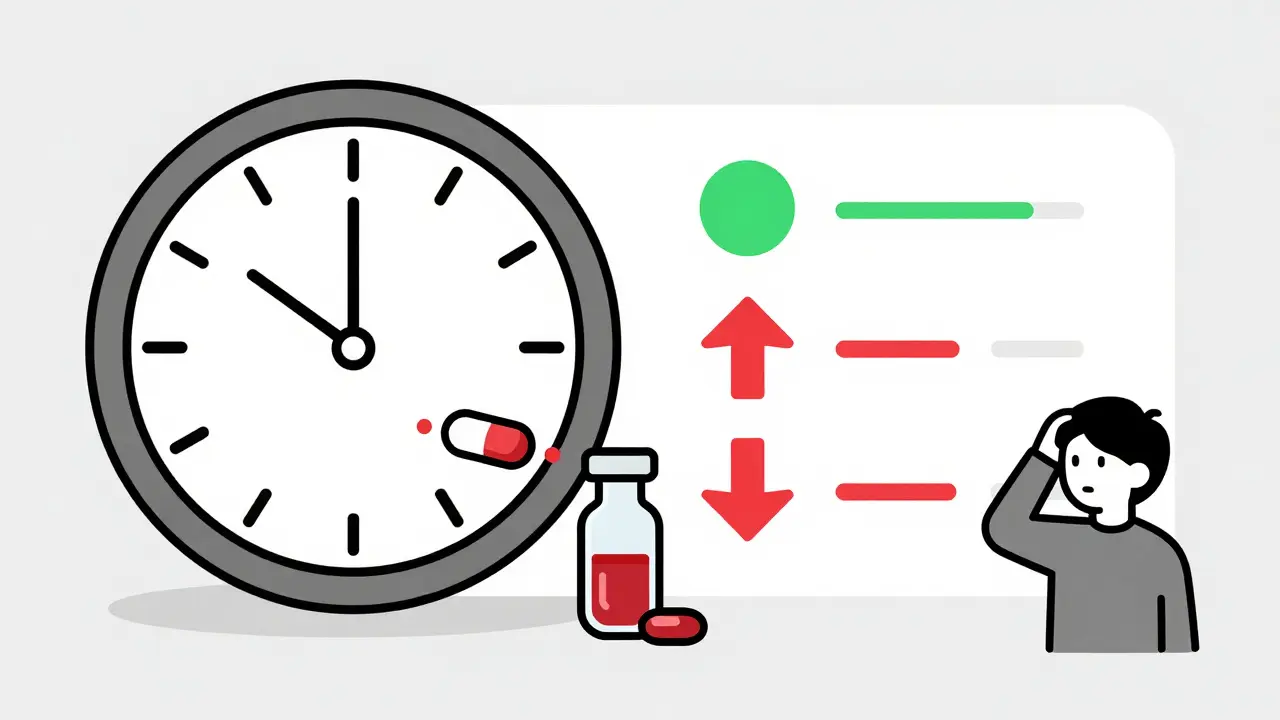
It doesn’t disappear overnight. Biotin sticks around in your blood for 2 to 3 days after your last dose. That means if you take a supplement on Monday morning, your blood test on Wednesday could still be wrong.
So what should you do? It’s not as simple as skipping your gummy the day before your test.
- Quest Diagnostics says: wait at least 8 hours after your last dose.
- Labcorp recommends 48 to 72 hours.
- Vanderbilt Medical Center says: stop for 3 days if you’re taking over 5 mg/day. For thyroid tests? Wait 7 days.
There’s no universal rule. Every lab is different. And most doctors don’t even know the details.
Why Isn’t This Common Knowledge?
Because no one’s telling you.
A 2022 study looked at 200 top-selling biotin supplements. Only 37% of the labels mentioned lab test interference. Not even a tiny footnote. Just "supports healthy hair and nails."
Doctors aren’t trained to ask about supplements unless they’re herbs or prescription drugs. And patients? They don’t think of biotin as medicine. They think of it as candy.
Dr. Dietmar Hampl of Roche Diagnostics called biotin interference "one of the most underappreciated preanalytical errors in modern laboratory medicine." And he’s right. In a 2020 survey, 43% of physicians had never heard of this risk.
There have been 178 reported adverse events linked to biotin interference - including one death. A man with a heart attack was sent home because his troponin test came back normal. He died the next day.
What Should You Do?
Here’s what works - right now:
- Check your supplement label. Look for "biotin" and the amount in micrograms (mcg). If it’s over 300 mcg, you’re in the risky zone.
- Stop taking it. If you’re due for blood work, stop biotin supplements for at least 3 days. For thyroid or cardiac tests? Wait 7 days.
- Tell your doctor. Say it clearly: "I take biotin supplements. I’m not sure how much." Don’t assume they’ll know.
- Ask your lab. Call the lab where your test will be done. Ask: "Do you have a biotin interference protocol?" They’ll tell you how long to wait.
If you’re taking biotin for MS or another medical condition, don’t stop without talking to your doctor. But do make sure your care team knows - and that your lab is aware.
What’s Changing?
Some labs are finally catching up. Siemens Healthineers released a new technology in 2022 that blocks 90% of biotin interference. The FDA is pushing for mandatory warnings on test kits. Health Canada now requires labels to say: "May interfere with laboratory tests" if a product has more than 100 mcg of biotin.
But until every lab, every doctor, and every supplement label gets on the same page - you’re the only one who can protect yourself.
Bottom Line
Biotin supplements aren’t dangerous by themselves. But they’re dangerous when you don’t know they’re lying to your lab.
You don’t need 10,000 mcg of biotin for shiny hair. Your body uses 30 mcg a day. The rest? It’s just floating in your bloodstream, messing up your test results.
Before your next blood test, ask yourself: "Could this supplement be hiding a real problem?" Then stop it. Tell your doctor. Wait a few days. Get retested.
It’s not just about accuracy. It’s about safety. One wrong number can cost you your health - or your life.


RacRac Rachel
March 3, 2026 AT 13:03