When you're trying to lose weight, alcohol is one of the sneakiest obstacles you might not even notice. It doesn't come with a nutrition label that screams "danger," and it's often part of social routines, celebrations, or even stress relief. But here's the truth: alcohol isn't just empty calories-it's a metabolic disruptor that works against your fat loss goals in ways most people don't expect.
Alcohol Has More Calories Than You Think
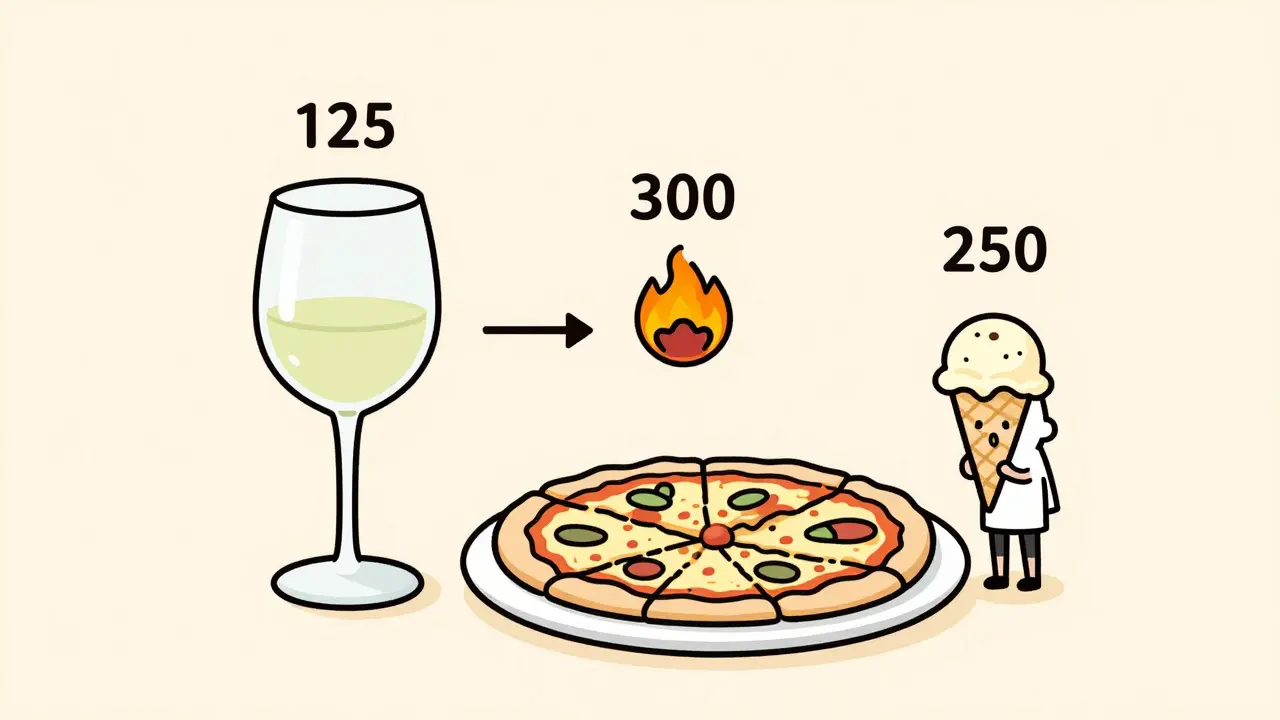
Let’s start with the basics: alcohol contains 7 calories per gram. That’s almost double the calories in protein or carbs (4 calories per gram) and close to fat (9 calories per gram). A 5-ounce glass of wine? Around 125 calories. A 12-ounce beer? About 150. Sounds manageable, right? But here’s where it gets tricky-those numbers don’t include mixers.
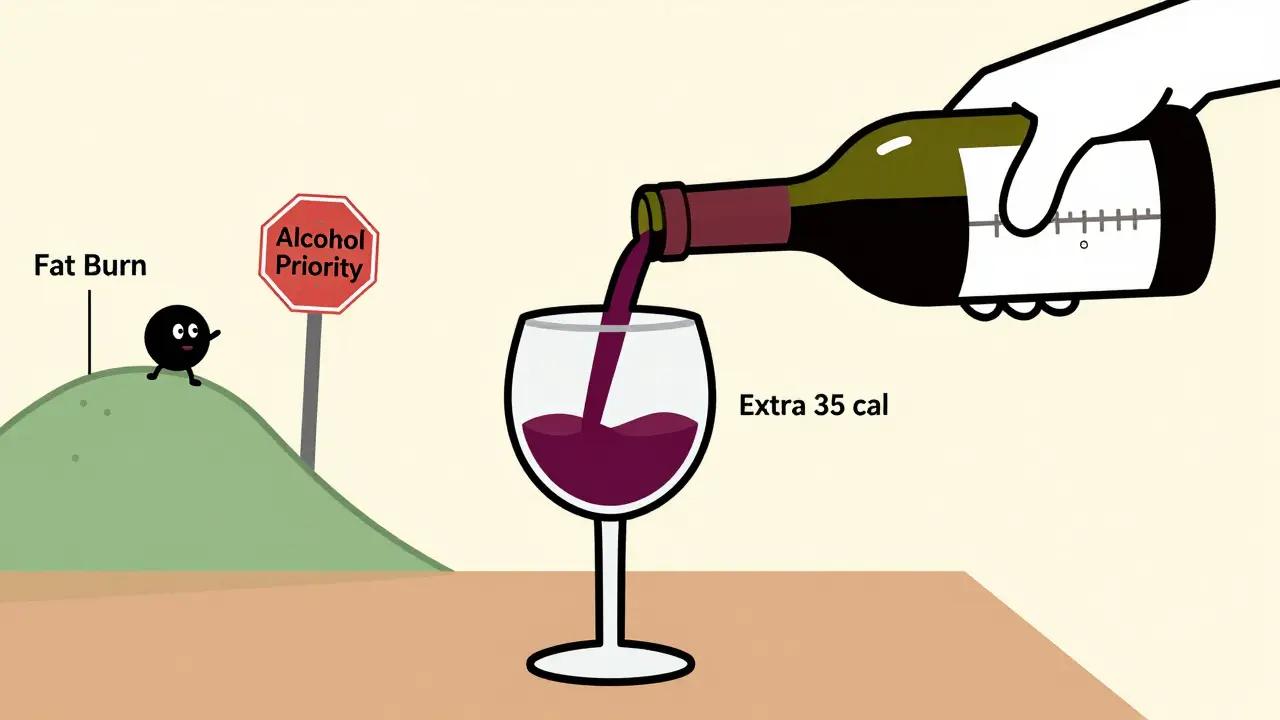
A piña colada can pack 400 to 500 calories. A rum and coke made with regular soda? That’s another 150 calories from sugar alone. And let’s not forget the drinks you get at bars or restaurants-they’re often poured generously. Studies show people pour up to 30% more wine into their glasses at home than the standard 5-ounce serving. That’s an extra 35 calories per glass, just from overpouring.
Compare that to a slice of pizza or a small ice cream sundae. A pint of lager has about the same calories as a slice of pepperoni pizza. A large glass of wine? Equal to a double-scoop cone. And unlike those foods, alcohol doesn’t fill you up. You’re not getting protein, fiber, or nutrients-just pure energy your body has to process.
Your Body Prioritizes Alcohol Over Fat
When you drink alcohol, your body doesn’t store it. It treats it like a toxin and gets rid of it first. That means your metabolism shifts into detox mode. While your liver is busy breaking down ethanol, it puts fat burning on pause.
Research shows this metabolic pause lasts about 1 to 2 hours per drink. During that time, any fat you’ve eaten-whether from dinner or a late-night snack-is more likely to be stored instead of burned. One study found that fat oxidation drops by 30-40% after alcohol consumption. That’s not just a minor hiccup-it’s a full stop to your fat loss engine.
And here’s the kicker: this doesn’t just happen once. If you’re drinking regularly, your body is constantly in this state of prioritizing alcohol over fat. Over weeks and months, that adds up. A 2022 trial showed people who cut out alcohol while keeping everything else the same lost 3.2% more body fat in 12 weeks than those who only cut other calories.
Alcohol Makes You Hungrier-and Worse Choices
It’s not just about the calories in the drink. Alcohol messes with your brain’s hunger signals. Multiple studies confirm it increases appetite. In controlled experiments, people who drank alcohol ate about 20% more food than those who had the same number of non-alcoholic calories.
And it’s not just quantity-it’s quality. Alcohol lowers your inhibitions. That’s why so many people find themselves reaching for chips, pizza, or fries after a few drinks. One study found alcohol consumption increases late-night snacking by 45%. You might not even remember doing it the next day.
It’s not a coincidence that people who drink regularly are more likely to gain weight around the belly. Alcohol seems to promote visceral fat storage-the kind that clings to your organs and increases health risks. Experts like Dr. Charles Mueller from Iowa Weight Loss Center point out that when you drink, your body stores food as fat, especially in the abdominal area.
Who Can Still Drink and Lose Weight?
You don’t have to quit alcohol completely to lose weight-but you do need to be strategic. The Dietary Guidelines for Americans 2020-2025 say moderate drinking-up to one drink a day for women and two for men-can fit into a healthy pattern, as long as you’re counting calories.
But here’s the catch: most people don’t track alcohol calories accurately. In one study, participants underestimated their cocktail calories by 47%. If you’re trying to hit a daily calorie goal, that’s a huge gap. And for many, even one drink a day adds up to 700-1,000 extra calories per week.
Some people can handle moderate drinking and still lose weight. But for others, especially those with slower metabolisms or insulin resistance, alcohol is a deal-breaker. A 2022 study in Nutrients found three distinct metabolic responses to alcohol-meaning some people burn fat more easily after drinking, while others store it more readily. That’s why one-size-fits-all advice doesn’t work.
Smart Strategies to Reduce Alcohol’s Impact
If you want to keep drinking but still lose weight, here’s what actually works:
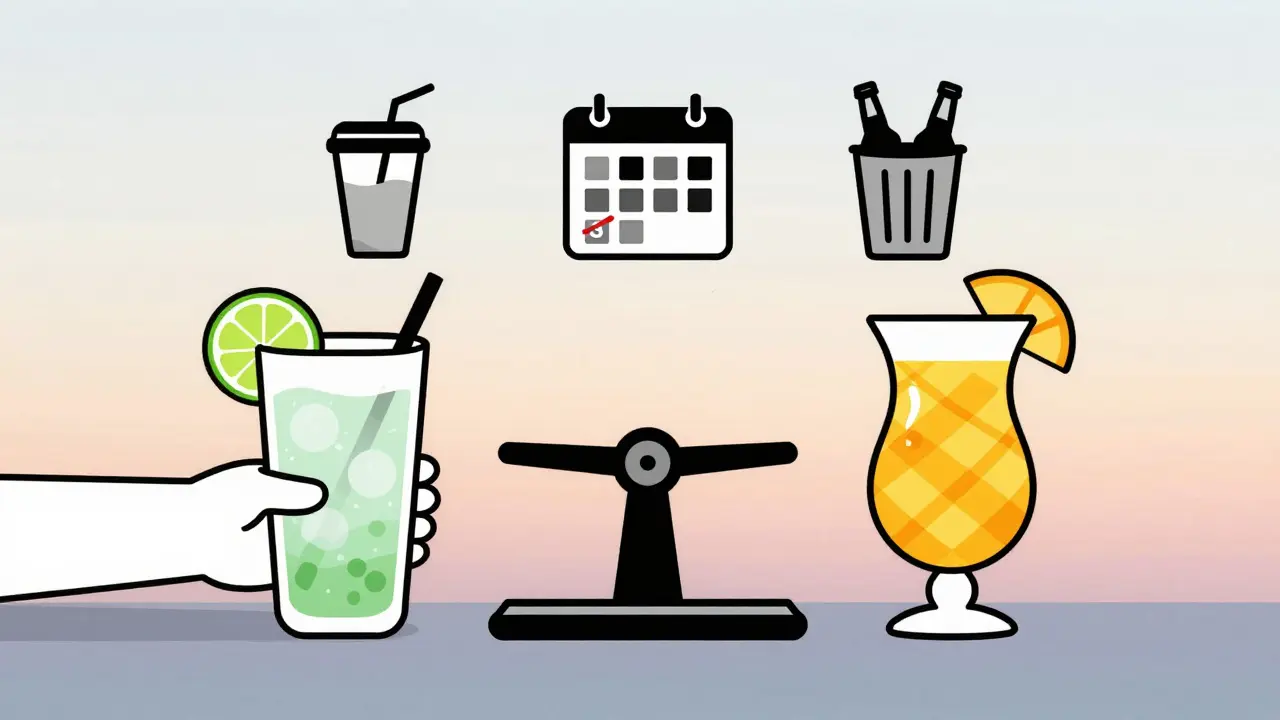
- Choose lower-calorie options. Stick to spirits like vodka or gin with soda water and lime. Skip the sugary mixers. A vodka soda has about 100 calories. A rum and coke? 250+. That’s a 150-calorie difference per drink.
- Control your pours. At home, use a measuring shot glass for spirits and a 5-ounce wine measure. Don’t just fill the glass. That one habit alone can save you 100-200 calories per night.
- Designate alcohol-free days. Try 3-4 days a week without alcohol. For most moderate drinkers, that cuts 750-1,200 calories a week. That’s roughly 1 pound of fat lost every 3-4 weeks-just from skipping drinks.
- Pre-load with protein. Eat 20-30 grams of protein before drinking. Chicken, eggs, Greek yogurt, or a protein shake. Research shows this reduces post-drinking food intake by 18%.
- Track everything. Use a food diary app and log every drink. Don’t assume. Don’t guess. If you don’t track it, you’re not really in control.
The Real Problem: Social Pressure and Habit
The biggest barrier isn’t willpower-it’s environment. People drink because it’s part of Friday nights, work events, or family gatherings. Saying "no" can feel awkward. But here’s the shift: you don’t have to explain yourself. Just say, "I’m cutting back for health reasons." Most people respect that.
Also, don’t wait for "motivation." Make it automatic. Keep alcohol out of your house. Don’t buy it. That removes the temptation before it even shows up.
And if you slip up? Don’t quit. One drink doesn’t ruin your progress. But if you’re drinking every night, that’s a pattern. Patterns change slowly-so start small. Swap one night a week for sparkling water with lemon. Notice how you feel the next day. Better sleep? Less bloating? More energy? Those are your real rewards.
What the Data Shows: Real Results
Let’s look at what actually happens when people cut back:
- People who reduce alcohol from heavy to moderate levels (over 14 drinks/week down to 7 or less) lose an average of 3.7 pounds in 12 months-without changing anything else.
- Regular drinkers (8+ drinks/week) are 23% more likely to be obese than non-drinkers, even when diet and activity are controlled.
- Alcohol contributes 10-12% of daily calories for people aged 25-45. That’s like eating a full meal’s worth of calories from drinks alone.
And the trend is shifting. Searches for "low-calorie alcoholic drinks" have jumped 65% since 2019. The global market for low-alcohol beverages is projected to hit $19.2 billion by 2027. People are waking up to the fact that you don’t need to drink to have fun.
Long-Term Success Requires More Than Cutting Alcohol
Here’s the truth: cutting alcohol alone isn’t enough for lasting results. A 2023 follow-up study found that 68% of people who lost weight by reducing alcohol regained it within a year-unless they added structured meal planning or exercise.
The most successful people combine alcohol reduction with consistent eating habits, sleep, and movement. You’re not just removing a bad habit-you’re building a better system. That’s why the Iowa Weight Loss Center found that 82% of patients kept the weight off when they paired alcohol reduction with a simple, repeatable meal plan.
Alcohol isn’t the enemy. But if you’re trying to lose weight and you’re drinking regularly, you’re fighting an uphill battle. The science is clear: reduce it, replace it, or remove it. And if you do, you’ll not only lose fat-you’ll feel better, sleep deeper, and have more energy every single day.
Can I still drink alcohol and lose weight?
Yes, but only if you’re very careful. Alcohol adds empty calories and slows fat burning. To lose weight while drinking, stick to low-calorie options like vodka with soda water, limit yourself to 1-2 drinks per week, track every calorie, and never drink on an empty stomach. Most people lose weight faster when they cut alcohol entirely.
Does alcohol cause belly fat?
Yes. Alcohol promotes visceral fat storage-the kind that wraps around your organs and creates a "beer belly." Your body prioritizes breaking down alcohol over burning fat, and when it does, it tends to store nearby fat in the abdominal area. Studies show regular drinkers have higher rates of belly fat, even if their overall weight is normal.
Which alcoholic drinks have the least calories?
The lowest-calorie options are straight spirits: vodka, gin, tequila, or whiskey (1.5 oz = 100 calories). Mix them with soda water and lime-no sugar, no juice. Avoid cocktails, wine spritzers with added syrup, and beer. A vodka soda has about 100 calories; a piña colada can hit 500.
How many calories are in a glass of wine?
A standard 5-ounce glass of wine has 120-125 calories. But most people pour 7-8 ounces at home, which adds 50-75 extra calories. If you drink wine 4 nights a week, that’s 500-700 extra calories weekly-enough to stall weight loss.
Why does alcohol make me hungrier?
Alcohol lowers inhibitions and disrupts hormones that control hunger and fullness. It increases ghrelin (the hunger hormone) and reduces leptin (the fullness signal). Studies show people eat 20% more food after drinking, especially high-fat, high-carb snacks. It’s not just about willpower-it’s biology.
How long does alcohol affect fat burning?
Your body pauses fat burning for 1-2 hours after each standard drink. During that time, any fat you eat is more likely to be stored. If you drink multiple times a week, your fat-burning system is constantly interrupted, making weight loss much harder.
Should I quit alcohol to lose weight?
You don’t have to quit-but if you’re not losing weight despite eating well and exercising, alcohol is likely the missing piece. For most people, cutting alcohol leads to faster, easier fat loss. Try going alcohol-free for 30 days. You might be surprised by how much energy and progress you gain.


Kamlesh Chauhan
January 8, 2026 AT 10:06