Medication Safety Calculator
Understand Your Medication Risk
Women metabolize medications differently than men due to biological factors like liver enzymes, body composition, and hormones. Learn if your dose might need adjustment.
Women don’t just experience more side effects from medications-they experience different ones. It’s not about being more sensitive. It’s about biology, history, and a system built on male bodies.
Think about this: you take the same pill as your partner, same dose, same instructions. But you’re twice as likely to end up in the ER because of it. That’s not an accident. It’s the result of decades of research done almost entirely on men.
Why Women Get More Side Effects
In the 1970s, the FDA told drug companies to keep women out of early clinical trials. Not because women were too fragile, but because researchers wanted to protect potential fetuses. It made sense on the surface. But no one stopped to ask: what if the drug works differently in women?
That decision created a blind spot. For decades, drug dosing, safety studies, and even labeling were based on how men’s bodies responded. Today, women make up over half the U.S. population and take nearly 60% of all prescription drugs. Yet, only 12% of pharmacokinetic studies even look at sex differences.
The numbers speak for themselves. Women have 80-90% higher rates of adverse drug reactions than men. They account for 63-70% of all severe reactions, even though they’re not taking that much more medication overall. And it’s not just about quantity-it’s about type.
The Science Behind the Difference
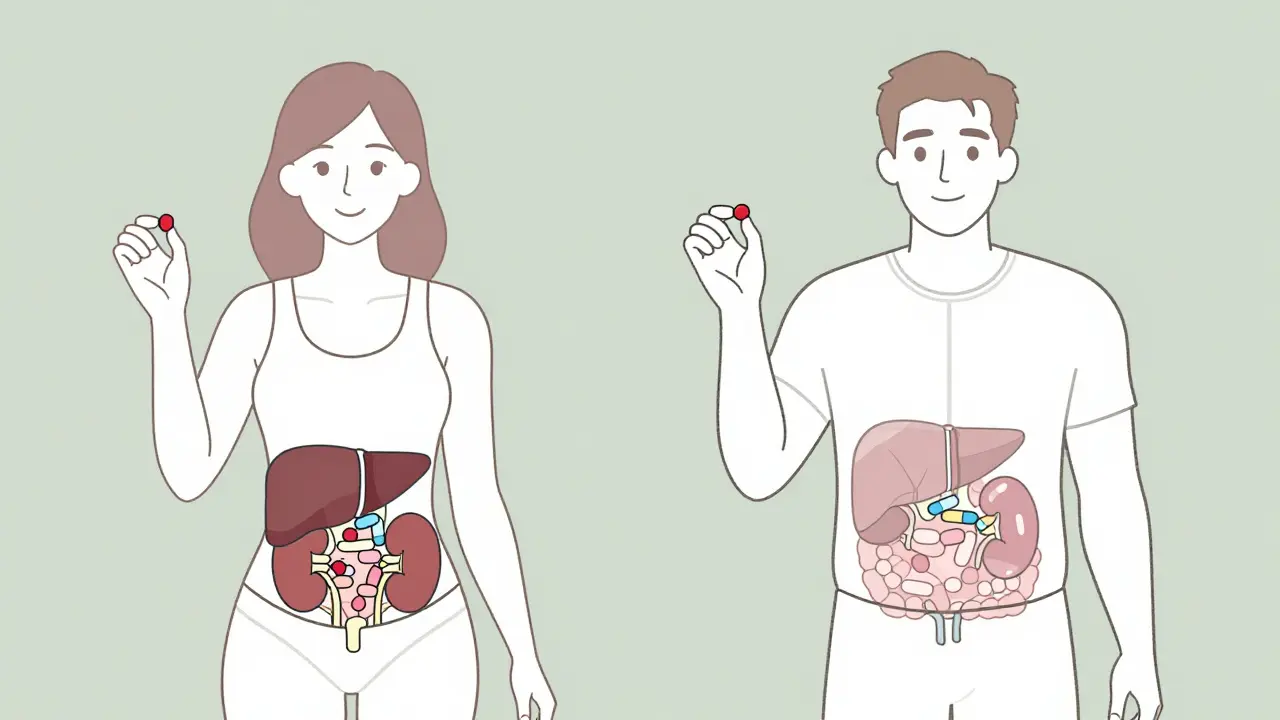
It’s not just hormones. It’s liver enzymes, body fat, kidney function, and how drugs move through the body.
Women have about 40% less of a key liver enzyme called CYP3A4. That enzyme breaks down half of all prescription drugs-things like statins, anti-anxiety meds, and sleep aids. Slower breakdown means the drug sticks around longer. Higher blood levels. More side effects.
Then there’s body composition. Women naturally carry more body fat-about 28% on average, compared to 16-18% in men. Fat-soluble drugs like diazepam (Valium) get trapped in fat tissue. That’s why women hold onto these drugs 20-30% longer than men. A standard dose meant for a man can leave a woman groggy the next morning.
Kidney function also differs. Women clear drugs like lithium 22% slower than men. That means even if they take the same amount, their blood levels rise higher. Same pill. Different outcome.
Hormones add another layer. Birth control pills can cut the effectiveness of the seizure drug lamotrigine by 50-60%. That means a woman on the pill might need nearly double the dose to get the same effect. But if she stops the pill, her dose suddenly becomes too high. No one told her. No one warned her.
Drugs That Hit Women Harder
Some drugs have clear, documented sex-based risks.
Zolpidem (Ambien) is the most famous example. In 2013, the FDA cut the recommended dose for women by half-not because women were more likely to abuse it, but because their bodies processed it 50% slower. After the change, adverse event reports from women dropped by 38%. That’s not a coincidence. That’s science.
Digoxin, used for heart failure, builds up to 20-30% higher levels in women. That increases the risk of toxicity by 40%. Yet, dosing guidelines still don’t reflect that.
Antidepressants like sertraline and fluoxetine cause nausea and dizziness 1.5 to 2 times more often in women. Women report 68% more severe nausea on Drugs.com than men. Meanwhile, men report 42% more sexual side effects. The same drug. Different problems.
Antipsychotics like haloperidol cause QT prolongation-heart rhythm issues-2.3 times more in women. Antibiotics like sulfamethoxazole trigger severe skin reactions in women 47% more often. And opioid painkillers? Women are over twice as likely to stop them because side effects were too severe.
What About Men?
It’s not just women who get the short end of the stick. Men face different risks.
They’re 35% more likely to get sexual dysfunction from antidepressants and antipsychotics. They’re 28% more likely to have trouble urinating with anticholinergic drugs used for overactive bladder or Parkinson’s. These side effects are rarely discussed in marketing or patient brochures. Men don’t report them as often-partly because they’re embarrassed, partly because doctors don’t ask.
But here’s the twist: men don’t get more side effects overall. They get different ones. And because the system was built on male data, those differences are invisible.
The Labeling Gap
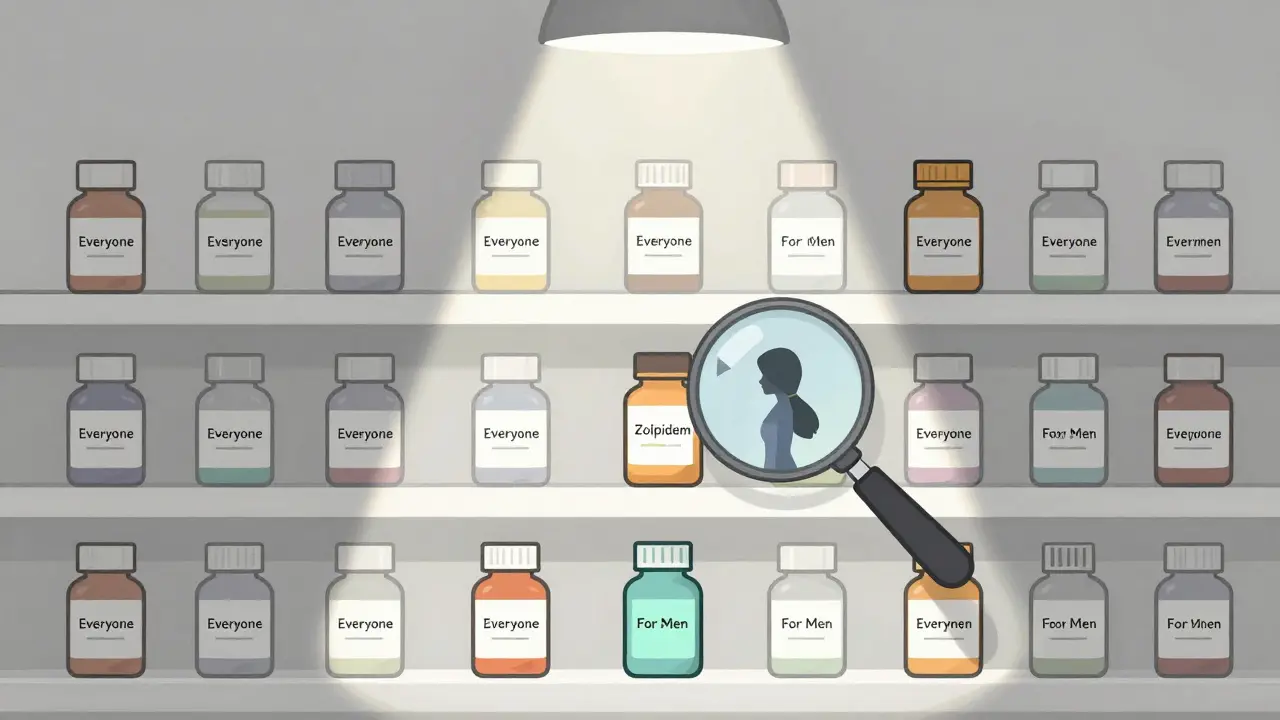
Out of 200 commonly prescribed medications, only 15 have sex-specific dosing instructions on their labels. That’s 7.5%. The rest? Same dose for everyone.
Even after the FDA changed the Ambien dose for women in 2013, most doctors didn’t know. A 2022 survey found only 28% of physicians routinely consider sex differences when prescribing. Two-thirds had never heard of the Ambien dose change.
Drug companies don’t prioritize this. Why? Because changing labels means new trials. New data. More cost. And until regulators demand it, they won’t do it.
Only 4% of all drug labels mention sex-specific dosing. That means millions of women are taking pills designed for men. And men are taking pills that don’t account for their unique risks.
Is It Biology-or Just Reporting?
Not everyone agrees on why women have more side effects.
Some researchers, like Irving Zucker from UC Berkeley, say it’s biology. Women metabolize drugs differently. Their bodies are built differently. The data proves it.
Others, like Sarah Richardson from Harvard, say it’s not that simple. She analyzed 33 million FDA reports and found that once you account for the fact that women take 56% more prescriptions than men, the sex gap in side effects drops to under 5%. Her theory? Women are more likely to notice side effects. More likely to report them. More likely to visit the doctor.
Janine Austin Clayton from the NIH puts it best: both are true. Biology matters. But so does behavior. Women are more likely to speak up. And when they do, we see the gap.
What’s Changing?
Slowly, things are shifting.
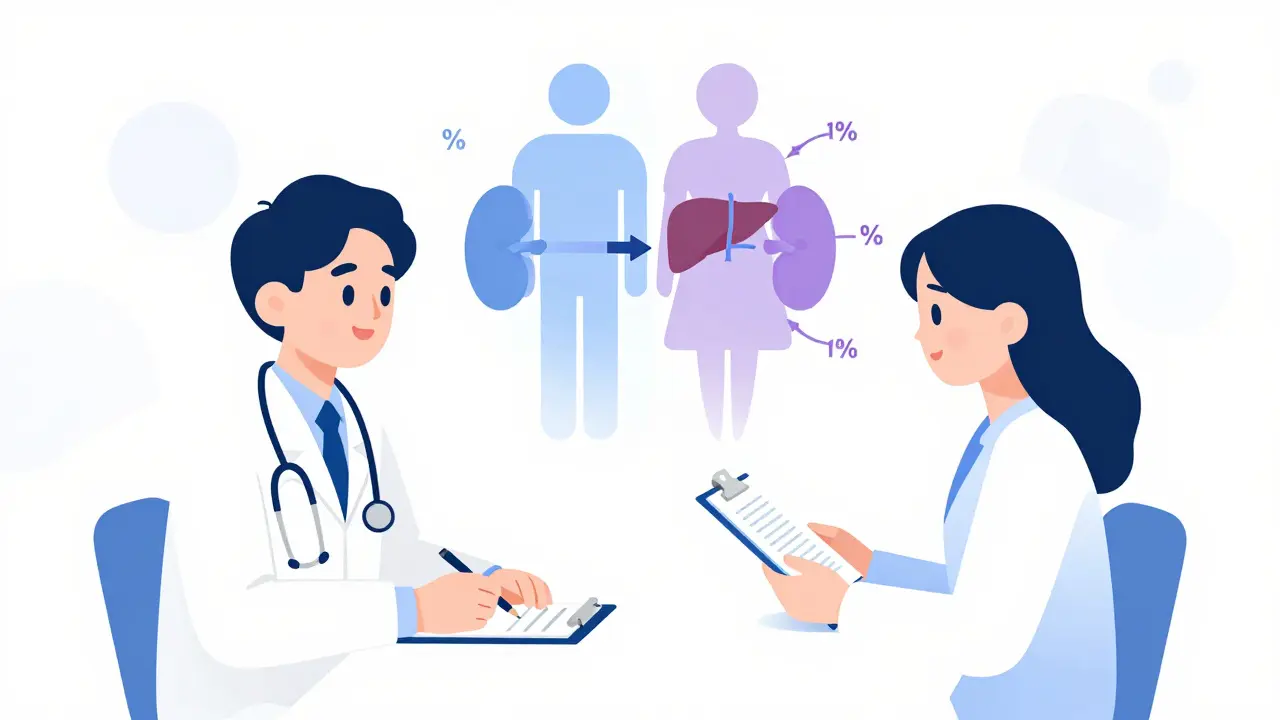
The FDA launched its ‘Sex and Gender Roadmap’ in 2023, aiming to make sex and gender a core part of drug approval by 2026. The NIH is investing $12.5 million in a new research center focused on sex differences in medicine. The European Medicines Agency now requires sex-stratified data in all Phase III trials.
Startups like Adyn and Womb Society are building drugs specifically for women’s physiology. The global women’s health pharmaceutical market is growing at 8.7% a year.
And in 2024, a new bill-the ‘Fair Trials for Women Act’-was introduced in Congress. If passed, it would require sex-specific dosing for all new drugs. That’s huge.
What You Can Do
If you’re a woman taking medication:
- Ask your doctor: "Was this dose tested on women?"
- Check if your drug has a sex-specific warning. Zolpidem, digoxin, and some SSRIs do.
- Track your side effects. Keep a simple log: what you took, when, and how you felt.
- If you’re getting side effects others don’t, don’t assume it’s "all in your head." It might be biology.
If you’re a man:
- Ask about sexual or urinary side effects. Don’t suffer in silence.
- Know that your body processes drugs differently too.
Doctors need to ask better questions. Patients need to demand better data. And regulators need to stop treating men as the default.
The Bottom Line
Medicine was built on male bodies. That’s not a mistake. It’s a legacy. And it’s costing women their health.
It’s not about fairness. It’s about science. Your body isn’t a smaller version of a man’s. It’s different. And your medication should reflect that.
The change is coming. Slowly. But it’s coming. And until then, know your body. Ask questions. Don’t settle for a one-size-fits-all pill.
Why do women have more side effects from medications than men?
Women have more side effects because their bodies process drugs differently. They have lower levels of key liver enzymes, higher body fat, slower kidney clearance, and hormonal fluctuations that affect how drugs are absorbed and broken down. Most drug dosing was tested only on men, so standard doses often lead to higher blood levels in women, increasing side effects.
What drugs have different dosing recommendations for women?
Zolpidem (Ambien) is the most well-known-women are advised to take half the dose due to slower metabolism. Digoxin, used for heart conditions, also has higher toxicity risk in women at standard doses. Some SSRIs like sertraline and fluoxetine cause more nausea in women, though official dose adjustments aren’t yet standard. Always check the drug label or ask your pharmacist.
Is it true that women report side effects more often than men?
Yes, research shows women are more likely to notice, report, and seek care for side effects. But that doesn’t explain the full gap. Biological differences-like slower drug metabolism-also play a major role. The real issue is that we’ve treated men as the standard, so we’ve missed how drugs affect women differently.
Do men have any unique medication risks?
Yes. Men are more likely to experience sexual dysfunction from antidepressants and antipsychotics. They’re also 28% more likely to have urinary retention from anticholinergic drugs. These side effects are often underreported because of stigma, but they’re real and need attention.
Why don’t drug labels include sex-specific dosing?
Because drug companies rarely test for it. Regulatory agencies don’t require it. Even though women take most prescriptions, only 4% of drug labels contain sex-specific dosing info. Changing labels means new clinical trials-which are expensive and time-consuming. Until rules change, the status quo stays.
What’s being done to fix this problem?
The FDA, NIH, and European Medicines Agency now require sex-stratified data in clinical trials. The FDA’s 2023 Sex and Gender Roadmap aims to integrate this into all drug approvals by 2026. Startups are developing drugs specifically for women’s physiology. And legislation like the Fair Trials for Women Act could soon make sex-specific dosing mandatory for new drugs.


William Minks
March 5, 2026 AT 19:09