
Imagine sitting in a doctor's office. You've been feeling under the weather for weeks, and finally, you get that prescription slip. But instead of the shiny box with the name you saw on TV, the pharmacist hands you a plain white bottle with a generic label. It costs a fraction of the price, but a nagging doubt creeps in: Is it really the same?
This hesitation is common. For decades, brand-name drugs have built an image of premium quality through heavy marketing and sleek packaging. Meanwhile, generics often struggle with a reputation as "cheap knockoffs." Yet, despite these perceptions, doctors overwhelmingly recommend generic medications. In fact, they make up about 90% of all prescriptions filled in the United States today. So, why do medical authorities push so hard for generics when patients are skeptical? The answer lies in rigorous science, significant cost savings, and a fundamental shift in how we view healthcare efficiency.
The Science of Bioequivalence: More Than Just "Same Ingredients"
To understand why doctors trust generics, we first need to look at what makes them legally and medically equivalent to brand-name drugs. A generic drug isn't just a copy; it is a pharmaceutical product that must meet strict regulatory standards set by agencies like the Food and Drug Administration (FDA).
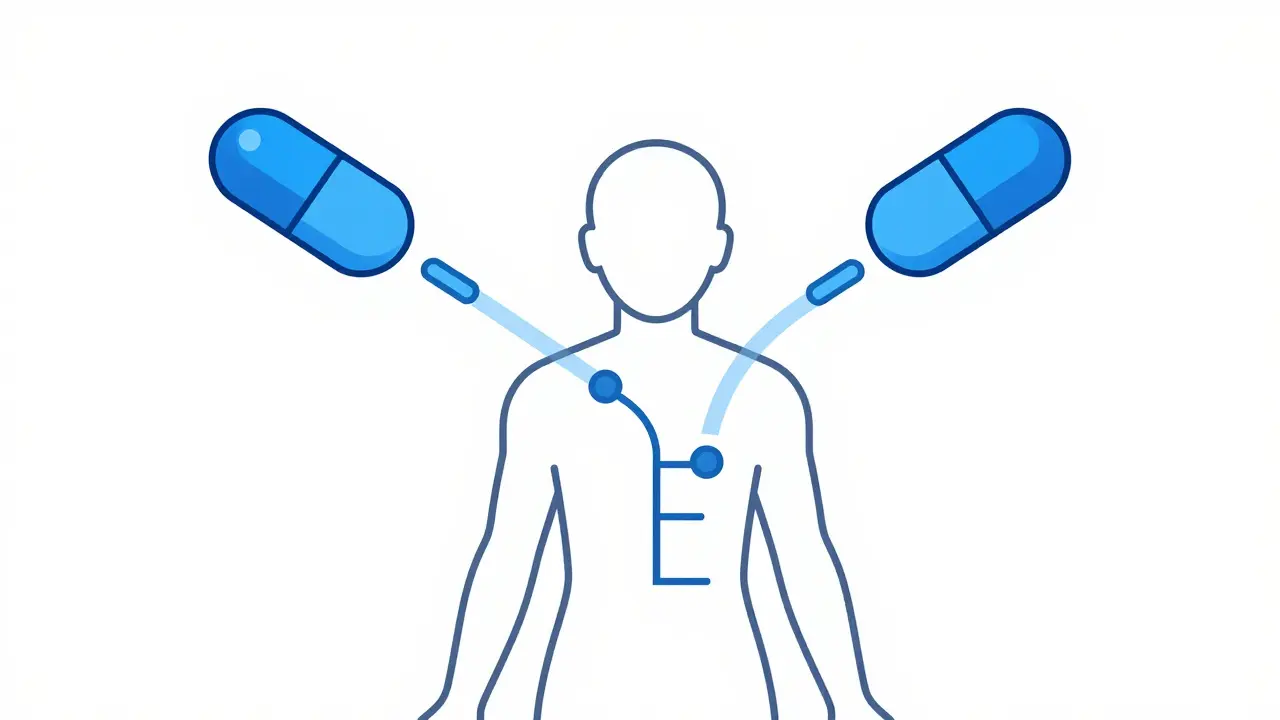
The core requirement is bioequivalence. This means the generic drug delivers the same amount of active ingredient into your bloodstream in the same amount of time as the brand-name version. The FDA mandates that this equivalence falls within a specific statistical range: a 90% confidence interval where the ratio of geometric means for both the area under the curve (AUC) and maximum concentration (Cmax) stays between 80% and 125%. If a generic fails this test, it simply doesn't get approved.
| Feature | Brand-Name Drug | Generic Drug |
|---|---|---|
| Active Ingredient | Proprietary formula | Identical to brand |
| Cost | High (often $300+/month) | Low (often $4-$10/month) |
| Packaging/Color | Distinctive branding | Plain, varies by manufacturer |
| Regulatory Pathway | Full clinical trials required | Abbreviated New Drug Application (ANDA) |
| Inactive Ingredients | Specific formulation | May differ (fillers, dyes) |
The Hatch-Waxman Act of 1984 established the framework for this system, creating an abbreviated approval pathway that allows generics to skip redundant human trials while ensuring safety. Manufacturing facilities for generics undergo the same Good Manufacturing Practices (GMP) inspections as brand-name manufacturers. The FDA conducts roughly 1,500 domestic and foreign inspections annually to ensure purity and potency. Essentially, if a generic passes these hurdles, it is therapeutically equivalent to the brand.
The Economic Imperative: Why Cost Matters to Clinical Outcomes
You might wonder why cost is even part of a medical discussion. After all, shouldn't health care be about efficacy alone? The reality is that affordability directly impacts health outcomes. When medications are expensive, patients skip doses or stop taking them entirely-a phenomenon known as non-adherence.
Generics typically cost 80% to 85% less than their brand-name equivalents. According to the Congressional Budget Office, this price difference is massive. For a patient needing lifelong treatment for high blood pressure or diabetes, the gap between a $350 monthly bill and a $4 bill can determine whether they stay healthy or end up in the emergency room.
The American College of Physicians (ACP) issued formal Best Practice Advice in 2016 stating unequivocally that clinicians should prescribe generic medications whenever possible. Their reasoning wasn't just about saving money for insurers; it was about improving patient adherence. Studies show that generic substitution improves medication adherence by approximately 6% compared to brand-name prescriptions. That 6% increase translates to better control of chronic conditions and a measurable reduction in hospitalization risks.
Consider the case of lisinopril, a common blood pressure medication. A practicing internist noted having patients insist on the brand-name version costing $350 a month when the generic was available for $4 at Walmart. Despite identical efficacy data, the fear of the unknown drove patients toward the more expensive option, often straining their finances without providing any additional health benefit.
Physician Perspectives: Knowledge vs. Behavior
If the science is solid and the savings are clear, why don't all doctors prescribe generics 100% of the time? The relationship between physicians and generic prescribing is complex. Research suggests that while most doctors understand the value of generics, their prescribing habits are influenced by factors beyond just cost.
A 2016 study by Tamuno Raymond George at Walden University examined 151 physicians and found no statistically significant association between a physician's belief about cost and their pattern of prescribing brand-name over generic drugs. This implies that other forces are at play-perhaps habit, patient pressure, or familiarity with specific brand formulations from training years ago.
Specialty also plays a role. Primary care physicians are significantly more likely to prescribe generically than hospital-based or private specialists. In one systematic review, primary care doctors prescribed generics at rates nearly double those of hospital physicians. This gap highlights a need for broader education across all medical disciplines. However, progress is being made. The Association of American Medical Colleges reports that 68% of internal medicine residency programs now include mandatory modules on generic drug prescribing, up from just 29% in 2015.
Doctors also face pressure from patients. About 41% of physicians report feeling pressured by patients to prescribe brand-name drugs, while 40% feel pressure to prescribe generics. This tug-of-war underscores the importance of communication. As Dr. Sarah Ibrahim of the FDA's Office of Generic Drugs noted, patients are more likely to stop taking generic medications when they experience a change-often due to anxiety rather than actual side effects. Pharmacists and doctors play a critical role in discussing these changes beforehand to alleviate fears.
Exceptions and Nuances: When Generics Require Caution
While generics are safe for the vast majority of medications, medical authority acknowledges certain exceptions. Not every drug behaves the same way in the body, and some require closer monitoring during the switch from brand to generic.
The most notable exception involves narrow therapeutic index (NTI) drugs. These are medications where small differences in blood concentration can lead to significant therapeutic failures or adverse reactions. The FDA maintains a list of such drugs (including warfarin, levothyroxine, and phenytoin), numbering around 15 as of 2023. For these medications, doctors may prefer to keep patients on a specific brand or a consistent generic manufacturer to avoid fluctuations.
Complex drug products present another challenge. Inhalers for asthma or COPD, for example, rely heavily on device mechanics, not just chemical composition. A 2015 FDA qualitative study found that patients had mixed perceptions about generic dry powder inhalers, particularly regarding design and usability. If a patient struggles to use the new device correctly, the medication won't reach their lungs effectively, regardless of its chemical equivalence.
Additionally, inactive ingredients-such as fillers, binders, and dyes-can differ between brands and generics. While these do not affect the drug's primary action, they can cause allergic reactions in sensitive individuals. Dr. Niteesh K. Choudhry from Harvard Health acknowledged that "strange things happen" with certain formulations, emphasizing the need for vigilance. However, these cases are rare and usually manageable through simple substitution with another generic manufacturer.
Overcoming Patient Skepticism: Building Trust
Perhaps the biggest hurdle in generic acceptance is psychological. Brand psychology has spent billions building trust in names like Lipitor or Prozac. Generics lack this emotional connection. Patients often associate the higher price of brand-name drugs with higher quality, a cognitive bias known as the "price-quality heuristic."
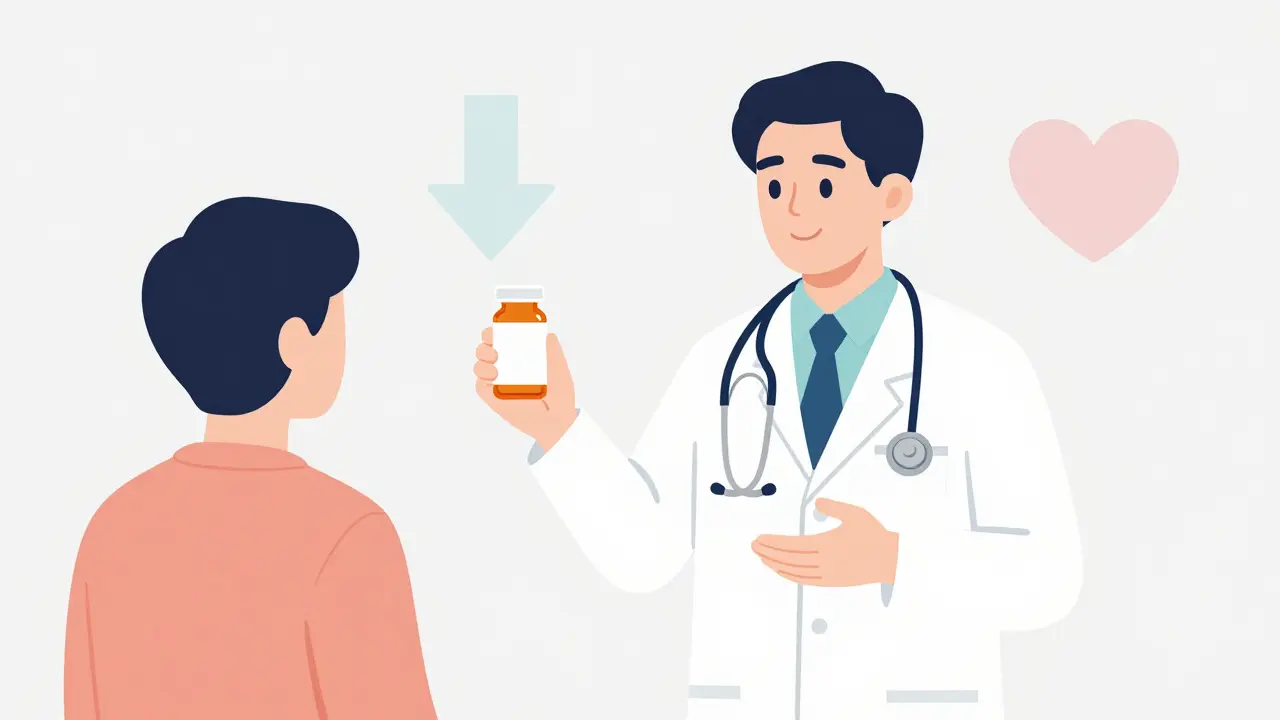
To combat this, healthcare providers must focus on transparency. Explaining the concept of bioequivalence in simple terms helps demystify the process. Telling a patient, "This pill has the exact same medicine inside, just a different wrapper," can reduce anxiety. The FDA’s "Look Alike Sound Alike" program has also helped reduce confusion by standardizing labeling practices, cutting patient mix-ups by 37% since 2018.
Educational initiatives are expanding. The FDA increased funding for its Generic Drugs Research Program to $15.2 million annually under GDUFA III (2023-2027), focusing specifically on patient and provider education. The goal is to shift the narrative from "cheaper alternative" to "smart, evidence-based choice." When patients understand that generics undergo the same rigorous testing as brands, skepticism begins to fade.
The Future of Generic Medications
The trajectory for generic medications is clear: they will continue to dominate the market. The global generic pharmaceuticals market was valued at $405.9 billion in 2022 and is projected to reach $595.6 billion by 2028. This growth is driven not just by cost pressures but by regulatory improvements that have slashed approval times from 36 months to an average of 10 months.
Looking ahead, the line between generics and biologics is blurring with the rise of biosimilars. These are similar to generics but for complex biologic drugs derived from living organisms. The FDA expects biosimilars to grow from 3% to 15% of biologic prescriptions by 2027. As these products enter the market, the lessons learned from traditional generic adoption-trust, education, and cost transparency-will become even more critical.
For now, the message from medical authorities remains consistent: generics are safe, effective, and essential for sustainable healthcare. By choosing generics, patients aren't compromising on quality; they're embracing a system designed to maximize access and minimize waste. The next time you receive that plain white bottle, remember the rigorous science behind it-and the peace of mind that comes with knowing you're getting the same care, at a fraction of the cost.
Are generic medications exactly the same as brand-name drugs?
Generic medications contain the same active ingredient, strength, dosage form, and route of administration as the brand-name drug. They must demonstrate bioequivalence, meaning they deliver the same amount of active ingredient into your bloodstream in the same amount of time. However, they may differ in inactive ingredients like colors, flavors, or preservatives, which generally do not affect performance but can occasionally cause allergies in sensitive individuals.
Why do doctors recommend generics if they look different?
Doctors recommend generics because they are therapeutically equivalent to brand-name drugs but cost significantly less-often 80-85% less. This lower cost improves medication adherence, as patients are less likely to skip doses due to financial burden. The different appearance (color, shape) is due to varying inactive ingredients and packaging, which does not impact the drug's efficacy.
Are there any situations where I should stick with the brand-name drug?
Yes, primarily for narrow therapeutic index (NTI) drugs, such as warfarin or levothyroxine, where small changes in blood concentration can have serious effects. Additionally, complex devices like certain inhalers may have usability differences that could impact delivery. Your doctor or pharmacist can advise if your specific medication requires staying on a brand or a consistent generic manufacturer.
How does the FDA ensure generic drugs are safe?
The FDA requires generic manufacturers to prove bioequivalence through rigorous pharmacokinetic studies. Manufacturing facilities undergo the same Good Manufacturing Practices (GMP) inspections as brand-name companies. The FDA conducts thousands of inspections annually to ensure quality, purity, and potency meet strict standards before approval.
Can switching to a generic cause side effects?
In rare cases, patients may experience different side effects due to variations in inactive ingredients (fillers or dyes). However, the active ingredient remains the same, so therapeutic side effects should be identical. If you notice unusual reactions after switching, consult your doctor or pharmacist, who may switch you to a different generic manufacturer or back to the brand if necessary.