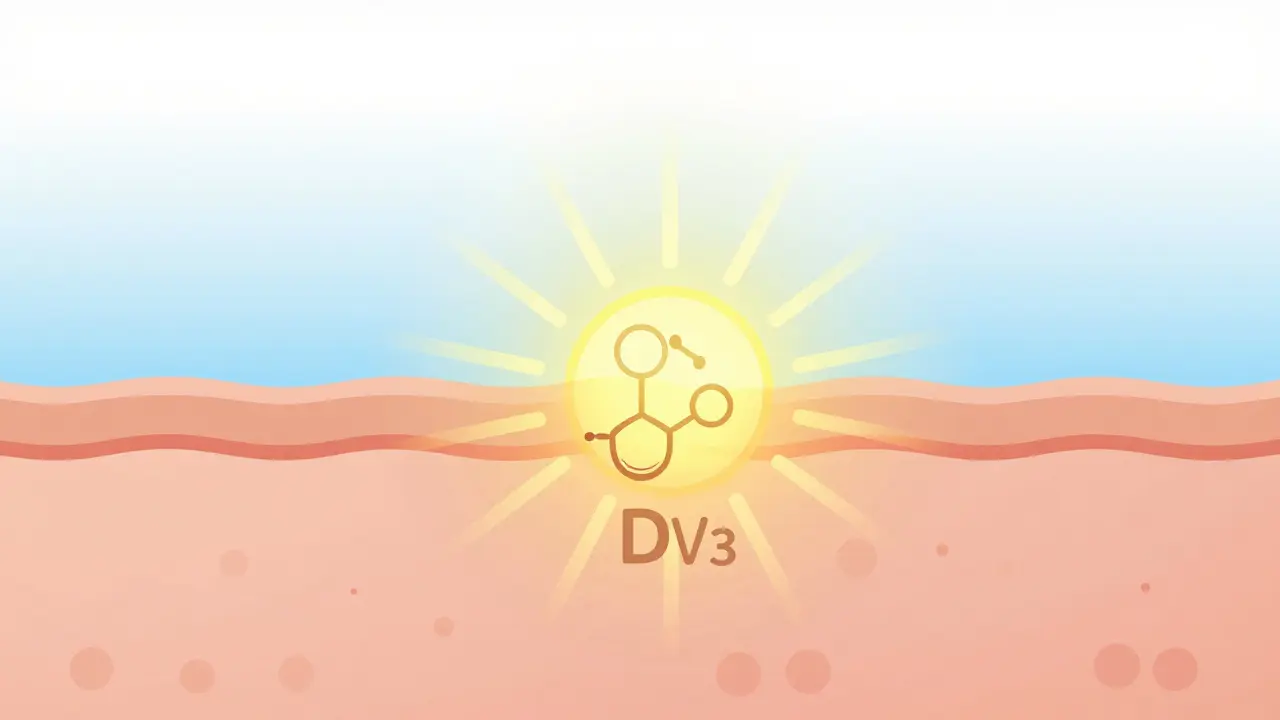
Most people think of Vitamin D as just the "sunshine vitamin" that keeps your bones strong. That’s a good start, but it misses the bigger picture. Vitamin D is actually a secosteroid hormone-a chemical messenger that talks to almost every cell in your body. It regulates calcium, yes, but it also influences your immune system, blood pressure, insulin production, and even how your cells divide. When your endocrine health is off, vitamin D levels are often part of the puzzle.
The problem? We’ve been measuring and supplementing vitamin D wrong for decades. Blood tests check one form of the vitamin, but your tissues might be starving for another. High-dose supplements can cause toxicity, while low doses do nothing for chronic conditions. If you’re dealing with fatigue, muscle weakness, or recurrent infections, understanding the real mechanics of vitamin D metabolism is crucial. Let’s look at how this hormone works, where it goes wrong, and how to fix it safely.
How Vitamin D Works as a Hormone
To understand why vitamin D matters for your entire body, you have to look at its lifecycle. It starts as a precursor called 7-dehydrocholesterol in your skin. When UVB light (specifically wavelengths between 290-315 nm) hits your skin, it converts this into cholecalciferol, or Vitamin D3. You can also get Vitamin D2 (ergocalciferol) from plants and mushrooms, but D3 is generally more effective at raising blood levels.
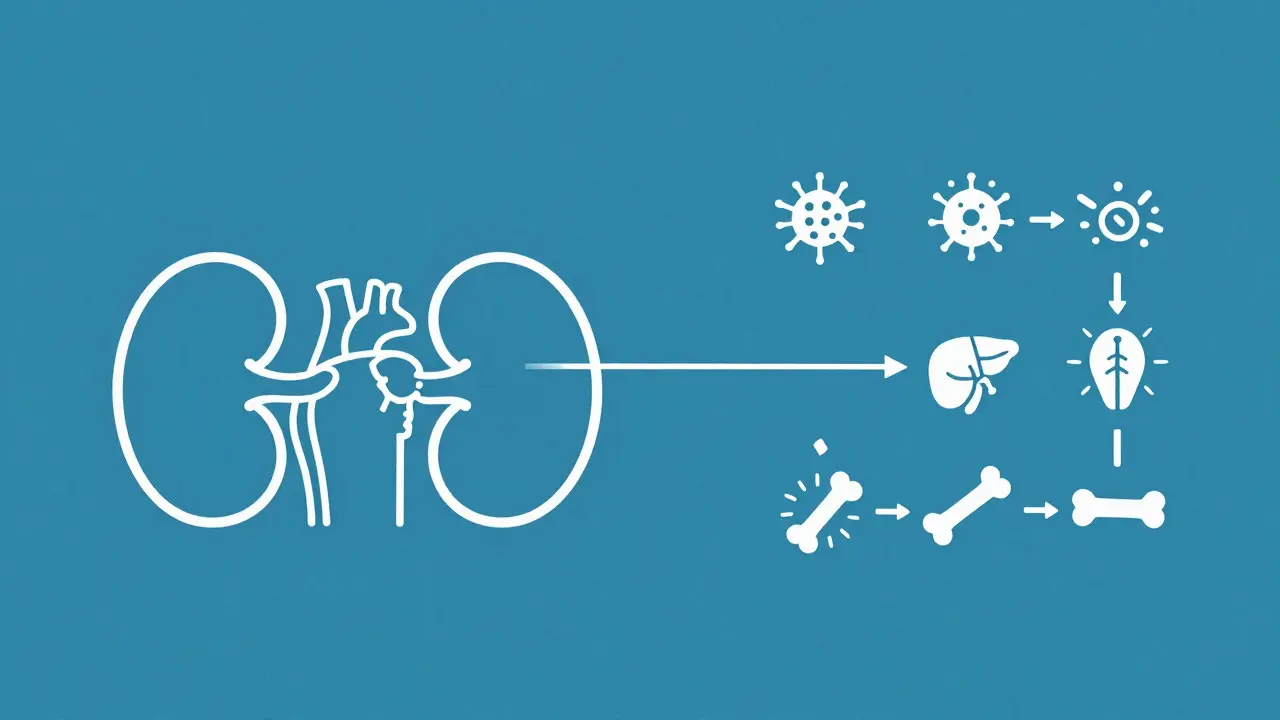
Once absorbed, vitamin D travels to your liver. There, an enzyme called CYP2R1 adds a hydroxyl group, turning it into 25-hydroxyvitamin D [25(OH)D]. This is the major circulating form found in your blood. It’s what doctors measure when they order a "vitamin D test." But here’s the catch: 25(OH)D isn’t biologically active yet. It’s like a loaded gun that hasn’t been fired.
The final step happens mostly in your kidneys. Another enzyme, CYP27B1, adds a second hydroxyl group, creating 1,25-dihydroxyvitamin D, also known as calcitriol. This is the active hormone. It binds to the Vitamin D Receptor (VDR), a nuclear transcription factor present in nearly all human cell types. Once bound, it turns specific genes on or off. Recent ontology analysis published in *Endocrine Reviews* (2024) shows VDR regulates over 11,000 target genes. About 43% of these control metabolism, 19% affect cell structure, and others manage immune responses and tissue development.
The Endocrine vs. Autocrine Pathways
This is where most confusion lies. Vitamin D operates through two distinct systems: the classic endocrine pathway and local autocrine/paracrine pathways.
The Endocrine Pathway: This is the traditional view. Your kidneys tightly regulate the production of calcitriol based on your body’s need for calcium. If your blood calcium drops, parathyroid hormone (PTH) signals the kidneys to make more calcitriol. Calcitriol then tells your gut to absorb more calcium from food, your bones to release stored calcium, and your kidneys to stop excreting it. This keeps serum calcium in a narrow range of 8.5-10.5 mg/dL, which is critical for nerve signaling and heart rhythm.
The Autocrine Pathway: Here’s the game-changer. Over 30 different tissues-including immune cells, pancreatic beta cells, and vascular endothelium-express their own CYP27B1 enzyme. They take the circulating 25(OH)D and convert it to active calcitriol locally, independent of kidney regulation. For example, during an infection, macrophages can increase local calcitriol production by 100-fold to fight pathogens, even if your blood levels are normal. This explains why high blood levels don’t always translate to better immune function in every individual. The local conversion rate matters just as much as the supply.
Decoding Vitamin D Blood Tests
If you’ve had a vitamin D test, you’ve likely seen numbers like 12 ng/mL or 45 ng/mL. These measure 25(OH)D. But what do they mean?
| Level (ng/mL) | Level (nmol/L) | Status | Clinical Implication |
|---|---|---|---|
| < 20 | < 50 | Deficient | Risk of secondary hyperparathyroidism, bone loss, and muscle weakness. |
| 21 - 29 | 52 - 72 | Insufficient | Suboptimal for bone health; may contribute to subtle symptoms. |
| 30 - 100 | 75 - 250 | Sufficient | Optimal for skeletal health per Endocrine Society guidelines. |
| > 150 | > 375 | Toxic | High risk of hypercalcemia (excess calcium in blood). |
The Endocrine Society defines deficiency as below 20 ng/mL. However, the Institute of Medicine argues that 20 ng/mL is sufficient for 97.5% of the population. This debate persists because we lack a perfect biomarker. Circulating 25(OH)D doesn’t tell us how much active hormone is reaching your tissues. Most vitamin D in the blood is bound to proteins: 85-90% to Vitamin D Binding Protein (DBP) and 10-15% to albumin. Only about 0.03% is "free" and available to enter cells. Genetic variations in DBP can significantly alter how much free hormone you have, meaning two people with the same blood level might have very different biological effects.
Supplementation Strategies: Dosage and Forms
So, how much should you take? The answer depends on your current status, weight, and genetics. The general maintenance dose recommended by the Endocrine Society is 600-2,000 IU/day for adults under 70, and 800-2,000 IU/day for those over 70. But this is a starting point, not a rule.
Obesity Matters: Vitamin D is fat-soluble. In individuals with a BMI ≥30, vitamin D gets sequestered in adipose tissue. Studies show obese individuals may need 2-3 times higher doses to achieve the same blood levels as lean individuals. While a normal-weight person might reach 30 ng/mL with 1,500 IU/day, someone with obesity might need 3,000 IU/day.
Malabsorption Issues: Conditions like celiac disease, Crohn’s disease, or gastric bypass surgery impair fat absorption. Since vitamin D requires dietary fat to be absorbed, standard doses often fail. These patients may require higher daily doses (1,000-2,000 IU extra) or intermittent high-dose regimens (e.g., 50,000 IU weekly for 8 weeks) under medical supervision.
D3 vs. D2: Cholecalciferol (D3) is generally preferred over ergocalciferol (D2). D3 raises and maintains blood levels more effectively. If you are vegan, look for lichen-derived D3, as it is plant-based and highly effective.
Beyond Bones: Cardiovascular, Immune, and Metabolic Health
You’ve probably heard claims that vitamin D prevents heart disease, cancer, and diabetes. The reality is nuanced. Observational studies consistently show that people with low vitamin D have higher risks of these conditions. For instance, data from NHANES links levels below 20 ng/mL with a 25% higher prevalence of hypertension. Dr. Michael F. Holick, a leading expert, argues that deficiency contributes to the pathogenesis of type 2 diabetes and multiple sclerosis.
However, large randomized controlled trials (RCTs) haven’t backed up all these hopes. The VITAL trial, involving nearly 26,000 participants, found no significant reduction in major cardiovascular events or invasive cancer with 2,000 IU/day of vitamin D3 over five years. Dr. JoAnn Manson, the principal investigator, notes that widespread supplementation for disease prevention in the general population isn’t supported by current evidence.
Why the discrepancy? It likely comes down to timing and tissue specificity. You can’t reverse established plaque in arteries or shrink existing tumors simply by boosting blood levels. However, maintaining sufficiency early in life may prevent initial damage. Additionally, as mentioned, local tissue activation varies. A person with normal blood levels might still have poor vitamin D activity in their pancreatic beta cells due to genetic factors affecting local conversion.

Risks of Over-Supplementation
More is not always better. Vitamin D toxicity is rare but serious. It usually occurs only with excessive supplementation (>10,000 IU/day for months), not from sun exposure. Toxicity leads to hypercalcemia-too much calcium in the blood. Symptoms include nausea, vomiting, weakness, frequent urination, and kidney stones. In severe cases, it can cause kidney failure and heart arrhythmias.
The threshold for toxicity is generally considered to be blood levels above 150 ng/mL. The Endocrine Society warns that individual sensitivity varies. People with certain DBP polymorphisms may be more susceptible to side effects even at moderate levels. Always retest after 3 months of supplementation to ensure you aren’t overshooting the target.
Future Directions: Personalized Vitamin D Therapy
The future of vitamin D medicine isn’t just about pills; it’s about precision. Researchers are developing tissue-selective analogs. For example, eldecalcitol, approved in Japan, enhances bone density without causing hypercalcemia by selectively activating VDR in bone tissue. New drugs like VDRM-110 are being tested to target pancreatic cells to improve insulin secretion without affecting calcium balance.
The NIH-funded Vitamin D Exposome Project aims to create assays that measure tissue-specific vitamin D activity using single-cell RNA sequencing. This could finally solve the paradox of why some people benefit from supplementation while others don’t. Until then, the best approach is pragmatic: test your levels, correct deficiencies, aim for sufficiency (30-50 ng/mL), and focus on overall lifestyle factors that support endocrine health.
What is the best time of day to take vitamin D?
Vitamin D is fat-soluble, so it should be taken with a meal containing fat for optimal absorption. While there is no strict "best time," taking it with breakfast or lunch ensures consistent absorption. Some anecdotal reports suggest taking it late in the day might interfere with sleep for sensitive individuals, possibly due to its role in regulating circadian rhythms, though scientific evidence for this is limited.
Can I get enough vitamin D from sunlight alone?
It depends on your location, skin tone, age, and season. Darker skin requires more UVB exposure to produce the same amount of vitamin D as lighter skin. In latitudes above 37 degrees (like much of the US and Europe), UVB rays are too weak in winter to trigger synthesis. Older adults also produce less vitamin D from sunlight. For many, especially in winter or for those with darker skin, supplementation is necessary to maintain sufficient levels.
Does vitamin D help with autoimmune diseases?
There is promising observational data linking low vitamin D to higher risks of multiple sclerosis, rheumatoid arthritis, and type 1 diabetes. Vitamin D modulates the immune system by reducing inflammation and promoting regulatory T-cells. However, clinical trials have not yet proven that supplementation prevents or treats these conditions definitively. It is considered a supportive therapy rather than a cure, and patients should work with their endocrinologists to manage levels alongside other treatments.
How long does it take for vitamin D levels to change after supplementation?
Serum 25(OH)D levels lag behind supplementation by about 2-3 months. This is because vitamin D is stored in fat tissue and released slowly. Retesting sooner than 3 months can give inaccurate results. Consistency is key; missing doses can delay the rise in blood levels.
Should everyone get their vitamin D levels tested?
The USPSTF currently states there is insufficient evidence to recommend routine screening for asymptomatic adults. However, testing is strongly recommended for high-risk groups: those with osteoporosis, chronic kidney disease, malabsorption syndromes (like celiac disease), obesity, dark skin living in northern latitudes, and elderly individuals. If you fall into one of these categories, annual testing is prudent.