
Medication Dose Calculator
Dosing Calculator
Unit Conversion
When giving medicine to a child or an elderly parent, even a tiny mistake can cause big problems. Too much? Too little? It’s not just about accuracy-it’s about safety. That’s where visual dosing aids come in. These aren’t fancy gadgets or high-tech devices. They’re simple tools: syringes with clear markings, droppers with color zones, measuring cups that show exactly how much to give. And they work. Not because they’re complicated, but because they make it impossible to guess.
Why Visual Dosing Aids Matter
Medication errors are one of the leading causes of preventable harm in healthcare. The Institute of Medicine estimates that at least 1.5 million adverse drug events happen every year in the U.S. alone. Many of these happen because someone misread a label, mixed up milliliters with teaspoons, or tried to eyeball a dose in a spoon. Visual dosing aids cut through that confusion.
Take pediatric antiretroviral therapy, for example. Children grow fast. A dose that was right last month might be too low-or too high-this month. Calculating the right amount based on weight is easy on paper. Hard when you’re tired, stressed, or working in a clinic with no electricity. That’s why researchers developed the Visual Dosing Aid (VDA) for kids on HIV treatment. It didn’t ask parents to do math. It showed them exactly where to fill the syringe. No calculations. No guesswork.
How Syringes with Visual Markings Work
Not all oral syringes are the same. The ones you find at a regular pharmacy often have tiny lines, small numbers, and confusing scales. A visual dosing syringe? It’s designed differently.
- Large, bold numbers in milliliters (mL)
- Contrasting background color (like yellow or white) so markings stand out
- Only the most common doses shown-no clutter
- Color-coded zones: green for safe, yellow for caution, red for overdose risk
One study with radiologists managing emergency reactions found that using these syringes cut dosing errors from 40% down to 18.2%. That’s more than half the mistakes gone. And it wasn’t because the staff were experts. It was because the tool made the right choice obvious.
Droppers That Show You When You’re Right
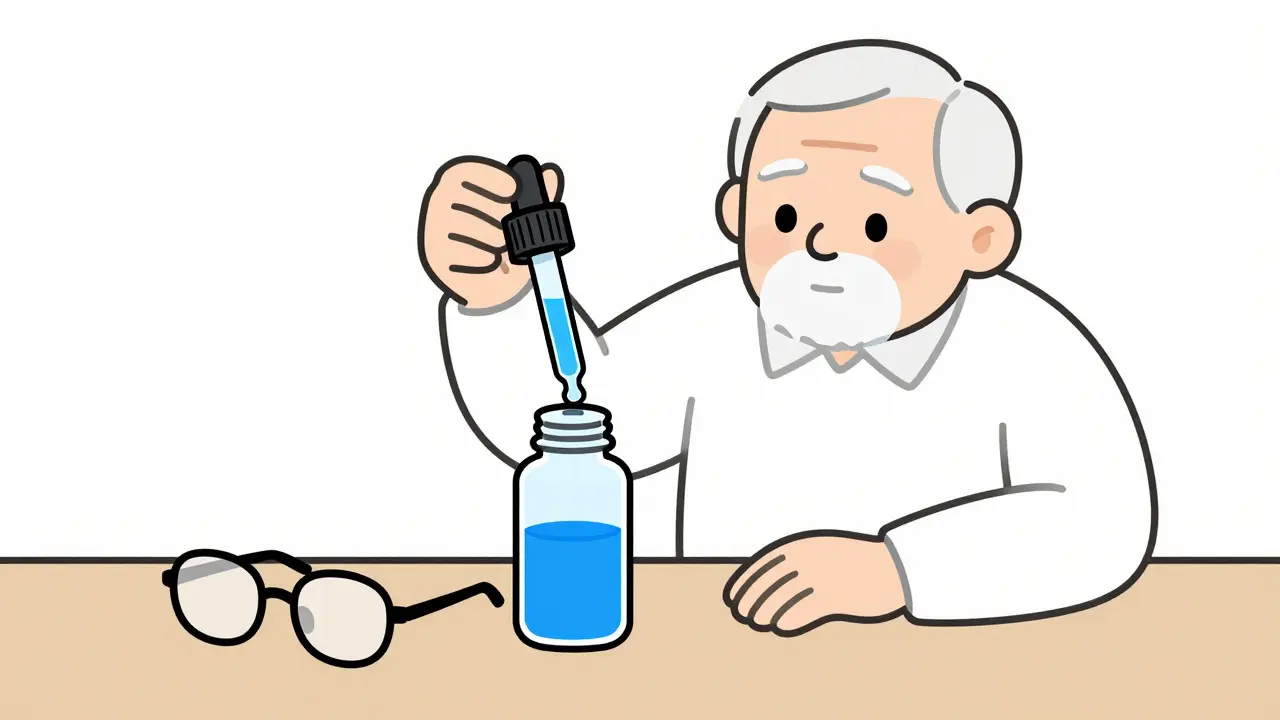
Droppers are everywhere-baby medicine, eye drops, nasal sprays. But most droppers don’t tell you how much you’ve drawn up. You have to look at the bottle, estimate, and hope. Visual dosing droppers change that.
Some have a transparent window along the side with marked lines. Others change color when the correct volume is drawn. One system turns from clear to blue when you’ve pulled up exactly 5 mL. No reading. No counting. Just see the color. If it’s blue, you’re good. If it’s still clear, keep going.
These aren’t just for kids. Elderly patients with poor eyesight or shaky hands benefit too. A dropper that gives visual feedback means fewer spills, fewer repeats, and less anxiety for caregivers.
Measuring Cups and Why They Beat Kitchen Spoons
You’ve probably heard this before: don’t use a kitchen spoon to give medicine. But how many of us have done it anyway? A teaspoon isn’t a teaspoon. One spoon might hold 4 mL. Another might hold 7 mL. That’s a 75% difference.
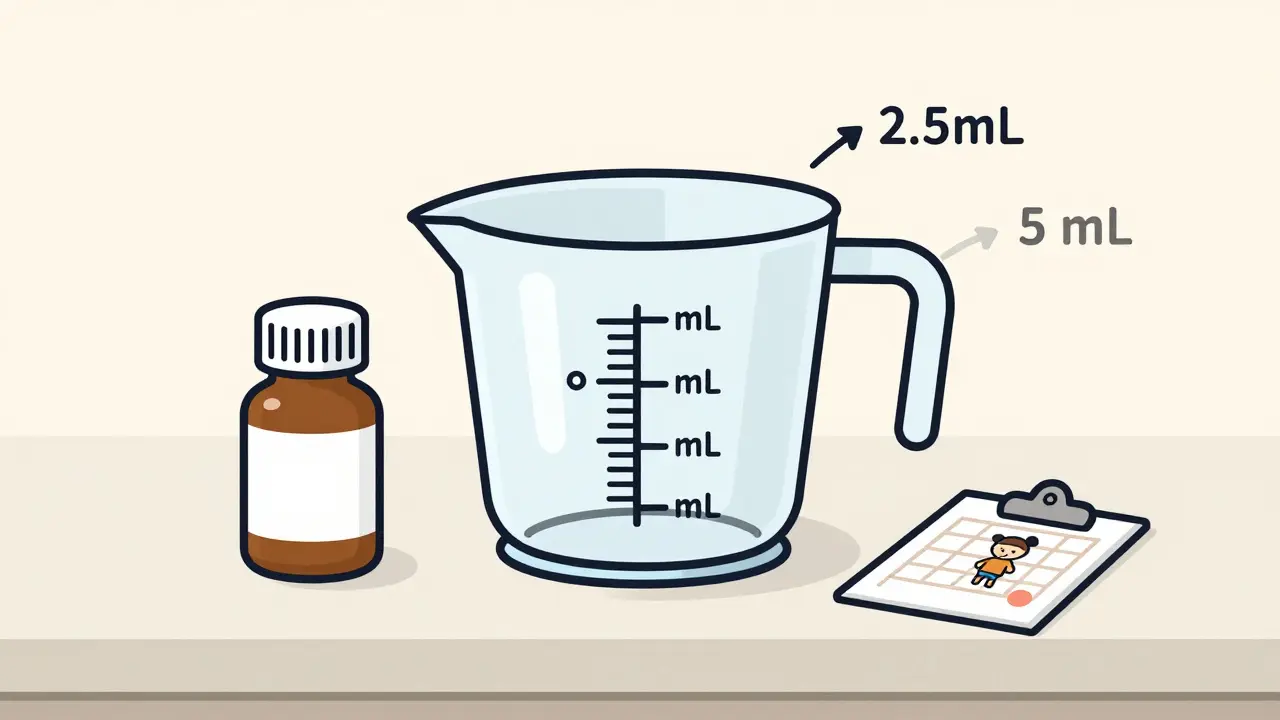
Visual dosing measuring cups fix this. They’re designed with:
- Clear, raised markings in mL and sometimes in drops
- Non-slip bases so they don’t tip
- Spouts that let liquid flow slowly without dripping
- Side handles for easy pouring
These cups often include common pediatric doses like 2.5 mL, 5 mL, and 10 mL with large, easy-to-read numbers. Some even have a built-in dosing chart on the side for quick reference. No need to remember what 10 mg per kg means. Just match the child’s weight to the line.
Where These Tools Shine the Most
Visual dosing aids aren’t magic. They don’t replace training. But they make training more effective. They work best in three situations:
- Pediatric care-Kids change weight fast. Dosing must change with them. Visual tools eliminate calculation errors.
- Emergency settings-When someone’s having a reaction, every second counts. A visual aid cut epinephrine administration time from 152 seconds to 97 seconds.
- Home care for elderly or disabled adults-If you’re giving insulin, seizure meds, or blood thinners, a mistake can be life-threatening. Visual cues reduce risk.
Even in these high-stakes cases, errors didn’t drop to zero. In the emergency study, 18.2% of teams still made mistakes-even with visual aids. Why? Because the biggest error wasn’t reading the syringe. It was giving the shot in the wrong place. That’s a training issue, not a tool issue.
What to Look for When Buying
Not all visual dosing tools are created equal. Here’s what to check before you buy:
- Units-Must be in milliliters (mL). Avoid teaspoons or tablespoons.
- Contrast-The numbers and lines should stand out from the background. If it’s hard to read in low light, skip it.
- Color zones-Look for red, yellow, and green zones that match common dosing ranges.
- Compatibility-Does it fit the bottle? Can you draw the full dose without spilling?
- Reusability-Some are single-use. Others are washable. Choose based on how often you’ll use it.
Don’t be fooled by packaging that says “accurate” or “doctor-recommended.” Those words mean nothing without clear, visible markings. Go for tools that let you see the dose before you give it.
Why People Love Them
In a study of 138 healthcare workers, 97.8% said the visual aid would help them give medicine correctly. 87% said it would save time. These aren’t small numbers. They’re proof that when you remove uncertainty, people feel more confident-and they perform better.
One radiologist said, “I didn’t have to think. I just looked and did.” That’s the goal. Less mental load. Fewer mistakes. More safety.
Limitations and What You Still Need
Visual dosing aids are powerful-but they’re not the whole solution. You still need:
- Training-Even the best tool won’t help if no one knows how to use it.
- Consistent availability-If the syringe is in the supply closet and not on the shelf, it won’t get used.
- Clear labels-Medication bottles should say the dose in mL, not just mg.
- Double-checking-Two sets of eyes are still the best safety net.
And remember: visual aids don’t fix self-administration errors. If someone is giving themselves a shot and misjudges the injection site, no color-coded syringe will help. That’s why these tools are part of a bigger safety plan-not the only piece.
The Future Is Clear
More hospitals and clinics are starting to include visual dosing tools in their safety protocols. The Joint Commission and the Institute for Safe Medication Practices both support their use. And as more studies show faster administration and fewer errors, adoption will keep growing.
Future versions might include smart features-like a syringe that glows when the right dose is drawn. But right now, the best tool is the one that’s simple, visible, and always within reach.
Medication safety isn’t about having the latest tech. It’s about removing the chance for error. And visual dosing aids do that better than anything else.
Are visual dosing aids only for children?
No. While they’re especially helpful for kids because their dosing changes with weight, they’re also critical for older adults with vision problems, tremors, or memory issues. Anyone who needs precise liquid medication dosing can benefit.
Can I use a kitchen spoon if I don’t have a measuring tool?
Never. Kitchen spoons vary in size by up to 75%. A teaspoon in your home might hold 4 mL, while another holds 7 mL. That’s a dangerous difference. Always use a tool marked in milliliters (mL).
Do visual dosing aids replace the need for a doctor’s instructions?
No. They help you follow the instructions correctly, but they don’t replace them. Always confirm the dose with your provider or pharmacist, especially if the medication is new or the dose has changed.
How do I clean visual dosing tools?
Rinse with warm water after each use. For syringes and droppers, flush with water by pulling and pushing the plunger. If reusable, wash with mild soap and air-dry. Never use hot water above 120°F or put in a dishwasher unless labeled safe.
Where can I get visual dosing aids?
Many pharmacies now stock them, especially in the pediatric or senior care section. Ask your pharmacist. Some manufacturers also sell them online directly. Look for brands that label them as "visual dosing syringe" or "precision dosing tool."


Stephen Rudd
March 11, 2026 AT 01:22