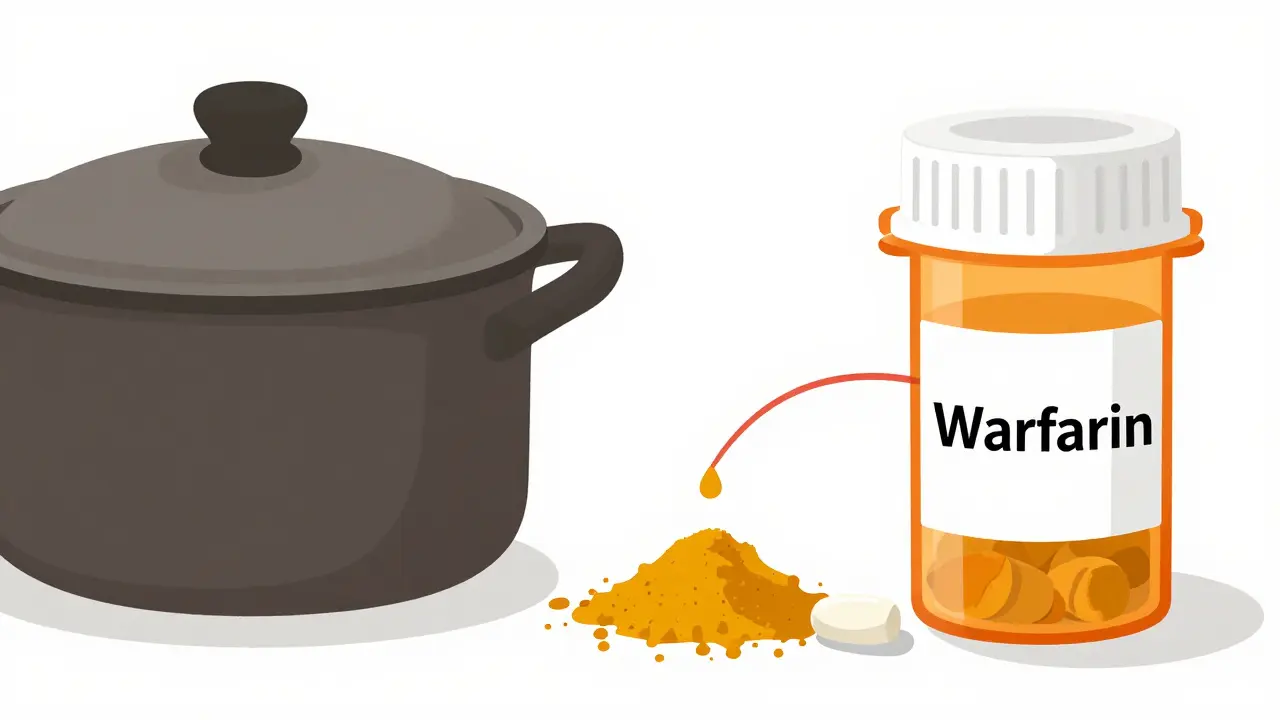
For years, turmeric has been praised as a natural remedy for inflammation, joint pain, and even digestion. But if you’re taking a blood thinner-whether it’s warfarin, rivaroxaban, aspirin, or clopidogrel-this golden spice could be hiding a serious danger. It’s not just a myth. It’s not just a theory. Real people have ended up in emergency rooms because they didn’t know turmeric can act like a blood thinner too.
How Turmeric Really Works in Your Blood
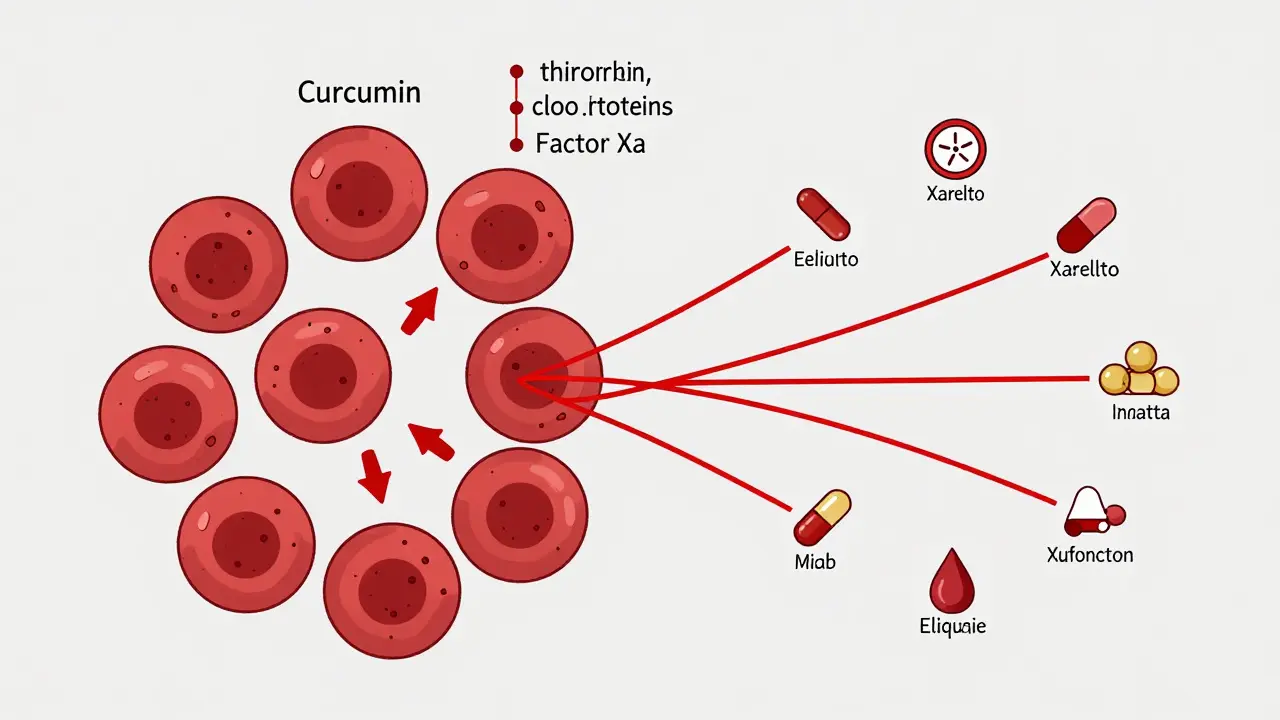
Turmeric gets its color and most of its health effects from curcumin, the compound that makes up 2-8% of raw turmeric powder. But when you take it as a supplement-especially concentrated extracts-it can deliver far more than you’d get from a teaspoon in curry. Studies show curcumin doesn’t just reduce inflammation. It directly interferes with how your blood clots. It slows down two key steps in the clotting process: thrombin and factor Xa. These are proteins your body uses to turn liquid blood into solid clots when you get hurt. If they’re blocked, even small cuts can bleed longer. That’s fine if you’re healthy. But if you’re already on a blood thinner, you’re stacking two effects on top of each other. And it doesn’t stop there. Curcumin also reduces platelet aggregation-the way blood cells stick together to form clots. That’s a double hit: it slows clotting proteins and makes platelets less sticky. Prescription blood thinners usually do one or the other. Turmeric does both.The Real-World Danger: INR Spikes and Bleeding Events
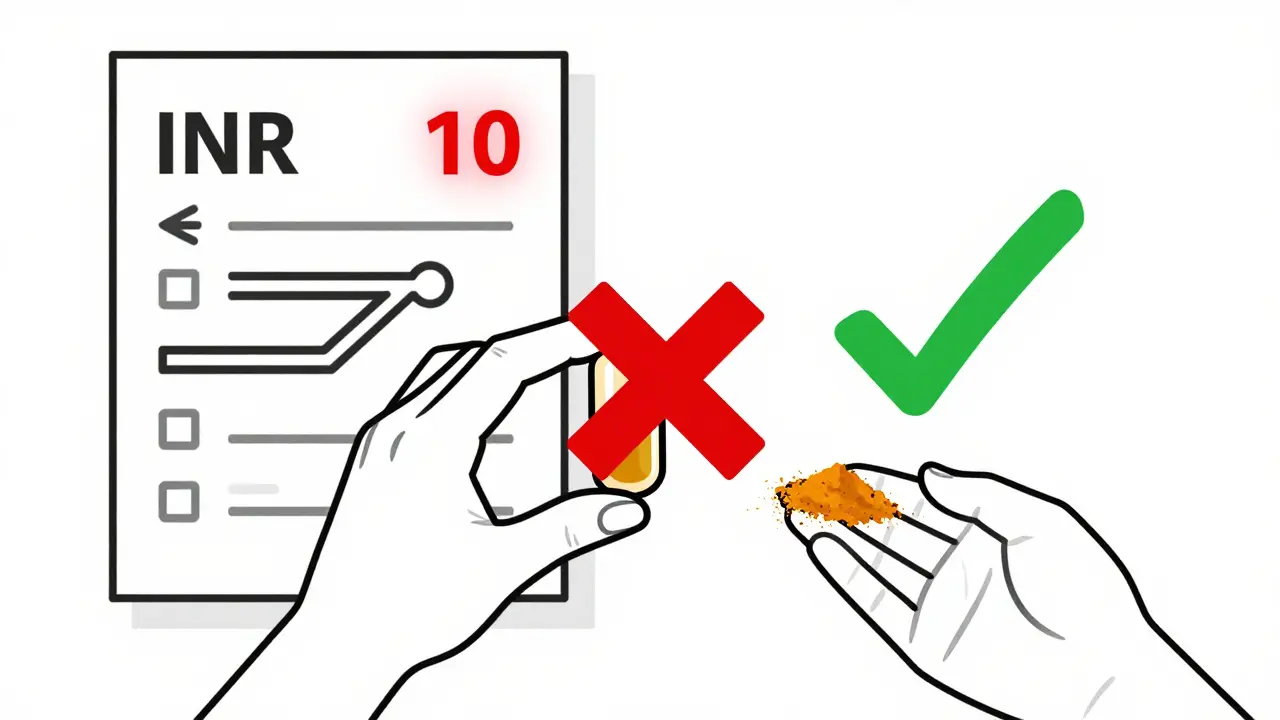
In April 2018, New Zealand’s Medsafe issued a formal warning based on a real case. A patient on stable warfarin therapy had been keeping their INR (a standard blood test that measures clotting time) between 2 and 3.5-perfectly safe. Then they started taking a turmeric supplement. Within weeks, their INR shot up to over 10. That’s not just high. That’s dangerous. An INR above 4.5 puts you at serious risk of internal bleeding. At 10, you’re in emergency territory. This isn’t theoretical. This happened. And it wasn’t an isolated incident. The Welsh Medicines Information Centre (WMIC) documented another case: a transplant patient taking turmeric powder-15 or more spoonfuls a day-for just ten days. Their kidney function dropped sharply, and their tacrolimus (a critical immune-suppressing drug) levels spiked to 29 ng/mL. That’s nearly triple the safe range. Why? Because turmeric interferes with liver enzymes (CYP3A4) that break down medications. It doesn’t just affect blood thinners-it can make any drug in your system build up to toxic levels.Which Blood Thinners Are at Risk?
It’s not just warfarin. All anticoagulants and antiplatelet drugs can interact with turmeric. That includes:- Warfarin (Coumadin)
- Rivaroxaban (Xarelto)
- Apixaban (Eliquis)
- Dabigatran (Pradaxa)
- Heparin
- Enoxaparin (Lovenox)
- Aspirin
- Clopidogrel (Plavix)
- Diclofenac, ibuprofen, naproxen
Why Natural Doesn’t Mean Safe
People assume if it’s natural, it’s harmless. That’s a dangerous myth. Aspirin comes from willow bark. Digitalis, used for heart rhythm problems, comes from foxglove. Nature doesn’t care if you call something a "supplement" or a "medicine." It only cares about the chemistry. Curcumin has been shown in lab studies to be more potent than its cousin bisdemethoxycurcumin in blocking clotting factors. That means the very compound that gives turmeric its "health benefits" is the same one that can cause life-threatening bleeding. And unlike prescription drugs, turmeric supplements aren’t tested in large human trials for interactions. There’s no safety label. No dosage chart. No warning. The WMIC says it plainly: "The risk of bleeding might be increased because turmeric may interfere with clotting by decreasing platelet aggregation." That’s not a suggestion. That’s a medical fact.What Should You Do?
If you’re on a blood thinner, here’s what you need to know:- Stop turmeric supplements immediately. This includes capsules, powders, extracts, and "golden milk" made with concentrated turmeric.
- Keep using turmeric as a spice. A pinch in your curry, soup, or scrambled eggs won’t hurt. The amount is too low to matter.
- Talk to your doctor before taking any new supplement. Even if it’s labeled "natural" or "herbal."
- Stop turmeric at least two weeks before any surgery. This includes dental work. Bleeding during procedures can be life-threatening.
- Watch for signs of bleeding. Unusual bruising, nosebleeds that won’t stop, blood in urine or stool, headaches with vision changes-these aren’t normal. Call your doctor.
What About Other Medications?
Turmeric doesn’t just mess with blood thinners. It also affects how your body processes other drugs. In one small study, people taking 2 grams of curcumin daily had 3.2 times higher levels of sulfasalazine (used for ulcerative colitis). Another case showed higher levels of norfloxacin (an antibiotic) when taken with turmeric. That’s not a coincidence. It’s enzyme interference. If you’re on any medication-especially for diabetes, high blood pressure, or immune conditions-turmeric could make it stronger than intended. That’s just as risky as making your blood too thin.The Bottom Line
Turmeric isn’t evil. It’s a spice. But when you take it as a supplement, you’re no longer using it as food. You’re using it as a drug. And drugs have side effects. Especially when mixed with other drugs. If you’re on a blood thinner, the safest choice is simple: avoid turmeric supplements entirely. Your body doesn’t need them. Your doctor didn’t prescribe them. And the risks? They’re real, documented, and potentially deadly. Don’t let the marketing fool you. "Natural" doesn’t mean safe. And when it comes to your blood, there’s no room for guesswork.Can I still use turmeric in my cooking if I’m on blood thinners?
Yes. Using turmeric as a spice in food-like in curry, soups, or rice-is generally safe. The amount you consume in cooking is too small to affect your blood clotting. The danger comes from supplements, powders, or concentrated extracts that deliver far more curcumin than food ever could.
How long does it take for turmeric to affect blood thinners?
It can happen quickly. In the documented case reported by Medsafe, a patient’s INR rose from normal to over 10 within weeks of starting a turmeric supplement. Some people may see changes in blood tests within days, especially if they’re taking high doses or concentrated forms.
Is there a safe dose of turmeric if I’m on warfarin?
There is no proven safe dose of turmeric supplements when you’re on warfarin or any other blood thinner. Even low-dose supplements can interfere with how your body processes the drug. Because curcumin content varies wildly between brands and batches, it’s impossible to predict the effect. The safest approach is to avoid supplements completely.
Can turmeric interact with newer blood thinners like Xarelto or Eliquis?
Yes. While most studies focus on warfarin, curcumin’s effects on clotting factors and platelets apply to all anticoagulants. The British Heart Foundation and Mayo Clinic both warn that turmeric can increase bleeding risk with direct oral anticoagulants (DOACs) like rivaroxaban and apixaban. These drugs don’t require regular blood tests, so you might not know you’re in danger until it’s too late.
What should I do if I’ve been taking turmeric with my blood thinner?
Stop the supplement right away. Contact your doctor or pharmacist immediately. They may want to check your INR or run other blood tests to see if your clotting time has changed. Don’t wait for symptoms like bruising or bleeding-act quickly. Even if you feel fine, the risk is still there.
Are there any safe alternatives to turmeric for inflammation?
Yes. Omega-3 fatty acids from fish oil have been shown to reduce inflammation without the same bleeding risks as turmeric. Ginger, in small amounts as a spice, is also considered low-risk. But always check with your doctor before starting any new supplement, even ones labeled "safe." Your medication plan is unique, and what’s safe for someone else might not be for you.


Shawn Raja
January 26, 2026 AT 02:12