Blood Sugar Emergency Decision Tool
This tool helps you determine if someone with diabetes is experiencing severe hypoglycemia or hyperglycemia based on blood sugar levels and symptoms. It provides clear, immediate instructions for emergency response. Always check blood sugar first before acting.
When someone with diabetes slips into a severe low or high blood sugar episode, minutes matter. Too often, families and caregivers freeze because they don’t know what to do - or worse, they do the wrong thing. Severe hypoglycemia and severe hyperglycemia are not just medical terms; they’re life-or-death situations that happen more often than people realize. And the medications meant to control diabetes can sometimes trigger them. Understanding how to respond correctly can save a life.
What Counts as Severe Hypoglycemia?
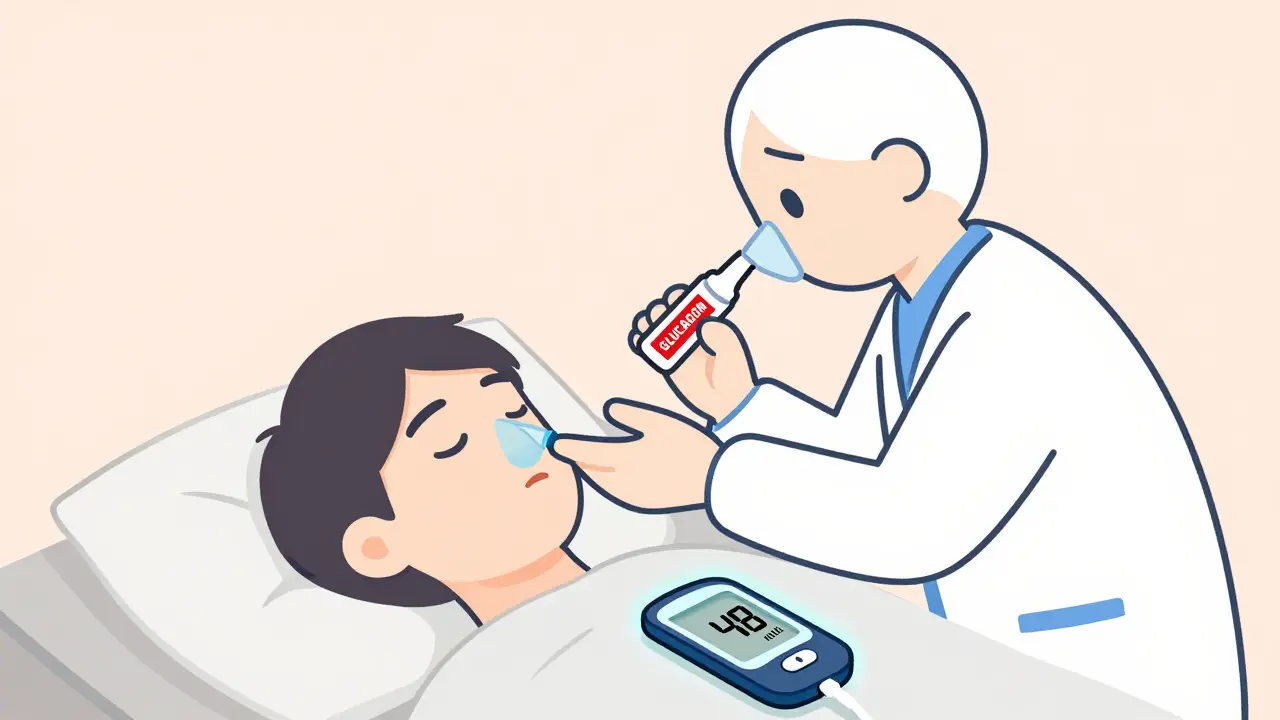
Severe hypoglycemia isn’t just feeling shaky or sweaty. It’s when blood sugar drops below 54 mg/dL (3.0 mmol/L) and the person can’t treat themselves. They might be confused, unconscious, or having a seizure. This isn’t rare. About 30% of people with type 1 diabetes experience at least one severe low each year. Insulin is the most common culprit - too much, or not enough food after a dose, and blood sugar plummets. But even newer medications like SGLT2 inhibitors can contribute if used improperly.Here’s the hard truth: if someone can’t swallow or is unconscious, you don’t feed them sugar. Pouring juice into their mouth risks choking or aspiration. Instead, you need glucagon - a hormone that tells the liver to dump stored glucose into the bloodstream. For years, this meant mixing powder and liquid, then injecting it. Most people never learned how. A 2021 study found only 42% of caregivers could successfully use the old kit. That’s why new options changed everything.
New Glucagon Tools: Faster, Simpler, Life-Saving
Since 2019, two major advances have made glucagon easier to use: nasal spray (Baqsimi) and autoinjector (Gvoke). Both are ready to use - no mixing, no syringes. Baqsimi is a puff of powder up the nose. Gvoke is a pen you press and hold for five seconds. Clinical trials show both work in under 15 minutes. That’s faster than the old method. And 93% of people respond to them. Even better: 83% of caregivers got it right the first time with nasal glucagon, compared to just 42% with the old kit.Cost is still a barrier. Baqsimi and Gvoke cost around $250-$270 per dose. The old glucagon kit is cheaper at $130. But insurance coverage is shifting. Now, 78% of private plans cover the new versions. Medicaid? Only 69% do. That gap leaves many families without access when they need it most. The American Diabetes Association now says: everyone on insulin should have glucagon prescribed and on hand. Not just in the medicine cabinet. In the car. At school. At work.
What About Severe Hyperglycemia?
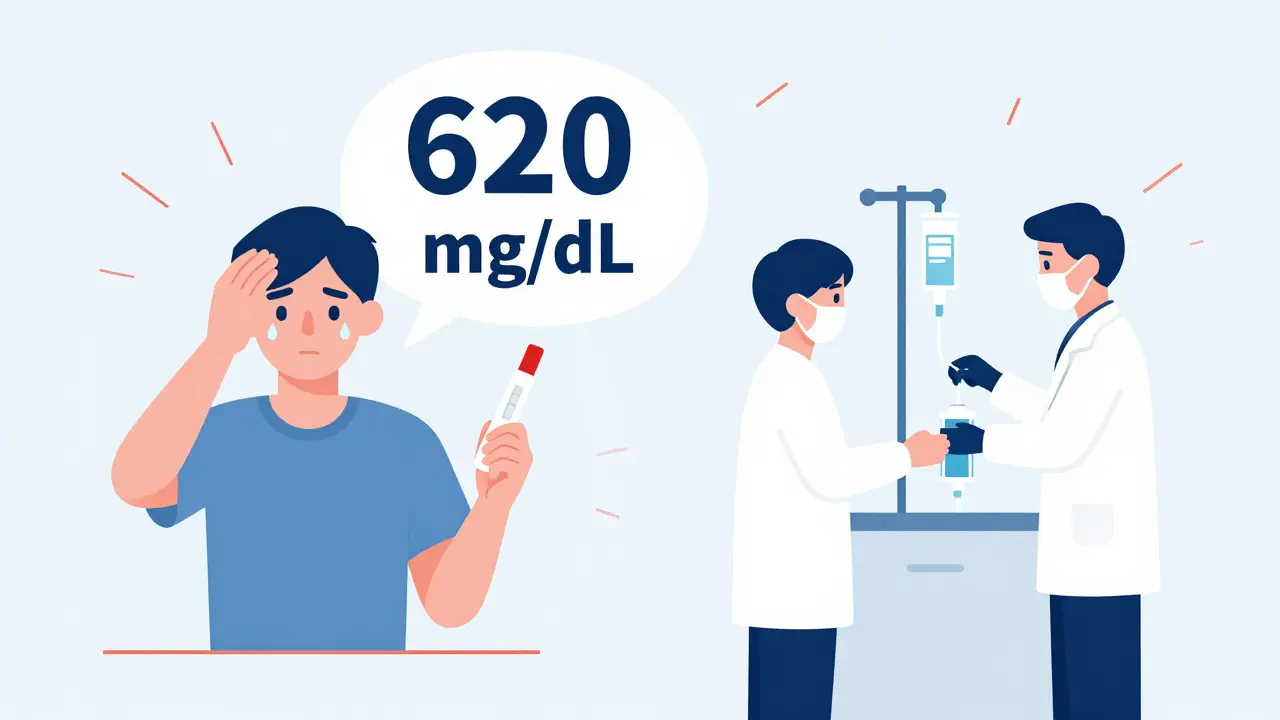
High blood sugar emergencies are different. They come in two forms: diabetic ketoacidosis (DKA) and hyperosmolar hyperglycemic state (HHS). DKA usually hits people with type 1 diabetes. Blood sugar over 250 mg/dL, ketones in the blood or urine, and acid in the blood (pH below 7.3). HHS is more common in type 2 diabetes. Blood sugar can soar above 600 mg/dL. No ketones, but the blood gets thick and sticky. Both can lead to coma or death if untreated.Here’s where people make fatal mistakes. Some think, “My sugar is high - I need more insulin.” But if they’re dehydrated and low on potassium, extra insulin can crash their electrolytes. That’s dangerous. Emergency treatment is not about insulin alone. It’s three things: fluids, electrolytes, and insulin - all given slowly through an IV in a hospital. The first hour is critical. Doctors give 1-2 liters of saline to rehydrate. Then they add potassium to prevent heart rhythm problems. Finally, insulin is dripped in, not injected. The goal? Lower sugar slowly, safely.
Early warning signs matter. If you notice fruity-smelling breath, nausea, vomiting, or extreme thirst, don’t wait. Test for ketones. If they’re above 1.5 mmol/L, go to the ER. A 2022 T1D Exchange survey found that 58% of DKA cases happened because people waited over 12 hours to get help. That’s too long. Every hour counts.
Why Mixing Up Treatments Is Deadly
This is critical: giving glucagon during hyperglycemia or insulin during hypoglycemia can kill someone. Glucagon raises blood sugar. If given to someone already in DKA, it can make ketones worse. Insulin lowers blood sugar. If given to someone with severe hypoglycemia, it can push them into a coma. Emergency responders and even some nurses have made this mistake. That’s why training isn’t optional - it’s mandatory.Dr. John Buse, a leading diabetes expert, warns: “If you can’t measure blood sugar, don’t give anything.” Guessing is dangerous. Always check. If the meter says 48 mg/dL? Give glucagon. If it says 620 mg/dL with ketones? Call 911. Don’t try to fix it yourself.
Preparedness Saves Lives
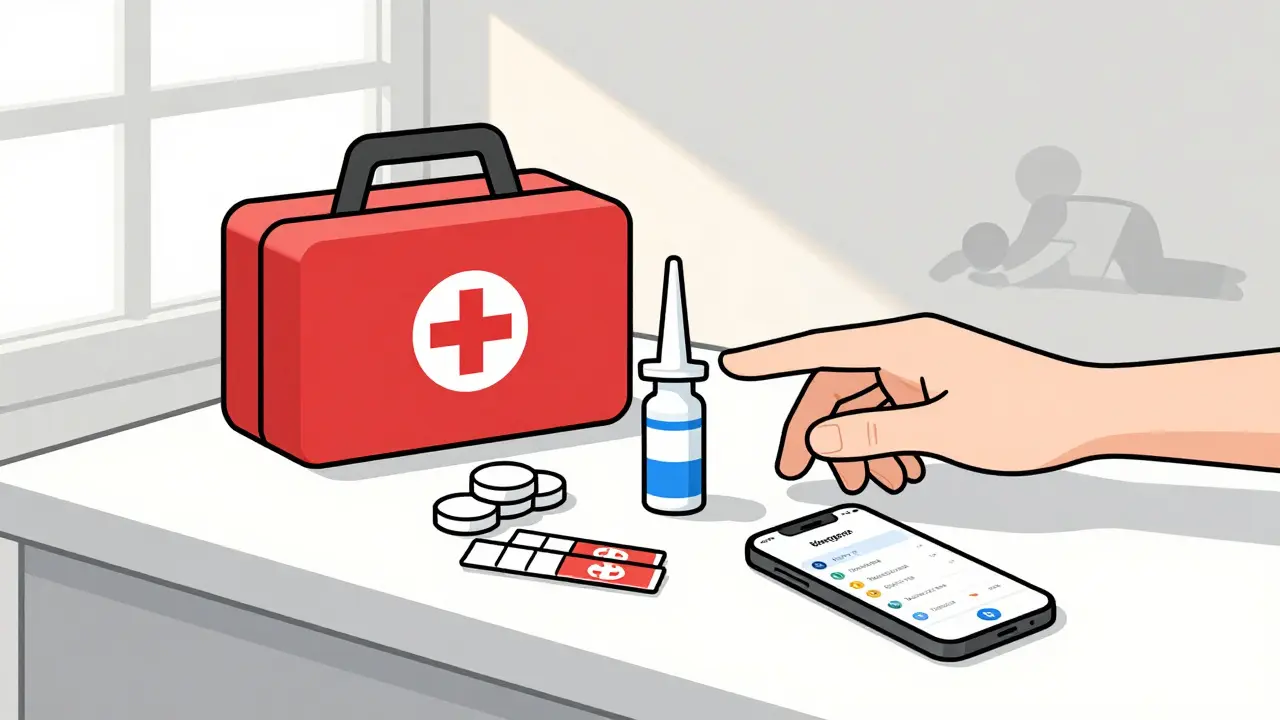
The most common reason people don’t use glucagon? Fear. They’re scared they’ll do it wrong. A 2022 survey by Beyond Type 1 found 78% of people avoided carrying glucagon because of this fear. But training changes everything. A 30-minute video can boost successful administration from 32% to 89%. Practice with a training device once a quarter keeps skills sharp. Studies show 92% of people remember how to use it after six months if they practice.Your emergency kit should include:
- Glucagon (nasal or autoinjector - check expiration date)
- Glucose tablets (4g each - 4 tablets = 15g)
- Fast-acting sugar (regular soda, juice)
- Ketone test strips
- Emergency contact list
And never, ever try to give food or drink to someone unconscious. That’s how people end up in the ICU from aspiration pneumonia. The rule is simple: if they can’t sit up and swallow, use glucagon. Call 911. Wait for help.
Who’s at Risk? And Why It’s Not Fair
Severe lows and highs don’t happen equally. People with type 1 diabetes face the highest risk. But 34% of type 2 patients on insulin are also at risk - and many don’t even know it. A 2023 Health Affairs study found Black and Hispanic patients experience 2.3 times more hospitalizations for severe hypoglycemia than White patients. Why? Lack of access to glucagon, fewer follow-ups, language barriers, and distrust in the system. This isn’t just a medical issue - it’s a justice issue.And here’s something new: the first dual-hormone artificial pancreas (Beta Bionics iLet) just got FDA approval. It automatically gives tiny doses of glucagon when it predicts a low. In trials, it cut severe lows by 72%. But only 12 U.S. centers offer it. Cost? Still out of reach for most. This tech is promising, but it’s not yet a solution for everyone.
What’s Next?
The future is coming fast. A new glucagon analog called dasiglucagon works in under two minutes - 98% effective. It’s in phase 3 trials and could be approved by late 2024. Meanwhile, apps like Gvoke HelperApp now guide users through administration with video prompts. Insurance companies are starting to cover these tools. But progress is uneven. Rural areas, low-income communities, and older adults still struggle to get basic emergency supplies.So what do you do today? If you or someone you care for uses insulin: get glucagon. Know how to use it. Practice with a trainer. Keep it with you. Teach family, teachers, coworkers. If you see someone with diabetes looking confused or unresponsive - don’t wait. Use glucagon. Call 911. And if blood sugar is sky-high with vomiting or fruity breath - don’t delay. Go to the ER. No waiting. No guessing.
Diabetes doesn’t take breaks. Neither should your emergency plan.
What should I do if someone with diabetes is unconscious and I don’t have glucagon?
Call 911 immediately. Do not try to give them food, drink, or insulin. Stay with them, turn them on their side to keep their airway open, and wait for emergency responders. Even without glucagon, trained paramedics can give IV glucose or glucagon on site. The priority is preventing choking and ensuring they get to a hospital as quickly as possible.
Can I use someone else’s glucagon if mine expired?
Yes - if it’s the same type (nasal or injectable) and the expiration date hasn’t passed. Glucagon is not personalized. If you’re in an emergency and someone nearby has a working dose, use it. The risk of not acting is far greater than the risk of using someone else’s. Always check the expiration date before use. If it’s expired, still use it - it’s better than nothing.
Is glucagon only for type 1 diabetes?
No. Anyone on insulin - whether type 1, type 2, or gestational diabetes - is at risk for severe hypoglycemia. In fact, 34% of type 2 diabetes patients on insulin have had a severe low. Glucagon is not a “type 1 only” tool. It’s for anyone who takes insulin and could become unconscious from low blood sugar. The American Diabetes Association recommends it for all insulin users.
How do I know if high blood sugar is an emergency?
If blood sugar is above 250 mg/dL and you have symptoms like nausea, vomiting, fruity breath, confusion, or deep rapid breathing, treat it as an emergency. Test for ketones. If they’re over 1.5 mmol/L, go to the ER. Don’t wait for symptoms to get worse. DKA can progress from mild to life-threatening in under 24 hours. Early action saves lives.
Can I give insulin to lower high blood sugar at home?
Only if it’s a mild rise and you’re sure the person is hydrated and has no ketones. If blood sugar is above 300 mg/dL with vomiting, confusion, or ketones present - do not give extra insulin. This can trigger dangerous drops in potassium and lead to cardiac arrest. Always check for ketones first. If unsure, go to the hospital. Emergency care requires IV fluids and electrolytes - things you can’t give at home.


Anil bhardwaj
February 24, 2026 AT 18:02