
Rifampin & Birth Control Interaction Checker
Imagine taking your birth control pill every single day without missing a dose, only to find out you’re pregnant. For most women, this is a nightmare scenario that rarely happens. But if you are prescribed Rifampin, which is a potent antibiotic used primarily for tuberculosis treatment that significantly reduces the effectiveness of hormonal contraceptives through accelerated metabolism, that nightmare becomes a statistically probable reality. This isn’t just theoretical anxiety; it is a well-documented pharmacological clash that has led to unintended pregnancies for decades.
Rifampin (often marketed as Rifadin) does not just slightly lower the efficacy of your birth control. It actively dismantles it. Unlike common antibiotics like amoxicillin or azithromycin, which have largely been cleared of blame in recent studies, rifampin is a unique beast. It supercharges your liver’s ability to break down hormones, leaving your body with nowhere near enough estrogen or progestin to stop ovulation. If you are starting a course of rifampin, understanding this interaction is not optional-it is essential for protecting your reproductive health.
The Mechanism: How Rifampin Sabotages Contraception
To understand why this interaction is so dangerous, we need to look at what happens inside your liver. Your liver uses enzymes, specifically from the cytochrome P450 family, to process drugs and hormones. Most antibiotics pass through this system without causing much trouble. Rifampin, however, is a potent enzyme inducer. Think of it as throwing gasoline on a fire. When you take rifampin, it tells your liver to produce massive amounts of these metabolizing enzymes.
These extra enzymes don’t distinguish between the antibiotic fighting your infection and the hormones preventing your pregnancy. They attack both. According to a 2024 systematic review published in the National Institutes of Health (NIH) archives, rifampin increases the frequency of ovulation in two out of four clinical studies analyzed. More alarmingly, it reduces exposure to estrogen and/or progestin in five out of five studies examined. Specifically, the area under the curve (AUC)-a measure of total hormone exposure-dropped by 30% to 83% for progestins and by 42% to 66% for ethinyl estradiol when taken with rifampin.
This metabolic acceleration means the contraceptive hormones are cleared from your blood long before they can do their job. The result? Your ovaries wake up. You ovulate. And if you have unprotected sex, you can get pregnant. The CDC classifies this as a Category 3 drug interaction, meaning the risks usually outweigh the benefits of continuing that specific contraceptive method while on the drug.
| Antibiotic Type | Effect on Hormone Levels | Ovulation Risk | Clinical Recommendation |
|---|---|---|---|
| Rifampin | Severe reduction (30-83% drop in progestin) | High (Documented breakthrough ovulation) | Use backup method or switch to non-hormonal IUD |
| Rifabutin | Moderate reduction | Moderate (Less pronounced than rifampin) | Consider backup method; monitor closely |
| Non-Rifamycin Antibiotics (e.g., Amoxicillin) | No significant change | Negligible (No observed difference in suppression) | Continue standard use; no backup needed unless vomiting/diarrhea occurs |
Rifampin vs. Other Antibiotics: A Critical Distinction
There is a widespread myth that all antibiotics interfere with birth control. This fear stems from older guidelines and anecdotal reports. However, modern evidence paints a clearer picture. A 2018 systematic review by the OBG Project found no observed differences in ovulation suppression or breakthrough bleeding when hormonal contraceptives were combined with non-rifamycin antibiotics. Drugs like penicillin, tetracycline, and macrolides (such as azithromycin) do not induce liver enzymes to the same extent as rifampin.
Rifampin stands alone as the primary offender among antibiotics. The Journal of the Society of Obstetricians and Gynaecologists of Canada explicitly states that rifampin is the only antibiotic reported to reduce plasma estrogen concentrations significantly enough to compromise contraception. Even rifabutin, a related drug often used for patients who cannot tolerate rifampin, shows less pronounced effects. In some studies, no ovulation was detected when combined oral contraceptives were paired with rifabutin, though caution is still advised due to smaller pharmacokinetic changes.
This distinction matters because it prevents unnecessary panic for patients taking standard antibiotics for UTIs or strep throat, while highlighting the urgent need for action for those treating tuberculosis or other mycobacterial infections. If your doctor prescribes a standard antibiotic, you likely don’t need condoms. If they prescribe rifampin, you absolutely do.

Real-World Evidence: Case Studies and Patient Reports
Numbers in journals are one thing; real-life consequences are another. The history of this interaction dates back to the 1970s, shortly after rifampin was approved by the FDA. Early case reports highlighted women using oral contraceptives who became pregnant during tuberculosis treatment. The World Health Organization issued warnings about this specific interaction in 1988, and those warnings remain valid today.
Recent patient experiences continue to validate these clinical findings. On the Birth Control Support Network forum, a user identified as 'TBsurvivor' shared a harrowing account from January 2024: "I was on Ortho Tri-Cyclen while taking rifampin for TB treatment and got pregnant despite perfect pill adherence - my OB/GYN confirmed it was almost certainly the rifampin interaction." This story echoes data from the UK’s Committee on Safety of Medicines, which documented 150 case reports of contraceptive failure associated with antibiotic use between 1970 and 1999, with rifampin being a key suspect in many instances.
Even healthcare professionals acknowledge the severity. A professor specializing in infectious diseases noted in a 2023 discussion that he had seen multiple pregnancies specifically linked to the rifampin-contraceptive interaction over his career, but never from other antibiotics. These anecdotes reinforce the statistical data: when rifampin is involved, "perfect use" of the pill is not enough.
Management Strategies: Protecting Yourself During Therapy
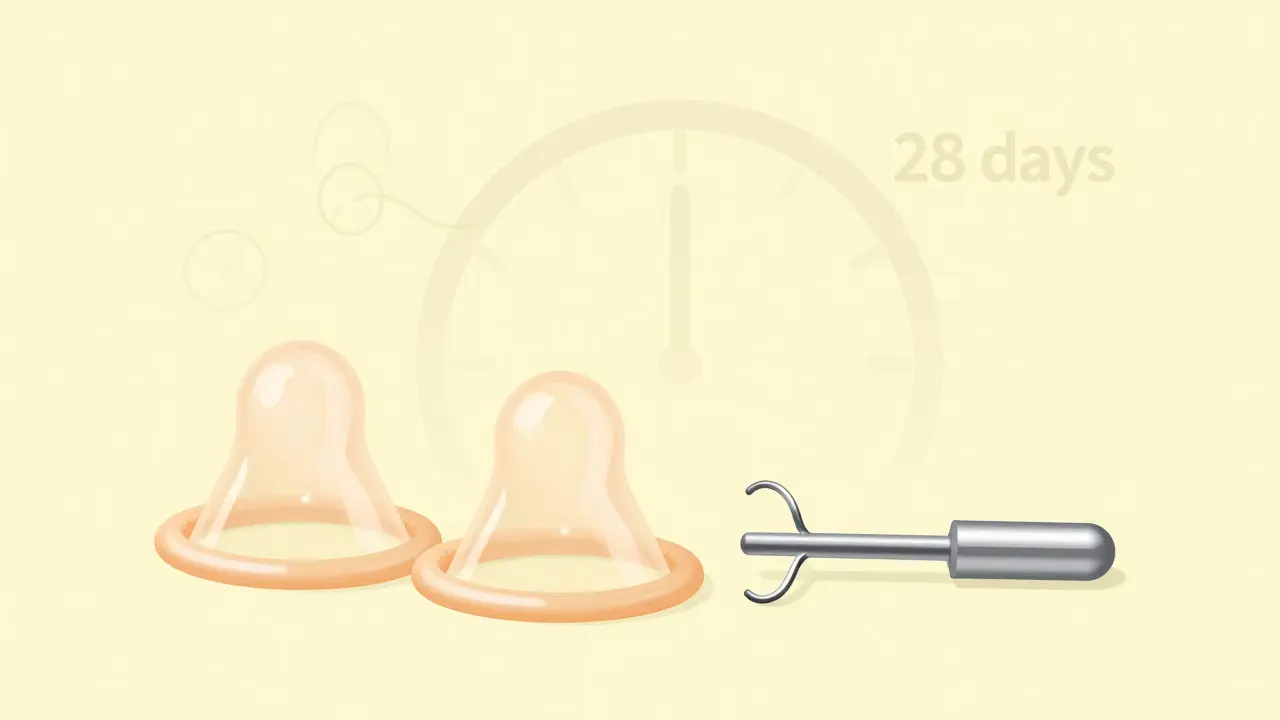
So, what should you do if you need rifampin? First, don’t stop your medication. Tuberculosis is a serious, potentially fatal disease that requires consistent treatment. Instead, adjust your contraceptive strategy. The Centers for Disease Control and Prevention (CDC) recommends using a backup contraceptive method, such as condoms, for the entire duration of rifampin therapy and for 28 days after discontinuation.
Why 28 days after? Because rifampin’s effect on liver enzymes is persistent. Even after you stop taking the drug, your liver remains in "overdrive" for several weeks, continuing to metabolize hormones rapidly. Waiting a full cycle ensures that your enzyme levels return to baseline and your contraceptive protection is fully restored.
If you want more robust protection, consider switching to a non-hormonal method. The copper IUD (Paragard) is unaffected by enzyme induction because it works locally in the uterus, not systemically through blood hormone levels. Similarly, progestin-only implants (like Nexplanon) are generally considered reliable, though some experts suggest caution due to potential reductions in progestin levels. The American College of Obstetricians and Gynecologists (ACOG) and other bodies increasingly favor long-acting reversible contraceptives (LARCs) like IUDs for patients requiring enzyme-inducing medications.
- During Rifampin Use: Add condoms to your routine immediately. Do not wait for a missed period to check for pregnancy.
- Post-Therapy: Continue using backup contraception for 28 days after your last dose of rifampin.
- Alternative Methods: Discuss switching to a copper IUD with your provider before starting treatment if possible.
- Pill Timing: While taking the pill at the same time daily helps maximize efficacy, it cannot overcome the sheer metabolic power of rifampin. Relying solely on timing is risky.
Future Directions and Research Gaps
Despite decades of knowledge about this interaction, gaps remain. A 2024 NIH review highlighted limited data on newer contraceptive formulations and varying rifamycin derivatives. Researchers are exploring whether pharmacogenetic testing could identify individuals with higher CYP3A4 enzyme expression, who might be at even greater risk for contraceptive failure. Preliminary data presented at the 2023 Infectious Diseases Society of America meeting suggests this personalized approach could refine risk assessments in the future.
However, as of late 2024, no pharmaceutical companies have developed rifampin formulations with reduced enzyme induction or contraceptive pills resistant to this metabolic breakdown. Until then, the advice remains simple and conservative: assume your hormonal birth control is compromised while on rifampin, and act accordingly. The cost of a few boxes of condoms is far lower than the life-altering impact of an unintended pregnancy.
How long does it take for birth control to work again after stopping rifampin?
You should use backup contraception for 28 days after your last dose of rifampin. The drug’s effect on liver enzymes persists for several weeks after discontinuation, meaning your body will continue to metabolize contraceptive hormones rapidly during this window.
Does amoxicillin interact with birth control like rifampin does?
No, amoxicillin and most other non-rifamycin antibiotics do not significantly reduce the effectiveness of hormonal contraceptives. Recent systematic reviews have found no evidence of increased ovulation risk with these common antibiotics, unlike rifampin which is a potent enzyme inducer.
Can I rely on the patch or ring while taking rifampin?
Probably not. The patch and vaginal ring deliver hormones systemically, similar to the pill. Since rifampin accelerates the metabolism of these hormones in the liver, the patch and ring are also subject to reduced efficacy. Backup contraception is recommended for all hormonal methods.
Is the copper IUD safe to use with rifampin?
Yes, the copper IUD is an excellent choice. It contains no hormones and works by creating a local inflammatory response in the uterus that is toxic to sperm and eggs. Therefore, its mechanism of action is completely independent of liver enzyme activity and is unaffected by rifampin.
What is the actual percentage risk of pregnancy with rifampin and the pill?
While exact percentages vary by study, typical failure rates for the pill are around 0.3% with perfect use. With rifampin co-administration, pharmacokinetic studies show hormone levels drop below effective thresholds in many cases, leading to documented breakthrough ovulation. The CDC classifies this as a high-risk interaction, suggesting the failure rate rises significantly above typical norms.