Your kidneys are hardworking filters. Every day, they process about 150 quarts of blood to produce 1 to 2 quarts of urine, getting rid of waste and extra fluid. But when you have chronic kidney disease (CKD), these filters get clogged or damaged. They can’t remove waste as efficiently. This is where food becomes medicine-or poison.
A renal diet is a medically prescribed eating plan designed to reduce the workload on compromised kidneys by limiting specific nutrients like sodium, potassium, and phosphorus. It isn't just about "eating healthy." In fact, many foods considered superfoods for heart health, like bananas or spinach, can be dangerous for failing kidneys. Getting this wrong doesn't just mean feeling bloated; it can lead to cardiac arrest or severe bone disease. Let’s break down exactly what you need to eat, what to avoid, and why the numbers matter.
The Big Three: Sodium, Potassium, and Phosphorus
When doctors talk about a renal diet, they aren't guessing. They are looking at three specific electrolytes that your kidneys struggle to balance. The Kidney Disease Outcomes Quality Initiative (KDOQI) guidelines highlight these as the critical control points for stages 3-5 CKD. Here is how each one affects you and what the targets look like.
Sodium: The Silent Fluid Retainer
You probably know salt is bad for high blood pressure. For kidney patients, it’s worse. Sodium pulls water into your bloodstream. If your kidneys can’t pee out that extra water, it builds up in your legs, lungs, and around your heart. This is called fluid overload, and it strains your heart significantly.
The KDIGO 2023 guidelines recommend keeping sodium under 2,000 to 2,300 milligrams per day. That’s roughly one teaspoon of table salt total-not per meal, but for the entire day. Here is the trap: only 25% of the sodium we eat comes from the salt shaker. The other 75% hides in processed foods. A single can of soup can pack 800 to 1,200 mg of sodium. That’s half your daily limit in one bowl.
- Limit: Canned soups, deli meats, frozen dinners, pickles, and soy sauce.
- Choose Instead: Fresh vegetables, fresh meat (not cured), and herbs like garlic powder, onion powder, lemon juice, or Mrs. Dash blends.
Cutting sodium by just 1,000 mg a day can lower systolic blood pressure by 5-6 mmHg in CKD patients, according to CDC data. That’s a huge win for your heart without adding another pill.
Potassium: The Heart Rhythm Regulator
Potassium helps your nerves and muscles work, including your heart. Healthy kidneys dump excess potassium easily. Damaged kidneys hold onto it. When potassium levels rise above 5.5 mEq/L, it becomes clinically dangerous. Dr. Anuja Shah from Johns Hopkins Medicine notes that this level can trigger cardiac arrhythmias-irregular heartbeats that can stop the heart entirely.
The National Kidney Foundation suggests aiming for 2,000 to 3,000 mg of potassium daily, but this depends heavily on your latest blood test. If your serum potassium is over 5.0 mEq/L, you likely need strict restriction.
| Food Item | Serving Size | Potassium (mg) | Status |
|---|---|---|---|
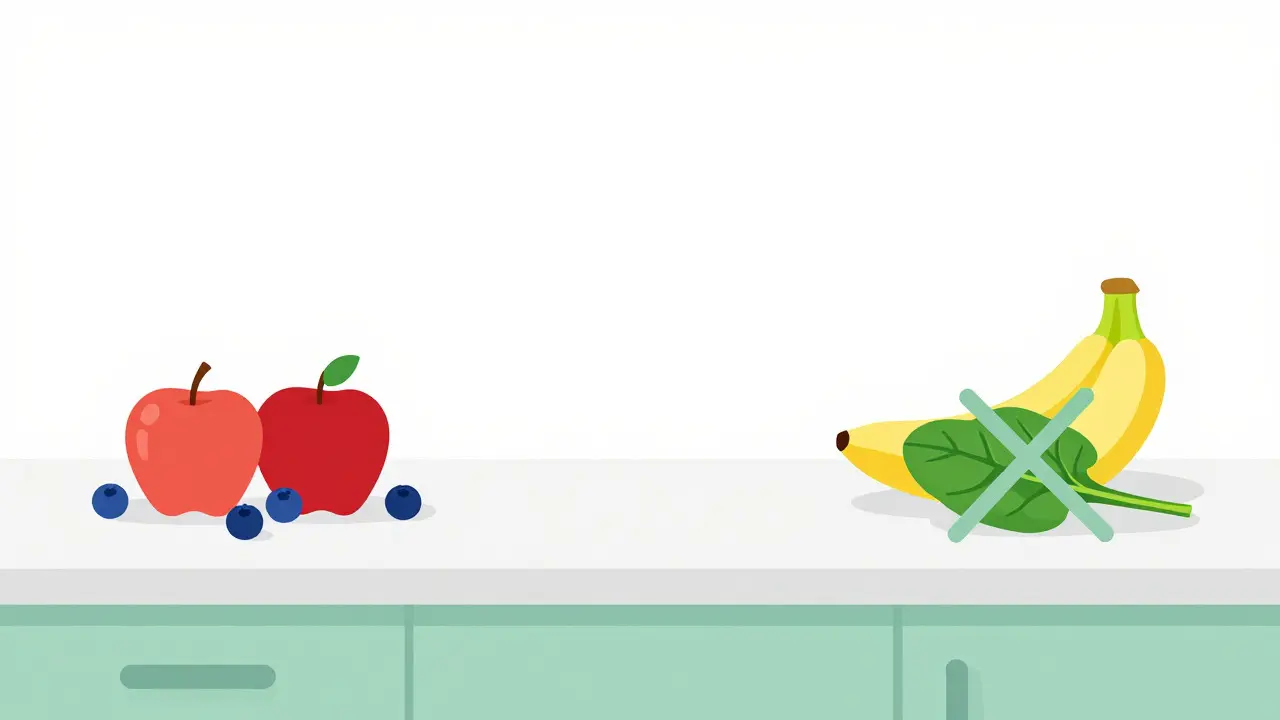
| Apples | 1 medium | 150 | Safe |
| Blueberries | 1/2 cup | 65 | Safe |
| Bananas | 1 medium | 422 | Restricted |
| Oranges | 1 medium | 237 | Restricted |
| Spinach (cooked) | 1/2 cup | 400+ | Restricted |
Notice the swap? Apples instead of bananas. Berries instead of oranges. It feels like a small change, but it keeps your heart rhythm steady.
Phosphorus: The Bone Thief
Phosphorus works with calcium to keep bones strong. But when kidneys fail, phosphorus builds up in the blood. Your body panics and leaches calcium from your bones to balance it out. This leads to brittle bones and calcification of blood vessels, making them stiff and prone to blockage.
Here is the tricky part: not all phosphorus is equal. Natural phosphorus (organic) found in meat and dairy is absorbed at a rate of 50-70%. Inorganic phosphorus, found in additives and preservatives, is absorbed at 90-100%. Research in the Clinical Journal of the American Society of Nephrology shows that these additives increase absorption by 30-50% compared to natural sources.
KDOQI recommends 800 to 1,000 mg of phosphorus daily for non-dialysis patients. You must read labels for words ending in "phos," like phosphate, phosphoric acid, or calcium phosphate. These are often in colas, processed cheeses, and baked goods.
- Avoid: Dark colas (450 mg per 12 oz), processed cheese slices (250 mg per slice).
- Limited: Milk (125 mg per 1/2 cup), nuts, seeds, and whole grains.
Protein: The Delicate Balance
Protein breaks down into waste products that kidneys filter. Too much protein accelerates kidney damage. However, too little causes malnutrition and muscle wasting. This is a tightrope walk.
Older advice pushed very low protein (<0.6g/kg/day). Newer research by Dr. Srinivasan Beddhu showed this increased malnutrition risk by 34% in elderly patients. Current KDOQI guidelines suggest 0.55 to 0.8 grams of protein per kilogram of body weight per day, focusing on high-quality sources.
What counts as high quality? Fish like salmon, cod, halibut, and tuna are excellent choices. They are naturally low in sodium but contain moderate potassium and phosphorus. Registered Dietitian Amy Meyer from Cleveland Clinic advises sticking to 2-3 ounce portions, two to three times a week. Egg whites are also a top-tier choice because they provide pure protein with minimal phosphorus compared to egg yolks.
Practical Tips for Living the Renal Diet
Changing your diet is hard. It takes time. The UCSF Medical Center reports that patients typically need 3-6 months to fully adapt to these restrictions. Don’t expect perfection on day one. Use these strategies to make it easier.
Leaching Vegetables
Want to eat potatoes or carrots but worried about potassium? You can remove some of it through a process called leaching. Soak cut vegetables in warm water for 2-4 hours. Then boil them in a large pot of water and drain well. According to DaVita’s 2023 nutrition guide, this method can reduce potassium content by up to 50%. It’s a simple kitchen hack that opens up more food options.
Fluid Management
If your urine output drops below 1 liter a day, you may need to restrict fluids to 32 ounces (1 liter) daily. This includes water, coffee, soup, and ice cream. To manage thirst:
- Suck on ice chips (they melt slower than drinking water).
- Rinse your mouth with lemon water and spit it out.
- Use a straw to drink quickly rather than sipping slowly.
Label Reading Skills
You become a detective in the grocery store. Look for "Low Sodium" (less than 140 mg per serving) or "No Salt Added." Avoid anything with "Salt," "Sodium," or "Monosodium Glutamate (MSG)" in the ingredients list. For phosphorus, scan for additive codes. If you see "E338" or similar phosphate codes, put it back.
Common Questions About Renal Nutrition
Can I ever eat bananas again if I have kidney disease?
It depends on your blood potassium levels. If your serum potassium is consistently above 5.0 mEq/L, you should avoid bananas (422 mg potassium each). If your levels are normal, you might be able to have a small portion occasionally. Always check with your nephrologist or renal dietitian before reintroducing high-potassium fruits.
Why is white bread better than whole wheat for kidney patients?
Whole grains are generally healthier for most people, but they are higher in phosphorus and potassium. One slice of whole-grain bread has about 150 mg of phosphorus, while white bread has only 60 mg. For someone managing hyperphosphatemia, swapping to white bread helps keep phosphorus levels in check without sacrificing calories.
Do I need to take phosphate binders if I follow a renal diet?
Diet alone often isn't enough to control phosphorus, especially since additives are so pervasive. Many patients on dialysis or late-stage CKD need phosphate binder medications. These drugs bind to phosphorus in food so your body excretes it instead of absorbing it. Take them with meals for maximum effectiveness.
How does diabetes affect my renal diet?
Diabetes is the leading cause of CKD. This creates a conflict: diabetic diets encourage beans, lentils, and leafy greens, which are high in potassium and phosphorus. You need a specialized plan that controls blood sugar (carbohydrate counting) while restricting electrolytes. Work closely with a renal dietitian to find low-potassium carbs like rice, pasta, and applesauce.
Is the renal diet permanent?
For most people with Stage 3-5 CKD, yes, the dietary adjustments are long-term. As kidney function declines, restrictions usually tighten. However, recent trends emphasize individualized approaches. Some patients may relax certain restrictions if their lab results remain stable, but this must be monitored by a healthcare provider.
Next Steps for Your Kidney Health
Managing a renal diet is not about deprivation; it’s about precision. By controlling sodium, potassium, and phosphorus, you protect your heart, your bones, and your remaining kidney function. Start by reviewing your last blood panel. Know your numbers for potassium and phosphorus. Then, visit a registered renal dietitian. They can create a personalized meal plan that fits your taste buds and your medical needs. Remember, every meal is an opportunity to support your health.