
Pre-Surgical Supplement Safety Checker
Step 1: Select Supplements
Safety Analysis
Select supplements from the list to view safety protocols.
You think you’re being honest. You tell your surgeon about the blood pressure pills and the insulin. But when they ask if you take any "supplements," you pause. Is that fish oil capsule really a medication? Does that daily multivitamin count? Most patients don’t consider over-the-counter products as drugs, but in an operating room, that distinction can be deadly.
As surgeons, we face a silent crisis in pre-operative care. Approximately 20 percent of Americans use prescription medications alongside herbal supplements, creating a minefield of potential interactions. The real problem isn’t just what patients take; it’s what they forget to tell us. Research indicates that only 39% of patients spontaneously report their supplement use during preoperative interviews. That means nearly two-thirds of our patients are walking into surgery with hidden variables that could trigger bleeding, anesthesia failure, or dangerous blood pressure swings.
The Hidden Risks of Herbal Supplements
We need to stop treating supplements as harmless vitamins. Many botanical products have potent pharmacological effects that directly interfere with surgical outcomes. The Dietary Supplement Health and Education Act of 1994 (DSHEA) created a regulatory gap where these products bypass standard FDA drug approval processes. This lack of oversight means formulations can vary wildly-active ingredient concentrations can differ by up to 300% between brands.
Consider the anticoagulant effect of common herbs. Ginkgo biloba, often taken for memory support, inhibits platelet aggregation. When combined with general anesthesia or intraoperative heparin, it can increase intraoperative blood loss by 30-50%. Similarly, Vitamin E (d-alpha-tocopherol), found in almost every multivitamin, thins the blood. Even garlic supplements, consumed for heart health, possess antiplatelet properties that prolong clotting time.
Then there is the issue of enzyme induction. St. John’s Wort is a classic example. It induces cytochrome P450 enzymes in the liver, which metabolize many anesthetic agents. Dr. George Broughton II highlighted this risk, noting that St. John’s Wort can reduce anesthetic effectiveness by 30-40%. If you rely on standard dosing for a patient taking this herb, they may wake up during surgery or experience inadequate pain control post-operatively.
| Supplement | Primary Risk | Recommended Discontinuation |
|---|---|---|
| Vitamin E | Bleeding risk (anticoagulant) | 14 days prior |
| Fish Oil (Omega-3) | Bleeding risk (antiplatelet) | 14 days prior |
| Ginkgo Biloba | Bleeding risk & anesthesia interaction | 14 days prior |
| Ginseng | Blood pressure fluctuations | 14 days prior |
| St. John’s Wort | Anesthesia metabolism acceleration | 14 days prior |
| Garlic Supplements | Bleeding risk | 7-14 days prior |
Standardizing the Pre-Operative Protocol
Generic questions like "Do you take any vitamins?" fail because patients don’t see vitamins as medicines. We must shift from passive inquiry to active screening. The American College of Surgeons recommends structured screening tools that list specific high-risk supplements rather than relying on patient memory.
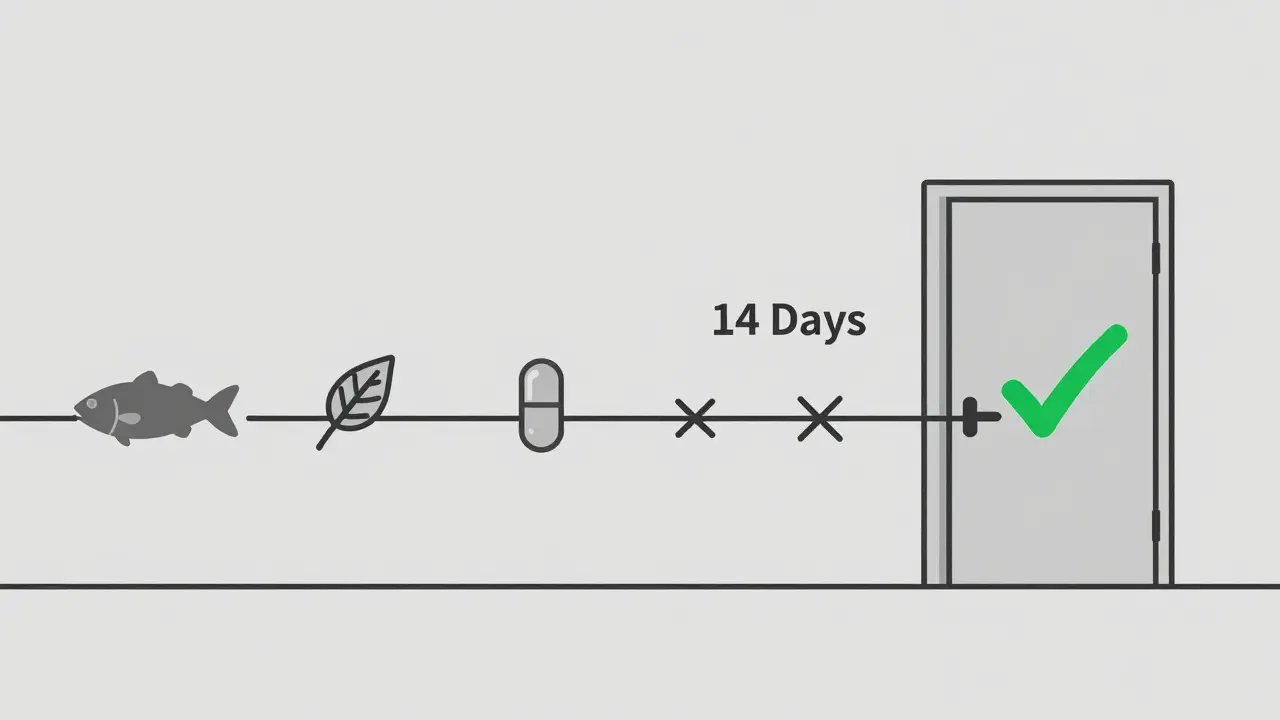
Current best practices, updated by the Hospital for Special Surgery (HSS) in 2023, mandate a strict timeline. Patients should stop all nutritional and herbal supplements fourteen days prior to surgery. This window allows for the turnover of platelets and the clearance of most herbal compounds from the system. However, blanket bans aren’t always necessary or beneficial. For instance, calcium and vitamin D are often exempted in orthopedic procedures due to their role in bone healing.
Let’s look at the specifics. Multivitamins require individual assessment. If a formulation contains more than 400 IU of Vitamin E or high-dose Vitamin K (100mcg or more), it must be discontinued. Fish oil capsules containing 180mg EPA and 120mg DHA per standard dose are significant enough to impact coagulation profiles and must be stopped two weeks out.
Compliance is the biggest hurdle. Studies show patient compliance with discontinuation protocols hovers around 58-67%. Why? Because instructions are vague. Providing written, specific discontinuation lists increases compliance significantly. The Phoenix Lipo clinic documented a jump from 47% to 83% compliance simply by giving patients clear, written instructions naming each supplement to stop.
Nutritional Support vs. Supplementation
It is crucial to distinguish between risky herbal supplements and therapeutic nutritional support. While we halt antioxidants and herbs, we actively encourage certain nutritional interventions to improve outcomes.
Carbohydrate loading is now a standard part of enhanced recovery after surgery (ERAS) protocols. Drinking a carbohydrate-rich solution, such as Ensure Pre-Surgery® (10 oz containing 50g carbohydrates), exactly three hours before surgery transitions the body from a fasted to a fed state. This simple step reduces insulin resistance by 25%, leading to better wound healing and less nausea post-operatively.
Protein supplementation also plays a vital role, particularly in bariatric and major abdominal surgeries. Guidelines suggest a minimum protein intake of 60-80g daily for two weeks preoperatively. Products like Fortisip Compact, used in validated trials, have shown measurable reductions in post-surgical complications when administered at 250 mL daily for at least five days before the procedure. This is not "supplementation" in the risky sense; it is medical nutrition therapy designed to build physiological resilience.
Specialty-Specific Variations
One size does not fit all. Plastic surgery protocols tend to be the strictest. Due to the delicate nature of tissue handling and the aesthetic importance of minimizing bruising and hematoma, plastic surgeons often demand a 14-day cessation of all herbal products. General surgery may allow basic multivitamins until seven days out, provided they lack high-dose Vitamin E or K.
Orthopedic surgery presents a unique case. Here, bone density matters. HSS guidelines permit continued calcium (1200mg daily) and vitamin D (2000 IU daily) supplementation through the day of surgery. In fact, uninterrupted vitamin D has been linked to 21% faster bone healing in recent studies. Conversely, bariatric surgery protocols are complex due to the high prevalence of comorbidities and the use of GLP-1 agonists.
The rise of GLP-1 agonists like semaglutide (Ozempic) has introduced new challenges. These medications slow gastric emptying, increasing the risk of aspiration during anesthesia. Specialized protocols now mandate discontinuing these drugs 2-4 weeks preoperatively. This is a critical update that many general practitioners may not yet know, making surgeon-led education essential.

Implementing Effective Screening Tools
To bridge the gap between patient knowledge and surgical safety, we need better tools. Relying on verbal history-taking is insufficient. The University of Michigan Health System found a 22% error rate in patient self-reporting. Patients often bring containers to appointments, but even then, identification errors occur due to confusing labeling.
We should adopt the five-question framework recommended by HSS:
- Which specific supplements should I stop before surgery?
- How many days or weeks before should I discontinue them?
- Could any of my current vitamins or herbals cause bleeding or interfere with anesthesia?
- Can I take my usual prescribed medications on the day of surgery?
- When can I safely resume my supplements after surgery?
Technology is catching up. Electronic Health Record (EHR) modules like Epic’s 'Supplement Safety Checker' are being adopted by 62% of academic medical centers. Standalone apps like the ASA’s 'Perioperative Supplement Risk Stratification' tool provide real-time interaction checks. These digital aids help flag conflicts instantly, reducing cognitive load on the surgical team.
Documentation must be precise. Writing "supplements discontinued" is not enough. We need to list each supplement, its dosage, frequency, and the exact date of discontinuation. This level of detail reduces intraoperative complications by 18% compared to general notes, according to JMIR Research Protocols data.
The Future of Perioperative Safety
The landscape is evolving toward personalization. Pharmacogenomic testing is emerging as a way to predict individual responses to both drugs and supplements. Mayo Clinic initiated pilot studies in early 2024 examining CYP450 genotyping to tailor discontinuation protocols. Instead of a blanket 14-day rule, future guidelines might specify timelines based on a patient’s metabolic profile.
Regulatory pressure is also mounting. CMS introduced quality metrics in 2025 requiring documented supplement screening for all surgical patients. Non-compliance now risks Medicare reimbursement reductions. This financial incentive aligns perfectly with patient safety goals, forcing systems to prioritize disclosure.
As surgeons, we hold the key to unlocking these hidden risks. By moving beyond generic questions and implementing structured, specialty-specific protocols, we can significantly reduce adverse events. It starts with asking the right questions and ends with verifying the answers. Your patient’s safety depends on knowing what’s in their pillbox, not just their prescription bottle.
Why do patients hide supplement use from surgeons?
Patients often do not consider over-the-counter supplements as "medications." They view them as natural or benign food products. Additionally, there is fear of judgment or concern that their surgery will be canceled if they admit to using unapproved substances. This psychological barrier leads to underreporting, with studies showing only 39% spontaneous disclosure rates.
How long before surgery should I stop taking Vitamin E?
Vitamin E should be discontinued at least 14 days prior to surgery. It acts as an anticoagulant and can increase the risk of excessive bleeding during and after the procedure. Since platelets have a lifespan of about 7-10 days, a two-week window ensures that new, unaffected platelets are circulating.
Is it safe to take fish oil before surgery?
No, fish oil should generally be stopped 14 days before surgery. Standard capsules contain Omega-3 fatty acids (EPA and DHA) that inhibit platelet aggregation. This antiplatelet effect can lead to prolonged bleeding times and increased bruising, which is particularly problematic in cosmetic and plastic surgeries.
Can I continue taking my multivitamin before surgery?
It depends on the formulation. Multivitamins containing high doses of Vitamin E (>400 IU) or Vitamin K (≥100mcg) must be stopped 14 days prior due to bleeding risks. Basic multivitamins without these high-dose components may be allowed until 7 days before surgery, but this requires individual assessment by your surgical team.
What are the risks of St. John’s Wort before surgery?
St. John’s Wort induces liver enzymes (cytochrome P450) that break down anesthetic drugs. This can cause anesthesia to wear off too quickly, potentially leading to awareness during surgery or inadequate pain control afterward. It should be discontinued at least 14 days before any procedure involving general anesthesia.
Do I need to stop GLP-1 medications like Ozempic before surgery?
Yes, current guidelines recommend stopping GLP-1 agonists like semaglutide (Ozempic) 2-4 weeks before surgery. These drugs slow gastric emptying, which increases the risk of aspiration (vomiting stomach contents into the lungs) while under anesthesia. Always consult your surgeon for the specific timeline tailored to your dosage.
Are there any supplements I should take before surgery?
Yes, specific nutritional supports are encouraged. Carbohydrate drinks (like Ensure Pre-Surgery) three hours before surgery reduce insulin resistance. Protein supplements may be recommended for 2 weeks prior to boost healing. Orthopedic patients are often advised to continue Calcium and Vitamin D to support bone strength, unless otherwise directed.