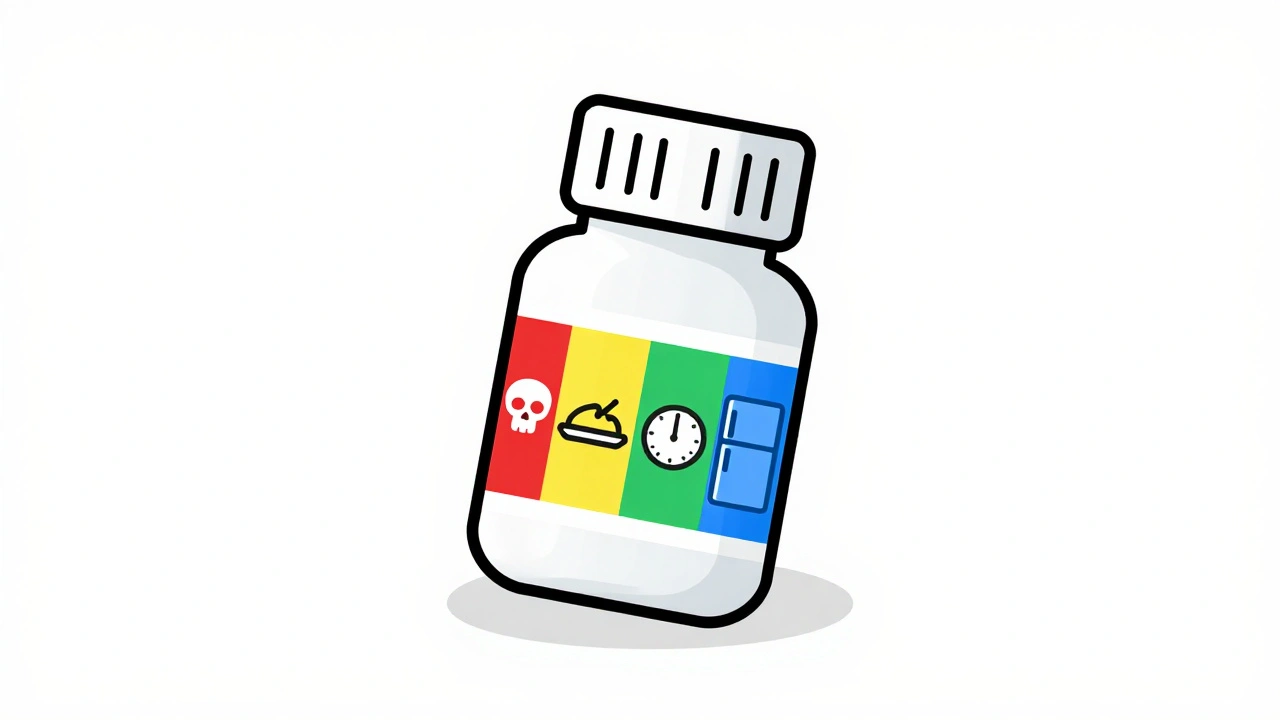
Ever opened your medicine bottle and seen a bright red sticker that says May Be Habit-Forming? Or a yellow one that reads Take with Food? These aren’t just decorations. They’re life-saving tools. Pharmacy auxiliary labels - the small, color-coded stickers on prescription bottles - are one of the most overlooked but critical parts of safe medication use. In fact, nearly half of all patients forget what their doctor told them about their pills within just two days. These stickers are there to make sure you don’t.
Why These Stickers Exist
Pharmacy auxiliary labels aren’t required by federal law, but they’re used in over 90% of U.S. pharmacies because they work. They add vital information that doesn’t fit on the main prescription label. Things like: Don’t drink alcohol with this, Keep in the fridge, Take until finished. Without them, patients are left guessing. And guessing with meds can be deadly.Studies show that prescriptions with these labels have an 18.7% higher chance of being taken correctly. That’s not small. It means fewer hospital visits, fewer side effects, and real money saved - about $1,200 per patient per year. In 2021, proper use of these labels helped prevent over 127,000 emergency room trips in the U.S. alone.
What the Colors Mean
The colors aren’t random. They’re a silent language pharmacists use to help you understand risk and action quickly.- Red - Critical warnings. Think: May Be Habit-Forming, Do Not Take with Alcohol, May Cause Drowsiness. About 37% of all auxiliary labels are red. You should stop and read these first.
- Yellow - Caution. These tell you to be careful. Take with Food, Avoid Sun Exposure, May Cause Dizziness. Used in 28% of cases. Not an emergency, but important.
- Green - General instructions. Take Once Daily, Shake Well, Take on an Empty Stomach. About 22% of labels. These help you take the medicine right.
- Blue - Storage needs. Keep Refrigerated, Store at Room Temperature. Used in 13% of cases. Especially important for insulin, antibiotics, and other biologics.
Research from the American Society of Health-System Pharmacists confirms that 87% of patients immediately recognize red as a warning. That’s by design. Colors trigger instinctive reactions - and that’s exactly what pharmacists need when someone’s in a hurry or stressed.
Where They’re Placed Matters
It’s not just what the label says - it’s where it’s stuck. Most bottles have labels placed vertically on the side. But that’s the worst spot.A 2019 study from the University of California found that when labels are placed horizontally across the cap or front of the bottle, patient understanding jumps by 31%. Why? Because people look at the top of the bottle when they open it. Vertical labels get ignored.
Even better? Interactive placement. Some pharmacies now use labels that only become visible when you twist off the cap. That’s called “interactive placement.” It forces you to engage with the label. One study showed this method increases noticeability by 63% compared to regular placement.
What’s on the Labels - And What’s Missing
Here are the most common types of auxiliary labels you’ll see:- Safety Warnings - Found on 27% of antibiotic prescriptions. Examples: Do Not Take with Alcohol, May Cause Severe Sunburn.
- Usage Instructions - The most common. Appearing on 41% of NSAID prescriptions. Take with Food is the #1 instruction. But here’s the problem: 22% of patients think it means “take after dinner,” which can reduce how well the drug works.
- Storage Requirements - Required for 18% of biologic meds. Insulin, certain antibiotics, and eye drops need refrigeration. If you don’t know, the pill won’t work - or could spoil.
- Adherence Reminders - Used on 68% of antibiotic prescriptions. Take Until Finished helps prevent antibiotic resistance. This one saves lives.
But here’s the scary part: a 2016 study found that 15-25% of prescriptions had no auxiliary labels - even when they clearly needed one. And 8-12% had conflicting or confusing messages. One pharmacy put Take with Food next to Take on an Empty Stomach. That’s not helpful. That’s dangerous.
Pictures Help - Especially If You’re Not a Native English Speaker
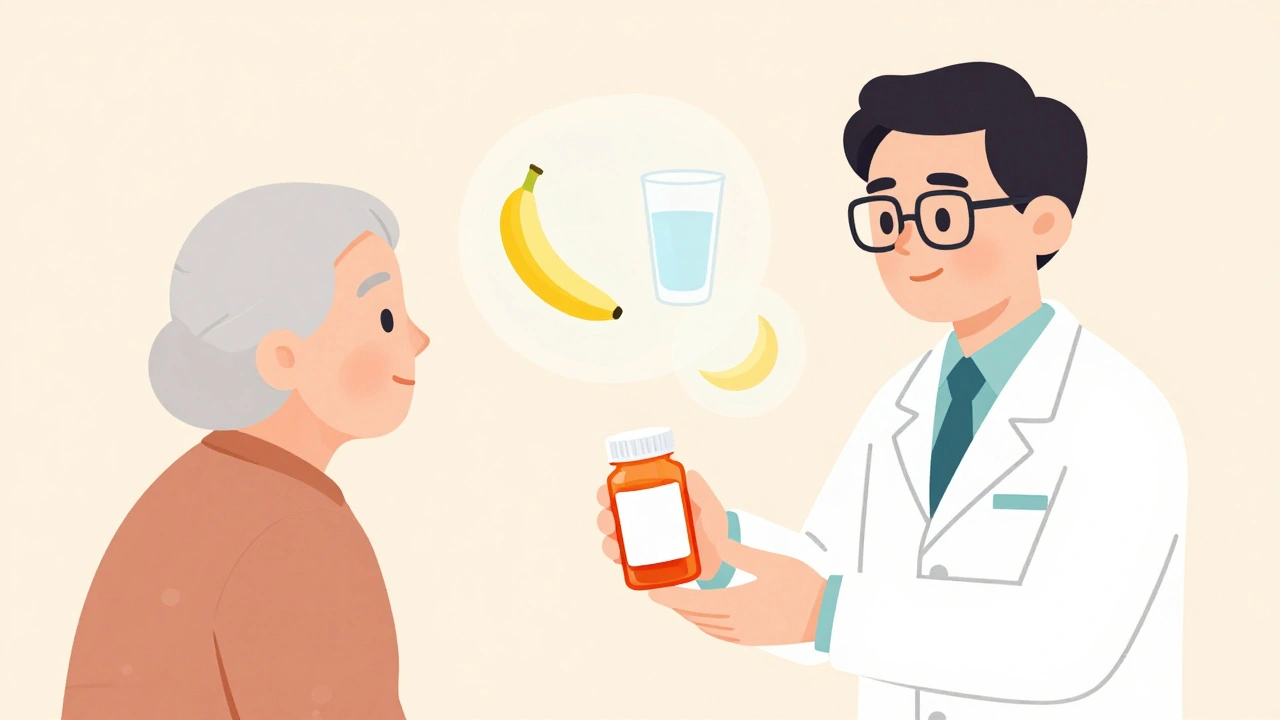
Text alone doesn’t work for everyone. About 25% of U.S. households speak a language other than English at home. But only 22% of pharmacies offer auxiliary labels in other languages.That’s where pictures come in. A 2018 study found that adding simple icons - like a glass of water, a bed, or a fridge - improved understanding by 47% among people with low literacy. A picture of a banana next to Take with Food? Instant clarity. A little red skull next to May Be Habit-Forming? No words needed.
Patients who got labels with both text and icons were 83% more likely to say they understood their instructions. That’s why the most advanced pharmacies are starting to use them - even if it’s not standard yet.
Who Uses Them - And Who Doesn’t
Auxiliary labels are used in retail pharmacies almost everywhere. But in hospitals, there’s a split. About 92% of these labels are meant for patients. The other 8%? Those are for nurses and staff. Things like Dosage Changed - Refer to Chart or Do Not Mix with IV Fluids. These are hidden from patients on purpose.But even in retail, there’s inconsistency. A 2023 KPMG report found that only 38% of pharmacies follow standardized label wording. The rest use their own phrases. One pharmacy says Take with Food. Another says Consume with Meal. That confusion adds to the problem.
What’s Changing - And What’s Coming
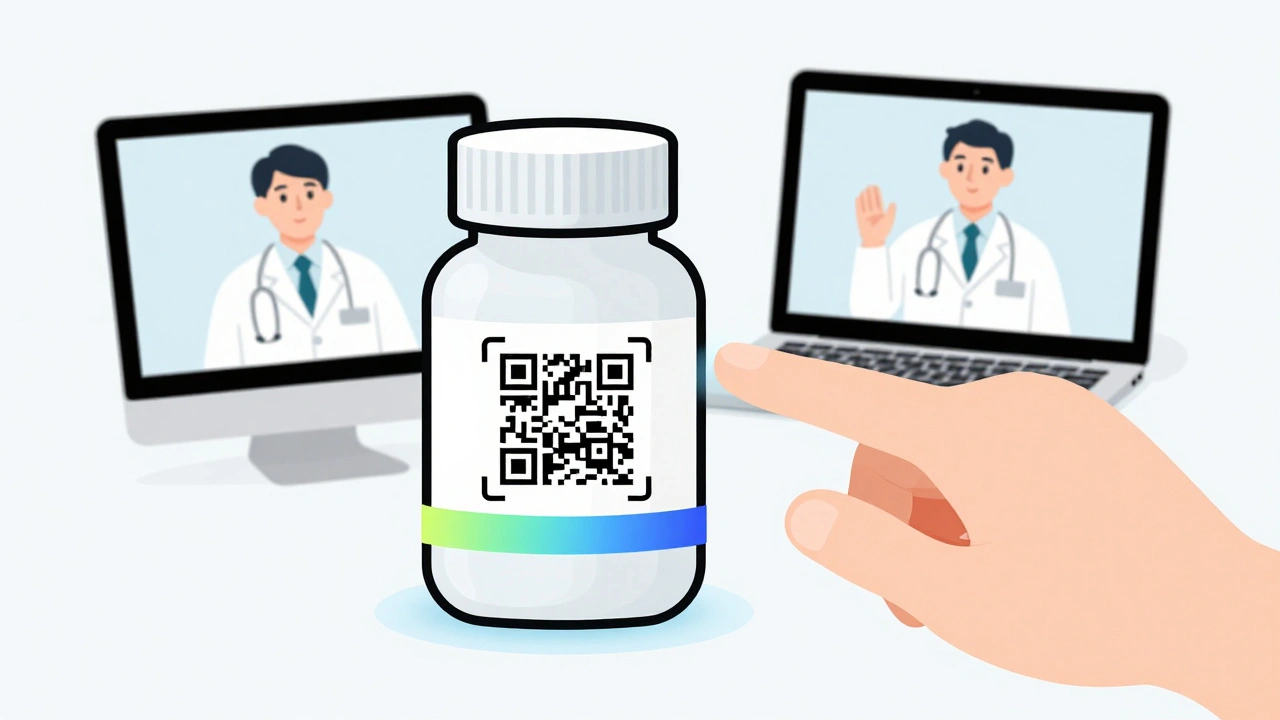
The future of auxiliary labels isn’t just paper and ink. Some chain pharmacies are testing QR codes on bottles. Scan it, and you get a 30-second video from a pharmacist explaining how to take the drug. That’s already in use at 17% of major chains.Even more advanced? Smart labels with temperature-sensitive ink. For insulin or other cold-sensitive meds, the label changes color if the bottle got too warm. Right now, this is only in pilot programs at 43 hospitals - but it’s coming fast.
California passed a law in 2024 (AB-1352) that now requires specific auxiliary labels on high-risk drugs like opioids and blood thinners. The FDA also released draft guidance in September 2023 pushing for clearer opioid warnings. These aren’t just trends - they’re policy shifts.
By 2025, 62% of major pharmacy chains plan to offer digital versions of these labels through apps or text messages. But here’s the catch: federal rules still require every prescription container to have a visible, permanent safety label. So paper stickers aren’t going away. They’re just getting smarter.
What You Should Do
Don’t just ignore these stickers. Treat them like instructions from your doctor - because they are.- Read them every time. Even if you’ve taken the pill before. Labels can change.
- Ask if you’re unsure. If you don’t know what Take with Food means, ask the pharmacist. Don’t guess.
- Check for pictures. If your label has icons, pay attention. They’re there to help.
- Report confusion. If you see two conflicting labels, tell the pharmacy. It’s not your fault - it’s a system error.
- Request multilingual labels. If English isn’t your first language, ask for labels in your language. Most pharmacies can print them.
These stickers are cheap. They’re simple. But they’re powerful. One wrong assumption - like thinking Take with Food means Take after dinner - can mean your medicine doesn’t work. Or worse, it causes harm.
They’re not perfect. But they’re the best tool we have right now to stop medication errors before they happen. And if you’re taking pills - whether it’s for high blood pressure, diabetes, or an infection - you need to know what they’re saying.
Are pharmacy auxiliary labels required by law?
No, auxiliary labels are not federally required in the U.S. The FDA doesn’t approve or regulate them. But 48 out of 50 state pharmacy boards strongly recommend them, and many have made them part of state practice laws. Most pharmacies use them because they reduce errors and protect patients.
Why are some labels red and others yellow?
The colors follow industry-wide conventions. Red means a serious warning - like risk of addiction, dangerous interactions, or severe side effects. Yellow means caution - things like "take with food" or "may cause dizziness." Green is for general instructions, and blue is for storage. These colors help patients react quickly without reading every word.
What does "Take with Food" really mean?
It means take the medication during or right after eating. This helps reduce stomach upset or improves how the drug is absorbed. But many patients think it means "take after dinner," which can delay absorption and make the drug less effective. If you’re unsure, ask your pharmacist to explain what "with food" means for your specific medicine.
Can I remove these stickers?
Technically, yes - but you shouldn’t. These stickers are part of your medication safety plan. Removing them increases the chance of taking the drug incorrectly, missing warnings, or storing it improperly. If you find them annoying, ask your pharmacist for a printed sheet with all the info instead.
Do these labels work for older adults or people with low vision?
Standard text labels can be hard to read for older adults or those with vision problems. That’s why many pharmacies now offer large-print labels or audio instructions. Some also use raised text or braille. Ask your pharmacist if they provide accessible versions. You’re entitled to them.
Why do some pharmacies use different wording for the same warning?
There’s no national standard for wording, so each pharmacy or chain may use its own phrasing. One might say "May Cause Drowsiness," another says "May Make You Sleepy." This inconsistency confuses patients. The industry is moving toward standardized wording, but adoption is slow. Always ask if you’re unsure what a label means.
Are there labels for medications I take long-term?
Yes. For chronic conditions like high blood pressure, diabetes, or depression, auxiliary labels often include adherence reminders like "Take Every Day" or "Do Not Stop Suddenly." These are especially important because stopping meds without warning can cause serious health problems. If you don’t see one on your long-term prescription, ask for it.


Shubham Pandey
December 3, 2025 AT 09:13