
OTC Drug Safety Checker
This tool helps you assess potential risks when taking over-the-counter medications based on your health conditions and current medications. Remember: OTC drugs can still interact with your health conditions and other medications. Always read labels carefully and consult a healthcare professional if you're unsure.
Your Health Profile
Your Current Medications
Common OTC Drugs to Check
Select one of these common OTC drugs to check for potential risks
When a medicine moves from prescription-only to over-the-counter (OTC), it sounds like good news: easier access, lower cost, no doctor’s visit. But behind that convenience is a hidden risk many people don’t see. You’re not just buying pain relief or allergy medicine-you’re taking a drug that was once controlled by a doctor. And now, you’re on your own.
Why Do Medications Switch from Prescription to OTC?
The shift from prescription to OTC doesn’t happen because a drug is weak. It happens because it’s proven safe enough for people to use without a doctor’s supervision-for the right reasons. The U.S. Food and Drug Administration (FDA) requires strong evidence before allowing a switch. The medication must be safe for self-diagnosis, easy to use correctly based on the label, and have a wide safety margin. That means even if someone takes a little too much, it’s unlikely to cause serious harm. Take ibuprofen. In the 1980s, it was only available by prescription. After years of studies showing it was safe for short-term pain and fever, it became OTC. The price dropped from $30-$40 a month to $5-$10. That’s a win for consumers. But it also meant millions of people started using it daily without anyone checking their kidneys, stomach, or blood pressure. The FDA has approved dozens of switches since then. Common examples include loratadine (Claritin), omeprazole (Prilosec OTC), and pseudoephedrine (Sudafed, now kept behind the counter). Each switch was backed by data. But data doesn’t always predict real-world behavior.What Happens When People Stop Seeing a Doctor?
The biggest change after a switch isn’t the pill-it’s the lack of oversight. When a doctor prescribes a drug, they consider your full medical history. They know if you have high blood pressure, liver disease, or take blood thinners. They watch for side effects. When you buy the same drug off the shelf, none of that happens. A 2023 study in Bangalore found that 77% of people using OTC drugs didn’t know the contraindications. That means they didn’t know what conditions made the drug dangerous for them. And nearly 85% trusted their pharmacist’s advice-but many pharmacists didn’t even ask about existing conditions or other medications. Here’s what can go wrong:- Someone with high blood pressure takes a decongestant like pseudoephedrine and ends up in the ER with a stroke.
- A person with diabetes uses OTC painkillers daily and develops kidney damage without realizing it.
- An elderly person takes Benadryl for sleep and gets confused, falls, and breaks a hip.
- A person takes two different cold medicines and accidentally doubles their acetaminophen dose-leading to liver failure.
The Hidden Dangers of Common OTC Drugs
Not all OTC drugs are created equal. Some carry risks most consumers don’t know about. NSAIDs (like ibuprofen and naproxen) are the most widely used OTC painkillers. But they’re not harmless. Long-term use can cause stomach ulcers, kidney failure, or increase the risk of heart attack or stroke. The American Geriatrics Society lists NSAIDs as one of 30 drugs to avoid in adults over 65 because they raise the risk of internal bleeding by 2 to 4 times. Antihistamines like diphenhydramine (Benadryl) are in sleep aids, cold meds, and allergy pills. They cause drowsiness, dizziness, and confusion-especially in older adults. That’s why falls are a leading cause of injury in seniors taking these drugs. Decongestants like pseudoephedrine can spike blood pressure. If you’re on beta-blockers, SSRIs, or MAOIs, mixing them can cause dangerous spikes in heart rate and blood pressure. One study from Ohio State University called this combination "potentially life-threatening." Acetaminophen (Tylenol) is the most common cause of accidental liver failure in the U.S. Why? Because it’s in over 600 OTC and prescription products. People take one for a headache, another for a cold, and a third for back pain-all without realizing they’re hitting a toxic dose.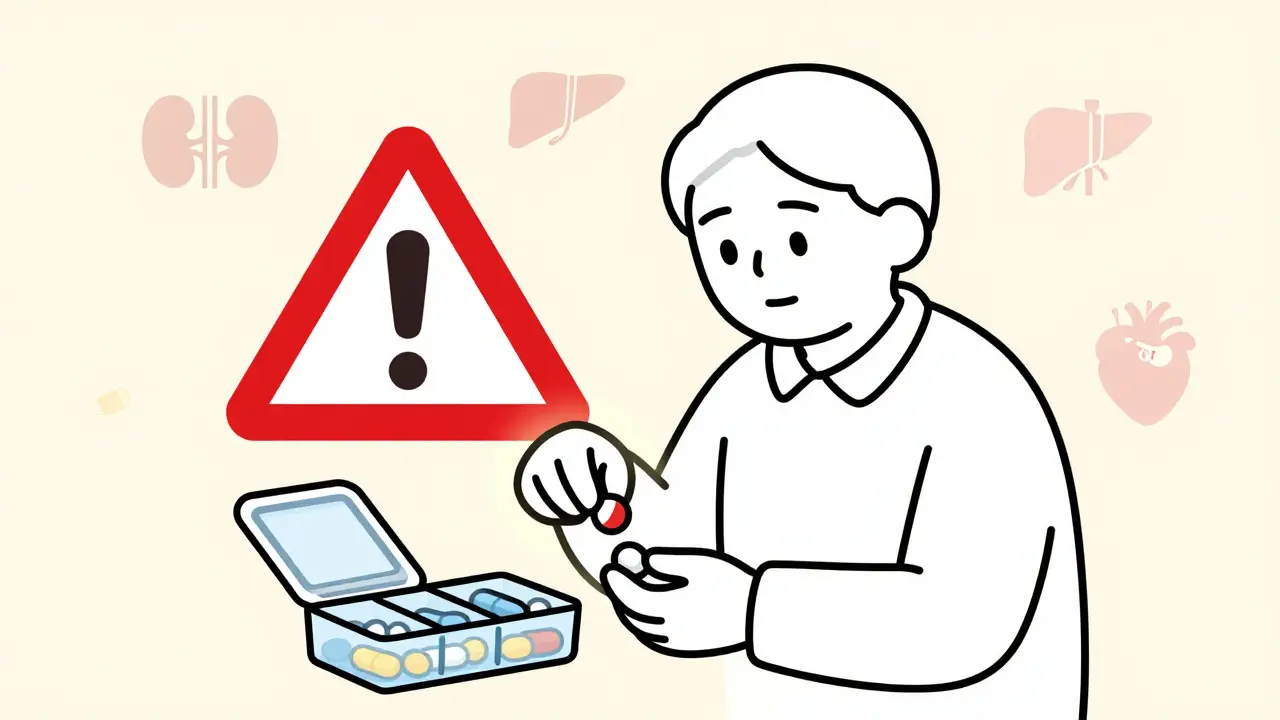
How to Use OTC Drugs Safely
You don’t need to avoid OTC drugs. You just need to treat them like the medicines they are. Here’s how:- Read the Drug Facts label. It’s not a suggestion-it’s the law. The FDA requires all OTC drugs to use this format: active ingredients, purpose, uses, warnings, inactive ingredients, and directions. If you skip this, you’re guessing.
- Check for duplicate ingredients. If you’re taking a cold medicine and a pain reliever, look at the active ingredients. If both have acetaminophen or ibuprofen, you’re doubling up. That’s how overdoses happen.
- Know your health conditions. Do you have high blood pressure? Kidney disease? Liver problems? Diabetes? Asthma? Some OTC drugs make these worse. If you’re unsure, ask a pharmacist.
- Don’t mix with alcohol or other meds. Alcohol with antihistamines or dextromethorphan can cause extreme drowsiness. OTC painkillers with blood thinners can cause bleeding. Sleep aids with prescription sedatives? That’s a recipe for respiratory failure.
- Ask your pharmacist. Sixty-eight percent of people do-but only 32% read the full label. Pharmacists aren’t just cashiers. They’re trained to spot dangerous combinations. Tell them what you’re taking, even if you think it’s "just OTC."
Who’s at Highest Risk?
Some groups are far more likely to be harmed by OTC switches:- Older adults (65+): Their bodies process drugs slower. They often take 5+ medications. The Beers Criteria lists 30 OTC drugs to avoid in this group.
- People on multiple prescriptions: If you take more than three medications, the chance of a dangerous interaction rises sharply.
- Children and teens: They may not understand dosing. Some teens misuse dextromethorphan (in cough syrups) for a high.
- People with chronic conditions: Diabetes, heart disease, kidney disease, liver disease-any of these make OTC drugs riskier.
What’s Changing? New Tools for Safer Use
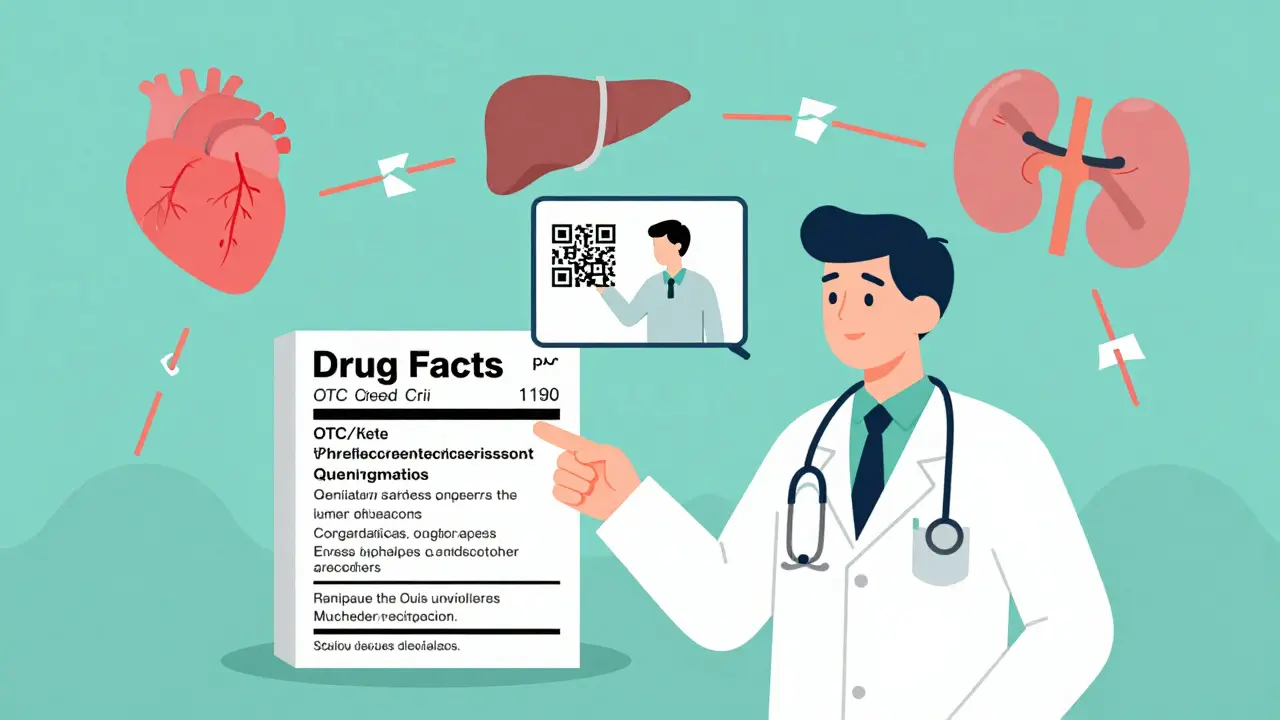
The FDA and pharmacies are trying to reduce harm. In 2022, they updated the Drug Facts label to use larger fonts, simpler language, and clearer warnings. That’s because 80 million American adults have low health literacy-they struggle to read medical instructions. Some stores are testing QR codes on OTC packaging. Scan it, and you get a video explaining uses, risks, and interactions. Walmart started this pilot in 2023 on 15% of their private-label products. Future tools may include AI-based apps that scan your medication list and flag dangerous OTC choices. But tech won’t fix the problem alone. People still need to understand what they’re taking.The Bottom Line
OTC switches save money and time. But they shift responsibility-from doctors to you. The same drug that helps your headache can hurt your liver if you’re not careful. The key isn’t avoiding OTC meds. It’s treating them with the same caution as prescription drugs. Ask yourself: Why am I taking this? Is this the right dose? Could this interact with something else? Do I have a condition that makes this risky? And if you’re ever unsure-ask someone who knows. A pharmacist, a nurse, a doctor. Don’t guess. Your body doesn’t have a reset button.Are OTC drugs safer than prescription drugs?
No, OTC drugs aren’t inherently safer-they’re just approved for use without a doctor’s supervision. Many OTC drugs are the same active ingredients as prescription versions. The difference is in how they’re used. Prescription drugs come with monitoring; OTC drugs rely on you to follow the label correctly. That’s why misuse of OTC drugs causes thousands of emergency room visits every year.
Can I take OTC painkillers every day?
Not without talking to a doctor. Daily use of NSAIDs like ibuprofen or naproxen increases your risk of stomach ulcers, kidney damage, and heart problems. Acetaminophen can cause liver failure if taken in high doses over time. If you need daily pain relief, you likely have an underlying condition that needs diagnosis-not just symptom masking.
Why are some OTC drugs kept behind the counter?
Some drugs, like pseudoephedrine, were switched to OTC but kept behind the counter due to misuse risks. Pseudoephedrine is used to make methamphetamine, so the Combat Methamphetamine Epidemic Act of 2005 required ID checks and purchase limits. This isn’t about safety for the user-it’s about preventing illegal production. Still, it shows regulators recognize that even OTC drugs can be misused.
How do I know if an OTC drug is right for me?
Start by reading the "Warnings" section on the Drug Facts label. Look for phrases like "Do not use if you have high blood pressure," or "Ask a doctor before use if you have liver disease." Then check all your other medications for the same active ingredient. Finally, ask a pharmacist. If you’re on three or more medications, it’s not optional-it’s essential.
Is it safe to use OTC drugs during pregnancy?
Many OTC drugs are not safe during pregnancy. For example, NSAIDs can affect fetal development in the third trimester. Some antihistamines and decongestants may raise blood pressure or reduce blood flow to the placenta. Always check with your doctor or pharmacist before using any OTC medication while pregnant-even if it’s "just a cold pill."
What should I do if I think I’ve taken too much OTC medicine?
Call Poison Control immediately at 1-800-222-1222 (U.S.) or your local emergency number. Don’t wait for symptoms. Acetaminophen overdose, for example, can cause liver damage without immediate signs. Keep the medication bottle handy when you call-it helps them identify the active ingredient and dosage.


henry mateo
December 30, 2025 AT 23:03