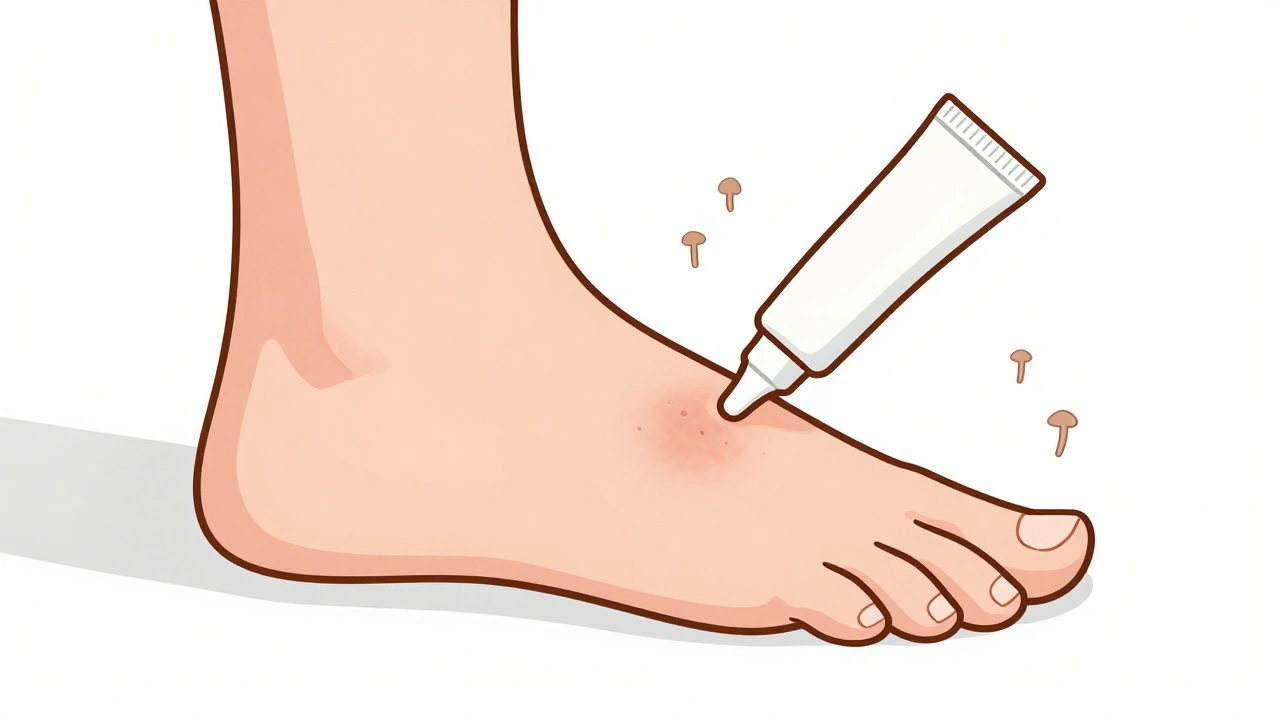
What Is Athlete’s Foot, Really?
Athlete’s foot isn’t just a myth from locker rooms-it’s a real, common fungal infection called tinea pedis. It thrives in warm, damp places between your toes, on the soles of your feet, or even under the nails. You don’t have to be an athlete to get it. If you wear closed shoes all day, walk barefoot in public showers, or sweat heavily, you’re at risk. About 1 in 5 people worldwide have it at any given time, according to the Cleveland Clinic. It’s not dangerous, but it’s itchy, stinky, and stubborn. Left untreated, it can spread to your nails or even trigger bacterial infections, especially if you have diabetes or a weakened immune system.
Why OTC Treatments Work (When Used Right)
Over-the-counter antifungals aren’t magic, but they’re proven. For mild to moderate cases, they work in 70-90% of people when used correctly. The FDA approved the first OTC antifungal cream, clotrimazole, back in 1990, and since then, dozens of options have flooded shelves. You don’t need a prescription for most cases. The real issue? Most people stop too soon. Symptoms fade in a few days, so they quit applying the cream. But the fungus is still hiding under the skin. That’s why 63% of treatment failures happen-people quit 4 days early, on average.
The Top 5 Active Ingredients Explained
Not all OTC creams are the same. They contain different active ingredients, each with unique strengths:
- Terbinafine (Lamisil AT): This is the most effective single ingredient. It kills fungi outright (fungicidal), not just slows them down. One daily application for 1-2 weeks is usually enough. Studies show it clears up 83% of cases. If you’re busy or hate applying meds twice a day, this is your best bet.
- Clotrimazole (Lotrimin): Works by disrupting the fungus’s cell wall. It’s great for mixed infections (like when yeast joins the party). But you need to use it twice daily for 2-4 weeks. Many users report itching relief within 24 hours.
- Miconazole (Micatin): Similar to clotrimazole, often found in powders or sprays. Good for sweaty feet and preventing spread.
- Tolnaftate (Tinactin): An older option. It’s cheap and dries out damp areas, making it ideal for between-the-toes infections. But it only works about 60-65% of the time, especially on thick, scaly soles.
- Undecylenic acid: Found in powders and liquids. It’s mild, safe for kids, and helps prevent recurrence. Not strong enough on its own for active infections.
Which One Should You Pick?
Here’s how to choose based on your situation:
| Active Ingredient | Best For | Application Frequency | Treatment Duration | Cure Rate |
|---|---|---|---|---|
| Terbinafine | General infections, busy lifestyles | Once daily | 1-2 weeks | 83% |
| Clotrimazole | Mixed infections, itching relief | Twice daily | 2-4 weeks | 74% |
| Tolnaftate | Moist, interdigital areas | Twice daily | 4 weeks | 65% |
| Miconazole | Prevention, sweaty feet | Twice daily | 2-4 weeks | 70% |
| Undecylenic acid | Mild cases, prevention | Twice daily | 4+ weeks | 60% |
If you’re unsure, go with terbinafine. It’s faster, simpler, and backed by the most clinical data. If your feet are sweaty and you’re prone to recurrence, pair it with a tolnaftate powder in your shoes. If itching is your main problem, clotrimazole gives quicker relief.
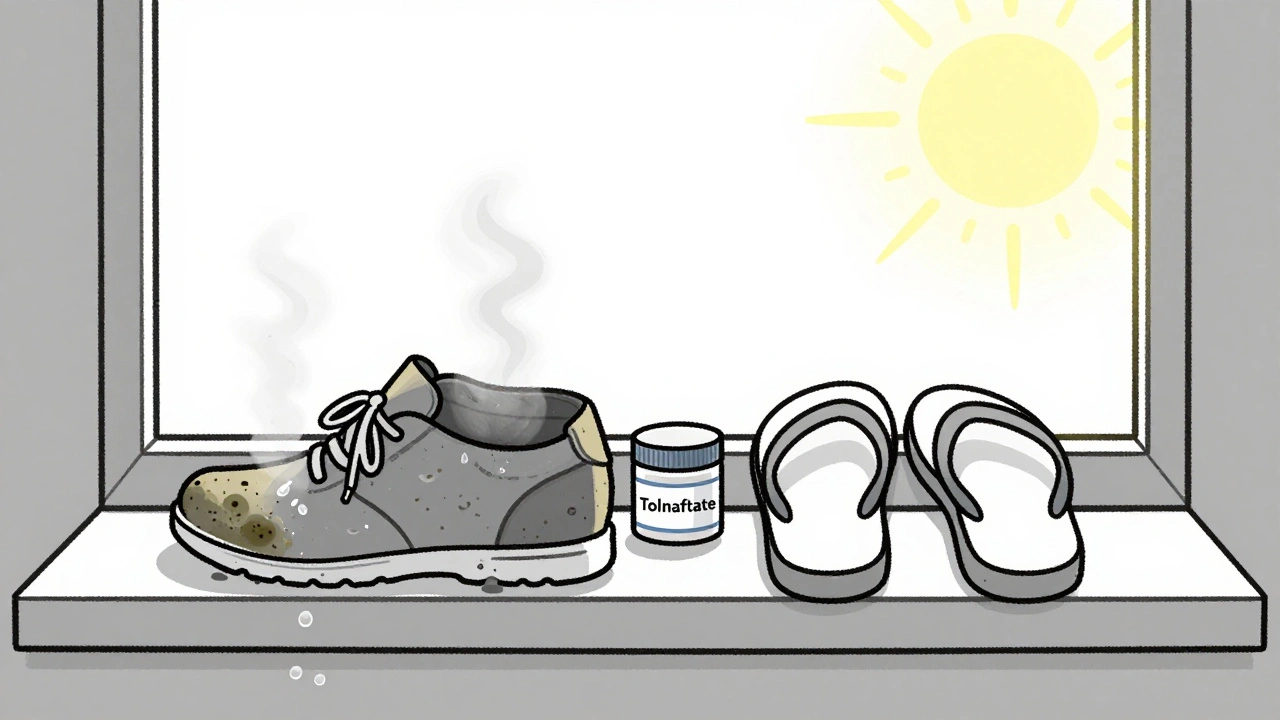
How to Apply It Correctly (The 5-Step Rule)
Applying the cream wrong is the #1 reason it fails. Here’s how to do it right:
- Wash and dry thoroughly. Use soap and water. Then, dry your feet with a clean towel-especially between your toes. Use a hairdryer on cool for 30 seconds if needed. Moisture is the enemy.
- Apply to the affected area AND beyond. Don’t just dab on the red spots. Spread a thin layer 1 inch past the edge of the infection. Fungus hides where it’s not visible.
- Use it every day. Even if your skin looks fine. Skip a day, and you give the fungus a chance to bounce back.
- Treat both feet. Even if only one looks infected. The fungus is probably on both.
- Keep going after it looks gone. For terbinafine: 1-2 weeks total. For others: 2-4 weeks. Don’t stop just because the itching stopped.
Prevention Is Half the Battle
Once you clear the infection, you need to stop it from coming back. Here’s what works:
- Change socks twice a day. Cotton or moisture-wicking materials only. No synthetic blends.
- Rotate your shoes. Don’t wear the same pair two days in a row. Let them air out for 48 hours. Fungus lives in damp leather and fabric.
- Use antifungal powder daily. Sprinkle tolnaftate or miconazole powder in your shoes and socks every morning. It cuts recurrence by 63%.
- Wear flip-flops in public showers. CDC says this reduces transmission by 85%.
- Use a separate towel for your feet. Don’t dry your feet with the same towel you use for your body. Fungus spreads easily.
When to See a Doctor
OTC treatments work for most-but not all. Call your doctor if:
- Your skin is cracked, bleeding, or oozing pus.
- The infection covers more than half your foot.
- You’ve tried two different OTC products for 2 weeks with no improvement.
- You have diabetes, poor circulation, or a weakened immune system.
Doctors can prescribe oral meds like terbinafine pills (250mg daily for 2 weeks) or stronger topical solutions like ciclopirox. These work when the fungus has burrowed deep or when your body can’t fight it alone.

What Not to Do
Here are the biggest mistakes people make:
- Applying too much cream. Thick layers don’t work better. They just make your feet sticky and slow absorption. Use a thin layer.
- Sharing towels or shoes. You’re spreading the fungus to others-or bringing it back.
- Wearing tight, non-breathable shoes. Sneakers all day? That’s a fungus paradise.
- Ignoring your toenails. If your nails are thick, yellow, or crumbling, you might have toenail fungus too. That needs separate treatment.
- Waiting for it to go away on its own. It won’t. It’ll just get worse.
Real User Experiences
People on Reddit and Drugs.com share honest stories. One user, ‘ActiveRunner87’, said terbinafine cleared their infection in 6 days-but only because they dried their feet with a hairdryer before each application. Skip one day, and they lost progress. Another user said Lotrimin stopped the itching fast but didn’t fully clear the infection until they used it for the full 4 weeks. The pattern? Consistency wins. Speed doesn’t matter. Completing the course does.
What’s New in 2025?
Science is moving forward. New OTC products now combine antifungals with dimethicone-a barrier that locks out moisture. There are also nanoemulsion sprays in clinical trials that could cut treatment time to just 3-5 days. But for now, the basics still win: clean, dry, treat, prevent. No fancy gadget beats good hygiene.
Final Takeaway
Athlete’s foot is annoying, but it’s not complicated. You don’t need expensive products or prescriptions for most cases. Pick one proven antifungal-terbinafine is your best bet. Apply it correctly. Keep going after it looks better. And most of all, stop letting your feet stay damp. If you do that, you’ll beat it this time-and keep it from coming back.


Jack Arscott
December 2, 2025 AT 19:35