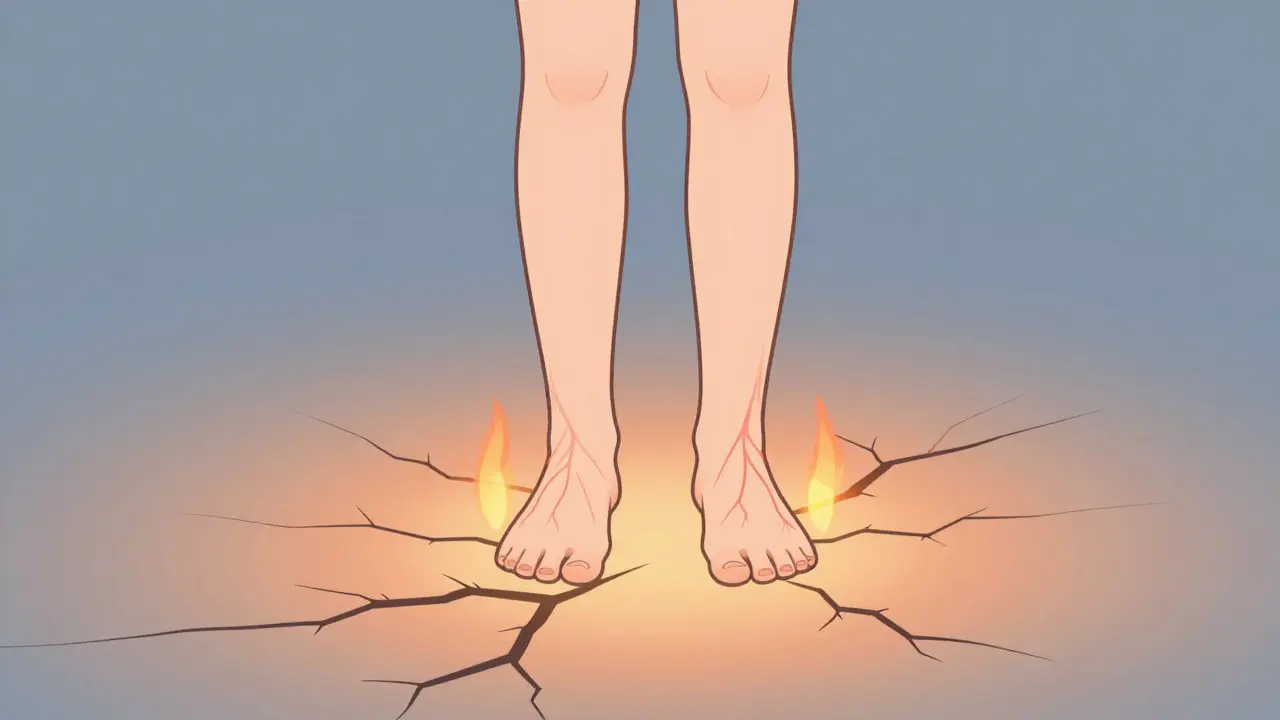
Living with diabetes means more than counting carbs or checking blood sugar. For nearly 7 out of 10 people with diabetes, nerve damage called diabetic neuropathy becomes a quiet, painful reality. It starts with tingling in the toes, then burns like fire, or feels like walking on glass. Over time, numbness creeps up the legs, making it hard to feel a blister, a cut, or even the ground beneath your feet. This isn’t just discomfort-it’s a threat to your independence, your sleep, and your sense of safety.
Why Does This Happen?
High blood sugar doesn’t just clog arteries-it fries nerves. Over years, too much glucose in the bloodstream damages the delicate fibers that carry signals between your brain and your feet, hands, and organs. The damage builds slowly. You might not notice it until the pain becomes impossible to ignore. This isn’t a sudden event. It’s the result of years of uncontrolled glucose levels. The Diabetes Control and Complications Trial (DCCT) proved it: keeping HbA1c below 7% cuts your risk of nerve damage by 60%. That’s not a suggestion-it’s the most powerful tool you have.
What Does the Pain Feel Like?
Painful diabetic neuropathy doesn’t act like a sprained ankle. It’s unpredictable. Some people feel sharp, electric shocks. Others describe a constant burning, like their skin is sunburned. Some say it feels like wearing invisible socks that are too tight. Then there’s numbness-the kind that makes you trip over nothing, or not feel a hot shower until you’re scalded. This isn’t just annoying. It’s dangerous. You can develop a foot ulcer without knowing it. By the time you see it, infection may already be spreading.
First-Line Treatments: What Actually Works
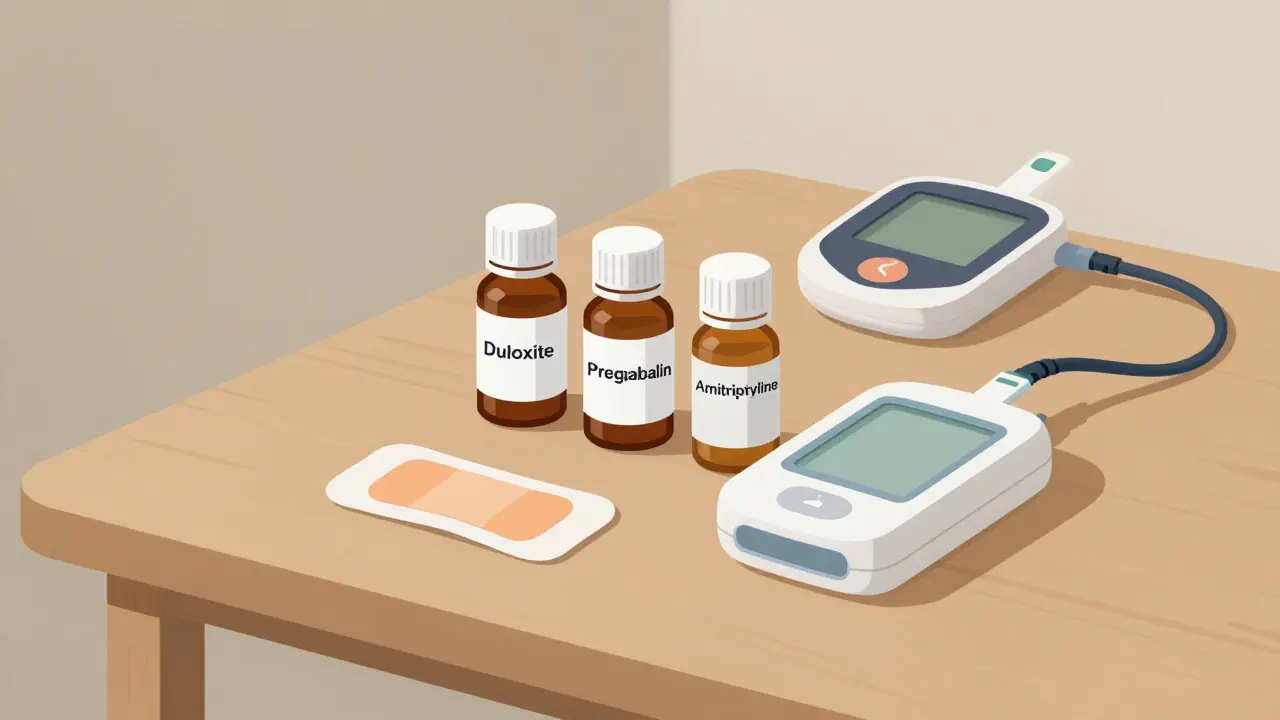
There are three main drugs approved specifically for diabetic nerve pain: duloxetine, pregabalin, and amitriptyline. Each has pros and cons.
- Duloxetine (Cymbalta): A serotonin-norepinephrine reuptake inhibitor. In clinical trials, about 35% of people got at least 50% pain relief-double the placebo rate. Side effects? Nausea, dry mouth, and fatigue. Many stop taking it because of stomach upset.
- Pregabalin (Lyrica): An anticonvulsant that calms overactive nerves. Around 30-40% of users report major pain reduction. But weight gain and dizziness are common. For older adults, this can mean falls.
- Amitriptyline: An old-school tricyclic antidepressant. It works better than most-up to 60% pain reduction in some studies. But it makes you sleepy, causes dry mouth, and can mess with heart rhythm. Not safe for everyone, especially those with heart issues.
There’s no one-size-fits-all. What helps your neighbor might make you feel worse. That’s why doctors start low and go slow. You might try duloxetine at 30 mg daily for two weeks, then bump to 60 mg if needed. If it doesn’t help after six weeks, you switch. No point suffering for months on a drug that isn’t working.
Topical Options: Less Systemic, Fewer Side Effects
If pills make you sick or you’re on ten other medications, topical treatments are a game-changer.
- Capsaicin 8% patch (Qutenza): A patch applied by a nurse in a clinic. It depletes substance P, the chemical that sends pain signals. After one treatment, 40% of patients saw 30% pain reduction. It lasts up to three months. You might feel a burning sensation during application-but it’s brief.
- Lidocaine 5% patches: These stick on like Band-Aids. Great for localized pain, like a burning spot on the ball of your foot. No drowsiness. No weight gain. You can use them daily. They’re cheap, safe, and surprisingly effective.
These don’t fix the nerve damage. But they silence the noise. And for many, that’s enough to sleep through the night.
Non-Drug Tools: Movement, Mindset, and More
Medication alone won’t save your feet. You need movement.
Walking 30 minutes a day isn’t just good for your heart-it helps nerves heal. Studies show regular exercise improves blood flow to nerves and reduces inflammation. Swimming, cycling, yoga-any low-impact activity counts. Don’t wait until the pain disappears to start. Move through it. Start with 10 minutes. Build up.
Stress makes pain worse. It tightens muscles, spikes blood sugar, and dulls your pain tolerance. Simple breathing exercises, meditation apps, or even five minutes of quiet in the morning can lower your overall pain levels. One study found that people who practiced mindfulness daily reported 25% less pain intensity after eight weeks.
And diet? Yes, it matters. Eating whole foods-vegetables, legumes, lean protein, nuts-reduces inflammation. Avoiding processed carbs and sugar isn’t just for blood sugar control. It’s for nerve protection. A 2023 study in the Journal of Clinical Nutrition showed that people who followed a Mediterranean-style diet had slower nerve damage progression than those on standard diabetic diets.
When Medications Fail: Advanced Options
For about half of people, even the best pills don’t cut it. That’s when you look beyond pills.
- TENS units: These small devices send mild electrical pulses through pads on your skin. In one trial, 83% of users saw pain drop from 3.17 to 1.44 on a 5-point scale. They’re affordable, non-invasive, and you can use them at home.
- Nerve blocks: A local anesthetic injected near the affected nerve. Gives relief for weeks, sometimes months. Good for flare-ups, not long-term.
- Spinal cord stimulation: A tiny device is implanted under your skin. It sends gentle pulses to your spinal cord, blocking pain signals. What’s shocking? Many patients don’t just feel less pain-they start feeling more sensation again. Numbness improves. One study showed patients regaining the ability to feel their toes for the first time in years.
These aren’t magic. They’re tools. But they’re tools that can restore your life.
The Real Hero: Blood Sugar Control
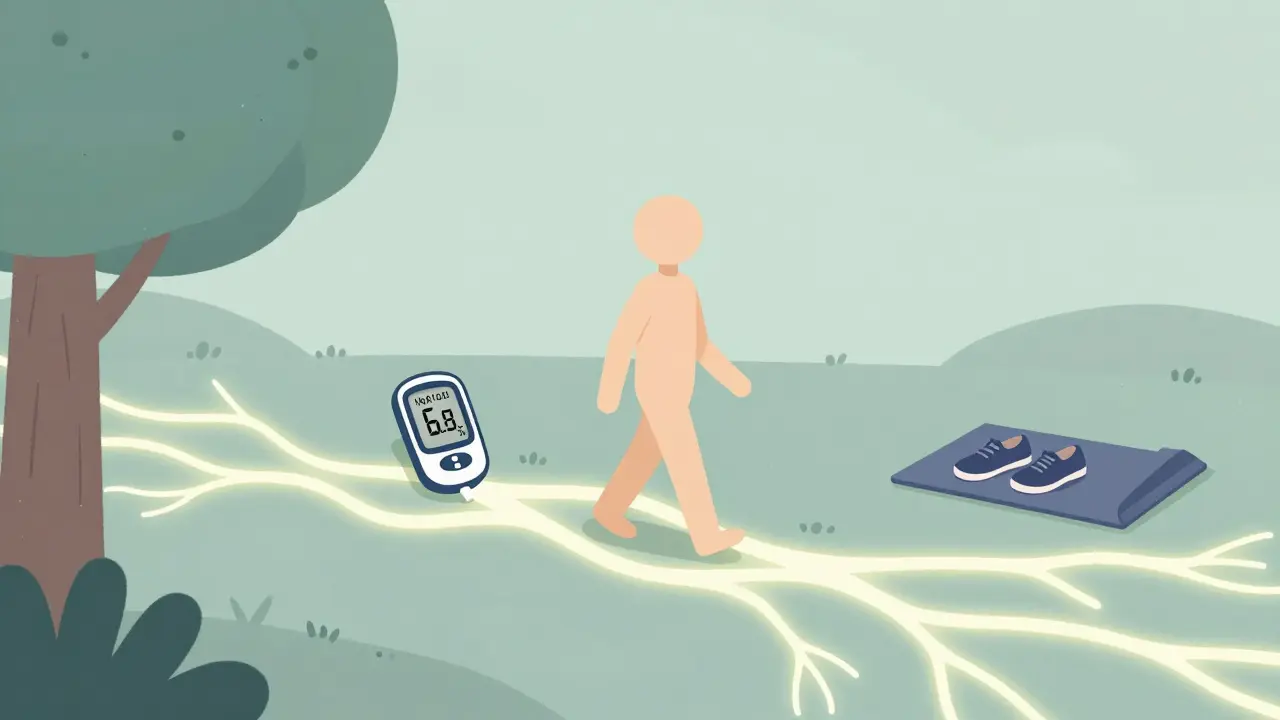
Here’s the truth no one tells you: no pill can reverse nerve damage as well as steady blood sugar control.
Studies show that if you get your HbA1c under 7% and keep it there, nerve pain can fade within a year. Numbness can improve. You might even regain some sensation. But if your HbA1c stays at 8.5% or higher? Damage keeps climbing.
The CDC says only 14% of people with diabetes hit that target. Why? Because it’s hard. It takes constant effort-meal planning, checking glucose, adjusting meds, walking after dinner, sleeping well. But it’s the only treatment that stops the problem at its root.
What Doesn’t Work (And Why)
Don’t waste time on things that hurt more than they help.
- NSAIDs like ibuprofen: They might take the edge off for a day, but they raise your risk of heart attack and kidney damage. Diabetics already have a 30-40% higher chance of kidney disease. Don’t make it worse.
- Tramadol and opioids: They work. But they’re addictive. The CDC says 8-12% of long-term users develop opioid use disorder. Tolerance builds fast. You need more just to feel the same. And constipation? It’s brutal.
- Supplements like B12 or alpha-lipoic acid: They sound promising. But large reviews show they don’t reliably reduce pain. If you’re deficient in B12 (common in people on metformin), yes, fix that. But don’t expect miracles.
What to Do Next
Start here:
- Get your HbA1c tested. If it’s above 7%, work with your doctor to lower it. Even a 0.5% drop helps.
- Try a lidocaine patch on your most painful spot. See if it helps for a few days.
- Start walking 10 minutes a day. Add 2 minutes every week.
- Write down your pain level each night on a scale of 1 to 10. Track it for a month. You’ll see patterns.
- Ask your doctor about duloxetine or pregabalin. Don’t be afraid to say, “I’ve tried this before and it didn’t work. What else?”
You’re not alone. Nearly 1 in 4 people with diabetic neuropathy feel depressed. That’s normal. But it doesn’t have to be your life. Pain can be managed. Nerves can heal. And you don’t need to suffer in silence.
Can diabetic neuropathy be reversed?
In early stages, yes-especially if blood sugar is tightly controlled. Nerve damage can improve within 6 to 12 months of reaching HbA1c targets below 7%. But if numbness is severe and has lasted years, full reversal is unlikely. The goal shifts from reversal to stopping further damage and managing pain.
What’s the best painkiller for diabetic nerve pain?
There’s no single best. Duloxetine and pregabalin are FDA-approved and work for many. Amitriptyline is more effective for some but has more side effects. Topical capsaicin or lidocaine patches are safer for older adults or those on multiple meds. The right choice depends on your health, other conditions, and how you respond to side effects.
Can I use ibuprofen for diabetic nerve pain?
No, not long-term. Ibuprofen and other NSAIDs don’t treat nerve pain well and can harm your kidneys-something people with diabetes are already at higher risk for. They may help a little for short-term inflammation, but they’re not a solution for neuropathy.
Does exercise help diabetic neuropathy?
Yes, strongly. Regular movement improves blood flow to nerves, reduces inflammation, and lowers blood sugar. Walking, swimming, and cycling are best. Even 30 minutes a day can reduce pain intensity and slow progression. Don’t wait for the pain to go away-move through it.
How long does it take for nerve pain to improve with better blood sugar control?
Many people notice improvement in pain and numbness within 6 to 12 months of consistently keeping HbA1c under 7%. Some see changes sooner. The key is consistency. Fluctuating blood sugar keeps damaging nerves. Steady control gives them a chance to heal.
Are there new treatments coming for diabetic neuropathy?
Yes. Researchers are testing drugs that target specific pain pathways-like Nav 1.7 blockers and NGF antibodies. Spinal cord stimulation is already showing promise by not just reducing pain but restoring sensation. Within the next 5 to 10 years, we may have treatments that actually repair nerve damage, not just mask it.


chandra tan
January 10, 2026 AT 09:25