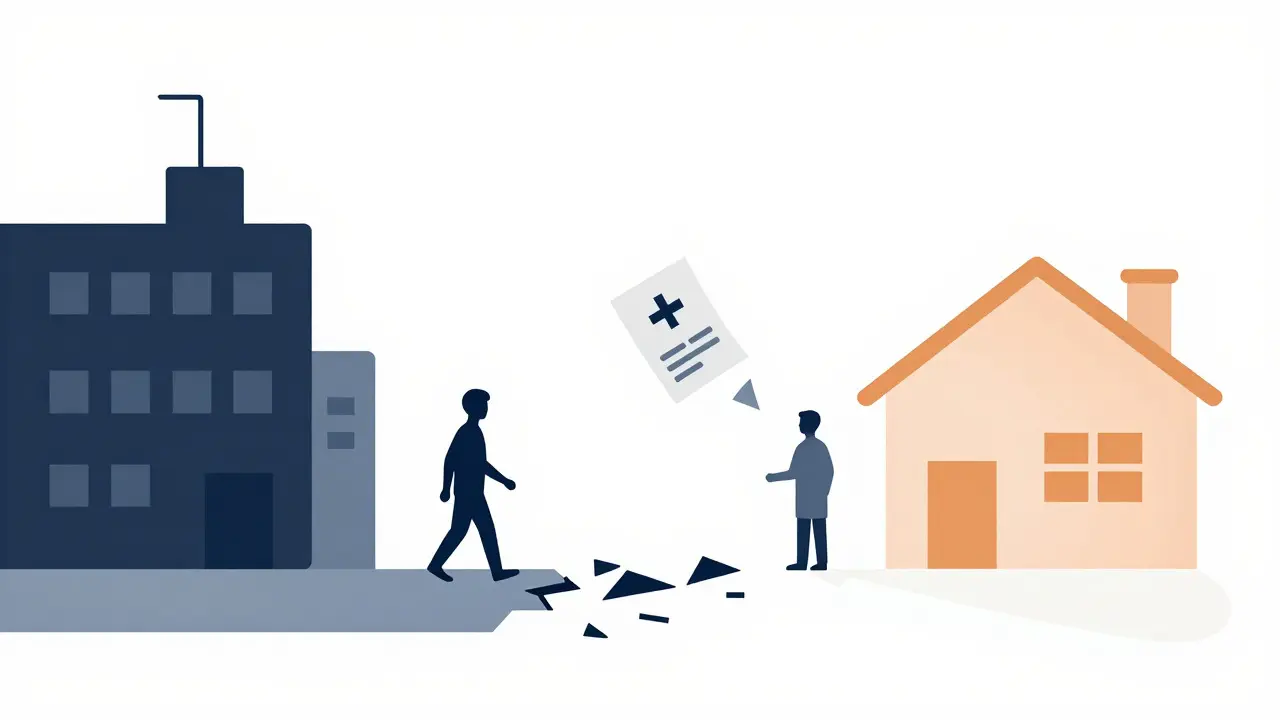
Imagine a patient moving from a secure psychiatric unit back to their family home. They leave with a new prescription for lithium and a note saying "monitor levels." But the community pharmacist doesn't get that note. The general practitioner assumes the specialist is handling it. Two weeks later, the patient’s blood work shows dangerously high lithium levels, leading to kidney strain and hospitalization. This isn’t just bad luck; it’s a breakdown in medication safety.
In mental health care, keeping patients safe from medication errors is one of the hardest jobs we face. Psychiatric drugs are powerful. They affect mood, cognition, and physical health. When care is fragmented-when a patient moves between a hospital, a prison, or a community clinic-the risk of harm spikes. We aren't just talking about typos on a script. We’re talking about missed doses, dangerous interactions, and the failure to monitor life-saving but risky drugs like clozapine or lithium.
The World Health Organization (WHO) launched its Global Patient Safety Challenge: 'Medication Without Harm' in 2017, specifically highlighting mental health as a high-risk area. Why? Because the people taking these meds often have impaired cognition, communication barriers, or complex histories of substance misuse. If we want to reduce preventable harm, we have to stop treating medication management as an afterthought and start coordinating it like the lifeline it is.
The Unique Risks of Psychotropic Medications
To understand why coordination matters, you first have to look at the drugs themselves. Psychotropic medications are drugs that alter brain function to treat mental disorders, including antidepressants, antipsychotics, and mood stabilizers. Unlike antibiotics, which you take for a week, these are often lifelong commitments. This long-term use creates specific dangers.
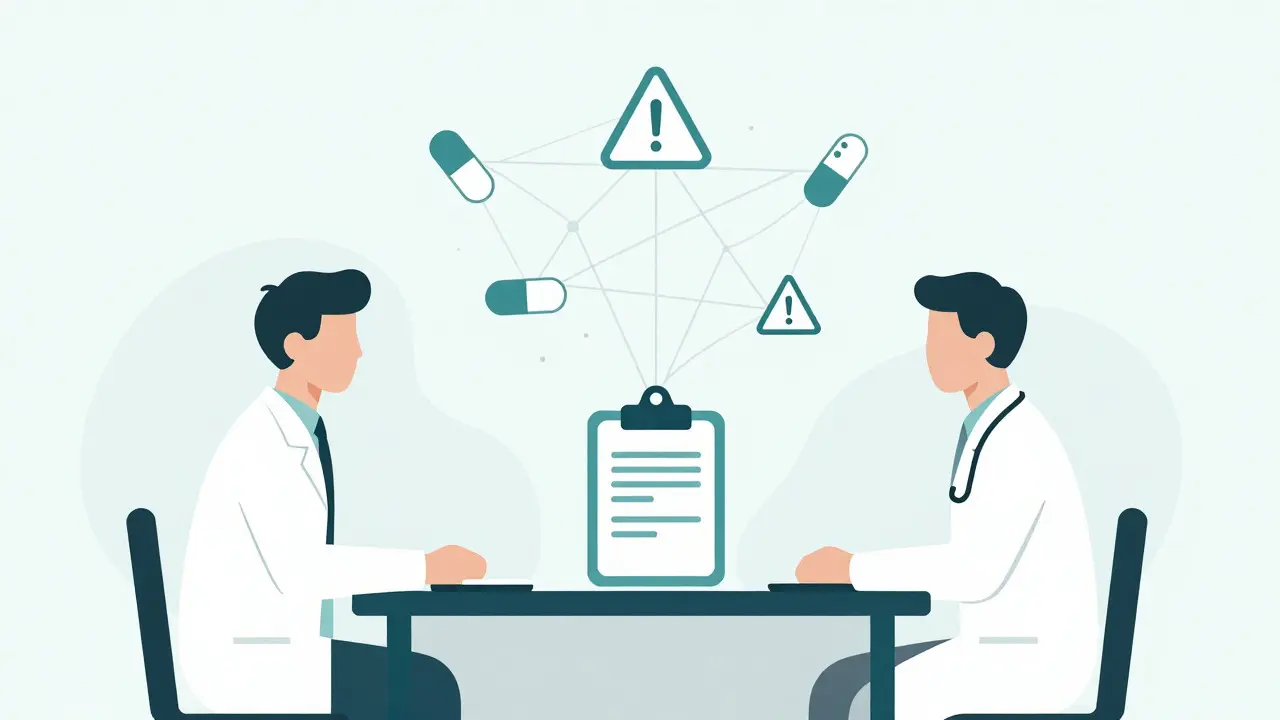
First, there is the issue of polypharmacy. Many patients with severe mental illness also have physical health conditions like diabetes or hypertension. They might be taking five different pills for their heart and three for their anxiety. When multiple prescribers don't talk to each other, drug interactions become a silent killer. For example, combining certain antidepressants with painkillers can increase bleeding risks. The NHS England guidance warns against this, noting that prescribers must "take account of all medicines being taken" and prioritize safety during transitions.
Second, some psychiatric drugs are "high-alert" medications. These are drugs where a small error can cause significant harm. Lithium and clozapine fall into this category. Lithium has a narrow therapeutic index, meaning the difference between a helpful dose and a toxic one is tiny. Clozapine requires regular blood tests to monitor for agranulocytosis, a rare but deadly drop in white blood cells. If a patient stops getting these checks because they moved doctors, the consequences can be fatal.
- Lithium: Requires serum level checks every 3 months (per NICE guidelines). Only 40% of patients in England currently receive necessary health checks in primary care.
- Clozapine: Requires strict monitoring protocols for blood counts and metabolic changes.
- Antipsychotics: Carry risks of metabolic syndrome, weight gain, and cardiac issues if not monitored.
The WHO identifies three key factors that make mental health medication management so risky: the medications themselves, provider/patient factors (like cognitive impairment), and system factors (like understaffed clinics). When these collide, unsafe practices follow.
Why Transitions of Care Are Danger Zones
If there is one moment when medication safety fails most often, it is during the transition of care. This happens when a patient moves from inpatient to outpatient care, from a jail cell to a community rehab center, or from a psychiatrist to a general practitioner.
In New Zealand, the Health Quality & Safety Commission published comprehensive guidelines in 2021 emphasizing that mandatory medicines reconciliation must happen at every single handover. Reconciliation isn't just copying a list. It is a clinical process where a professional compares the patient's current home medications against the new orders to catch discrepancies.
Without this, errors pile up. Studies show that electronic prescribing systems can reduce errors involving wrong doses or omitted medicines by 55%. However, technology alone isn't enough if the human element is missing. In secure environments like prisons, medication error rates are higher than in community settings. Why? Because care pathways are fragmented. A patient might see a doctor in custody, then be released to a GP who has no record of what was prescribed inside.
NHS England’s 2017 guidance for Health and Justice settings highlights this gap. It states that medicines reconciliation must occur when "verifying community or other external prescribing." If you skip this step, you risk giving a patient a drug they’ve already stopped, or missing a critical interaction with a new med.
The Ten Rights and Three Checks Framework
So, how do clinicians actually keep patients safe on the ground? You need a framework. The Saskatchewan Registered Psychiatric Nurses Association updated their guidelines in 2024 to emphasize the "ten rights and three checks." This isn't just theory; it’s a checklist for every single dose administered.
- Right Patient: Verify identity using two identifiers.
- Right Medication: Check the name against the order.
- Right Dose: Ensure the amount matches the prescription.
- Right Route: Oral, injectable, transdermal?
- Right Time: Adhere to the schedule.
- Right Documentation: Record it immediately.
- Right Reason: Is this med still indicated?
- Right Response: Is the patient improving or showing side effects?
- Right to Refuse: Respect patient autonomy while assessing capacity.
- Right Education: Does the patient know what they are taking and why?
The "three checks" involve checking the medication label at three distinct points: when retrieving it, when preparing it, and before administering it. This simple habit catches a surprising number of errors. For instance, looking at the bottle, then the syringe, then the patient’s chart ensures you haven't grabbed the wrong vial.
In mental health, the "Right to Refuse" is particularly tricky. Patients may lack insight into their illness (anosognosia) or fear side effects. Clinicians must balance respect for autonomy with the duty of care. Direct observation of medication consumption is often required to prevent "cheeking" (hiding pills to sell or hoard them), which is a major source of diversion and non-adherence.
Coordinating Between Primary and Specialist Care
The biggest gap in medication safety usually lies between the specialist psychiatrist and the primary care GP. Psychiatrists manage the complex psychotropics, but GPs handle the physical health checks. Who owns the patient’s safety?
The answer is: both, but only if they coordinate. NICE guidance (NG5, 2015) stresses that decisions must consider "how safe the medicines are, how well they work for the person, and whether their use is in line with national guidance." But this requires a shared care agreement.
A robust care plan should include:
- Details of any planned dose changes.
- A physical health monitoring schedule (blood pressure, glucose, lipids).
- Therapeutic drug monitoring plans (e.g., lithium levels).
- Clear triggers for contacting the mental health team (e.g., "call if tremors worsen").
- A designated lead clinician responsible for overall coordination.
New Zealand’s Health Quality & Safety Commission suggests practical strategies like joint case conferences between GPs and psychiatrists and using medicines management coordinators. These roles act as bridges, ensuring information flows both ways. Without them, the GP is flying blind, and the psychiatrist is disconnected from the patient’s daily reality.
| Approach | Impact on Error Rates | Key Benefit |
|---|---|---|
| Electronic Prescribing | Reduces errors by 30-50% | Eliminates illegible handwriting and dosing calculation errors |
| Clinical Pharmacist Involvement | Reduces errors by 25% | Expert review of interactions and appropriateness |
| Mandatory Reconciliation | Significant reduction in discrepancies | Ensures continuity across care transitions |
| Paper-Based Systems | Higher error rates | None; prone to omission and misinterpretation |
Addressing Diversion and Non-Adherence
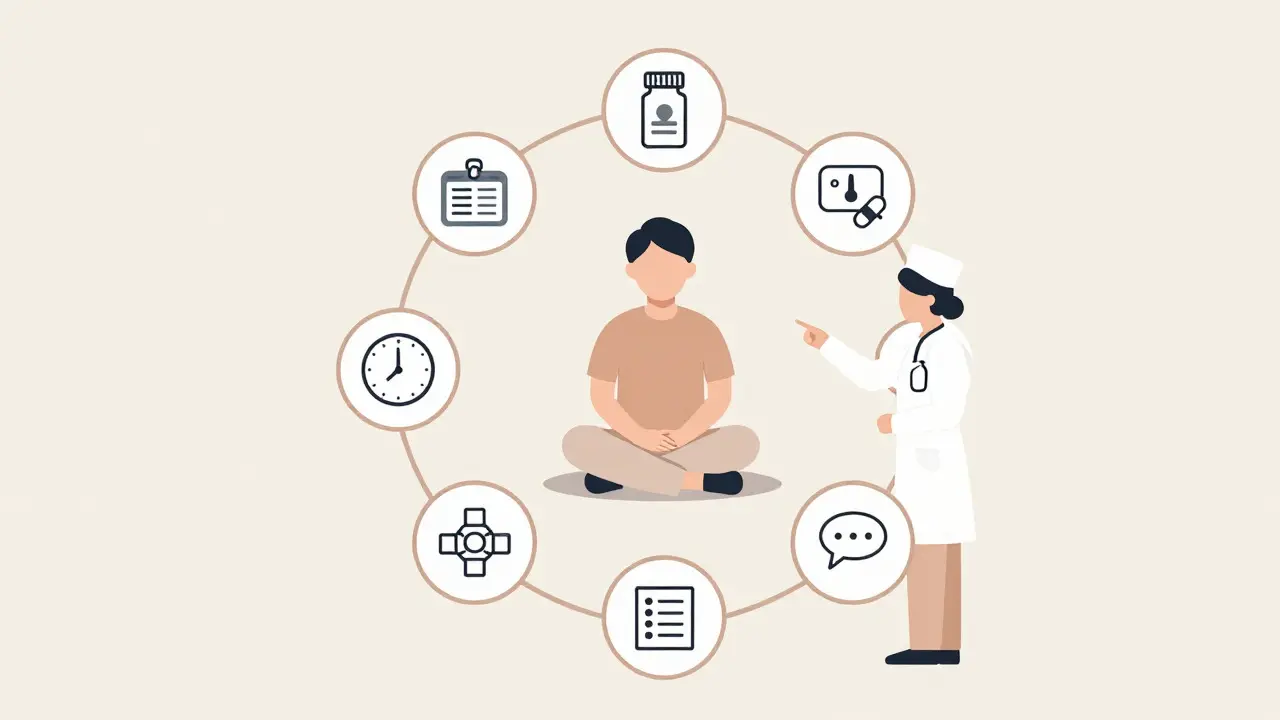
Medication safety isn't just about prescriptions; it's about behavior. In mental health settings, medication diversion (taking meds meant for others) and non-adherence are rampant. The NIH research (2023) notes that patients with mental illness are at high risk for drug-related problems in primary care, yet much of the focus remains on dementia patients, leaving a gap in broader understanding.
Frontline nurses report that direct observation is essential. But it’s also about trust. If a patient feels judged, they will hide their pills. Strategies to reduce diversion include:
- Secure disposal protocols for declined medications.
- Open conversations about side effects rather than just demanding compliance.
- Using long-acting injectables (LAIs) for patients with chronic non-adherence, which removes the daily burden of pill-taking.
NHS England also warns against the off-label use of low-dose antidepressants for insomnia (like mirtazapine) in secure settings, citing increased risks of diversion and abuse. Sometimes, the safest med is the one that isn't easily abused.
Building a Culture of Safety
Finally, none of this works without a culture of safety. The ASHP guidelines (2018) emphasize a "just culture" supported from the C-suite to the frontline. This means when errors happen, we ask "what went wrong with the system?" not "who messed up?"
Dr. Sarah Ashcroft of King's College London points out that a lack of formal training in mental illnesses among GPs contributes significantly to safety challenges. We need better education. Clinicians must know the therapeutic actions, contraindications, and adverse effects of every psychotropic drug they prescribe.
As we move forward, the integration of electronic health records that span primary and specialist care will be crucial. But technology is only a tool. The real engine of safety is communication. It’s the phone call between the psychiatrist and the GP. It’s the nurse checking the lithium level. It’s the pharmacist catching the interaction. When we coordinate care effectively, we don't just prevent errors; we restore hope and stability to patients who need it most.
What is medication reconciliation in mental health?
Medication reconciliation is the process of creating the most accurate list possible of all medications a patient is taking-including dose, frequency, and route-and comparing it against the admitting, transfer, or discharge orders. In mental health, this is critical during transitions between inpatient and community care to prevent omissions, duplications, or dangerous interactions.
Why are lithium and clozapine considered high-alert medications?
Lithium has a narrow therapeutic index, meaning small changes in dose can lead to toxicity, requiring regular blood tests. Clozapine carries a risk of agranulocytosis (a severe drop in white blood cells) and requires strict, regular monitoring of blood counts. Errors in monitoring these drugs can lead to severe morbidity or mortality.
How does polypharmacy increase risk in mental health patients?
Polypharmacy refers to the use of multiple medications simultaneously. Mental health patients often take several psychotropics alongside drugs for physical conditions like diabetes or hypertension. This increases the risk of drug-drug interactions, adverse side effects, and confusion about which pills to take, especially if different doctors are managing different aspects of care without communicating.
What is the role of clinical pharmacists in medication safety?
Clinical pharmacists play a vital role by reviewing medication lists for interactions, appropriateness, and dosing accuracy. Evidence shows that involving clinical pharmacists can reduce medication errors by up to 25%. They also assist in patient education and help coordinate care between specialists and primary care providers.
How can healthcare providers prevent medication diversion?
Preventing diversion involves direct observation of medication ingestion, secure storage and disposal of unused meds, and building trust with patients to encourage honest reporting of side effects. Using long-acting injectables can also help for patients with chronic adherence issues. Avoiding off-label uses of easily abused substances, like low-dose sedatives for insomnia, is also recommended.