
LAI Side Effect Monitoring Checklist
What's your medication?
Risk factors
When you’re managing schizophrenia or another serious mental illness, taking a pill every day can feel impossible. That’s where long-acting injectables (LAIs) come in - a single shot every few weeks keeps medication levels steady, cuts down on relapses, and gives patients more stability. But here’s the problem: long-acting injectables aren’t just about convenience. They’re a long-term commitment to your body, and that means side effects don’t disappear just because you don’t swallow a pill anymore. In fact, they often hide in plain sight.
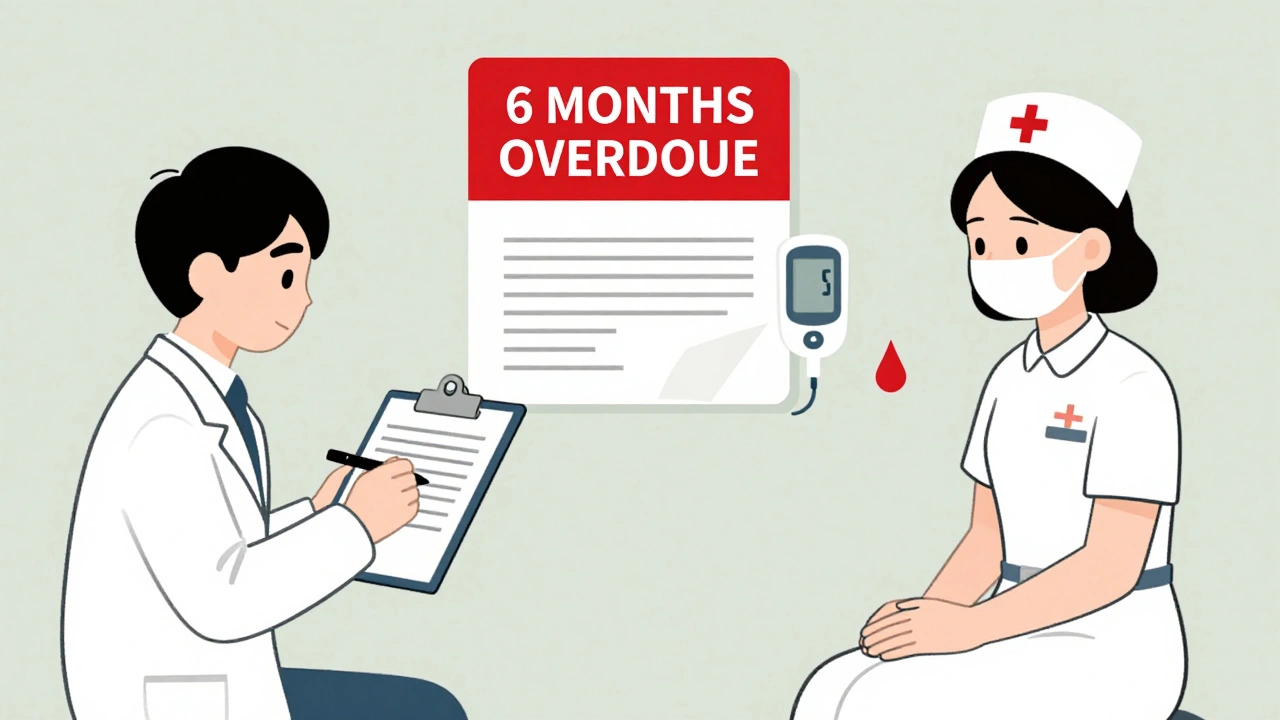
Between 2021 and 2023, audits across mental health services in the UK, the US, and Europe showed a startling pattern. While nearly every patient on LAIs had their injection documented, only 45% had any formal record of side effect checks in the past year. That’s not a glitch. It’s a systemic failure. You can get your shot on time, every time, but if no one’s checking your weight, your blood pressure, your movement, or your blood sugar, you’re walking into a silent health crisis.
What You’re Actually Getting With a LAI Shot
Long-acting injectables aren’t one-size-fits-all. Each formulation has its own profile of risks. Olanzapine LAI (Zyprexa Relprevv) can cause sudden, dangerous sedation after injection - so much so that you must stay under observation for three full hours. Paliperidone (Invega Sustenna) can spike your prolactin levels, leading to sexual dysfunction, breast swelling, or missed periods. Aripiprazole may leave you restless and unable to sit still - akathisia - in up to 25% of users. And haloperidol? It’s older, cheaper, but it can make your muscles stiff, your movements jerky, and your face twitch uncontrollably.
Metabolic side effects are the quiet killers. One patient on paliperidone gained 30 pounds over 18 months - no one checked his glucose or cholesterol until his blood pressure hit 180/100. Another developed type 2 diabetes after two years on risperidone LAI. These aren’t rare. Studies show 20-30% of LAI users develop metabolic syndrome. That’s more than one in four. And if you’re not getting tested every six months - fasting glucose, lipids, waist circumference - you’re flying blind.
The Monitoring Gap Nobody Talks About
Why isn’t this being caught? Because the system isn’t built for it. A community psychiatrist in Ohio told a survey team: “I have 15 LAI patients. Fifteen minutes per appointment. I prioritize mood over metabolism because that’s what gets paid.” That’s the reality in too many clinics. Insurance doesn’t reimburse for checking blood pressure or asking about movement disorders. It pays for “mental status review.” So that’s what gets done.
Meanwhile, nurses and support staff - the ones who actually administer the shots - report that 62% have never received formal training on LAI side effect monitoring. Many only look for redness at the injection site. They’re not trained to recognize tardive dyskinesia. They don’t know how to use the Abnormal Involuntary Movement Scale (AIMS). And they’re not given the time to do it.
Even when protocols exist, they’re ignored. The National Council’s 2022 guidelines say: quarterly AIMS assessments, fasting labs every six months, blood pressure at every visit. But only 22% of US mental health systems meet all those standards. In private practices? It’s worse. Only 48% have any formal monitoring program at all.
Who’s at Highest Risk - And Why It Matters
Not all LAIs are equal. First-generation drugs like haloperidol decanoate carry a 30-50% risk of movement disorders. Second-generation drugs like aripiprazole or paliperidone have lower movement risks but higher metabolic ones. If you’re over 40, overweight, or have a family history of diabetes, your risk multiplies. And if you’re on olanzapine LAI? You’re in the highest-risk group for sudden sedation - and you need that three-hour watch.
Women on LAIs face unique risks. Prolactin elevation from paliperidone or risperidone can cause infertility, osteoporosis, or breast cancer over time. Yet, in the 2021 UK audit, only 18% of female patients had prolactin levels checked. That’s not oversight. That’s neglect.
And here’s the cruel irony: the very reason LAIs work - regular clinic visits - should be the perfect opportunity to catch these problems. But instead of using those visits to screen for diabetes, heart disease, or movement disorders, many clinicians treat them like a pharmacy run. “Got your shot? Good. See you in six weeks.”
What Real Monitoring Looks Like
There’s a better way. In 15 community clinics that implemented full monitoring protocols - with trained staff, scheduled labs, AIMS checks, and documented vital signs - hospitalizations dropped by 40%. That’s not magic. That’s medicine.
Here’s what effective monitoring includes:
- Before every injection: Blood pressure, temperature, heart rate, mental status, and direct questions: “Have you had trouble moving? Any new breast tenderness? Feeling unusually thirsty or tired?”
- After injection (for all LAIs): At least 30 minutes of observation. For olanzapine? Three hours. Watch for confusion, dizziness, or sudden sleepiness.
- Every 3 months: AIMS test to check for involuntary movements. This isn’t optional. It’s a standard of care.
- Every 6 months: Fasting blood glucose, lipid panel, weight, waist measurement. No exceptions.
- Annually (or sooner if symptoms appear): Prolactin levels, liver enzymes, ECG for QT prolongation.
These aren’t extras. They’re part of the treatment. And they take time - about 15 to 20 extra minutes per visit. But the cost of not doing them? Emergency rooms, heart attacks, strokes, irreversible movement disorders, and early death.

The Future Is Here - But Only If We Use It
Technology is catching up. New apps let patients log symptoms between visits - sleep changes, appetite shifts, restlessness. One pilot study showed a 30% increase in early side effect detection. Telehealth check-ins for weight and blood pressure are now recommended by the American Psychiatric Association. And researchers are testing a blood test that could predict who’s likely to gain weight on LAIs before they even start - a game-changer for personalized care.
Medicare Advantage plans are starting to tie reimbursement to monitoring quality. That’s a big shift. If clinics don’t document AIMS scores and metabolic labs, they lose money. Suddenly, monitoring isn’t a favor - it’s a requirement.
By 2030, nearly one in three antipsychotic prescriptions will be LAIs. That’s not speculation. It’s a projection from Decision Resources Group. But if we keep treating them like simple shots instead of complex, long-term medical interventions, we’re setting up a generation of patients for preventable physical decline.
What You Can Do Right Now
If you’re on a long-acting injectable - or care for someone who is - don’t wait for the system to fix itself. Ask these questions at every visit:
- “Did you check my weight and blood pressure today?”
- “When was my last blood sugar and cholesterol test?”
- “Have you used the AIMS scale to check for movement problems?”
- “Are you watching for signs of high prolactin - like missed periods or breast changes?”
- “If I feel dizzy or pass out after my shot, what should I do?”
Keep your own log. Write down changes in energy, appetite, movement, or mood. Bring it to your appointment. Be the person who insists on the basics. Because no one else will - unless you make them.
Long-acting injectables give you freedom. But freedom without safety is just risk. The science is clear. The guidelines exist. The tools are available. What’s missing is the will to use them. Don’t let your health become a footnote in a chart.
How often should side effects be checked for long-acting injectables?
Side effect checks should happen at every injection visit, with vital signs, mental status, and specific questions about movement, weight, and mood. Formal assessments like the AIMS scale for movement disorders should be done every three months. Blood tests for glucose, lipids, and prolactin should occur every six months. For high-risk patients - such as those on olanzapine or with existing metabolic conditions - more frequent checks are needed.
Why is olanzapine LAI different from other long-acting injectables?
Olanzapine LAI (Zyprexa Relprevv) carries a black box warning for post-injection delirium/sedation syndrome, a rare but potentially fatal condition. Because of this, patients must be monitored by trained staff for three full hours after each injection. No other LAI requires this level of observation. It’s the only formulation with a federally mandated REMS program in the US.
Can long-acting injectables cause diabetes?
Yes. Several LAIs, especially olanzapine and paliperidone, significantly increase the risk of type 2 diabetes. Studies show 20-30% of users develop metabolic syndrome, which includes insulin resistance, high blood sugar, and abnormal cholesterol. Regular fasting glucose and HbA1c tests every six months are essential to catch this early. Many patients develop diabetes years before it’s detected because monitoring is skipped.
What is the AIMS test, and why is it important?
The Abnormal Involuntary Movement Scale (AIMS) is a standardized tool used by clinicians to detect tardive dyskinesia - involuntary movements of the face, tongue, or limbs that can become permanent. It takes less than five minutes to administer. It should be done every three months for all LAI users, especially those on first-generation antipsychotics. Skipping AIMS means missing early signs of irreversible movement damage.
Are there alternatives to frequent clinic visits for monitoring?
Yes. Telehealth visits can be used for weight, blood pressure, and symptom check-ins between injections. Mobile apps that let patients log changes in appetite, sleep, or movement have been shown to improve early detection by 30%. Some clinics now partner with local pharmacies to do basic labs or vital signs. These aren’t perfect replacements - but they help close the gap when in-person time is limited.
What should I do if my doctor never checks my blood work?
Request the tests directly. Bring a printed copy of the Royal College of Psychiatrists or American Association of Psychiatric Pharmacists guidelines to your appointment. Ask for a referral to a primary care provider who can handle metabolic monitoring. If you’re in a public system, ask about patient advocates or care coordinators. Your physical health is part of your mental health treatment - and you have the right to demand it.


john damon
December 11, 2025 AT 19:42