Medication Lab Monitoring Scheduler
Your Medication Monitoring Tool
Select your medication to calculate your next required lab test date based on current treatment guidelines.
Your next lab test will be calculated here...
Additional information about your medication will appear here.
When you’re on a medication that can change your body in ways you can’t feel right away, waiting for symptoms to show up is like playing Russian roulette with your health. That’s where lab monitoring calendars come in - they’re not just reminders. They’re your early warning system.
Why Lab Monitoring Isn’t Optional
Not all side effects come with a warning sign. Some medications quietly lower your white blood cell count, raise your potassium levels, or mess with your liver enzymes long before you feel dizzy, tired, or nauseous. By the time you notice something’s off, it might already be too late. Lab tests catch those hidden changes before they turn into emergencies. Take clozapine, a powerful antipsychotic used for treatment-resistant schizophrenia. It’s effective - but it can cause a dangerous drop in neutrophils, a type of white blood cell that fights infection. If your ANC (absolute neutrophil count) falls below 500/μL, you’re at serious risk for life-threatening infections. Weekly blood tests for the first few months aren’t a suggestion - they’re a requirement. Miss one, and you could be walking around with no defense system. Lithium, used for bipolar disorder, is another example. Too little, and it doesn’t work. Too much, and it poisons your nervous system. That’s why your serum lithium level needs to be checked 5 to 7 days after starting, then weekly until it stabilizes. After that? At least every six months. Skipping even one check can lead to tremors, confusion, or kidney damage.How Different Medications Need Different Tracking
There’s no one-size-fits-all calendar. What works for one drug won’t work for another. Here’s how monitoring varies across common drug classes:- Clozapine: Weekly ANC checks for the first 18 weeks, then every two weeks, then monthly - and sometimes lifelong. Any drop below 1500/μL triggers a pause in dosing.
- Lithium: Serum levels checked every 6 months after stabilization. Also, kidney and thyroid function monitored yearly.
- Warfarin: Monthly INR tests to ensure your blood isn’t clotting too fast or too slow. More frequent if you start a new antibiotic or change your diet.
- LONSURF (trifluridine/tipiracil): Used for advanced colorectal cancer. Requires weekly blood counts to catch low platelets or neutrophils. Also tracks nausea, vomiting, and diarrhea.
- Systemic corticosteroids (over 2 weeks): Morning cortisol test to check if your adrenal glands are shutting down from long-term use.
- Glaucoma eye drops (e.g., dorzolamide/timolol): Annual eye exams to monitor pressure and optic nerve damage.
Some drugs need simple checks - like mirtazapine, which only requires weekly appetite and weight tracking for 4 to 8 weeks. Others demand complex, lifelong routines. The key? Know which one you’re on.
Tools That Actually Work
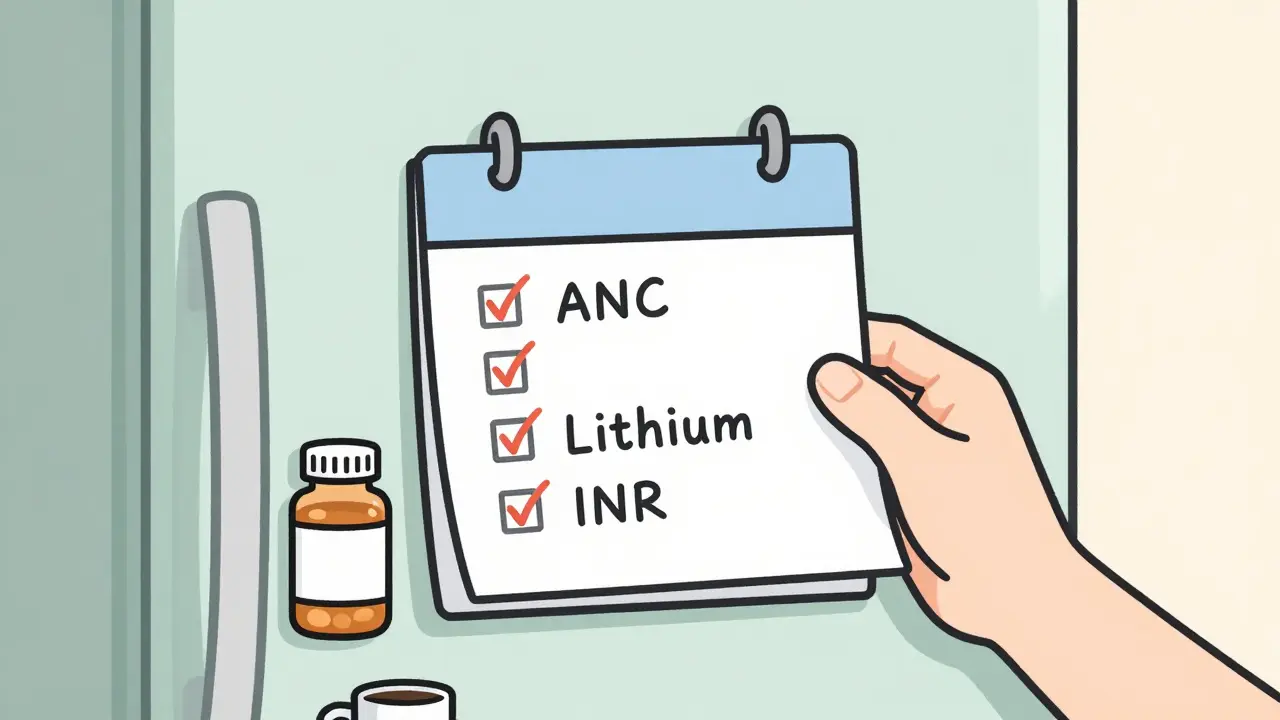
You don’t need fancy tech to stay on track. But you do need something reliable. Printable calendars from providers like CBH Philly give you a clear grid: date, test, result, side effect notes. You can tape it to your fridge. Fill it out after each blood draw. Bring it to every appointment. Simple. Effective. Digital tools take it further. The Health Manager app from Blood Cancer United lets you log not just lab dates, but also what you ate, how much you slept, and when you felt off. Over time, it shows patterns - like “I always get dizzy two days after my lithium dose” or “My nausea spikes after eating dairy.” That’s insight you can’t get from a paper chart. Ulta Lab Tests lets you order your own labs, but it doesn’t remind you when to test. It’s useful if you’re self-monitoring, but it’s not a calendar. It’s just a store. The real game-changer? Integration. Some EHR systems now auto-schedule lab draws based on your medication. If your doctor prescribes clozapine, the system flags your next ANC test and sends you a text. No more guessing.
What Happens When You Skip a Test
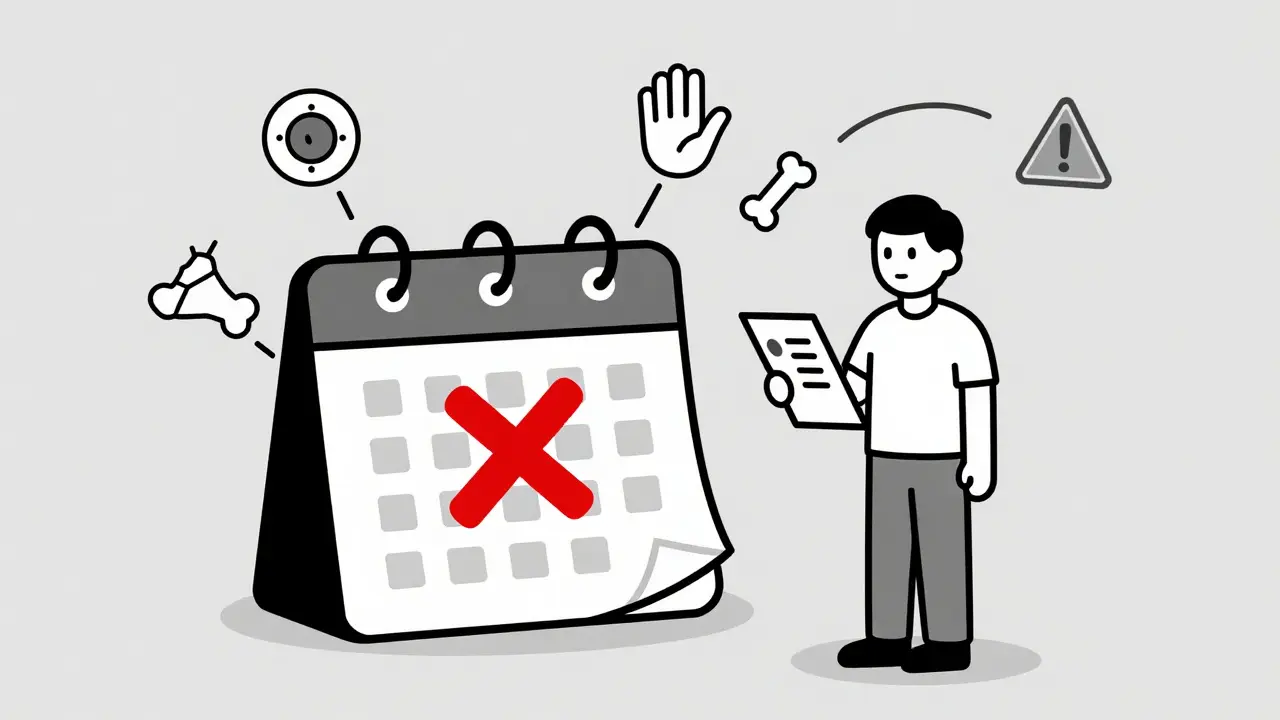
Let’s be blunt: skipping a lab test isn’t just careless - it’s dangerous. A 2024 study from the National Institutes of Health found that over 40% of lithium toxicity cases happened because patients hadn’t had a level check in over a year. Many didn’t even know they needed one. Warfarin users who missed INR checks were 3 times more likely to have a major bleed. And in cancer patients on LONSURF, those who skipped weekly blood counts had a 60% higher chance of hospitalization due to low blood counts. It’s not about being “bad” at managing your health. It’s about forgetting. Life gets busy. You miss a week. Then another. Before you know it, you’re six months behind. That’s why your calendar needs to be visible, simple, and tied to something you already do - like taking your pill or brushing your teeth.Building Your Personal Lab Calendar
Start here:- Know your meds. Write down every drug you’re on - including supplements. Look up each one’s monitoring requirements. Don’t rely on memory.
- Find your tool. Pick one: printable template, app, or digital calendar synced with your phone. Use the same one every time.
- Set reminders. Don’t just rely on the calendar. Set a recurring alert 3 days before each test. Label it: “ANC Blood Draw - DO NOT SKIP.”
- Track symptoms. Next to each test date, write down: fatigue, nausea, rash, bruising, confusion. Even small changes matter.
- Bring it to every visit. Your doctor doesn’t remember your last test. You do. Make it part of your routine.
- Update it. If your dose changes, your monitoring changes. Adjust your calendar immediately.
For example: If you start on clozapine, your calendar might look like this:
- Week 1: ANC test - note energy level, fever, sore throat
- Week 2: ANC test - note mouth ulcers, dizziness
- Week 3: ANC test - note weight gain, dry mouth
- Week 4: ANC test - if ANC >1500, switch to every 2 weeks
- Month 3: ANC test - if stable, switch to monthly
And keep going. Even if you feel fine.
The Hidden Cost of Ignoring Monitoring
You might think, “I feel fine. Why test?” But side effects don’t announce themselves. They creep in. A patient on long-term steroids might feel great - until they fracture a bone from osteoporosis they didn’t know they had. A person on antipsychotics might not notice their blood sugar rising - until they’re diagnosed with type 2 diabetes. A lithium user might think their hand tremor is just stress - until they’re admitted for toxicity. These aren’t rare cases. They’re predictable. And preventable. Lab monitoring calendars turn guesswork into control. They give you power over your body’s hidden responses. They turn passive patients into active partners in care.What’s Next? AI, Wearables, and Better Systems
The future is coming. Apps are starting to sync lab calendars with smartwatches that track heart rate variability, sleep patterns, and even sweat chemistry. AI is being trained to predict which patients are most likely to develop side effects based on past lab trends - not just one result, but a whole history. But right now, the best tool is still the one you use consistently: a calendar, a reminder, a habit. No app replaces the discipline of showing up for your test. No algorithm replaces the clarity of writing down how you felt after your last dose. Stick with what works. Keep your calendar updated. Talk to your provider. Your next lab result might not just be a number - it could be your lifeline.Do I need a lab calendar if I feel fine?
Yes. Many dangerous side effects - like low white blood cell counts, kidney stress, or adrenal suppression - don’t cause symptoms until they’re severe. Lab tests catch these before you feel anything. Feeling fine doesn’t mean your body is fine.
Can I just rely on my doctor to remind me?
No. Doctors manage dozens of patients. They can’t track every lab schedule for everyone. Even with electronic records, missed tests are common. You are your own best advocate. Keep your own calendar and bring it to every appointment.
What if I miss a lab test?
Call your provider right away. Some meds, like clozapine or lithium, require immediate action if a test is missed. You may need to pause your medication until the test is done. Never assume it’s okay to wait. Delaying can lead to serious complications.
Are digital apps better than paper calendars?
It depends. Digital apps (like Health Manager) let you link side effects to food, sleep, or timing - giving you deeper insights. But paper calendars are simpler, don’t need batteries, and are easier to bring to appointments. Use whichever you’ll stick with. Consistency matters more than format.
How often should I update my lab calendar?
Update it every time your medication changes - dose, timing, or new drug. Also update it if your doctor changes your monitoring schedule. A calendar that’s outdated is useless. Treat it like your medication schedule: it’s part of your treatment plan.
Can I order my own lab tests without a doctor?
Yes, services like Ulta Lab Tests let you order tests directly. But you still need a provider to interpret the results. A low ANC or high lithium level isn’t something you should self-diagnose. Always share your results with your doctor and update your calendar together.


Kathy Leslie
March 14, 2026 AT 06:27