
Have you ever touched your upper arms or thighs and felt a texture like sandpaper? If you’ve seen tiny, rough bumps that look like permanent goosebumps, you are likely dealing with Keratosis Pilaris, commonly known as chicken skin. It is incredibly common, affecting up to 70% of teenagers and about 40% of adults. While it looks annoying and feels rough, the good news is that it is harmless, not contagious, and often improves as you get older.
The frustration with KP isn’t medical-it’s cosmetic and tactile. You want smooth skin, but standard lotions just sit on top. The key to managing this condition lies in understanding why those bumps form and using specific ingredients to dissolve them gently. Here is how to tackle rough skin effectively without causing more irritation.
What Causes Those Rough Bumps?
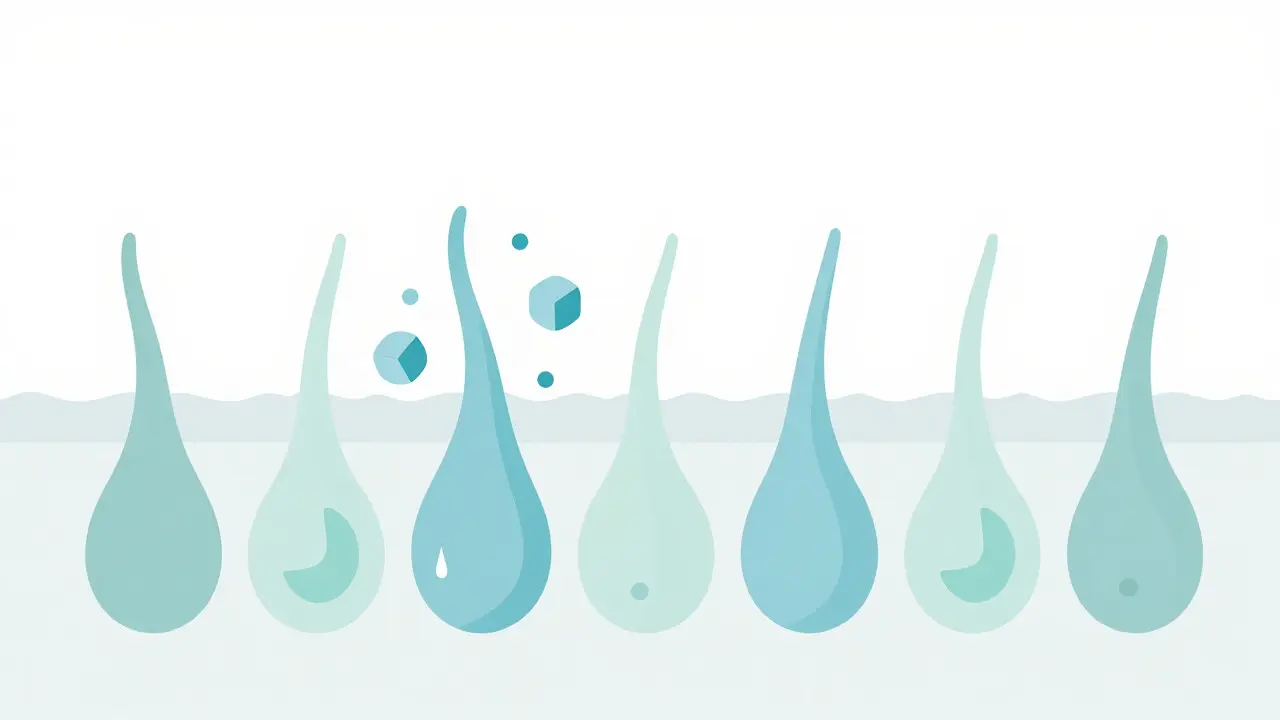
To treat KP, you first need to know what you are fighting. It starts with keratin, a hard protein that protects your skin. In people with KP, too much keratin builds up and forms a plug that blocks the hair follicle opening. This blockage creates the small, raised bumps you see and feel.
This condition runs in families. About half of all cases have a genetic link, specifically involving mutations in the filaggrin gene, which helps maintain the skin barrier. You might also notice KP is worse if you have eczema or dry skin conditions like ichthyosis. Seasonal changes play a huge role too. When humidity drops below 40% in winter, your skin loses moisture faster, making the keratin plugs harder and more visible. That is why many people find their 'chicken skin' flares up significantly during colder months.
Why Gentle Exfoliation Is Key
Your instinct might be to scrub the bumps away. Resist that urge. Dermatologists warn that harsh physical scrubs can worsen inflammation and lead to dark spots (post-inflammatory hyperpigmentation). Instead, you need chemical exfoliants that dissolve the keratin plugs from within.
The most effective active ingredients for KP include:
- Lactic Acid: An alpha-hydroxy acid (AHA) that breaks down dead skin cells. Creams with 10-12% lactic acid can improve skin texture by 40-60% after 4-6 weeks of consistent use.
- Urea: A powerhouse ingredient that both exfoliates and hydrates. Urea creams at 10-20% concentration reduce scaling in 65% of users within two months.
- Glycolic Acid: Another AHA that promotes cell turnover. Formulations with 8-12% glycolic acid show noticeable smoothing after 12 weeks.
- Salicylic Acid: A beta-hydroxy acid (BHA) that penetrates oil-filled pores. It is particularly helpful if your KP is accompanied by acne.
Retinoids, like tretinoin, are prescription-strength options that speed up cell turnover. They work well for about 70% of patients but take 3-6 months to show results and can cause significant irritation initially. For most people, starting with over-the-counter AHAs or urea is safer and more sustainable.
Building a Routine That Actually Works
Consistency is the hardest part of treating KP. You cannot fix it overnight, and stopping treatment usually means symptoms return within 2-4 weeks. Here is a practical daily protocol recommended by dermatologists:
- Shower Smart: Use lukewarm water, not hot. Hot water strips natural oils and worsens dryness. Limit showers to 5-10 minutes.
- Apply Treatment to Damp Skin: Within 3 minutes of getting out of the shower, apply your exfoliating product (lactic acid, urea, or salicylic acid). Your skin is more permeable when damp, allowing better absorption.
- Moisturize Heavily: Follow up immediately with a thick, ceramide-rich moisturizer. Ceramides help repair the skin barrier, reducing the chance of new keratin plugs forming. Experts note that combining moisturizers with exfoliants yields 30% better long-term results than exfoliants alone.
- Be Patient: Expect to wait 8-12 weeks to see significant improvement. Do not judge the product after one week.
Avoid tight synthetic clothing that rubs against the affected areas. Loose cotton fabrics reduce friction-related irritation, which can aggravate the bumps.
Product Comparison: What Should You Buy?
| Product Type | Key Ingredient | Expected Results | Best For |
|---|---|---|---|
| AmLactin Lotion | 12% Lactic Acid | Visible smoothing in 4-8 weeks | Dry, rough patches on arms/thighs |
| CeraVe SA Lotion | Saliclic Acid + Ceramides | Gentle exfoliation and barrier repair | Sensitive skin prone to irritation |
| Eucerin Advanced Repair | 10-20% Urea | Reduces scaling and intense dryness | Very dry, scaly skin |
| Paula's Choice AHA Lotion | 8% Glycolic Acid | Improves texture and tone | Body skin with discoloration |
User feedback consistently highlights that AmLactin and CeraVe SA are top performers. However, some users experience initial stinging with lactic acid products. If this happens, reduce application to every other day until your skin adjusts. Most people find the sensation subsides after 1-2 weeks.
When to See a Dermatologist
For most people, home care is enough. But if your KP is inflamed, red, or painful, you might have an inflammatory variant that requires professional intervention. Laser therapy, such as pulsed-dye laser, can reduce redness by 50-75% in severe cases. While expensive and often not covered by insurance, it is an option for those struggling with persistent erythema (redness) despite topical treatments.
Also consult a doctor if you suspect your condition is actually eczema or psoriasis. Misdiagnosis leads to ineffective treatment. A dermatologist can confirm KP through visual examination and rule out other follicular disorders.
Managing Expectations
It is crucial to set realistic goals. There is no cure for keratosis pilaris. The goal is management-keeping the skin smooth and comfortable. Studies show that only about 28% of patients achieve complete clearance by age 30. For the rest, ongoing maintenance is necessary. Accepting that KP may never fully disappear helps reduce the stress and frustration associated with chasing 'perfect' skin. Focus on progress, not perfection. With the right routine, you can significantly improve your skin’s texture and confidence.
Is Keratosis Pilaris contagious?
No, KP is not contagious. It is a genetic condition related to how your body produces keratin. You cannot catch it from someone else or spread it to other parts of your body through contact.
Will Keratosis Pilaris go away on its own?
Often, yes. Many children outgrow KP by their late teens or early twenties. However, about 40% of adults still have it. Even if it doesn't disappear completely, it often becomes less severe with age.
Can I pop the bumps?
Avoid popping them. Picking can damage the hair follicle, leading to infection, scarring, or dark spots. Chemical exfoliants are a much safer way to remove the keratin plugs.
Does diet affect Keratosis Pilaris?
There is limited direct evidence linking specific foods to KP. However, staying hydrated and eating a balanced diet rich in vitamins A and E supports overall skin health. Some anecdotal reports suggest reducing dairy or sugar might help, but scientific data is inconclusive.
How long does it take for treatments to work?
Patience is key. Most topical treatments require 8-12 weeks of consistent daily use to show significant improvement. You might notice slight softening after a few weeks, but full texture changes take time.