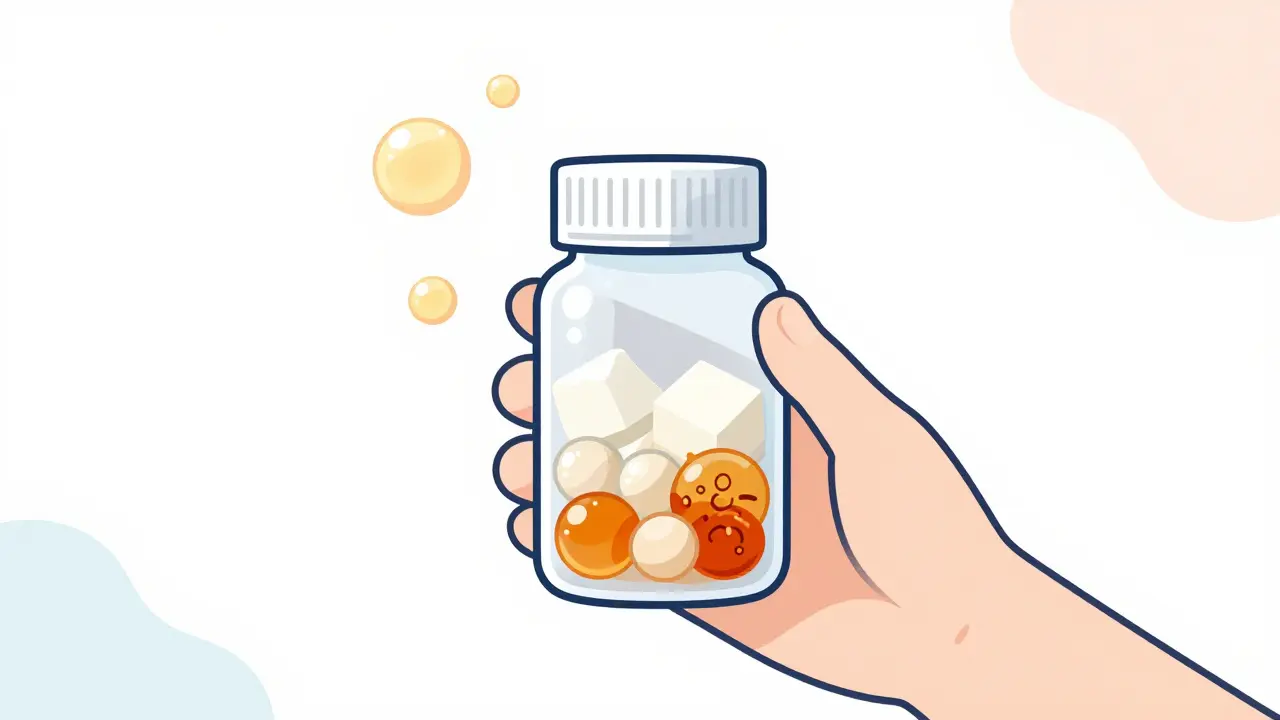
When you pick up a prescription at the pharmacy, you assume the pill you’re taking will work the same way every time-no matter if it’s brand name or generic. But what if the problem isn’t the active drug at all? What if it’s the stuff you can’t see-the fillers, dyes, and preservatives-that’s causing your stomach to churn, your skin to breakout, or your medication to suddenly stop working?
What You’re Really Taking
Generic medications are supposed to be exact copies of brand-name drugs. They contain the same active ingredient, same dose, same intended effect. But here’s the catch: they don’t have to match the inactive ingredients. These are called excipients, and they’re everything that’s not the medicine itself: lactose, corn starch, titanium dioxide, propylene glycol, tartrazine dye, sodium benzoate, and more. They help the pill hold its shape, dissolve properly, taste better, or last longer on the shelf. For most people, they’re harmless. But when you’re taking five, six, or seven different generic pills a day, those harmless ingredients start adding up.A 2020 study found that someone on ten prescriptions ingests nearly 2.8 grams of inactive ingredients every single day. That’s over half a teaspoon of chemicals you didn’t ask for-and they’re not all the same across brands. One generic version of metoprolol might use lactose. Another might use mannitol. A third might use both. And if you’re taking three different generics for blood pressure, cholesterol, and diabetes-all with lactose-you could be hitting 300mg, 400mg, even 600mg of lactose daily. For someone with lactose intolerance, that’s not just discomfort. That’s bloating, cramps, diarrhea. And you might not connect it to your meds at all.
The Hidden Risks
Some excipients are known troublemakers. Lactose affects about 65% of the global population to some degree. Propylene glycol shows up in nearly half of all liquid medications and can cause headaches, nausea, or even seizures in sensitive individuals at high doses. Tartrazine (Yellow No. 5) triggers allergic reactions in around 4% of people, often mistaken for food allergies. Bisulfites, used as preservatives in some injectables and inhalers, can cause life-threatening asthma attacks in 5-10% of asthmatics.And here’s the kicker: you might not even know you’re sensitive until you’re on multiple generics. One patient on Reddit described taking three different generic thyroid meds-all containing lactose-and suddenly developing severe diarrhea. She’d taken each one alone before with no issues. But together, the cumulative dose crossed her personal tolerance threshold. That’s not rare. Pharmacists report one in four see at least one patient per month with unexplained symptoms tied to excipient overload.
Why Generics Are Different
Brand-name drugs stick to the same formula for years. Generics? Each manufacturer picks their own excipients to cut costs, improve stability, or speed up production. The FDA doesn’t require them to match. All they need to prove is that the active ingredient gets absorbed into your bloodstream within 80-125% of the brand-name version. That’s called bioequivalence. But it doesn’t check if the filler is triggering inflammation, blocking absorption, or interacting with another excipient in your other meds.Studies have shown differences in peak drug levels between brand and generic versions of antiepileptic drugs-up to 20%-due to excipient changes. For drugs like digoxin, where the difference between a therapeutic dose and a toxic one is tiny, even a small shift in absorption can mean hospitalization. The FDA has documented cases where switching generics led to therapeutic failure, not because the drug was bad, but because the binder slowed down how fast it dissolved.
Who’s at Risk?
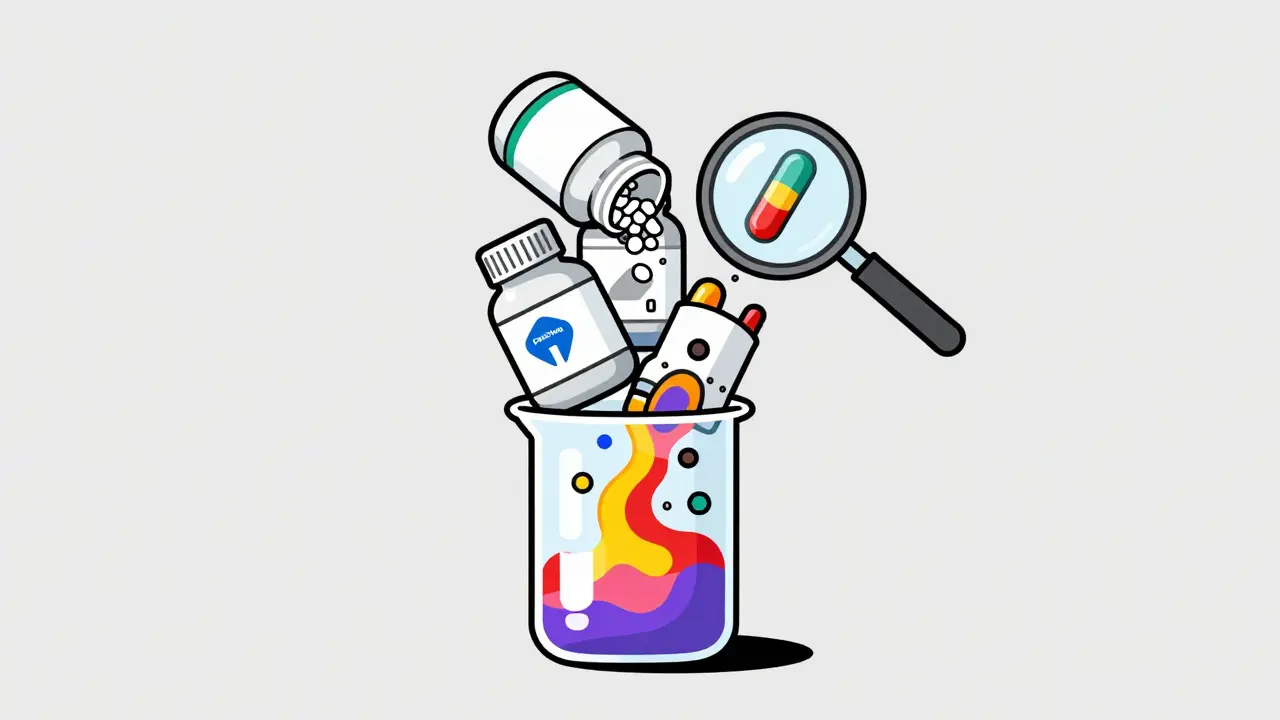
It’s not just people with known allergies. Older adults on multiple prescriptions are the most vulnerable. The average Medicare patient takes 4.8 medications daily. Many are on generics because of cost. But with age comes reduced liver and kidney function, making it harder to clear even harmless excipients. Children, people with autoimmune conditions, and those with chronic GI issues are also at higher risk.And it’s not just oral pills. Inhalers, creams, eye drops, even IV fluids can contain problematic excipients. A steroid inhaler with propylene glycol might trigger coughing in someone who’s never had asthma before. A topical cream with parabens could cause a rash that looks like eczema but doesn’t respond to treatment-because it’s not eczema at all.
What You Can Do
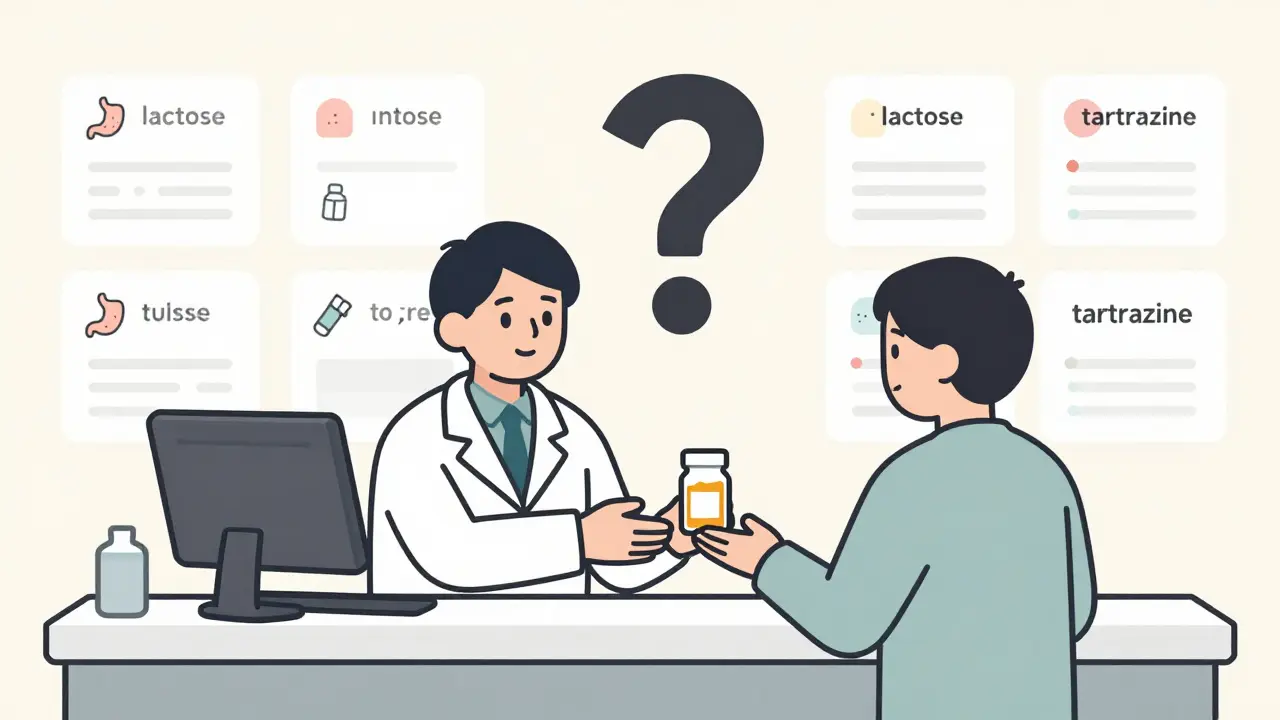
You don’t have to accept this as normal. Here’s what works:- Ask your pharmacist for the full ingredient list. Most package inserts don’t list everything. Call the manufacturer or check the FDA’s Inactive Ingredient Database. It’s updated quarterly and free to use.
- Track your symptoms. Keep a log: when did your bloating start? After you added the new generic blood pressure pill? Did your rash appear after switching your antidepressant? Correlate timing with new meds.
- Ask for the same generic manufacturer. If one version of your generic lisinopril works fine, stick with it. Don’t let the pharmacy swap it out unless you say yes. Many pharmacies will honor this request if you ask.
- Request non-lactose or dye-free versions. Many generics now offer lactose-free, gluten-free, or dye-free options. They might cost a little more, but they’re worth it if you’re reacting.
- Use MedCheck AI or similar tools. New AI systems launched in late 2023 can scan your entire medication list and flag potential excipient conflicts. Ask your pharmacist if your pharmacy uses one.
The Bigger Picture
The generic drug market is huge-$187 billion globally in 2022, and growing fast. But the system was built for efficiency, not safety in combinations. The FDA’s stance has been: “No proof of harm, so no need to change.” But case reports keep piling up. The European Medicines Agency already requires manufacturers to justify using excipients that affect more than 0.1% of the population. In the U.S., the FDA launched the Inactive Ingredient Transparency Initiative in January 2024, forcing companies to list all excipients in digital labels by December 2025.By 2026, the EU will require formal risk assessments for drugs commonly used together. That’s a step forward. But until U.S. regulators require cumulative exposure checks, it’s up to you and your pharmacist to catch the problems before they catch you.
Real Stories, Real Consequences
One woman in Florida switched from brand-name levothyroxine to a cheaper generic. Within weeks, her TSH levels spiked. Her doctor blamed poor compliance. She insisted something was off. Her pharmacist pulled up the ingredient list: the new generic had calcium carbonate as a filler. Calcium blocks thyroid hormone absorption. She switched back to a calcium-free generic-and her levels normalized in six weeks.A veteran in Arizona developed hives every time he took his generic metformin. He’d never had allergies before. His pharmacist found the culprit: FD&C Red No. 40. He switched to a dye-free version. The hives vanished.
These aren’t outliers. They’re symptoms of a system that treats pills like interchangeable parts-when they’re not.
Final Thought
Your medication isn’t just about the active ingredient. It’s about the whole package. When you’re on multiple generics, you’re not just taking drugs-you’re taking a cocktail of fillers, dyes, and preservatives you never agreed to. Most of the time, it’s fine. But when it’s not, the consequences can be serious-and avoidable.Don’t assume your meds are safe just because they’re generic. Ask. Track. Switch if needed. Your body is telling you something. Listen.
Can inactive ingredients in generic drugs really cause side effects?
Yes. While inactive ingredients (excipients) don’t treat your condition, they can trigger reactions in sensitive individuals. Common culprits include lactose (causing GI distress), propylene glycol (linked to headaches or seizures in high doses), and artificial dyes like tartrazine (which can cause rashes or asthma). These reactions become more likely when multiple generics with the same excipient are taken together, leading to cumulative exposure.
Why do generic versions of the same drug have different ingredients?
Generic manufacturers choose their own excipients to reduce costs, improve stability, or meet production needs. The FDA only requires that the active ingredient matches the brand-name drug in strength and absorption rate-not the fillers, dyes, or binders. As a result, one generic version of, say, metformin might use corn starch, while another uses lactose or microcrystalline cellulose. There are over 27 different formulations for levothyroxine alone.
How can I find out what’s in my generic medication?
Check the package insert, but don’t rely on it alone-many don’t list all ingredients. Use the FDA’s Inactive Ingredient Database (available online), ask your pharmacist to look up the NDC number, or call the manufacturer directly. Some pharmacies now use tools like MedCheck AI to scan your prescriptions for potential excipient conflicts.
Should I avoid all generic medications?
No. Generics are safe and effective for most people and save billions in healthcare costs. The issue isn’t generics themselves-it’s the lack of awareness about excipient combinations. If you’re on multiple meds and experience unexplained symptoms, investigate the inactive ingredients. Often, switching to a different generic version with compatible excipients resolves the problem.
Are there any medications where excipient differences are especially dangerous?
Yes. Drugs with narrow therapeutic indexes-like digoxin, warfarin, levothyroxine, and certain antiepileptics-are most vulnerable. Even small changes in how the drug is absorbed due to excipients can push levels into toxic or ineffective ranges. The FDA has documented cases of therapeutic failure and toxicity linked to switching generics in these drugs.
What should I do if I think my meds are causing an excipient reaction?
Don’t stop your meds without talking to your doctor. Instead, keep a symptom diary and review your entire medication list with your pharmacist. Ask them to check for repeated excipients across your prescriptions. If a pattern emerges, request a switch to a different generic version or a brand-name option if necessary. Many patients find relief simply by avoiding a single problematic ingredient like lactose or tartrazine.


Annie Choi
January 15, 2026 AT 03:26