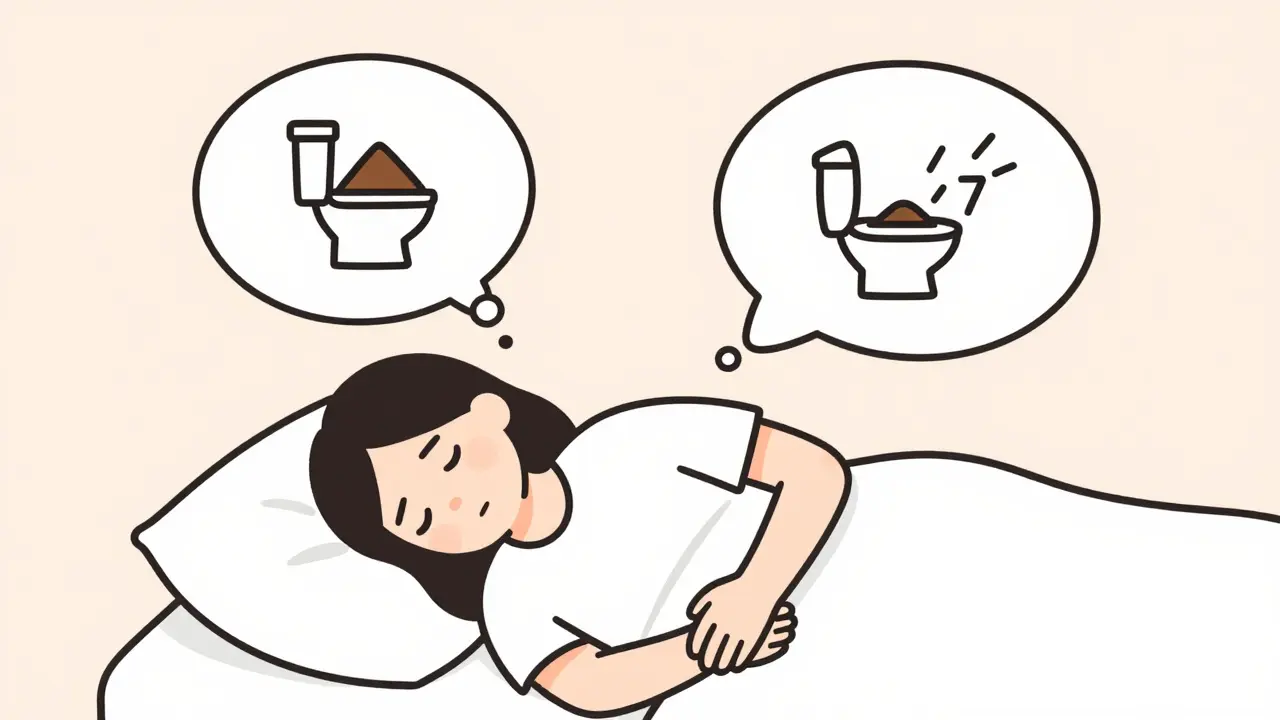
Living with IBS-Mixed means your gut feels like a switch-some days you’re stuck, others you’re rushing to the bathroom. There’s no warning. No pattern you can count on. You wake up with bloating, spend the morning in pain, and by lunch, you’re canceling plans because you’re not sure if you’ll make it to the toilet in time. This isn’t just an upset stomach. This is IBS-Mixed, a real and often misunderstood condition that affects about 1 in 5 people with IBS. And while it’s not life-threatening, it can make life feel unmanageable.
What Exactly Is IBS-Mixed?
IBS-Mixed, or IBS-M, is a subtype of Irritable Bowel Syndrome where you alternate between constipation and diarrhea. To be diagnosed, you need to have abdominal pain at least once a week for three months, along with changes in bowel habits. Specifically, at least 25% of your stools should be hard or lumpy (Bristol Stool Scale types 1-2) and another 25% should be loose or watery (types 6-7). That’s the official rule-but what it feels like is chaos. One day you’re taking laxatives, the next you’re reaching for Imodium. No treatment seems to work consistently.
Unlike Crohn’s or ulcerative colitis, IBS-M doesn’t show inflammation or damage on scans. It’s a functional disorder: your gut is working, but it’s working wrong. Nerves in your intestines are too sensitive. Your gut moves too fast or too slow. The bacteria living inside you are out of balance. And stress? It doesn’t just make you anxious-it makes your stomach cramp.
Why Is IBS-Mixed So Hard to Treat?
Here’s the catch: treatments that help one symptom often make the other worse. Take loperamide (Imodium). It slows your bowels down-great for diarrhea. But if you’re constipated the next day? It makes it worse. Same with laxatives. Polyethylene glycol might get you moving, but if you’re already loose, it turns into a disaster.
Even medications made for IBS have limits. Linaclotide, approved for constipation-predominant IBS, only helps about 22% of IBS-M patients. Eluxadoline, for diarrhea-predominant IBS, works for just 19% of those with mixed symptoms. That’s why most doctors don’t rely on pills alone. They push for a combo approach: diet, stress control, and smart medication use.
The Low FODMAP Diet: What Works and What Doesn’t
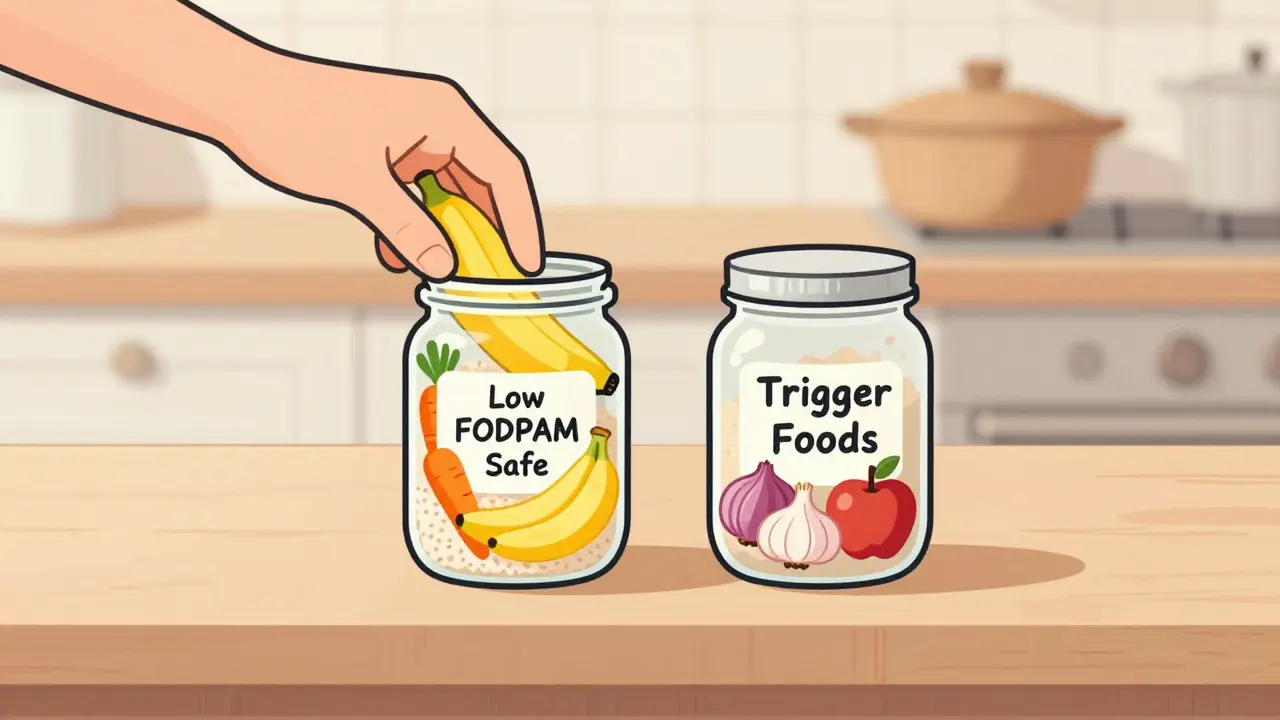
The low FODMAP diet is the most studied and effective dietary strategy for IBS-M. FODMAPs are short-chain carbs that ferment in your gut and cause gas, bloating, and irregular bowel movements. Common culprits: onions, garlic, wheat, dairy, apples, honey, and artificial sweeteners.
Studies show 50-60% of IBS-M patients feel better on this diet. That’s lower than the 70-75% seen in IBS-D, but still significant. The trick isn’t just cutting out foods-it’s doing it right. You start with a strict 2-6 week elimination phase. Then, you slowly add foods back in one at a time to see what triggers you. Most people can’t do this alone. A registered dietitian who specializes in IBS makes the difference between giving up and finally feeling in control.
Reddit users report real wins: one person cut symptom days from 25 to 8 per month after three months of low FODMAP and peppermint oil. But it’s not easy. After six months, over half of people feel diet fatigue. The restrictions are exhausting. Social events become minefields. That’s why it’s not a lifelong prison-it’s a tool to find your personal triggers, then build a flexible, sustainable plan around them.
Medications That Actually Help IBS-Mixed
There’s no magic pill for IBS-M. But some medications work better than others when used smartly.
- Antispasmodics like dicyclomine (10-20mg as needed) help reduce cramping and pain. They work equally well for all IBS types, including mixed.
- Antidepressants (especially tricyclics like amitriptyline) are surprisingly effective. They don’t treat depression here-they calm the nerves in your gut. Studies show 55-60% of IBS-M patients get pain relief and fewer bowel fluctuations with low-dose tricyclics.
- Peppermint oil capsules (enteric-coated, like IBgard) relax intestinal muscles. Many users report less bloating and pain. About 68% say it helps, though 22% get heartburn.
- For constipation: Polyethylene glycol (Miralax) is gentle and safe for daily use. Magnesium citrate works fast but shouldn’t be used long-term.
- For diarrhea: Loperamide (Imodium) is okay for occasional use. Don’t take it daily-it can lead to worse constipation later.
The best strategy? Keep both meds on hand. Take the laxative only when stools are hard. Use loperamide only when they’re watery. No guessing. No overuse.
Stress Is a Major Trigger-Here’s How to Fight It
Over half of IBS-M patients say stress makes their symptoms worse. It’s not in your head-it’s in your gut. The brain and gut are wired together. When you’re stressed, your gut reacts.
Cognitive Behavioral Therapy (CBT) is one of the most powerful tools you can use. It’s not just talking. It’s learning how your thoughts affect your body. A 2021 review found CBT reduced IBS symptoms by 40-50%, far more than just reading about the condition. Apps like Cara Care and The IBS Clinic offer guided CBT programs you can do at home.
Other stress-reducing habits help too: daily breathing exercises, yoga, walking in nature, or even journaling for 10 minutes before bed. You don’t need to meditate for an hour. Just 5 minutes of slow breathing-inhale for 4 counts, hold for 4, exhale for 6-can calm your nervous system and ease gut spasms.
Tracking Your Symptoms: The Key to Taking Back Control
If you don’t track your symptoms, you’re flying blind. You might think dairy is the problem-but what if it’s the onion in your salad? Or the coffee you had with breakfast? Or the night you stayed up until 2 a.m.?
Start a daily log. Write down:
- What you ate and drank
- Stool type (use the Bristol Stool Scale-look it up online)
- Pain level (0-10)
- Stress level (0-10)
- Medications taken
Use an app like Cara Care or IBS Buddy. People who track digitally improve 35% more than those using paper. After 4-6 weeks, patterns emerge. Maybe you’re fine on weekends but crash every Monday. Maybe your pain spikes after alcohol but not wine. That’s your data. That’s your power.
What’s New in IBS-M Treatment?
Research is moving fast. In 2023, a new drug called ibodutant showed promise in phase 3 trials-45% of IBS-M patients improved, compared to 28% on placebo. It’s not approved yet, but it’s coming.
Microbiome testing is also gaining ground. Tests like Viome analyze your gut bacteria and give personalized food advice. In early studies, 58% of users saw symptom improvement. It’s expensive, but for people who’ve tried everything else, it’s worth considering.
The Rome Foundation is updating diagnostic rules for 2024. Instead of needing alternating symptoms in 25% of bowel movements, they’ll raise it to 30%. That might mean some people who thought they had IBS-M don’t qualify anymore. But it also means future treatments will be more precise.

Real-Life Strategies That Work
Here’s what real people with IBS-M are doing successfully:
- Combining dicyclomine (20mg as needed for pain) with 5g of psyllium husk daily-helped 52% of users on HealthUnlocked.
- Alternating loperamide during diarrhea flares and magnesium citrate during constipation-worked for 33%.
- Using enteric-coated peppermint oil daily and avoiding gluten and dairy-reported by 62% of Reddit users as their top relief method.
The common thread? No single fix. It’s a toolkit. You learn what works for you, and you adapt.
What to Avoid
Don’t rely on over-the-counter remedies as your main solution. Many people try laxatives, fiber supplements, and antidiarrheals for months before seeing a doctor. The average time to diagnosis is 6-7 years. That’s too long.
Don’t ignore mental health. If you’re anxious, depressed, or constantly worried about your next bowel movement, you’re not just having IBS-you’re carrying emotional weight that makes it worse.
Don’t quit the low FODMAP diet too soon. It takes 4-6 weeks to see results. And don’t try to do it alone. A dietitian can help you avoid nutrient gaps and make it sustainable.
Final Thoughts: You’re Not Broken
IBS-Mixed isn’t your fault. It’s not weakness. It’s not "just stress." It’s a real, complex condition with real, manageable solutions. The goal isn’t perfection. It’s fewer bad days. Less pain. More freedom.
Start small. Track for two weeks. Try one dietary change. Talk to your doctor about antidepressants or peppermint oil. Give CBT a shot. You don’t need to fix everything at once. Progress isn’t linear. Some days will be hard. But with the right tools, you can build a life where your gut doesn’t run your schedule.
Can IBS-Mixed be cured?
No, IBS-Mixed cannot be cured. It’s a chronic condition with no known single cause. But it can be managed effectively. Most people reduce symptoms by 50-70% with a combination of diet, stress management, and targeted medications. The goal is not to eliminate all symptoms, but to make them predictable and manageable.
Is IBS-Mixed the same as IBD?
No. IBS-Mixed is a functional disorder-it doesn’t cause inflammation or damage to the gut lining. IBD (Crohn’s disease or ulcerative colitis) involves chronic inflammation, ulcers, and can lead to serious complications like bowel obstruction or cancer. Blood tests, colonoscopies, and scans can tell them apart. IBS-M is diagnosed after ruling out IBD.
Can stress really cause IBS-Mixed symptoms?
Yes. Stress doesn’t cause IBS, but it triggers flare-ups in most people with it. The gut and brain are connected through the vagus nerve. When you’re stressed, your gut slows down or speeds up, increases sensitivity, and changes how bacteria behave. Managing stress with CBT, breathing, or mindfulness isn’t optional-it’s part of treatment.
Should I take fiber supplements for IBS-Mixed?
Soluble fiber like psyllium husk (Metamucil) can help both constipation and diarrhea by absorbing water and forming a gel that normalizes stool. It’s gentle and safe for daily use. Avoid insoluble fiber (like wheat bran), which can worsen bloating and gas. Start with 5g per day and increase slowly.
Why do some medications make my IBS-Mixed worse?
Because IBS-Mixed involves opposing symptoms, treatments that help one can hurt the other. Laxatives can trigger diarrhea. Antidiarrheals can cause constipation. Even fiber can cause bloating if introduced too fast. The key is to treat symptoms as they appear-not to take meds daily. Keep two options on hand and use them only when needed.
How long does it take to see improvement with the low FODMAP diet?
Most people notice improvement within 2-6 weeks of strict elimination. But full results take longer-up to 12 weeks-once you start reintroducing foods. Many give up too early. Stick with it. Work with a dietitian. The goal isn’t to stay on the diet forever-it’s to find your personal triggers and build a flexible eating plan that works long-term.


Dorine Anthony
December 19, 2025 AT 09:51