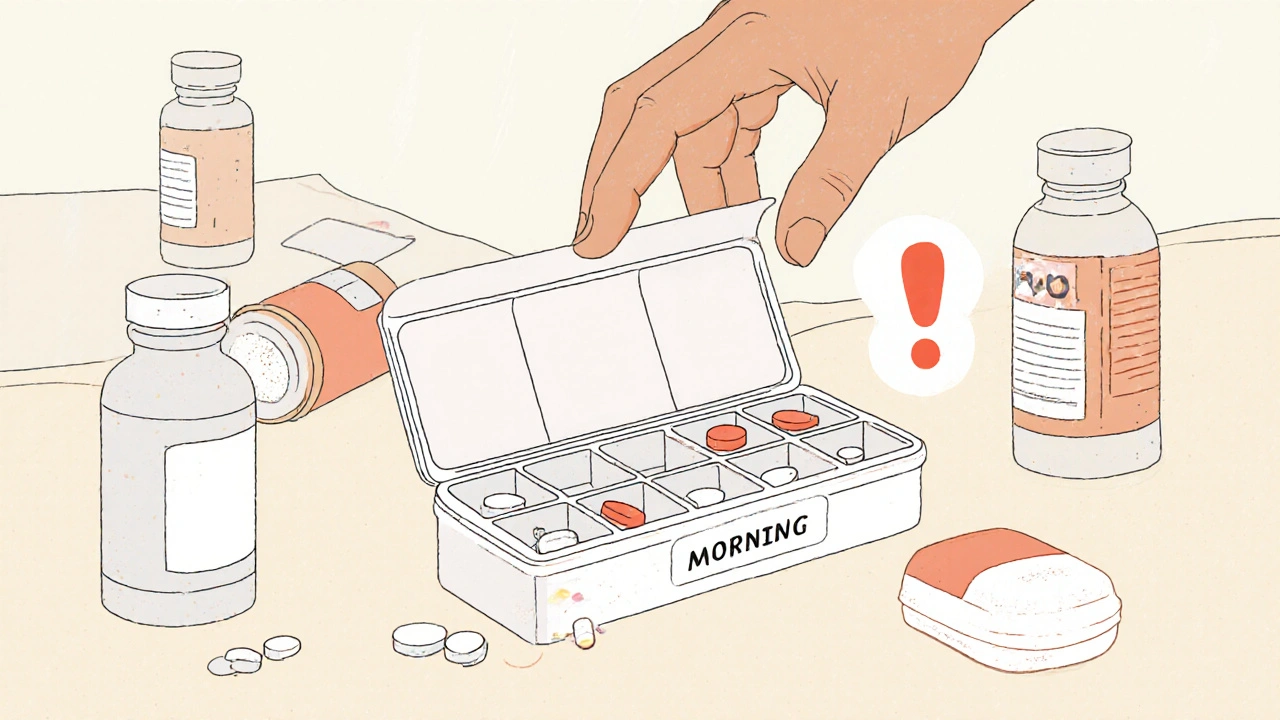
Using a pill organizer can save your life-if you use it right. But if you fill it wrong, it can kill you. Every year, thousands of people accidentally overdose because they trusted a simple plastic box to keep them safe. The truth? A pill organizer isn’t magic. It’s a tool. And like any tool, it can backfire if you don’t know how to handle it.
Why Pill Organizers Are Risky When Used Wrong
Pill organizers are designed to help people take the right medicine at the right time. They’re especially helpful for seniors taking five or more pills a day. But here’s the catch: a 2022 study in the Journal of the American Geriatrics Society found that improper use of pill organizers increases overdose risk by 23% in older adults. That’s not a typo. The very thing meant to protect you can become a trap. The biggest danger? Mixing "as needed" meds like painkillers or sleep aids into your daily compartments. People think, "I’ll just put my ibuprofen in Monday’s morning slot so I don’t forget." But what happens when you’re in pain on Wednesday and reach for that same slot? You take two doses in three days. Or worse-you take it again on Thursday because you think you missed it. That’s how overdoses start. Another big mistake: filling your organizer from old pill bottles instead of your current medication list. If your doctor changed your dose last week but you’re still using last month’s bottle labels, you’re flying blind. A 2023 WebMD report showed that 28% of medication errors happen because people refill organizers using outdated labels.What Kind of Pills Should Never Go in a Pill Organizer?
Not all pills are made to live in a plastic box. Some need special care. Here’s what to keep out:- Liquid medications - They leak, mix, and ruin other pills.
- Refrigerated drugs - Like insulin or certain antibiotics. Heat and humidity destroy them.
- Chewable or dissolvable pills - They crumble, stick together, or dissolve into a gooey mess.
- Soft gel capsules - They can burst or stick to the plastic, making dosing inaccurate.
- PRN (as-needed) medications - Pain relievers, anti-anxiety pills, sleep aids. These should stay in their original bottles, clearly labeled, and kept separate from your daily organizer.
How to Fill a Pill Organizer Correctly
Filling your organizer isn’t a chore you rush through while watching TV. It’s a safety check. Follow these steps exactly:- Wash your hands - Use soap and water for at least 20 seconds. Dirty hands can contaminate pills or transfer residue from one medicine to another.
- Gather everything - Your current medication list (from your doctor or pharmacy), all original pill bottles, your organizer, and a clean surface.
- Organize by time - Group all your pills by when you take them: morning, afternoon, evening, bedtime.
- Fill one medication at a time - Don’t dump all your pills in. Take one bottle, read the label, count out the pills for one day, then place them in the correct compartment. Then move to the next pill. This prevents mix-ups.
- Double-check each compartment - After filling, look at each slot. Does the pill match the name on your list? Does the number match the prescription? If you’re unsure, stop. Call your pharmacist.
- Keep original bottles nearby - Never toss them. They’re your backup. If you’re confused about what’s in a compartment, check the bottle. Always.
Where to Store Your Pill Organizer
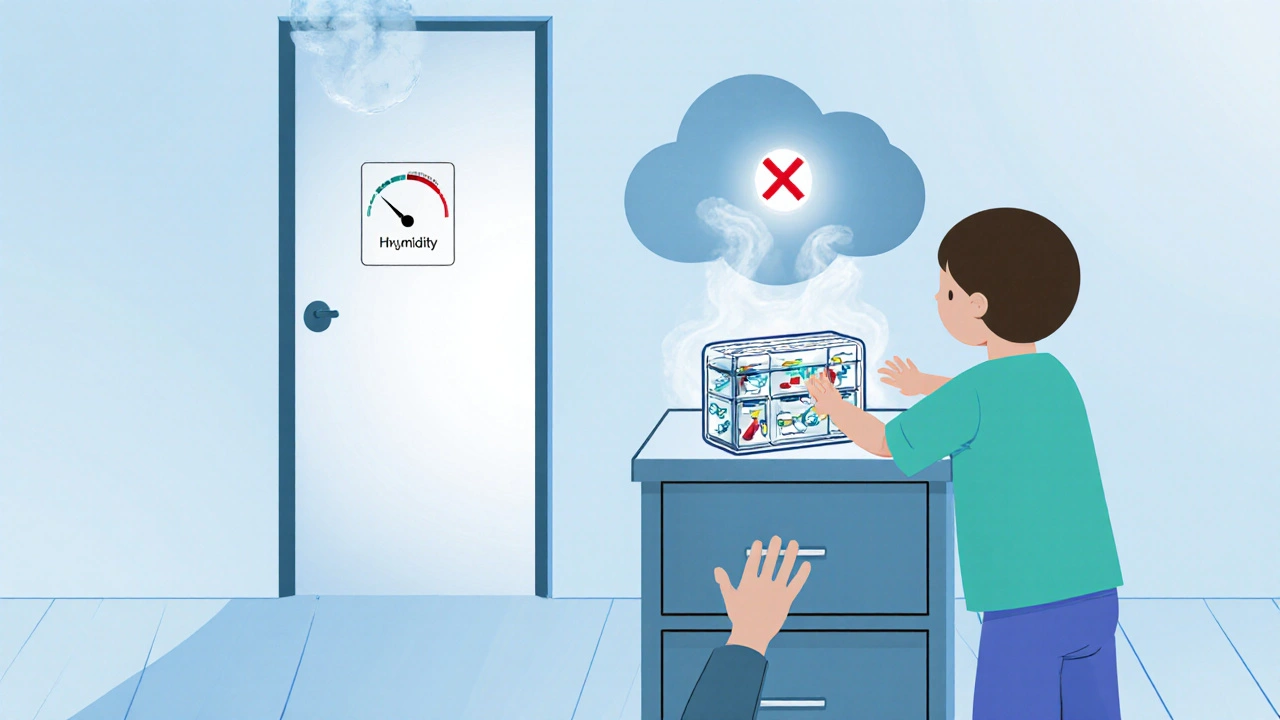
Don’t put it in the bathroom. Seriously. Not even if it’s convenient. Steam from showers, heat from radiators, and moisture from sinks ruin pills. The Kaiser Permanente guidelines say humidity above 60% causes pills to break down faster. A 2022 Hero Health study showed that pills stored in bathrooms degrade 47% faster than those kept in a cool, dry place. Store your organizer in a kitchen cabinet, bedroom drawer, or on a nightstand - anywhere cool, dry, and out of reach of kids or pets. If your organizer has child-resistant features, great. But don’t rely on them. Kids are curious. And they’re faster than you think.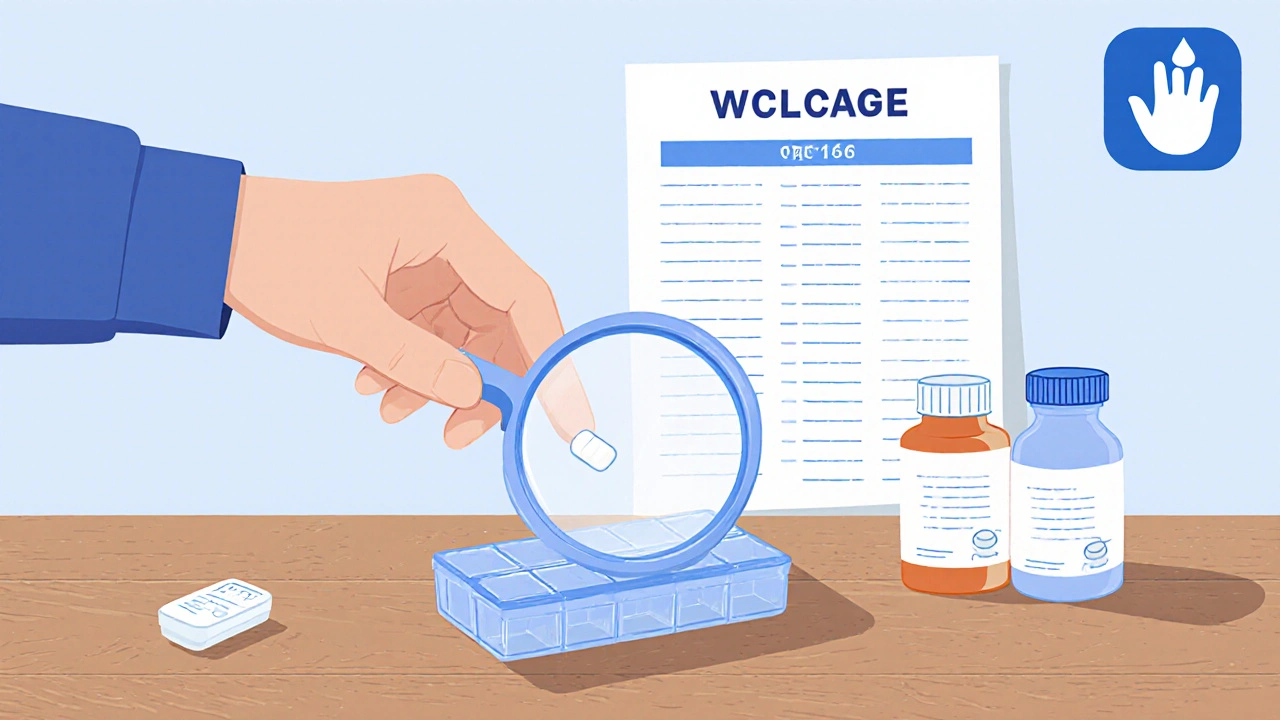
How Often Should You Refill?
Most pill organizers are designed for weekly use. That means you should fill them once a week - on the same day, every week. Sunday morning works well for most people because it gives you a clean start to the week. Never fill more than a week’s worth unless your pharmacist says it’s safe. Some medications lose potency after 30 days outside their original packaging. Even if your pills look fine, they might not work as well. Also, never refill your organizer after a prescription change unless you’ve verified everything again. If your doctor added, removed, or changed a dose, go back to Step 1. Wash your hands. Get the new list. Check each bottle. Fill slowly.What to Do When You’re Not Sure
If you’re confused about a pill - what it is, how much to take, or whether it’s even supposed to be in the organizer - stop. Don’t guess. Call your pharmacist. They’re paid to answer these questions. Most pharmacies now offer free organizer-filling services with pharmacist verification. In 2023, 68% of U.S. pharmacies started offering this service, and it cuts errors by 52% compared to self-filling. If you’re caring for someone else, ask the pharmacist to label each compartment with the medication name and time. Some organizers even come with Braille labels for visually impaired users.Red Flags That Something’s Wrong
Watch for these warning signs:- You find the same pill in two different compartments.
- You can’t remember what’s in a slot.
- Pills look different than they did last week - color, shape, size.
- You’ve taken a pill more than once in a day.
- Your organizer is sticky, wet, or smells odd.
Smart Organizers: Are They Worth It?
There’s a new wave of electronic pill organizers that beep, flash, and even text your family if you miss a dose. Some cost up to $100. Are they worth it? For some people - yes. If you forget doses often, live alone, or have memory issues, a smart organizer with alarms and tracking can be a game-changer. Hero Health’s 2023 model, for example, sends alerts if someone opens a compartment more than once in four hours - a sign of possible overdose. But here’s the catch: tech doesn’t replace common sense. Even the fanciest organizer won’t stop you from putting your painkiller in the morning slot. You still need to follow the rules. And don’t assume a smart device is foolproof. If the battery dies, the alarm stops. Always keep your original bottles as backup.Real Stories, Real Consequences
On Reddit’s r/MedicationAdherence, users shared 142 overdose incidents in 2023 linked to pill organizer mistakes. The top three causes:- Putting PRN pain meds in daily compartments (58 cases)
- Not updating the organizer after a prescription change (49 cases)
- Combining pills that shouldn’t be stored together (35 cases)
Final Checklist: Your Safety Routine
Before you fill your organizer this week, run through this:- ✅ Do I have my current medication list? (Not last month’s)
- ✅ Are all original bottles within arm’s reach?
- ✅ Did I wash my hands for 20 seconds?
- ✅ Am I filling one pill at a time?
- ✅ Did I check each compartment against the label?
- ✅ Are PRN meds kept separate?
- ✅ Is the organizer stored in a cool, dry place?
- ✅ Did I set an alarm to remind me when to refill next week?
Can I put all my pills in one organizer?
No. Only solid oral pills that don’t need special storage can go in a standard organizer. Avoid liquids, refrigerated meds, chewables, soft gels, and "as needed" pills. Keep those in their original bottles.
Is it safe to fill my pill organizer a week in advance?
For most solid pills, yes - but only if they’re stored properly. Keep the organizer in a cool, dry place, away from heat and humidity. Never fill more than one week ahead unless your pharmacist approves it. Some medications lose strength after 30 days outside their original packaging.
What should I do if I accidentally take two doses?
Call your doctor or pharmacist immediately. Don’t wait. If you took a blood thinner, painkiller, or heart medication, even one extra dose can be dangerous. Keep your medication list handy so you can tell them exactly what you took and when.
Why shouldn’t I store my pill organizer in the bathroom?
Bathrooms are humid and hot, especially after showers. Moisture can make pills crumble, stick together, or lose potency. Studies show pills degrade 47% faster in high-humidity environments. Store your organizer in a kitchen cabinet or bedroom drawer instead.
Can my child accidentally take pills from my organizer?
Yes - even if it has child-resistant features. Kids are clever and fast. Always keep your organizer locked away or out of reach. If you have young children in the home, consider a locked organizer or keep it in a high cabinet. Never assume safety features are enough.
Do I still need to keep the original pill bottles?
Yes. Always. The organizer is a helper, not a replacement. Original bottles have the correct name, dosage, expiration date, and prescribing doctor. If you’re ever unsure what’s in a compartment, check the bottle. It’s your safety net.


Akash Sharma
November 26, 2025 AT 16:49