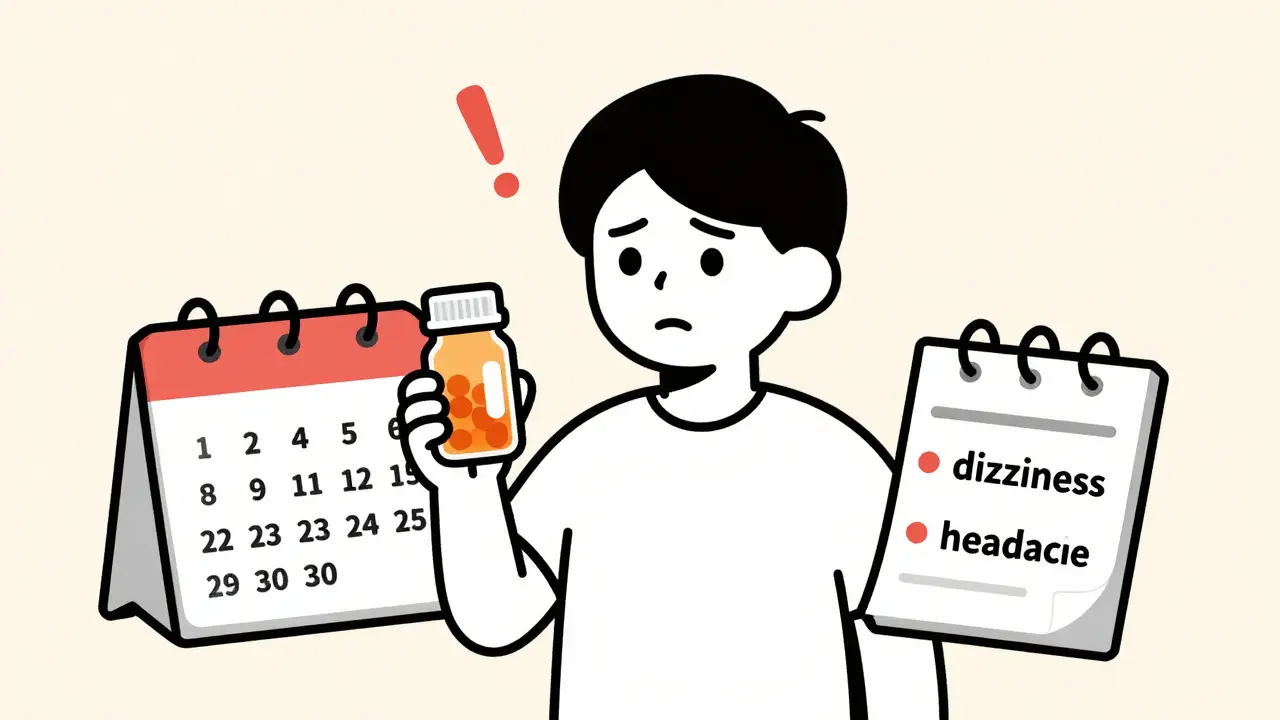
Someone gave you the wrong pill. You took it and felt dizzy. Or maybe your child was given a double dose at school, and the nurse said, "It’s probably fine." You’re not imagining things. Medication errors happen more often than you think-about 1.3 million people in the U.S. are injured every year because of them. And most of those errors never get reported. Why? Because people don’t know how. Or they’re afraid they’ll get blamed. Or they think no one will care.
Here’s the truth: reporting a medication error is not about pointing fingers-it’s about saving lives. Whether it’s a pharmacist giving you the wrong dose, a nurse administering insulin at the wrong time, or a doctor prescribing a drug that clashes with your other meds, your report could stop someone else from getting hurt. You don’t need to be a doctor. You don’t need legal help. You just need to know what to say, where to say it, and how to make sure someone listens.
Step 1: Recognize the Error
Before you can report it, you have to be sure it’s an error. Medication errors aren’t always obvious. Sometimes it’s a simple mix-up: you were supposed to get 5 mg of lisinopril, but you got 10 mg. Other times, it’s more subtle-a drug you’re allergic to was added to your list, or the label says "take with food," but you were told to take it on an empty stomach.
Look for these red flags:
- The pill looks different from your last refill (color, shape, markings)
- You’re told to take a drug you’ve never taken before, with no explanation
- You feel new symptoms shortly after starting or changing a medication (rash, nausea, confusion, rapid heartbeat)
- Your prescription label doesn’t match what your doctor said
- A school staff member gave your child a medication without your written consent
If something feels off, trust your gut. Don’t wait to see if it gets worse. Write down what happened: the name of the drug, the dose, when you took it, and how you felt. Take a photo of the pill bottle if you can. Keep the container-even if it’s empty. That’s evidence.
Step 2: Talk to Your Provider Immediately
Your first stop should be the person who prescribed or gave you the medication. Call your doctor’s office, pharmacy, or school nurse. Don’t wait until your next appointment. Say clearly: “I believe there was a medication error, and I’m concerned about my safety.”
Be specific. Don’t say, “I think something’s wrong.” Say: “I was given 20 mg of metoprolol instead of 10 mg. I’ve had a pounding headache and blurred vision since I took it yesterday.” Include the date, time, and where the error happened.
Ask: “Is this dangerous? Do I need to go to the ER?” If they brush you off-“It’s probably nothing”-push back. Say: “I’ve documented this. I’d like a written response and a plan to prevent this from happening again.” You have the right to be heard.
According to a 2022 study in BMJ Quality & Safety, 64% of patient-reported medication errors were dismissed without review-unless the patient had documentation. Your notes, photos, and pill bottles make your report impossible to ignore.
Step 3: Request Your Medical Records
Within 72 hours of the error, ask for a copy of your full medical record related to the incident. Under HIPAA, providers must give you access within 30 days. But don’t wait-call every day if you have to. You need proof of what was ordered versus what was given.
Look for:
- Prescription orders
- Medication administration records (MARs)
- Nurse or pharmacist notes
- Lab results showing drug levels
If you’re in a hospital, ask for the incident report number. If it’s a clinic, ask if they filed a “medication error report” internally. If they say no, say: “I’m filing a report now. I’d like to know if this is being tracked.”
Without these records, your report is just a story. With them, it becomes a case that can be investigated-and fixed.
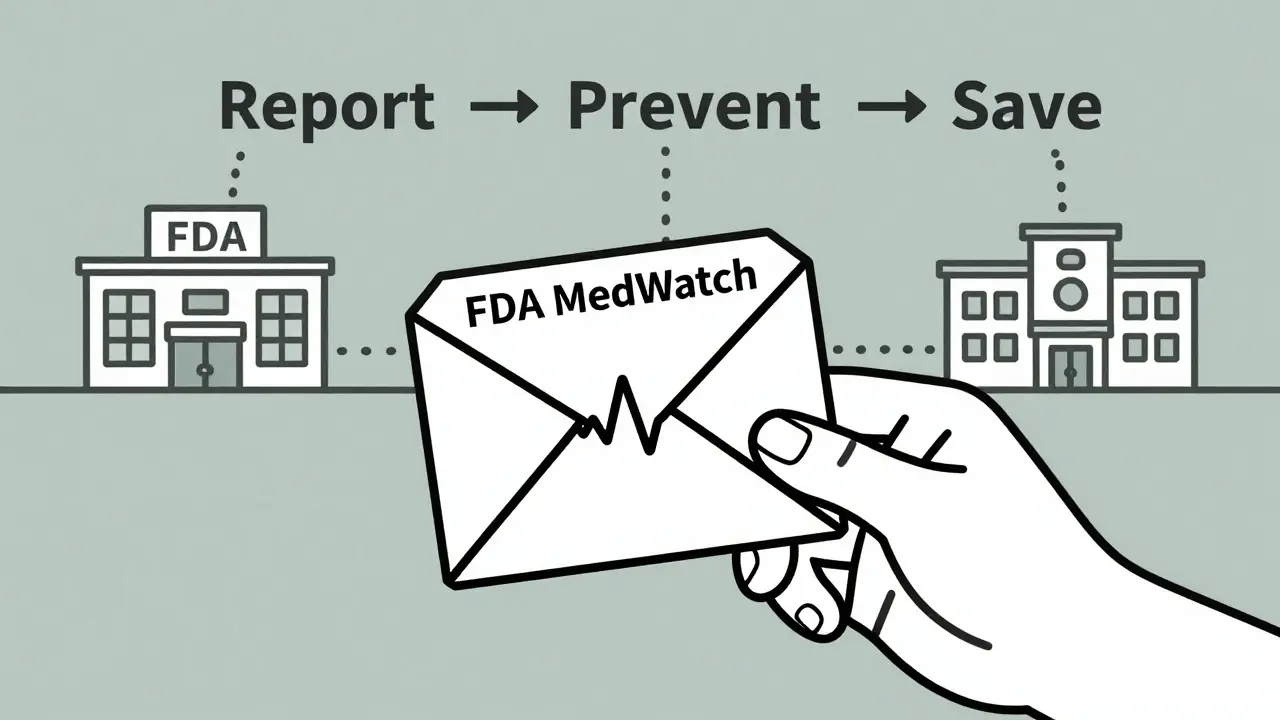
Step 4: Report to the FDA’s MedWatch Program
Even if your provider acknowledges the error, you should still report it to the FDA’s MedWatch program. Why? Because your report helps the government track dangerous patterns. One person’s mistake might be the clue that leads to a nationwide recall.
The FDA gets about 140,000 reports a year-but experts say less than 1% of serious errors are reported. That means most of what’s out there goes unseen.
Reporting takes less than 10 minutes now. The FDA updated its online form in 2023. It’s simple:
- Go to fda.gov/medwatch
- Click “Voluntary Report”
- Fill in: the drug name, dose, your symptoms, when it happened, and who gave it to you
- Upload photos of the label or prescription if you have them
- Submit
You don’t need to give your name. But if you do, they’ll send you a confirmation number. And here’s the kicker: reports submitted through a healthcare provider get acknowledged 89% of the time. Reports from patients alone? Only 28%. So if you can, have your doctor or pharmacist file it for you too.
Step 5: Report to ISMP (If You’re in a Healthcare Setting)
If you’re a patient in a hospital, nursing home, or clinic, and you’re comfortable doing so, report the error to the Institute for Safe Medication Practices (ISMP). They run a confidential, non-punitive reporting system that’s been used to fix over 200 medication safety problems since 1991.
Unlike the FDA, ISMP doesn’t investigate individual cases for punishment. They look for patterns: “Are 10 other patients getting the same wrong drug because the labels look alike?” or “Is this IV bag being confused with another?”
They publish safety alerts that hospitals across the country use to update their systems. You can report anonymously at ismp.org. They respond to every report-and they’ve helped cut medication errors by up to 75% in hospitals that use their feedback.
Special Case: School Medication Errors
If your child was given the wrong medication at school, act fast. In 48 states, schools are required to report medication errors to the state education department within 24 hours. But many don’t follow through.
Here’s what to do:
- Ask for the school’s Medication Administration Incident Report form
- Get a copy of the signed permission form and the medication log
- Document your child’s symptoms with dates and times
- Send a certified letter to the school nurse and principal demanding a written response within 5 business days
- Report the incident to your state’s Department of Education
According to a 2021 Government Accountability Office report, only 32% of school districts made changes after a medication error. Don’t let your child be the next statistic. Push for a safety review.
What Happens After You Report?
Most people think reporting leads to punishment. It shouldn’t. The best systems-like those at Johns Hopkins and Kaiser Permanente-use a “just culture” approach. That means:
- Human error (a tired nurse misread the label)? Fix the system-change the labeling, add double-checks.
- At-risk behavior (skipping verification because it’s “too slow”)? Coaching and training.
- Reckless behavior (ignoring safety rules on purpose)? Discipline.
Dr. Robert Wachter, a leading patient safety expert, says: “The most effective systems separate blame from learning.” Your report isn’t a complaint-it’s a tool for improvement.
Some providers still fear lawsuits. But research shows that when doctors apologize and explain what went wrong, lawsuits drop by 37%. Transparency builds trust.
Common Roadblocks-and How to Beat Them
You’ll run into resistance. Here’s how to handle it:
- “We don’t have time.” Say: “I understand. But if this happens to someone else, it could be fatal. I’m asking you to make time.”
- “It’s not a big deal.” Say: “It’s a big deal to me. I felt sick. I’m not the only one who might be affected.”
- “We can’t give you records.” Say: “Under HIPAA, I’m entitled to them within 30 days. If I don’t get them by [date], I’ll file a complaint with the Department of Health and Human Services.”
- “No one will believe you.” You have your notes. Your photos. Your symptoms. You’re not crazy. You’re the expert on your own body.
And if no one responds? Escalate. Contact the hospital’s patient advocate, the state medical board, or the Office for Civil Rights at HHS. You’re not being difficult. You’re being necessary.
Why This Matters
Medication errors aren’t rare accidents. They’re system failures. And every time you report one, you’re helping fix them. In hospitals that use structured reporting, repeat errors drop by 75%. That’s not theory-it’s data from the Agency for Healthcare Research and Quality.
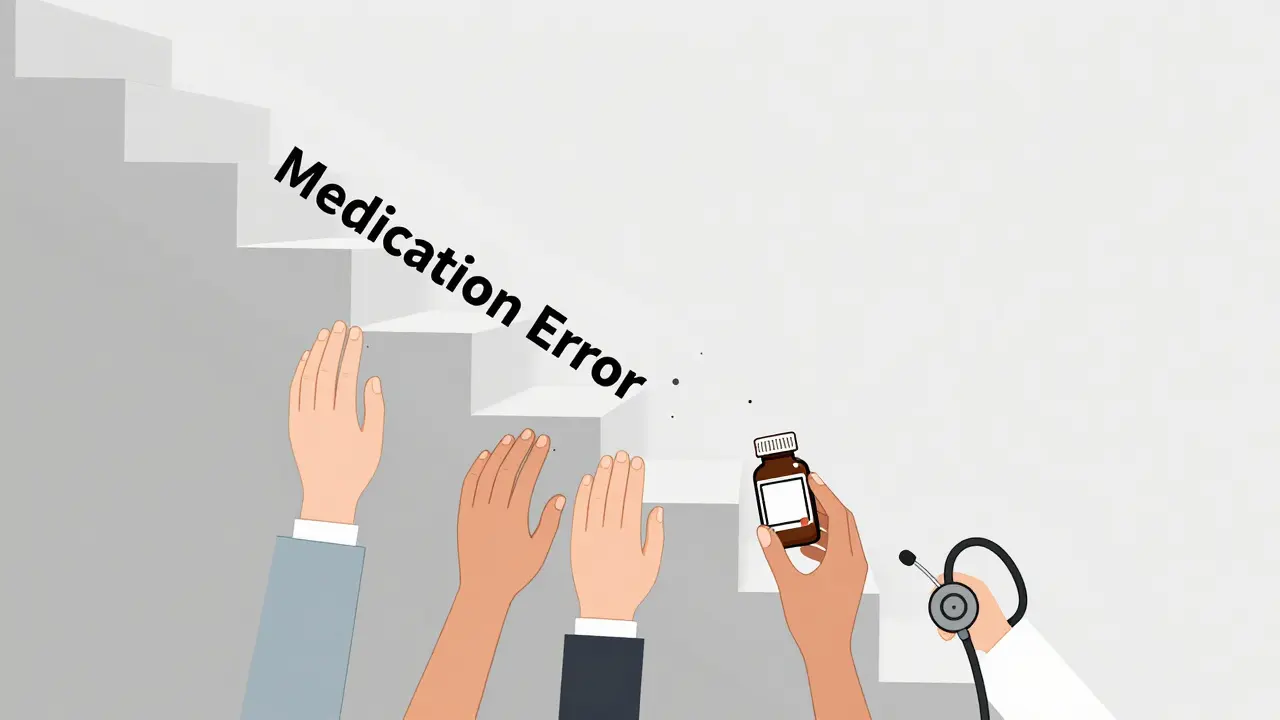
Think of it this way: if you saw a broken step on a staircase, you’d warn people. A medication error is the same thing. It’s a hazard. And you have the power to fix it-for yourself, for your family, for strangers you’ll never meet.
Don’t wait for someone else to speak up. You don’t need permission. You don’t need a degree. You just need to say: “This happened. I’m reporting it.”
And then do it.
What should I do if I think I got the wrong medication?
Stop taking the medication immediately. Call your provider or pharmacist to confirm the error. Write down what you took, when, and how you felt. Keep the pill bottle and take a photo of the label. If you have symptoms like dizziness, rash, or trouble breathing, go to the ER. Then file a report with the FDA’s MedWatch program and ask your provider to document it internally.
Can I report a medication error anonymously?
Yes. The FDA’s MedWatch program allows anonymous reporting. The Institute for Safe Medication Practices (ISMP) also accepts anonymous reports. However, if you provide your contact information, you’re more likely to receive a response and updates if the error leads to a recall or safety alert.
Will reporting a medication error get me or my provider in trouble?
Reporting should not lead to punishment for honest mistakes. Leading healthcare safety organizations promote a “just culture” that focuses on fixing systems, not blaming individuals. While some providers may fear legal consequences, studies show that transparent reporting reduces lawsuits by 37%. Most errors are due to flawed processes-not intentional harm.
How long does it take to get a response after reporting?
If you report through your provider, you should get a response within 7-10 days. The FDA does not guarantee a response to individual consumer reports, but they do track trends and issue alerts. Reports submitted through ISMP typically receive a follow-up within 30 days. If you don’t hear back, follow up in writing. You have the right to know what’s being done.
Do I need a lawyer to report a medication error?
No. You do not need a lawyer to report a medication error. Reporting to your provider, the FDA, or ISMP is a patient safety step, not a legal one. However, if you suffered serious harm and want to pursue compensation, consulting a lawyer is advisable. But reporting the error itself is something anyone can-and should-do.
What if my child was given the wrong medicine at school?
Contact the school nurse and principal immediately. Request a copy of the Medication Administration Incident Report. Document your child’s symptoms and any communication with the school. File a report with your state’s Department of Education. In 48 states, schools are legally required to report these incidents. If they don’t respond, escalate to your local health department or state board of education.