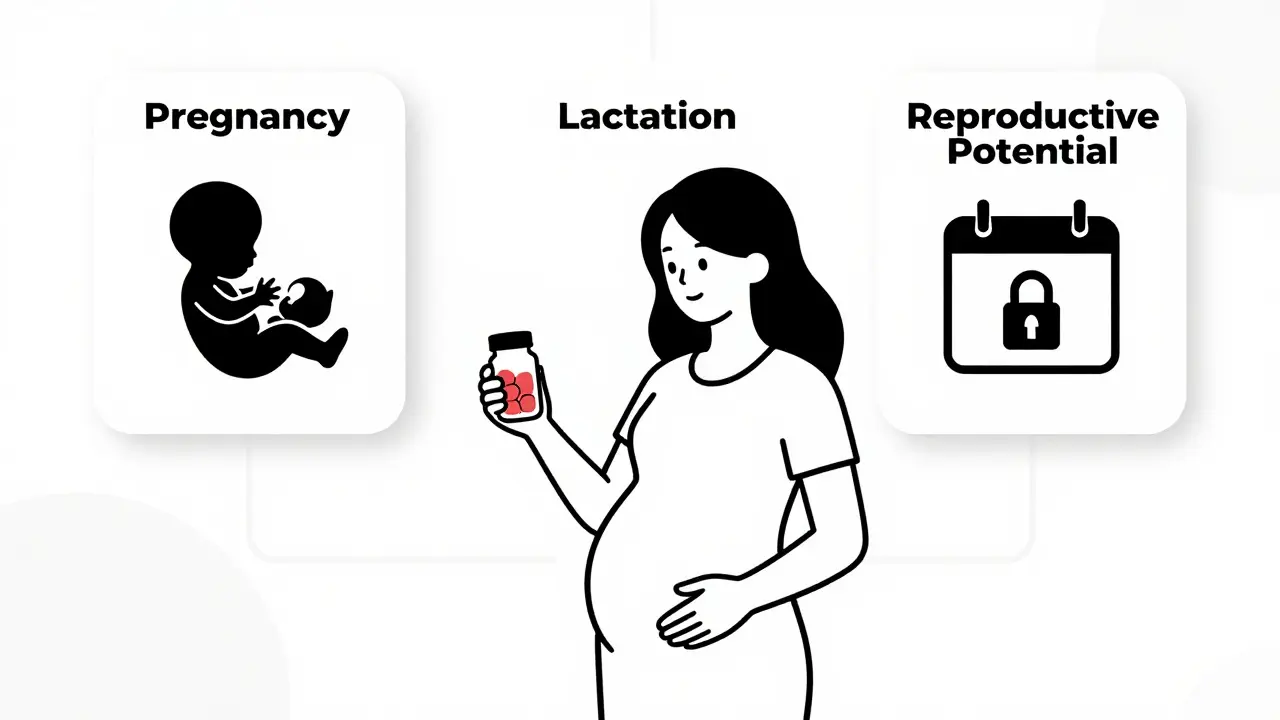
When you're pregnant or breastfeeding, taking any medication isn't just about what works-it's about what’s safe. For years, doctors and patients relied on simple letter categories: A, B, C, D, or X. But those letters didn’t tell the whole story. In 2015, the U.S. Food and Drug Administration (FDA) replaced them with something far more useful: the Pregnancy and Lactation Labeling Rule (PLLR). Now, instead of guessing what a letter meant, you get real data-numbers, timelines, and clear explanations. But reading this new format takes a little practice. Here’s how to make sense of it.
What Changed from the Old Letter System?
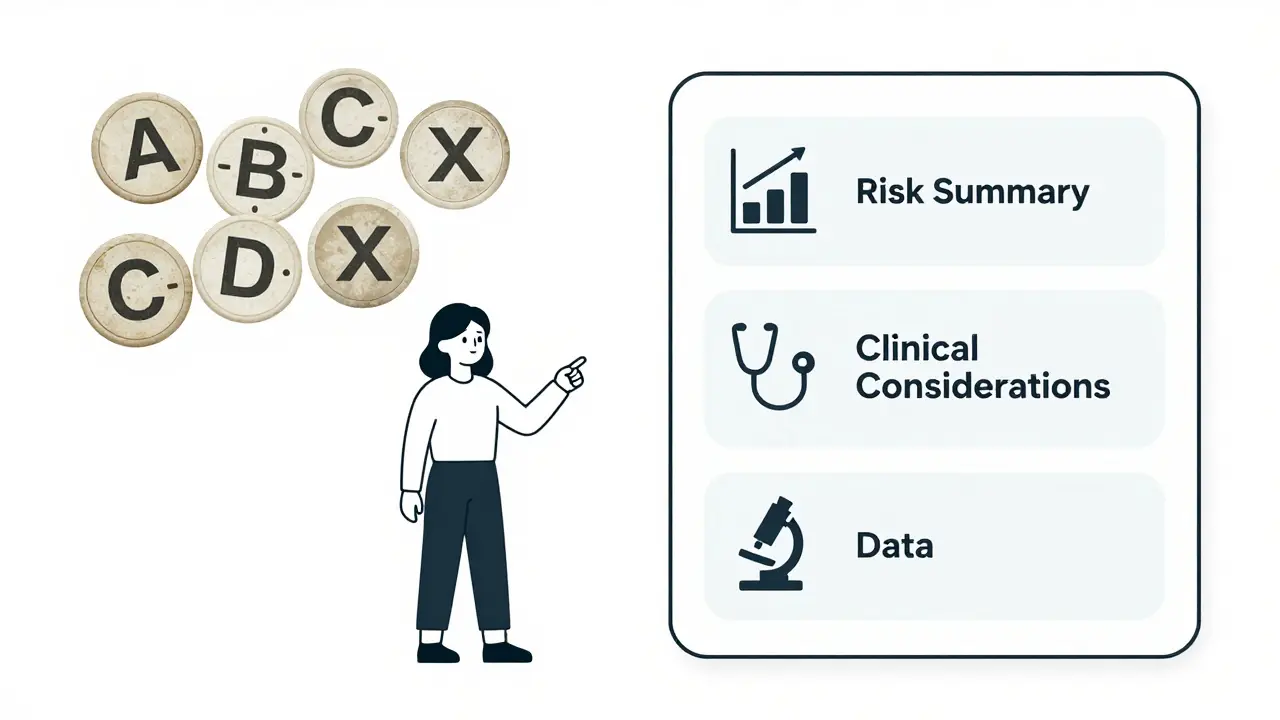
Before June 30, 2015, drug labels used five letter categories to summarize pregnancy risk:- A: Human studies show no risk (less than 2% of drugs)
- B: Animal studies show no risk, but human data is limited (about 15% of drugs)
- C: Risk can’t be ruled out (about 70% of drugs)
- D: Evidence of human risk (around 10% of drugs)
- X: Contraindicated in pregnancy (less than 1% of drugs)
The New PLLR Format: Three Clear Sections
The PLLR restructured drug labeling into three mandatory subsections under Section 8: Pregnancy (8.1), Lactation (8.2), and Females and Males of Reproductive Potential (8.3). Each follows the same simple structure:- Risk Summary - What we know about the risk
- Clinical Considerations - What to do in practice
- Data - How we know it
Reading the Pregnancy Section (8.1)
The Pregnancy subsection starts by grounding you in reality:Risk Summary often begins with: “The background risk of major birth defects in the U.S. general population is 2-4%.” Then it adds: “Exposure during the first trimester was associated with a 1.5-fold increased risk of neural tube defects.” That means if the baseline risk is 3%, the increased risk becomes about 4.5%. It’s not “dangerous”-it’s measurable.
Some labels specify timing: “Increased risk observed only with exposure between weeks 4 and 10 of gestation.” That’s critical. If you take a drug after week 10, the risk may not apply. Others note if the risk is dose-dependent: “Risk rises with daily doses above 500 mg.”
Clinical Considerations gives you actionable advice. Examples:
- “Consider switching to a safer alternative before conception.”
- “Monitor fetal anatomy with targeted ultrasound at 18-22 weeks.”
- “Avoid use in the third trimester due to risk of neonatal withdrawal.”
Data shows the science behind the claims. You’ll see things like:
- “Prospective cohort study of 1,200 pregnancies (95% CI 1.2-1.9)”
- “Registry data from 2018-2023, including 347 exposed pregnancies”
- “No controlled trials; based on observational data”
This helps you judge the quality of the evidence. Was it a small, poorly controlled study? Or a large registry with long-term follow-up?
Understanding Lactation Labeling (8.2)
Breastfeeding concerns are often ignored. The PLLR changed that. The Lactation section now includes:- Drug levels in breast milk - Measured as a percentage of maternal dose. For example: “Infant exposure is estimated at 4% of the maternal dose.”
- Potential effects on the infant - “No adverse effects reported in 85 breastfed infants.”
- Monitoring recommendations - “Observe for drowsiness or poor feeding in infants during the first two weeks.”
Many drugs pass into breast milk-but not all cause harm. A drug with 10% infant exposure might still be safe if it’s poorly absorbed by the baby’s gut. Others, like certain antithyroid drugs, can affect infant thyroid function even at low levels. The label tells you what to watch for.
Some labels now include pharmacokinetic data: “Peak milk concentration occurs 1-2 hours after maternal dose.” That means timing your dose right after feeding can reduce infant exposure.
Reproductive Potential Section (8.3)
This section matters even if you’re not pregnant right now. It includes:- “Pregnancy testing recommended prior to initiation and monthly during treatment.”
- “Effective contraception required; failure rate of 9% with typical use of oral contraceptives.”
- “Potential for reversible infertility with prolonged use.”
For example, drugs like isotretinoin (Accutane) or certain chemotherapy agents require strict pregnancy prevention plans. This section ensures you’re not just told “don’t get pregnant”-you’re told how to prevent it, and with what level of reliability.
How Clinicians Are Adapting
A 2018 study found 62% of obstetricians struggled with the new labels at first. Why? Because they had to read paragraphs instead of scan a letter. But over time, confidence grew. By 2022, 73% of perinatal specialists preferred the narrative format for complex cases.Pharmacists report a big shift too. A 2021 survey showed 64% of pharmacists now get more questions from patients about pregnancy risks. And 78% say they spend 5-7 extra minutes per prescription counseling. That’s time well spent. Patients who understand the real numbers feel more in control.
Some clinicians still rely on external tools. The TERIS and MotherToBaby databases are now used by 80% of primary care providers for pregnancy-related prescribing decisions. These are free, evidence-based, and updated monthly.
What You Should Do
If you’re pregnant, planning to become pregnant, or breastfeeding:- Ask your provider: “Can you show me the pregnancy and lactation section of this drug’s label?”
- Don’t rely on old advice. A drug labeled “C” ten years ago might now have detailed data showing low risk.
- Check if your medication is listed in a pregnancy exposure registry. There are 47 active registries tracking drugs like antidepressants, antiseizure meds, and biologics. Participation helps future patients.
- Use the FDA’s free PLLR Navigator app to search drug labels on your phone.
Remember: a higher risk number doesn’t always mean “don’t take it.” Sometimes, the risk of not treating your condition-like uncontrolled seizures, depression, or high blood pressure-is far greater than the drug’s risk. The new labels help you weigh both.
What’s Coming Next
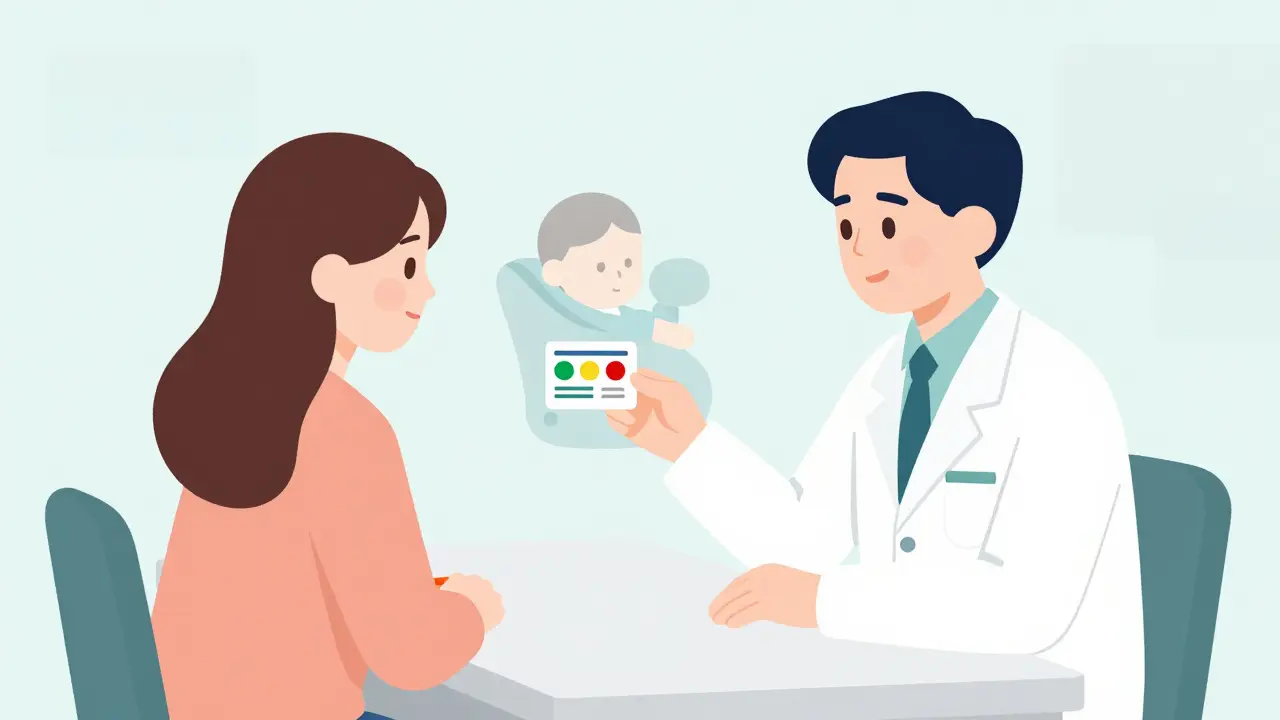
The FDA is working on visual aids-icons that show risk levels at a glance. Draft guidance from 2023 proposes symbols like:- 🟢 Low risk
- 🟡 Moderate risk
- 🔴 High risk
These will appear alongside the narrative text. By 2025, the FDA plans to update 100% of pregnancy-related drug labels. And starting in 2022, all new drugs must include lactation pharmacokinetic data-how much enters breast milk, when it peaks, and how long it lasts.
Still, gaps remain. A 2023 report found 63% of psychiatric drug labels lack specific gestational timing details. And only 15% of registry participants are Black or Hispanic, even though those groups make up 30% of U.S. pregnancies. That’s something regulators are now trying to fix.
Final Takeaway
The old letter system gave you a shortcut. The new system gives you clarity. It doesn’t tell you what to do-it tells you enough to make a smart choice with your provider. You’re not just reading a label anymore. You’re reading science.Are the old pregnancy letter categories still used today?
No. The FDA phased out the A, B, C, D, and X categories completely by December 2020. All prescription drugs approved after June 30, 2015, use the new narrative format. Even older drugs had to update their labels by then. You may still see the old letters on outdated packaging or websites, but they’re no longer legally valid.
Can I trust the data in the new labels?
Mostly, yes. The data comes from pregnancy exposure registries, clinical studies, and post-marketing surveillance. Registries now track over 25,000 pregnancies annually, up from just 5,000 before 2015. But not all data is equal. Some labels cite small observational studies with no control groups. Always check the "Data" section for study size, duration, and whether results were confirmed in multiple sources.
What if my drug doesn’t have updated labeling yet?
About 22% of prescription drugs in the U.S. still use the old format, mostly older generics. If you’re unsure, check the FDA’s website or use MotherToBaby or TERIS. These free services provide updated, evidence-based summaries for drugs that haven’t been fully updated in labeling. Your pharmacist can also help you find reliable information.
Is it safe to take medication while breastfeeding?
Many medications are safe. The key is infant exposure percentage. If the label says less than 10% of the maternal dose reaches the baby, and no adverse effects have been reported in studies, it’s likely safe. Drugs like sertraline, ibuprofen, and insulin have very low transfer rates. Always look for specific infant monitoring advice-like watching for drowsiness or poor feeding-rather than avoiding the drug altogether.
Why does the label mention male fertility?
Some drugs can affect sperm quality or DNA, potentially impacting conception or fetal development. For example, certain chemotherapy drugs or finasteride may require men to use contraception even if their partner isn’t pregnant. The reproductive potential section ensures both partners are informed, not just the woman.


Sneha Mahapatra
February 27, 2026 AT 11:40