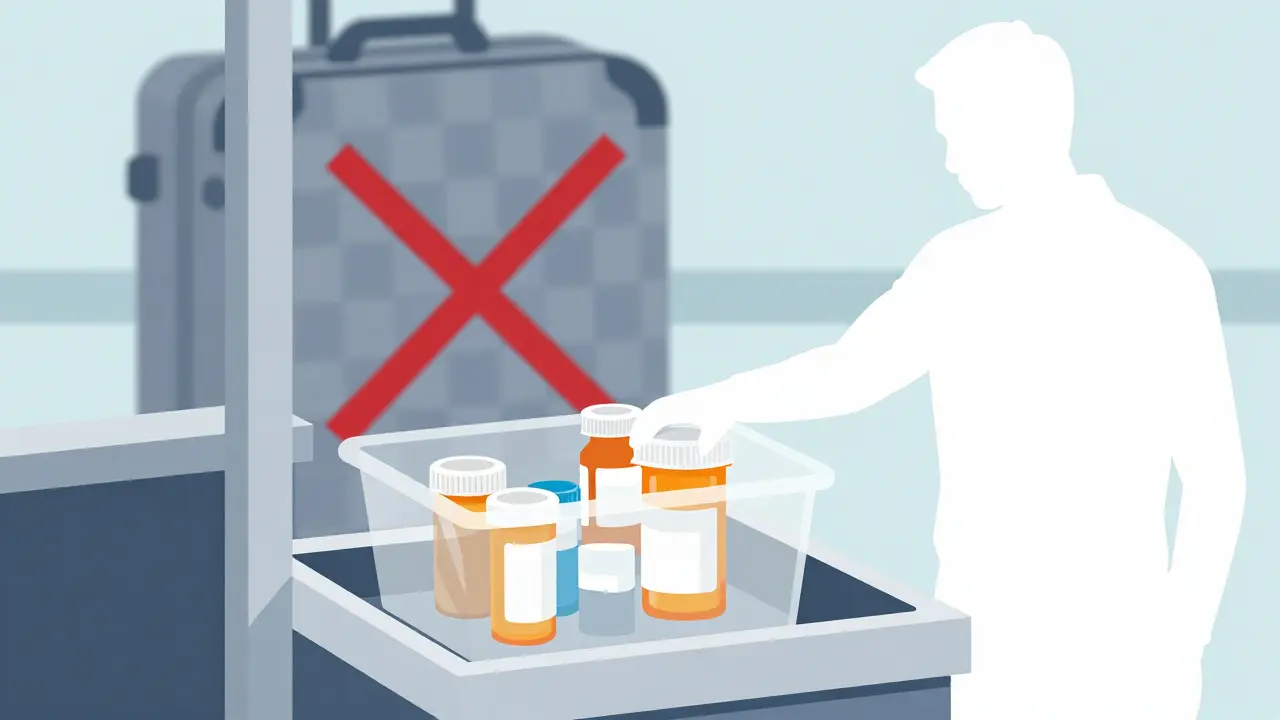
Imagine arriving at your dream destination, only to have security detain you because your insulin isn't in its original bottle. It happens more often than you think. Every year, travelers face delays, confiscations, or denied boarding because they didn't follow the strict medication packing protocols required by international customs and transport authorities. Whether you are heading out on a cross-country road trip or embarking on a luxury cruise, how you store your prescriptions can make or break your journey.
This guide cuts through the confusion. You don't need a lawyer to understand the rules, but you do need to know exactly what goes in your bag, how much you carry, and how to prove it belongs to you. We will walk you through the essential steps to keep your treatments secure and compliant across borders.
The Golden Rule: Never Check Your Medicine
The most common mistake people make is placing their prescriptions in checked luggage. Statistically, luggage gets lost in roughly 0.02% of cases, but when your medication is involved, even that small percentage is too high a risk. If your bag vanishes, you have no way to replace heart medication or asthma inhalers immediately.
You must keep all essential medications in your carry-on luggage personal bag that travels with you through security checks. This includes the Transportation Security Administration (TSA) approved bins at airports and the cabin bags you bring onboard ships. Royal Caribbean International's updated policy from early 2024 explicitly advises guests to transport everything in carry-on to minimize diversion or loss. The same logic applies to road trips; never leave life-saving drugs in a rental car trunk or checked vehicle cargo hold.
Container Rules That Keep You Moving
How you pack pills matters as much as where you put them. Many travelers transfer tablets into cute, travel-friendly pill boxes to save space. While convenient, this often violates customs regulations. When you arrive in a foreign port or even drive across state lines, officials may confiscate unlabeled substances because they cannot verify they are yours.
- Keep Original Containers: Always use the prescription bottle from your pharmacy with the label attached.
- Name Matching: The name on the bottle must match your passport or driver's license perfectly.
- No Generic Bottles: Clear plastic containers without labels look suspicious to border agents and raise red flags instantly.
If you rely on daily pill organizers, you can use them strictly for organization inside your hotel room once you settle in. For transit, stick to the pharmacy wrappers. Some services offer "Unit Dose Boxes" sealed by pharmacists, which are accepted, but standard DIY pill organizers should stay home.
Calculating the Right Quantity
Packing the bare minimum is risky. Delays happen. Flights get cancelled, and buses get delayed. According to Special Journeys' protocols, you should calculate extra supplies based on your mode of travel. For bus trips, add at least one extra day's dose. For flights or cruises, pack a minimum of three extra days.
Why three days? In international aviation, approximately 23% of flights experience significant delays. If you land late and miss your pick-up time, having a buffer ensures you aren't stuck waiting at an airport pharmacy in a city where you speak no other languages. The goal is continuity of care regardless of logistics.
| Trip Type | Recommended Extra Supply | Risk Factor |
|---|---|---|
| Road Trip | 1-2 Days | Low (Easy access to pharmacies) |
| Air Travel | 3+ Days | High (Border controls, baggage loss) |
| Cruise | 3-5 Days | Very High (International waters, isolated) |

Documentation Essentials for Border Crossings
Having the right physical items is step one. Step two is proving legitimacy. If you are traveling internationally, especially on a cruise visiting multiple countries, you need documentation beyond just a bottle. A physician's note is your best defense against confiscation.
Your medical professional should provide a letter detailing your condition, every drug you take, the dosage, and the frequency. This letter should be signed and dated. For controlled substances, which include many ADHD medications and painkillers, this becomes mandatory in nearly every jurisdiction. You should also keep a digital copy on your phone and a cloud backup. Communication barriers affect about 12% of travelers when dealing with foreign medical providers, so clear documentation helps bridge that gap quickly.
Cruise vs. Road Trip: Knowing the Difference
The rules shift depending on whether you are moving over land or water. Cruises involve entering sovereign territories, meaning port authority laws apply to you while docked. Road trips typically involve crossing administrative boundaries within a larger nation, though state laws vary significantly.
Navigating Port Regulations
Cruise lines like Norwegian and Carnival enforce stricter policies due to international maritime law. Certain Caribbean destinations restrict stimulants and psychotropic medications heavily. Dr. Michael Thompson, former medical director for Royal Caribbean, noted that permits are required for these drugs in 65% of Caribbean ports. If you carry codeine-containing products, you may need prior approval from your ship's medical staff.
Understanding State Laws
On a road trip across the US, federal law protects some rights, but state statutes control others. A prime example is medical marijuana, which remains illegal in some states despite legalization in others. Even non-controlled substances can cause issues if packaging is ambiguous. About 67% of members report facing medication issues during cross-state drives simply due to varying local enforcement priorities.
Temperature Control and Storage Hygiene
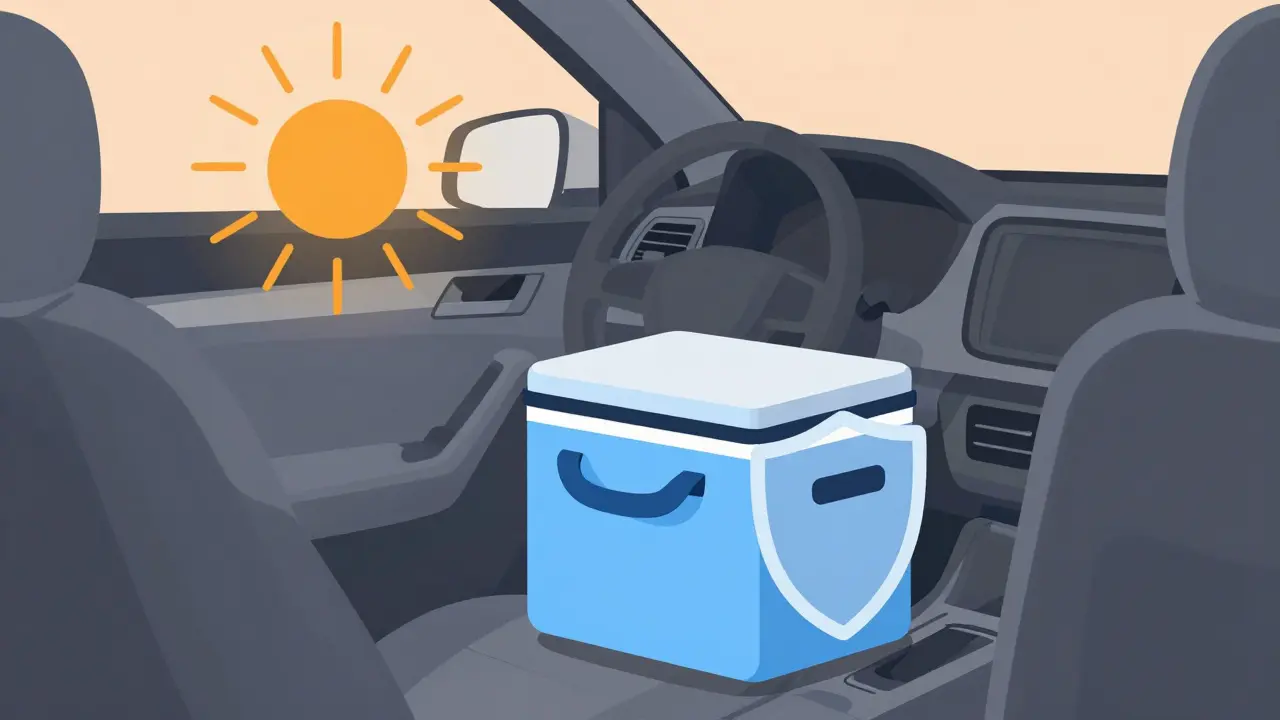
Your medications are sensitive biological tools. Heat, humidity, and UV light can degrade efficacy. Many biologics require temperature control for at least 72 hours. During summer months, car cabins can reach temperatures that destroy medicine faster than you think.
Use UV-protective cases designed for travel. Pharmacies like CVS and Walgreens now offer repackaging services that include thermal protection. Avoid leaving meds in direct sunlight on the dashboard. If you are flying, do not check bags that contain thermally sensitive items like insulin. If a bag loses temperature control, the drug could be useless upon arrival.
What To Do If Something Goes Wrong
Despite perfect planning, emergencies happen. Theft, loss, or confiscation can occur unexpectedly. Have a recovery plan before you leave.
- Contact Home Pharmacy: Most pharmacists can call in refills to a clinic near your current location if you provide proof of identity.
- Utilize Local Clinics: Save the contact info of your doctor's office. They can recommend local partners abroad.
- Travel Insurance: Comprehensive insurance covers the cost of replacement and potential evacuation. Over 28% of cruise medical emergencies lead to evacuations costing thousands, so coverage is vital.
By preparing for the worst while executing the best practices, you ensure your health remains stable throughout your adventure.
Can I bring liquid medication in my carry-on?
Yes, liquid medications are exempt from the standard 3.4-ounce liquid limit for liquids, gels, and aerosols. You should declare them to security officers at the checkpoint. Inform the officer before screening begins so they can test the sample correctly.
Do I need to tell the airline about my meds?
You are not legally required to disclose your medication list to the airline, but you must inform TSA agents during security screening if your bag contains unusual equipment or large quantities. For cruises, declaring controlled substances 30 days before sailing is often mandatory per line policy.
Are there restrictions on ice packs for cooling meds?
Ice packs are permitted if they are frozen solid when presented for screening. If they are partially melted or slushy, they might be subject to additional screening. Consider using gel packs that remain below freezing or insulated containers that don't require ice.
What if my medication name differs internationally?
Different countries brand drugs differently. Always carry the generic name of the active ingredient alongside the brand name. This prevents confusion when showing prescriptions to foreign pharmacists who may not recognize the brand version used at home.
Is a prescription copy enough without the bottle?
It depends on the jurisdiction. Most customs agencies prefer the original labeled bottle. A prescription copy supports your case but rarely replaces the requirement for the original container. Transferring pills to unlabelled jars risks seizure.


Carolyn Kask
March 31, 2026 AT 16:45