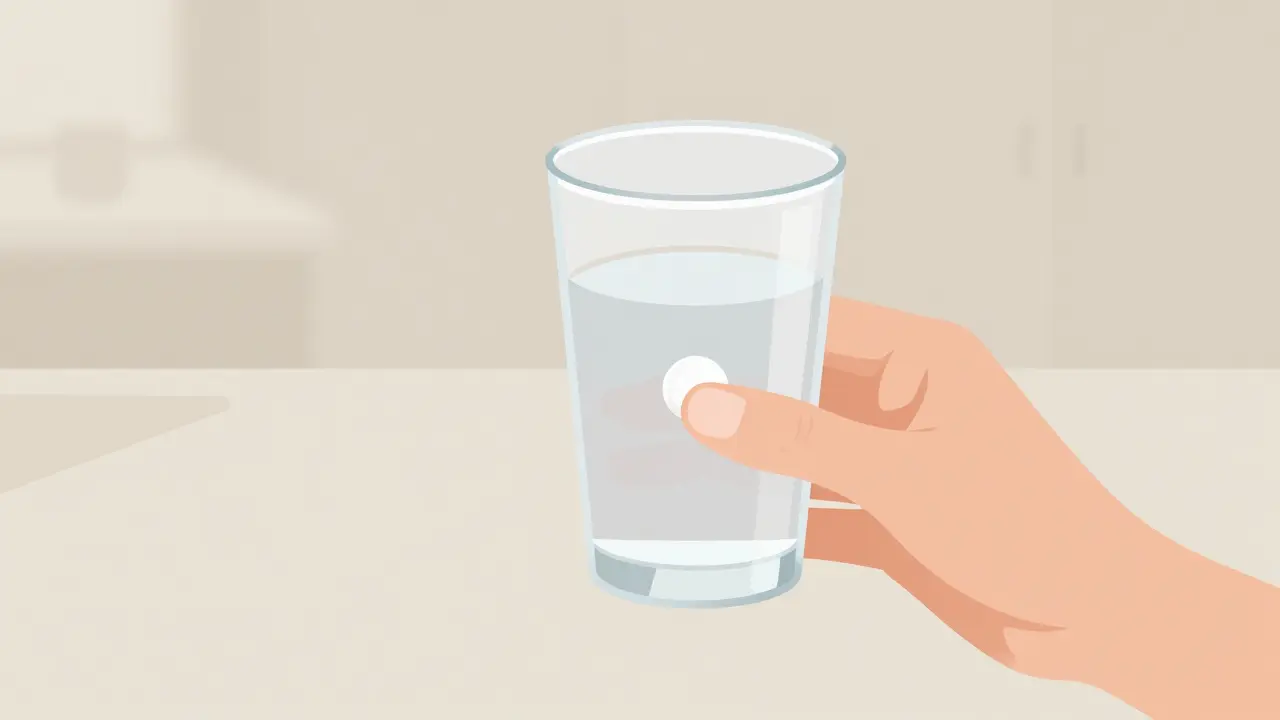
Imagine sitting at your kitchen table with a glass of water and a handful of pills that feel like small stones in your mouth. You try to swallow, but they get stuck. Your throat tightens, you cough, and suddenly the simple act of taking your daily medicine feels like a dangerous obstacle course. This isn't just an inconvenience; it is a medical reality for millions of people dealing with dysphagia, which is a condition characterized by difficulty or discomfort while swallowing. If you stop taking your medication because it is hard to swallow, you risk serious health complications. But if you crush every pill without asking, you might be making things worse.
The good news? You do not have to choose between choking on a tablet and skipping your dose. There are proven strategies, from changing how you sit to swapping out specific drug forms, that can help you stay on track. Let’s look at exactly what works, what to avoid, and how to talk to your care team so you can take your medicine safely.
Why Swallowing Pills Gets Harder (And Why It Matters)
Dysphagia is not just about being nervous. According to the American Speech-Language-Hearing Association (ASHA), it is a disorder that affects any phase of the swallowing process, from the moment food enters your mouth to when it reaches your stomach. For older adults, this is incredibly common. A 2019 study in the Journal of the American Geriatrics Society found that about 15% of community-dwelling seniors struggle with swallowing, and that number jumps to 68% among nursing home residents.
When swallowing becomes difficult, medication adherence often drops. People skip doses, hide pills in food without checking if it’s safe, or simply give up. The stakes are high. Research published in the PMC database (PMC10511598) in 2023 showed that nearly half of all modified medications were altered inappropriately. In some cases, crushing a pill could lead to toxicity or overdose. In others, it destroyed the drug’s effectiveness entirely. Understanding why this happens is the first step to fixing it.
The Danger of Crushing Pills Without Asking
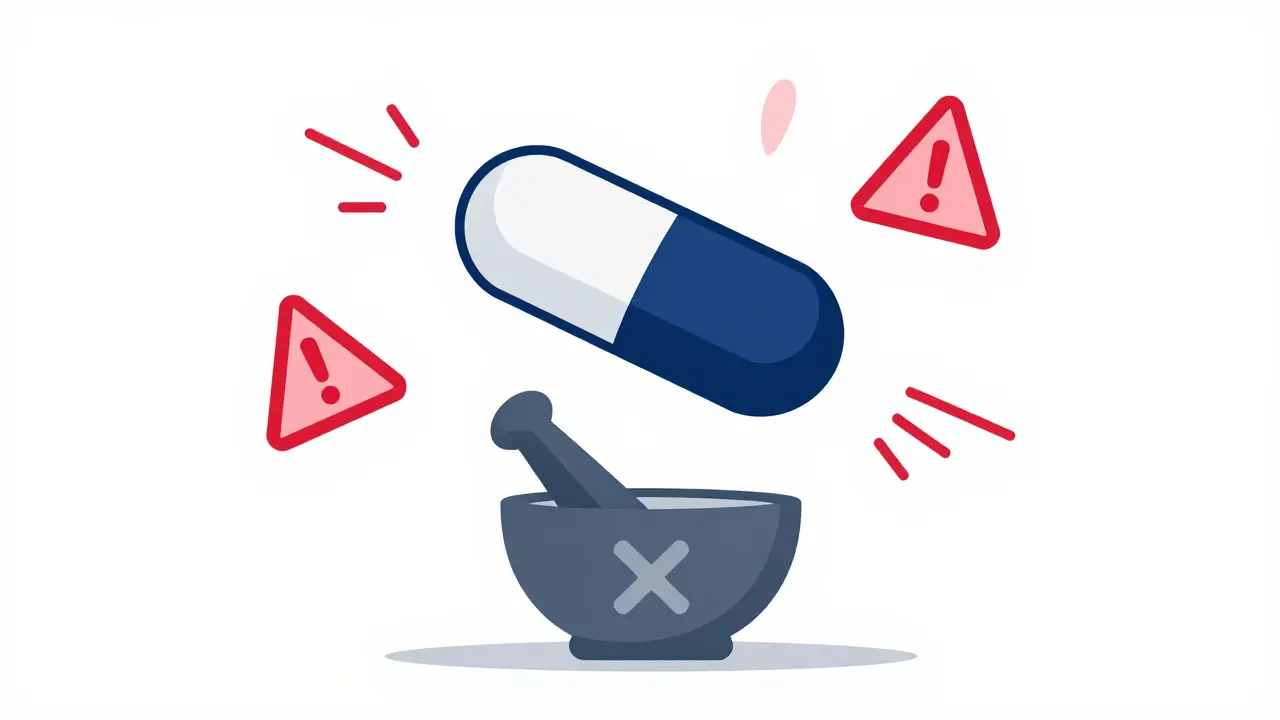
It is tempting to grab a mortar and pestle or even the back of a spoon when a pill won’t go down. However, UK guidelines and the National Institute for Health and Care Excellence (NICE) strongly advise against this unless it is a last resort. Here is why:
- Extended-Release Formulations: Many pills are designed to release medication slowly over 12 or 24 hours. Crushing them dumps the entire dose into your system at once, which can cause dangerous side effects.
- Enteric Coatings: Some tablets have a special coating to protect them from stomach acid or to prevent them from irritating your esophagus. Crushing removes this protection.
- Taste and Irritation: Some drugs taste bitter or can burn your mouth and throat if exposed directly to tissue.
A 2020 study highlighted that prescribers often fail to consider how medicines should be administered to patients with swallowing difficulties, leaving nurses and caregivers to guess. Never assume a pill is safe to crush. Always check with a pharmacist first.
Techniques That Actually Help You Swallow
Before changing the medication itself, try changing your technique. Sometimes, it is not the pill size but the mechanics of your swallow that need adjustment. The University of Michigan Medicine offers a method called the "lean forward" technique, which has shown up to a 75% improvement in success rates for capsules.
- Place the capsule on your tongue.
- Take a medium sip of water (about 30ml).
- Bend your head forward toward your chest, rather than tilting it back.
- Swallow as you lean forward.
This counterintuitive move uses gravity to help the capsule float toward the back of your throat instead of getting stuck at the base of your tongue. For larger tablets, the "pop-bottle method" can work well. Place the tablet on your tongue, close your lips tightly around the opening of a plastic water bottle, and drink rapidly while tilting the bottle up. The suction helps pull the pill down.
If you are at risk of aspirating (where liquid goes into your lungs), speech therapists often recommend thicker liquids. These hold together better and are easier to control. Conversely, if you are prone to choking, thinner liquids might be safer. Ask a speech-language pathologist to assess your specific risk.
Alternative Formulations: When Tablets Aren’t the Answer
If techniques don’t work, it is time to look at the medication itself. The goal is to find a version of the drug that does not require traditional swallowing. Here are the main alternatives:
| Formulation Type | Best For | Limitations |
|---|---|---|
| Liquid Solutions | Precise dosing, easy to mix with soft foods | May taste bad; some drugs degrade in liquid form |
| Orodispersible Tablets (ODTs) | Dissolve on the tongue without water | Not available for all medications; can be expensive |
| Transdermal Patches | Long-term conditions like pain or blood pressure | Skin irritation; slow onset of action |
| Dissolvable Films | Rapid absorption, no water needed | Limited availability; new technology |
| Rectal Suppositories | Emergency situations or severe nausea | Inconvenient; not suitable for long-term daily use |
According to a 2023 FDA analysis, only 37% of essential medications have alternative formulations suitable for patients with swallowing difficulties. This gap is frustrating, but pharmacists are trained to find workarounds. They might suggest switching from a brand-name tablet to a generic liquid, or combining multiple pills into a single injectable dose if appropriate.
New technologies are emerging too. Dissolvable film formulations, such as those developed by IntelGenx, adhere to the oral mucosa and dissolve quickly. A 2023 study in the Journal of Clinical Pharmacy and Therapeutics reported 85% adherence rates in patients with moderate dysphagia using these films. While not yet available for every drug, they represent a promising future direction.
Managing Medication via Feeding Tubes
For patients with severe dysphagia who rely on enteral feeding tubes, medication administration requires strict protocols. The Consensus Guideline on Medication Management of Adults with Swallowing Difficulties (2015) outlines best practices:
- Use once-daily preparations whenever possible to reduce the number of times the tube needs to be manipulated.
- Administer drugs separately. Do not mix multiple medications in one syringe, as they may interact chemically.
- Flush with water. Use at least 10ml of water before and after each medication to prevent clogging and ensure full delivery.
- Check for interactions. Some drugs bind to enteral feeds, reducing their absorption. Hold feeds for 30 minutes before and after administration if required.
Nursing staff play a critical role here. Dr. Angela Mansolillo, a speech-language pathologist, notes that patients with dysphagia are more likely to experience medication errors, particularly with altered dosage forms. Clear communication between the prescribing doctor, the pharmacist, and the nurse is essential to prevent mistakes.

Building a Care Team Approach
You should not manage this alone. A coordinated effort involving physicians, pharmacists, nurses, and speech therapists is necessary to develop an individualized plan. Start by asking your doctor to document dysphagia in your electronic health record. This alerts other providers to your needs.
Next, consult a pharmacist. They can review your entire medication list and identify which drugs can be switched to liquids, ODTs, or patches. If you are in a care facility, request a formal assessment by a speech-language therapist. They can evaluate your swallowing function and recommend specific postures or consistency modifications.
Finally, involve your caregivers. Teach them the "lean forward" method and the proper way to administer crushed medications if approved. Ensure they know never to mix meds with large amounts of food, as this makes it hard to verify if the full dose was consumed.
Frequently Asked Questions
Can I crush my extended-release pills?
No, you should never crush extended-release or sustained-release pills without explicit approval from a pharmacist. Doing so releases the entire dose at once, which can lead to toxicity, overdose, or severe side effects. Always check the label or ask a professional.
What is the "lean forward" method for swallowing pills?
The lean forward method involves placing the capsule on your tongue, taking a sip of water, bending your head forward toward your chest, and then swallowing. This technique uses gravity to help the capsule slide down the throat more easily, particularly for lightweight capsules.
Are there liquid versions of most medications?
Unfortunately, no. A 2023 FDA analysis found that only 37% of essential medications have alternative formulations like liquids or orodispersible tablets. However, pharmacists can often compound custom liquids or suggest therapeutic alternatives that are available in easier-to-swallow forms.
Is it safe to mix crushed medicine with applesauce?
Only if a pharmacist confirms the medication is safe to crush. Mixing with soft foods like applesauce can mask the taste, but it also makes it difficult to ensure you swallowed the entire dose. Additionally, some drugs interact with certain foods, reducing their effectiveness.
Who should I talk to about my swallowing difficulties?
Start with your primary care physician to document the issue. Then, consult a pharmacist for medication-specific solutions and a speech-language pathologist for swallowing assessments and exercises. A coordinated team approach ensures both safety and efficacy.
What are orodispersible tablets (ODTs)?
Orodispersible tablets are specially formulated pills that dissolve rapidly on the tongue without the need for water. They are ideal for patients with mild to moderate dysphagia who cannot swallow solid tablets but can manage dissolving substances in their mouth.
How do I flush a feeding tube after giving medication?
Use at least 10ml of clean water to flush the tube before and after administering each medication. This prevents clogging and ensures the full dose is delivered into the stomach. Always follow the specific instructions provided by your healthcare provider or pharmacist.