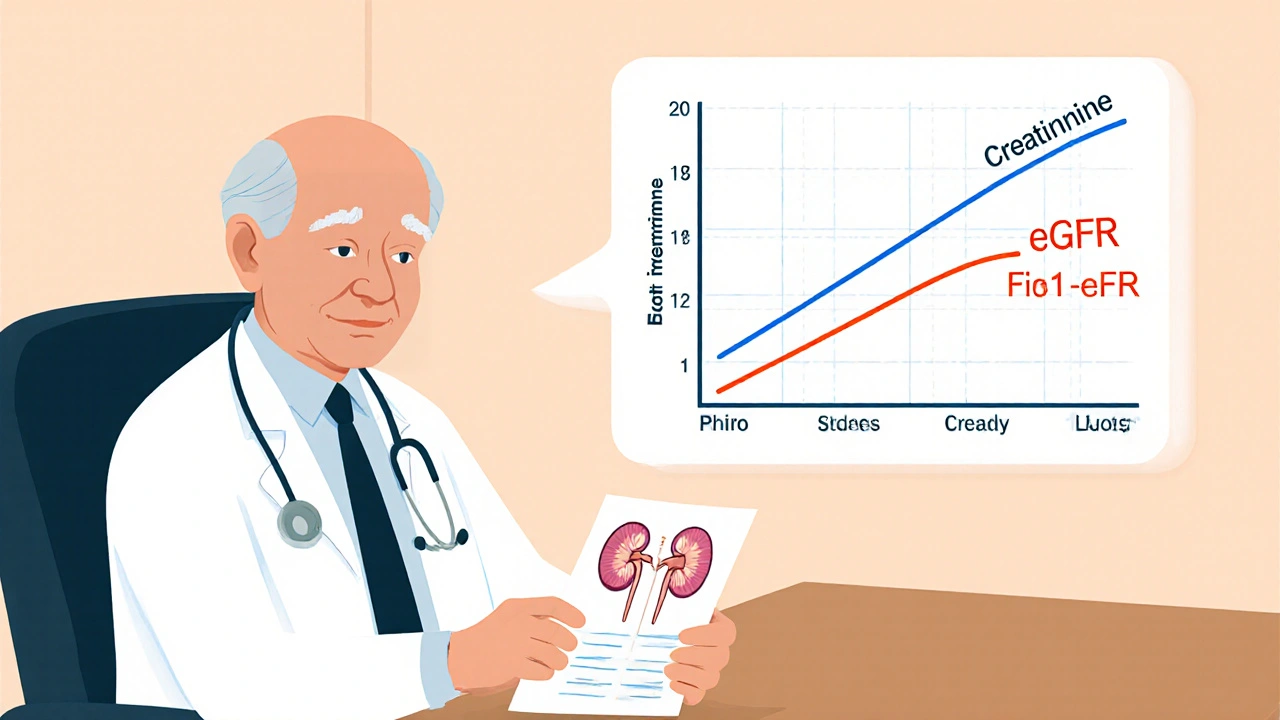
Why Kidney Function Matters More After 65
As we get older, our kidneys don’t work the same way they did in our 30s or 40s. It’s not disease - it’s just aging. By age 70, most people have lost about 30-40% of their kidney function naturally. That means drugs that used to clear easily from the body now stick around longer, building up to dangerous levels. This is why a 75-year-old taking the same dose of a medication as a 45-year-old could end up in the hospital from toxicity - even if their blood tests look "normal."
One in three common prescriptions for seniors - from antibiotics to painkillers to blood thinners - are cleared by the kidneys. If those kidneys aren’t working well, and no one checks, the result is confusion, falls, bleeding, or even kidney failure. The scary part? Most doctors don’t routinely adjust doses based on real kidney function. They rely on outdated formulas or default numbers in electronic records. That’s why so many older adults end up with medication-related problems.
What Tests Actually Tell You About Kidney Health
The go-to test for kidney function is serum creatinine. But here’s the problem: creatinine comes from muscle. Older adults often lose muscle mass. So even if their kidneys are failing, their creatinine might stay low because they have less muscle to produce it. That gives a false sense of security. A creatinine of 1.2 mg/dL might look fine for a 50-year-old, but for a frail 82-year-old, it could mean their kidneys are barely working.
That’s why we need more than just creatinine. The gold standard - inulin clearance - is accurate but requires hours of IV drips and multiple blood draws. No one does that in a regular clinic. So we use equations to estimate kidney function, called eGFR (estimated glomerular filtration rate). But not all equations are created equal, especially for seniors.
The Four Main Equations - And Which One to Use
There are four main formulas doctors use to estimate kidney function. Each has strengths and weaknesses in older adults.
- Cockcroft-Gault (CG): This one uses age, weight, gender, and serum creatinine. It was designed in 1976 and still works well - if you use ideal body weight, not actual weight. For seniors who are underweight or very overweight, using real weight leads to big errors. Studies show using ideal body weight cuts dosing mistakes by 25%.
- MDRD: Developed in 1999, it’s built into many lab reports. But it underestimates kidney function in seniors with low muscle mass. It’s not the best for people over 70.
- CKD-EPI: Introduced in 2009, this became the standard for most clinics. It’s better than MDRD, but still struggles in very old or frail patients. It often misclassifies someone with stage 3 kidney disease as stage 2 - which means they might get a full dose of a drug they shouldn’t.
- BIS1 and FAS: These are newer equations designed specifically for older adults. They account for age, sex, creatinine, and sometimes cystatin C. In patients over 75, BIS1 is 20% more accurate than CKD-EPI. It’s the most reliable for people with low muscle mass, malnutrition, or chronic illness.
For seniors over 75, especially those who are frail or thin, BIS1 is the best choice. For those with obesity, use Cockcroft-Gault with ideal body weight. For most others, CKD-EPI is acceptable - but only if you know its limits.
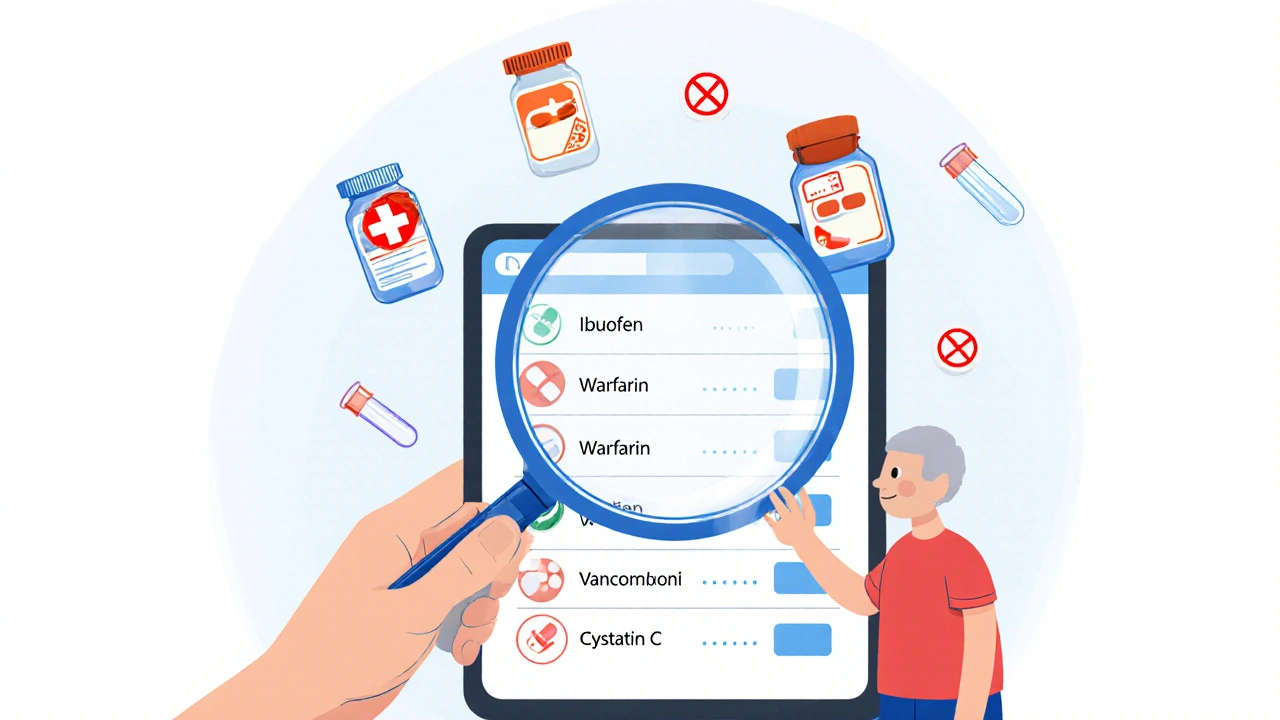
When to Use Cystatin C
Cystatin C is a protein made by all cells. It’s not affected by muscle mass like creatinine is. If your creatinine-based eGFR looks okay but you suspect kidney trouble - maybe the person is losing weight, has dementia, or is on multiple meds - a cystatin C test can help. It’s more expensive ($50-$75 extra), but it’s worth it when the stakes are high.
For example: A 90-year-old woman on warfarin has a creatinine of 1.0 and an eGFR of 60 using CKD-EPI. She’s not eating well and has lost 15 pounds. A cystatin C test shows her true eGFR is 42. That changes everything. Her warfarin dose needs to be cut, and her other meds need review. Without cystatin C, she’d be at risk of dangerous bleeding.
Real-Life Mistakes and How to Avoid Them
Here’s what goes wrong in real clinics:
- A doctor uses CG with actual body weight for an obese senior. Result: overestimates kidney function → too high a dose → kidney damage.
- A lab report shows CKD-EPI eGFR of 55, and the EHR auto-populates a standard dose. But the patient is 88, frail, and has no muscle. BIS1 would show eGFR of 38. The patient gets vancomycin at full dose → toxicity → ICU stay.
- A pharmacist notices the patient’s creatinine hasn’t changed in 6 months - but they’ve lost weight and are weaker. They question the dose. That’s how mistakes get caught.
The biggest error? Relying on what the computer says. Most electronic health records use CKD-EPI by default. They don’t switch to BIS1 for patients over 75. You have to override it. That means you need to know which equation to pick - and when.
What to Do in Practice: A Simple 3-Step Plan
- Start with BIS1 for anyone over 75, especially if they’re frail, thin, or have multiple chronic conditions.
- Check cystatin C if the eGFR is between 45-59 and there’s no sign of kidney damage (like protein in urine). If cystatin C confirms low function, reduce doses.
- Confirm with 24-hour urine collection for high-risk drugs like aminoglycosides, colistin, or dabigatran. This isn’t routine - but it’s critical when the drug has a narrow safety window.
Don’t wait for symptoms. Check kidney function at least once a year for seniors on regular meds. More often if they’re hospitalized, losing weight, or starting new drugs.

What You Can Do Right Now
If you’re a caregiver or a senior managing your own meds:
- Ask your doctor: "Which equation are you using to calculate my kidney function?"
- Ask: "Is my dose adjusted for my age and body type?"
- Request a cystatin C test if you’re thin, weak, or have lost weight recently.
- Keep a list of all your meds - including over-the-counter ones like ibuprofen or naproxen. These can hurt kidneys too.
- Use the National Kidney Foundation’s free eGFR calculator (updated 2023) to check your numbers at home.
Pharmacists are your allies. Many now use BIS1 or CG with ideal weight for seniors. If your pharmacist questions a dose, listen. They see the patterns.
The Future Is Personalized
By 2026, new AI tools will analyze not just creatinine and age - but muscle mass, nutrition, inflammation, and even walking speed - to predict kidney function more accurately. The National Institute on Aging is funding research to make point-of-care kidney tests that work for older bodies, not just young ones.
For now, the best tool is awareness. Kidney function isn’t a one-size-fits-all number. It’s personal. And for seniors, getting it right isn’t just about avoiding side effects - it’s about staying independent, mobile, and safe at home.
What’s the best equation for kidney function in seniors over 75?
For seniors over 75, especially if they’re frail, thin, or have low muscle mass, the BIS1 equation is the most accurate. It’s designed specifically for older adults and reduces dosing errors by up to 18% compared to CKD-EPI. If BIS1 isn’t available, use Cockcroft-Gault with ideal body weight - not actual weight.
Can a normal creatinine level mean my kidneys are failing?
Yes. Creatinine comes from muscle. Older adults often lose muscle, so their creatinine stays low even if kidneys are damaged. That’s why a "normal" creatinine can be misleading. Always check eGFR using an age-appropriate equation - and consider cystatin C if you’re losing weight or feeling weaker.
Why do some doctors still use outdated formulas?
Many electronic health records automatically use CKD-EPI or MDRD because they’re the default. Most doctors don’t have time to dig into the details. Also, older training programs didn’t emphasize geriatric kidney changes. But awareness is growing - especially among pharmacists and geriatric specialists.
Which medications are most dangerous if kidney function isn’t checked?
Drugs like dabigatran, rivaroxaban, metformin, aminoglycosides, vancomycin, and NSAIDs (ibuprofen, naproxen) are cleared by the kidneys. In seniors with reduced kidney function, these can build up to toxic levels. Even common painkillers like acetaminophen can cause liver damage if kidney function is poor and the body can’t clear other metabolites.
Should I get a cystatin C test if I’m over 70?
If you’re over 70 and have low muscle mass, are losing weight, or are on multiple medications, yes. Cystatin C gives a clearer picture than creatinine alone. It’s especially useful if your eGFR is borderline (45-59) but you feel unwell or your meds are causing side effects. It costs more, but it can prevent hospitalization.
Can I check my kidney function at home?
You can’t test kidney function directly at home, but you can use the National Kidney Foundation’s free online eGFR calculator. Input your age, sex, race, and serum creatinine - and it will calculate eGFR using CKD-EPI. For seniors, remember to ask your doctor if BIS1 was used. If not, request it.
Next Steps for Safer Medication Use
Don’t wait for a crisis. If you’re over 65 and take regular medications:
- Ask for your latest eGFR number and which equation was used.
- Review all your meds with a pharmacist - especially if you’ve had recent weight changes.
- Keep a log of energy levels, appetite, and any new confusion or dizziness. These can be early signs of drug buildup.
- Use the American Geriatrics Society’s 2024 Kidney Function Assessment Toolkit - it’s free and designed for patients and caregivers.
Safety isn’t about doing more tests. It’s about asking the right questions - and making sure the numbers used to guide your care match your body, not a textbook.


Scott Collard
November 30, 2025 AT 04:32