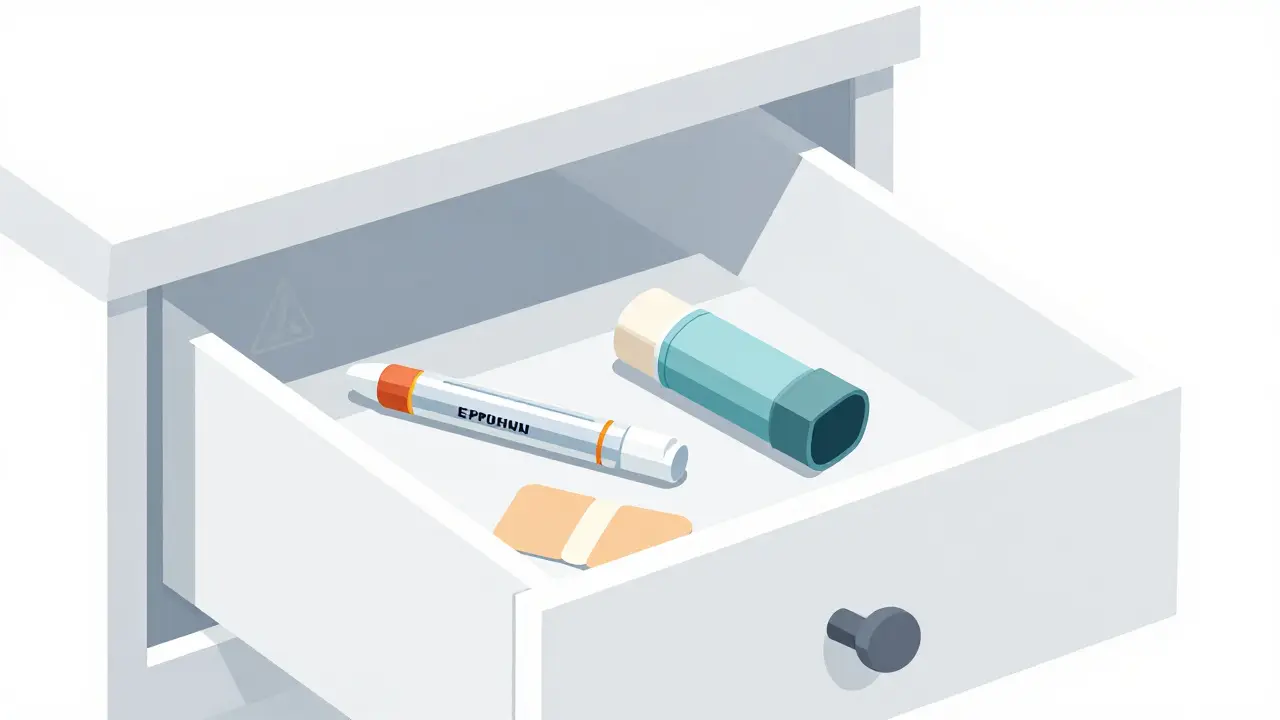
Check your medicine cabinet. If you see an expired EpiPen, a half-used inhaler, or old nicotine patches tucked away in a drawer, you might be sitting on a safety hazard. These aren’t just regular trash. They contain potent drugs, pressurized gases, or sharp needles that can harm children, pets, sanitation workers, and the environment if thrown into the bin incorrectly.
I’ve seen too many people toss these items into the general waste because they don’t know better. The truth is, disposing of medical devices like auto-injectors and inhalers requires specific steps. You need to protect your household and follow local regulations. Let’s break down exactly how to handle each type so you can do it safely and legally.
Disposing of Expired EpiPens: Treat Them as Sharps
An EpiPen is not just a medication container; it is a sharps device. It contains a needle that automatically deploys when used. Even if you never used the EpiPen, the needle is still inside, loaded and ready. This makes it dangerous for anyone who might dig through your trash later.
The safest way to dispose of an EpiPen is to return it to your healthcare provider. When you go in for a refill, ask if they have a sharps container where you can drop off the old one. Many clinics and hospitals accept them for free. This is the gold standard because it ensures the needle is handled by professionals.
If you can’t return it to your doctor, look for a drug take-back program. In many places, pharmacies or law enforcement agencies host collection events. You can find permanent drop-off locations using online locator tools provided by health departments. Do not try to remove the needle yourself. Tampering with the device can cause accidental injection or injury.
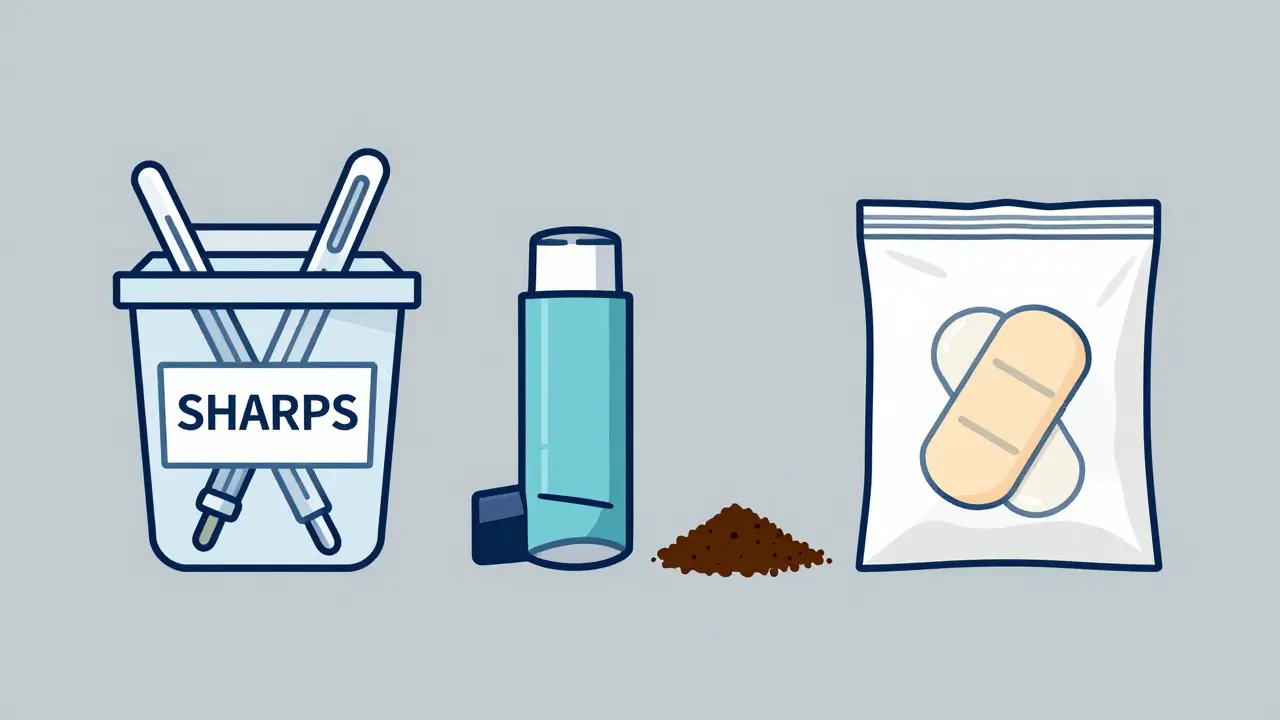
If no take-back option exists within reach, you must store it safely at home until you can find a proper facility. Use a hard-plastic container with a tight-fitting lid, like an empty laundry detergent bottle. Label it clearly with "SHARPS" and "DO NOT RECYCLE." Never use glass jars or thin plastic bags, as they can break or puncture. Once full, contact your local waste management authority for instructions on how to dispose of the sealed container.
Handling Expired Inhalers: Pressure and Propellants
Inhalers, especially metered-dose inhalers (MDIs), are different from pills or patches. They are pressurized containers. If you throw an inhaler into a compactor or incinerator, it can explode. The propellants used in older models were also harmful to the ozone layer, though modern ones are safer, they still contribute to greenhouse gas emissions if released improperly.
First, check the label. Some manufacturers provide specific disposal instructions. If the inhaler is completely empty, some municipalities allow you to recycle the metal canister after removing the plastic mouthpiece. However, this varies wildly by location. In New York City, for example, you can drop aerosol cans at specialized Household Special Waste Drop-Off Sites.
If the inhaler still has medication left, treat it as pharmaceutical waste. Many pharmacy chains, like Walgreens or CVS, may accept them, but availability depends on state laws. A quick call ahead saves time. If they won’t take it, mix the remaining powder or liquid with something unappealing, like coffee grounds or cat litter, in a sealed bag before throwing it in the trash. This prevents someone from accidentally ingesting the residue.
For dry powder inhalers, which don’t have pressurized gas, the process is simpler. Remove any remaining powder, mix it with undesirable substances, and discard the device in your household trash. Always ensure the device is empty of loose medication before discarding.
Getting Rid of Medicated Patches: Stickiness and Residue
Medicated patches, such as those for nicotine, pain relief, or hormone therapy, deliver drugs through the skin. Even after you peel them off, they often retain a significant amount of active medication. Throwing them loosely in the trash risks exposure to curious kids or pets who might lick the sticky surface.
The FDA has a specific "flush list" for certain high-risk medications, including fentanyl patches. If your patch is on this list, flush it down the toilet immediately. This prevents accidental ingestion, which can be fatal. For most other patches, flushing isn’t necessary, but you still need to neutralize the stickiness.
To dispose of standard medicated patches, fold them in half with the sticky sides touching each other. This seals the medication inside and removes the adhesive risk. Place the folded patch in a sealed container or a heavy-duty plastic bag. Then, throw it in your household trash. Do not recycle the packaging unless it’s clearly marked as recyclable material, and even then, separate the patch from the wrapper first.
Avoid using disposal packets like DisposeRx for patches. These packets are designed for pills and liquids, turning them into a gel. They don’t work well with the large surface area and adhesive nature of patches. Folding and sealing is the most effective method for transdermal delivery systems.
Why Proper Disposal Matters: Safety and Environment
You might wonder why you can’t just toss everything in the bin. The stakes are higher than you think. According to FDA reports, a significant percentage of accidental pediatric poisonings involve improperly discarded medications. A child finding an EpiPen might play with it, triggering the needle. A pet chewing on a leftover patch could suffer an overdose.
Environmentally, improper disposal leads to pharmaceuticals entering waterways. Wastewater treatment plants aren’t designed to filter out every trace of complex drugs. Studies have found traces of hormones and painkillers in rivers and lakes, affecting aquatic life. By using take-back programs or safe home disposal methods, you reduce this chemical load.
Additionally, sanitation workers deserve protection. They handle trash without knowing what’s inside. A broken needle or leaking chemical can injure them. Treating medical waste with respect protects their livelihood and health. It’s a small effort on your part that makes a big difference for others.
Finding Local Disposal Resources
Knowing the rules is one thing; finding a place to drop off your items is another. Start by checking with your pharmacist. They are often the best resource for local disposal options. Many communities have designated days for drug take-back, organized by law enforcement agencies. These events are usually held twice a year, offering secure bins for various types of medical waste.
Use online tools to locate permanent drop-off sites. Websites like safeneedledisposal.org or DEA’s collector locator can help you find nearby options. If you live in a rural area, options might be limited. In that case, consider storing your sharps in a labeled container until you can travel to a city with a collection center. Don’t let distance excuse unsafe disposal.
Some states have stricter laws than others. California, for instance, mandates disposal at designated centers or via mail-back programs. Texas allows household trash disposal if properly contained. Check your local health department’s website for specific guidelines. Ignorance of the law doesn’t exempt you from fines or environmental damage.
Can I throw an unused EpiPen in the regular trash?
No, you should not throw an unused EpiPen in the regular trash unless it is securely contained in a puncture-proof container labeled "SHARPS." Because it contains a needle, it poses a risk to sanitation workers and others who handle trash. The safest option is to return it to your healthcare provider or use a designated sharps disposal program.
How do I dispose of an inhaler that still has medication left?
If your inhaler still has medication, treat it as pharmaceutical waste. Mix the remaining contents with an undesirable substance like coffee grounds or cat litter in a sealed bag. Then, discard it in your household trash. Avoid throwing it in the recycling bin due to the pressurized canister and residual medication.
Should I flush medicated patches down the toilet?
Only flush patches if they are on the FDA’s official "flush list," which includes high-risk medications like fentanyl. For most other patches, folding them with sticky sides together and sealing them in a bag before trashing is the recommended method. Flushing non-listed patches contributes to water contamination.
Where can I find a drug take-back location near me?
You can find drug take-back locations by visiting the DEA’s National Take Back Initiative website or using resources like safeneedledisposal.org. Many pharmacies and law enforcement agencies also host periodic collection events. Contact your local health department for specific dates and locations in your area.
Is it illegal to dispose of medical sharps in household trash?
Laws vary by state and country. In some regions, like California, it is illegal to dispose of sharps in household trash without proper containment. In others, it may be allowed if strictly packaged. Always check your local regulations to avoid fines and ensure public safety. When in doubt, use a take-back program.