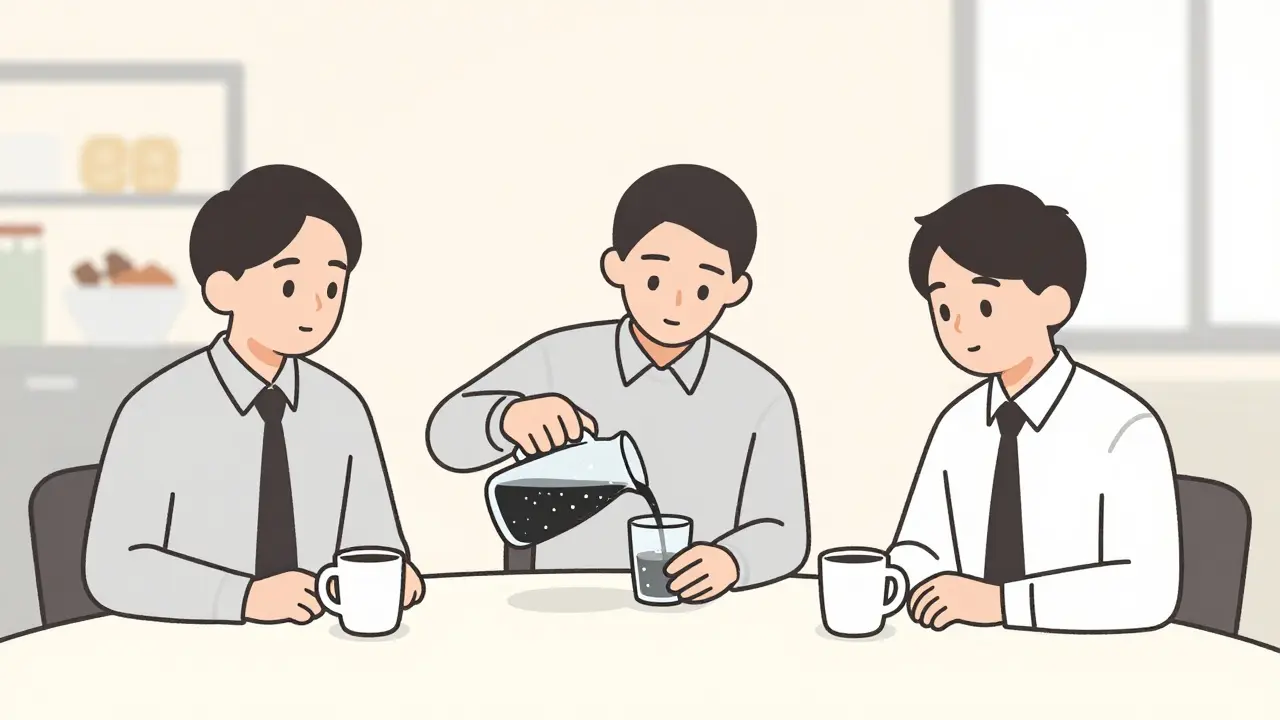
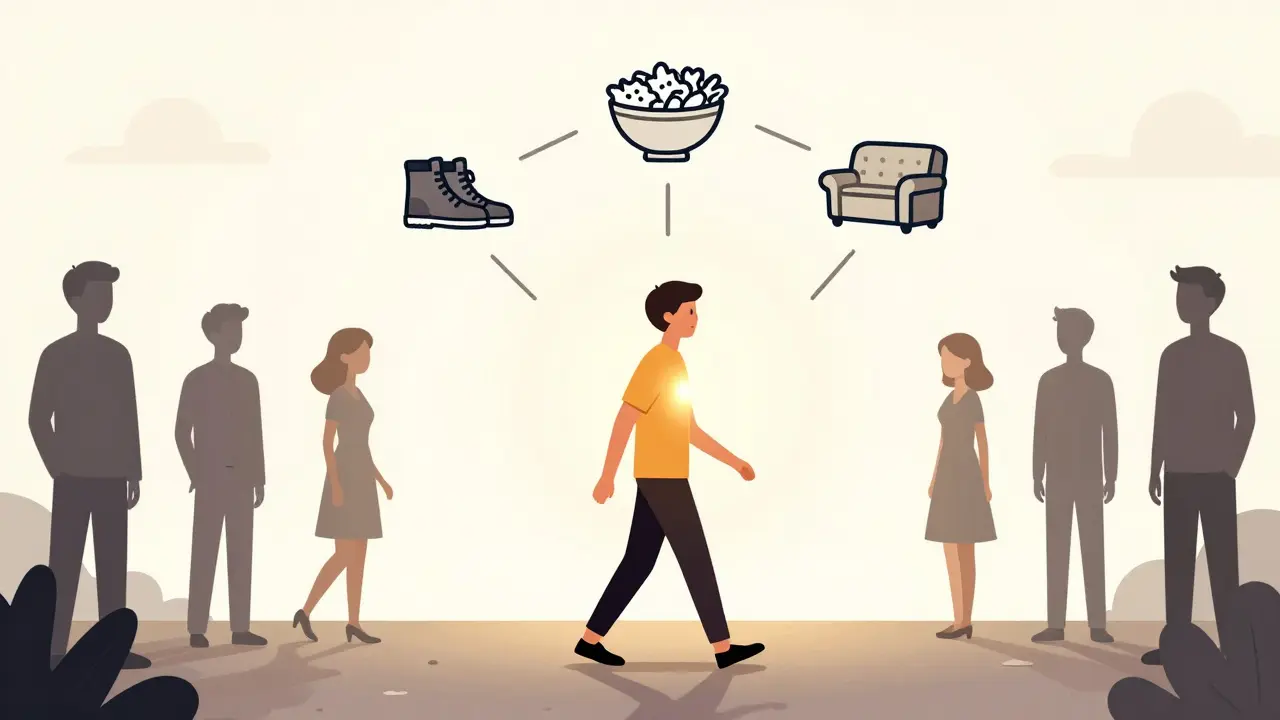
Ever noticed how you suddenly started drinking sparkling water because everyone at work did? Or how you bought the same sneakers as your friend, even though you didn’t really need them? That’s not coincidence. It’s social influence-the quiet, powerful force that makes us mirror the choices of the people around us, often without even realizing it.
Most people think peer pressure only happens in high school. But it doesn’t stop at 18. It shows up in how you choose your phone plan, what you eat for lunch, which brand of laundry detergent you buy, and even how you vote. The people in your circle-friends, coworkers, classmates-don’t just influence your mood. They reshape your preferences, your habits, and your decisions, often more than ads or logic ever could.
Why We Copy Others Without Thinking
Humans are wired to fit in. It’s not weakness-it’s survival. Back when we lived in small tribes, being rejected by the group meant danger. Today, that same instinct drives us to match the behavior of those around us. Studies show that when people are unsure what to do, they look to others for cues. That’s called social learning.
In one famous experiment from the 1950s, Solomon Asch asked people to compare line lengths. When everyone else in the room gave the wrong answer, 76% of participants went along with them-even though the correct answer was obvious. That’s not stupidity. That’s the brain choosing safety over accuracy. We fear being wrong in front of others more than we fear being wrong alone.
Modern brain scans confirm this. When people change their minds to match a group, the ventromedial prefrontal cortex-the area tied to personal value and reward-lights up differently. It’s not just pretending. The brain actually starts to see the group’s choice as more valuable. Peer attitudes don’t just sway your behavior. They rewrite how your brain weighs options.
It’s Not Just About Being Popular
Many assume peer influence only works through popularity. But it’s more subtle than that. You don’t need to be the most liked person in the room to shape choices. What matters is perceived norm-what you think everyone else is doing or believing.
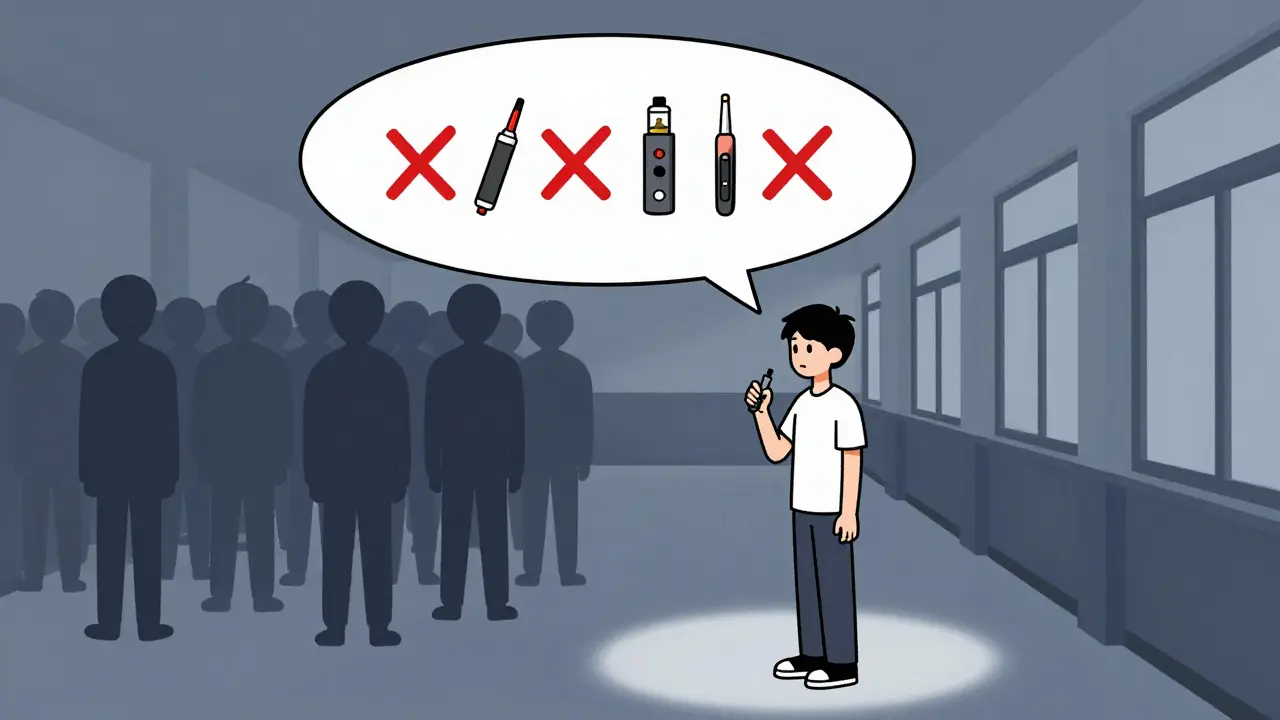
Take vaping among teens. A 2021 CDC study found that teens overestimated how many of their peers vaped by nearly 30%. Once they learned the real numbers were much lower, their own use dropped by 18.7%. That’s not because they were pressured. It’s because their perception of the norm shifted. The behavior didn’t change. The belief about what was normal did.
This is why interventions that focus on correcting misperceptions work better than scare tactics. Telling someone “everyone’s doing it” can backfire if it’s not true. But showing them “most people aren’t” can create real change. The power isn’t in the majority-it’s in the belief of the majority.
Who Has the Most Influence? (Spoiler: It’s Not Who You Think)
Not all peers are equal. Influence doesn’t always come from the loudest or most popular person. Research shows it often comes from people who are structurally close-friends you talk to daily, classmates you sit with, coworkers you grab coffee with.
Network studies reveal something surprising: people with moderate social status have the strongest influence. Not the top dog. Not the outsider. The middle. Why? Because they’re seen as relatable but still credible. A 2015 study found that when a peer with moderate popularity modeled healthy habits, others were 37.8% more likely to follow than when a highly popular peer did. Too much status feels unattainable. Too little feels irrelevant. The sweet spot is someone you see as “like me, but a little ahead.”
That’s why peer-led health campaigns work. Schools that train “opinion leaders”-students who aren’t necessarily athletes or class presidents, but trusted by their peers-see better results than top-down programs. These are the kids who text back quickly, share memes, and get invited to everything. They’re not influencers. They’re just connected.
The Dark Side: When Conformity Hurts
Not all social influence is good. When peer attitudes normalize risky behavior, the consequences can be serious. Longitudinal studies tracking teens over years show that exposure to peers who engage in substance use increases an individual’s own risk by 28%. But here’s the catch: it’s not just about hanging out with those peers. It’s about how much you identify with them.
Adolescents who strongly identify with a group that values rebellion are more likely to adopt its behaviors-even if they personally disagree. That’s social identity theory in action. You don’t just copy behavior. You adopt it to become the kind of person your group sees as acceptable.
This explains why some teens quit smoking after switching schools, even if they never wanted to smoke in the first place. The group norms changed. Their identity shifted. Their behavior followed.
And it’s not just teens. Adults do this too. Think about workplace culture. If your team treats overtime as normal, you’ll start staying late-even if you hate it. If your friend group jokes about skipping therapy, you might avoid it even if you need it. Peer attitudes create invisible rules. And breaking them feels like betrayal.
How to Use This Knowledge-For Good
Understanding social influence isn’t just about recognizing manipulation. It’s about using it to create change.
Public health programs are starting to get it right. Instead of blasting ads about “don’t vape,” they’re training real teens to model healthy choices in their own circles. The “Friends for Life” program saw real drops in vaping because it didn’t target the whole school. It targeted the right people-the ones who already had trust and connection.
Even in your own life, you can use this. Want to get more active? Don’t just join a gym. Find one or two friends who are already moving more. Make it a habit to walk together. Your brain will start to associate movement with belonging, not punishment.
Want to eat better? Stop buying kale because it’s “healthy.” Start buying it because your roommate eats it every morning-and you like how it makes her feel. That’s how real change sticks. It’s not about willpower. It’s about environment and identity.
What Happens When You Resist?
Resisting peer influence isn’t easy. Neuroscientists have found that saying no to a group activates the same brain regions as physical pain. The amygdala and prefrontal cortex light up, signaling conflict. That’s why it feels so exhausting to stand alone-even when you’re right.
But here’s the thing: resistance gets easier with practice. People who consistently align their choices with their values-not their crowd-develop what psychologists call “self-coherence.” They don’t change to fit in. They attract people who fit with them.
It’s not about being anti-social. It’s about being intentional. You don’t have to reject your friends. You just need to stop letting their habits become your default.
It’s Not About Peer Pressure. It’s About Belonging.
Social influence isn’t about control. It’s about connection. We copy others because we want to feel seen, accepted, and part of something bigger. That’s not a flaw. It’s human.
The trick is knowing when to lean in-and when to step back. When peer attitudes align with your values, let them strengthen you. When they pull you away from who you are, recognize it for what it is: a signal, not a command.
Every choice you make is shaped by the people around you. The question isn’t whether you’re influenced. It’s who you want to be influenced by-and why.
Why do I change my mind just because my friends think differently?
Your brain is wired to seek social harmony. When your peers express a different opinion, your brain checks whether aligning with them might improve your standing or reduce conflict. This isn’t weakness-it’s a survival mechanism. Studies show that even when you know you’re right, seeing others disagree can cause your brain to re-evaluate your own judgment. The stronger your connection to the group, the more likely you are to shift your view, even unconsciously.
Can social influence be positive?
Absolutely. Social influence drives many healthy behaviors: quitting smoking, exercising regularly, eating better, and even getting vaccinated. Programs that use peer role models-like teens encouraging others to avoid vaping-see success rates up to 30% higher than traditional campaigns. When the people around you model positive habits, your brain starts to see those habits as normal, safe, and rewarding. That’s how change spreads without pressure.
Is peer influence stronger in teens than adults?
Teens are more sensitive to peer influence because their brains are still developing the parts that control impulse and long-term thinking. But adults aren’t immune. In fact, adults often show stronger conformity in group settings where identity matters-like workplaces, religious groups, or political circles. The difference isn’t strength-it’s context. Teens conform to fit in socially. Adults conform to fit into roles or maintain status.
How do I know if I’m being influenced or just making my own choice?
Ask yourself: Would I still make this choice if no one else was doing it? If you’re unsure, try this: imagine your closest friend made a different decision. Would you still feel okay with yours? If the answer is no, social influence is likely at play. Real personal choice feels calm and confident. Influenced choices often come with a whisper of doubt: “I hope they like this too.”
Can social media make peer influence worse?
Yes. Social media amplifies the illusion that everyone else is doing something-whether they are or not. Seeing 50 posts about a new diet, workout, or product creates a false norm. Algorithms show you what people like you engage with, so you’re constantly exposed to a distorted version of reality. Studies show people overestimate peer behaviors by 15-20% online. That’s why trends go viral even when they’re unhealthy or unrealistic.
What’s the difference between peer influence and peer pressure?
Peer pressure is direct and often verbal: “Come on, just try it.” Peer influence is silent and indirect: you notice your friends doing something, and over time, you start doing it too. One is a demand. The other is a slow shift in what feels normal. You can be influenced without anyone ever asking you to change.
Can I reduce my susceptibility to social influence?
Yes. Start by becoming aware of when you’re making choices to fit in. Keep a short journal: write down three decisions you made in a day and ask, “Was this mine, or was it theirs?” Over time, you’ll notice patterns. Strengthen your self-awareness by spending time alone with your thoughts. The more comfortable you are with your own values, the less you’ll need to mirror others to feel secure.
Are some cultures more influenced by peers than others?
Yes. Research analyzing 253 million Facebook users found that conformity rates were nearly triple in collectivist cultures (like Japan) compared to individualistic ones (like the U.S.). In cultures that prioritize group harmony, people are more likely to adjust their behavior to match group norms-even if it goes against personal preference. In cultures that value independence, people resist more, but still conform when they feel deeply connected to the group.
If you want to make choices that truly reflect who you are, start by noticing who you’re listening to. Not just the people you talk to-but the ones you quietly imitate. Your habits are shaped by more than your goals. They’re shaped by the people you feel you belong to.


Meina Taiwo
December 22, 2025 AT 01:18