Medication-Induced Hiccup Risk Calculator
Assess Your Hiccup Risk
Based on clinical data from the article, this tool estimates your risk of medication-induced hiccups based on your current medications and other factors.
Your Risk Assessment
Ever had hiccups that wouldn’t stop-no matter how many glasses of water you drank or how hard you held your breath? If you’ve recently started a new medication, it might not be a coincidence. Hiccups triggered by drugs are more common than most people realize, and they can turn from a minor annoyance into a serious disruption to sleep, eating, and daily life. While many assume hiccups are just a random glitch, they’re actually a neurological reflex gone haywire-and certain medications can push that reflex into overdrive.
Why Some Medications Make You Hiccup
The hiccup reflex isn’t just about your diaphragm spasming. It’s a full circuit: nerves send signals to your brainstem, which then tells your diaphragm to contract, followed by the sudden closure of your vocal cords. That’s the ‘hic’ sound. Medications mess with this system in three main ways: they irritate the nerves that control the diaphragm, alter brain chemicals like dopamine or GABA, or cause your stomach to swell, which tugs on the diaphragm.
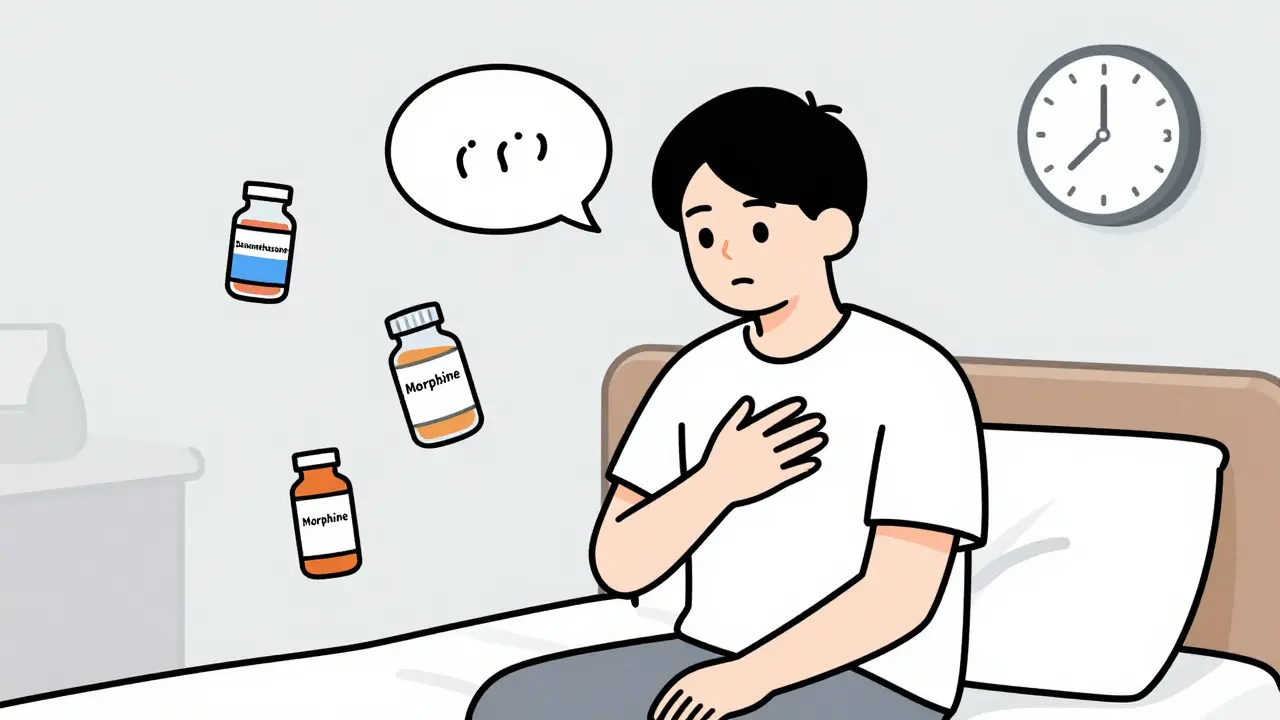
Some drugs are notorious for this. Corticosteroids like dexamethasone and prednisone top the list. In cancer patients getting chemo, dexamethasone is often given to prevent nausea-but up to 41% of those patients develop hiccups, especially when combined with cisplatin. Benzodiazepines like midazolam, used for sedation before surgery, cause hiccups in about 10% of cases. Opioids, especially morphine, are another big culprit, particularly in people managing chronic pain. Even some antibiotics like azithromycin and moxifloxacin have been linked to hiccups, though those cases are rarer.
It’s not always about the dose. Some people get hiccups from just 4mg of dexamethasone, while others take 20mg with no issue. What matters is how your body reacts to the drug’s effect on your nervous system. The FDA officially recognized this link in 2021 by adding hiccups to dexamethasone’s warning label. And since January 2024, doctors now have a specific ICD-10 code-R09.2-MIH-for medication-induced hiccups, making it easier to track and treat.
Who’s Most at Risk?
Men are far more likely to get drug-induced hiccups than women. In one major study, 97% of patients who developed hiccups from dexamethasone and cisplatin were male. The reason isn’t fully understood, but it may relate to differences in how hormones interact with brain receptors involved in the hiccup reflex.
Older adults and people with neurological conditions are also more vulnerable. If you’re on multiple medications, especially those that affect the central nervous system, your risk goes up. Cancer patients, people with kidney disease, and those on long-term steroid therapy are the most commonly affected groups. It’s not just about the drug-it’s about your body’s overall sensitivity.
What to Do When Hiccups Won’t Stop
If your hiccups last more than 48 hours, they’re no longer just a nuisance-they’re a medical issue. Persistent hiccups can lead to exhaustion, weight loss, and even depression. The first step? Don’t panic. But also don’t ignore it.
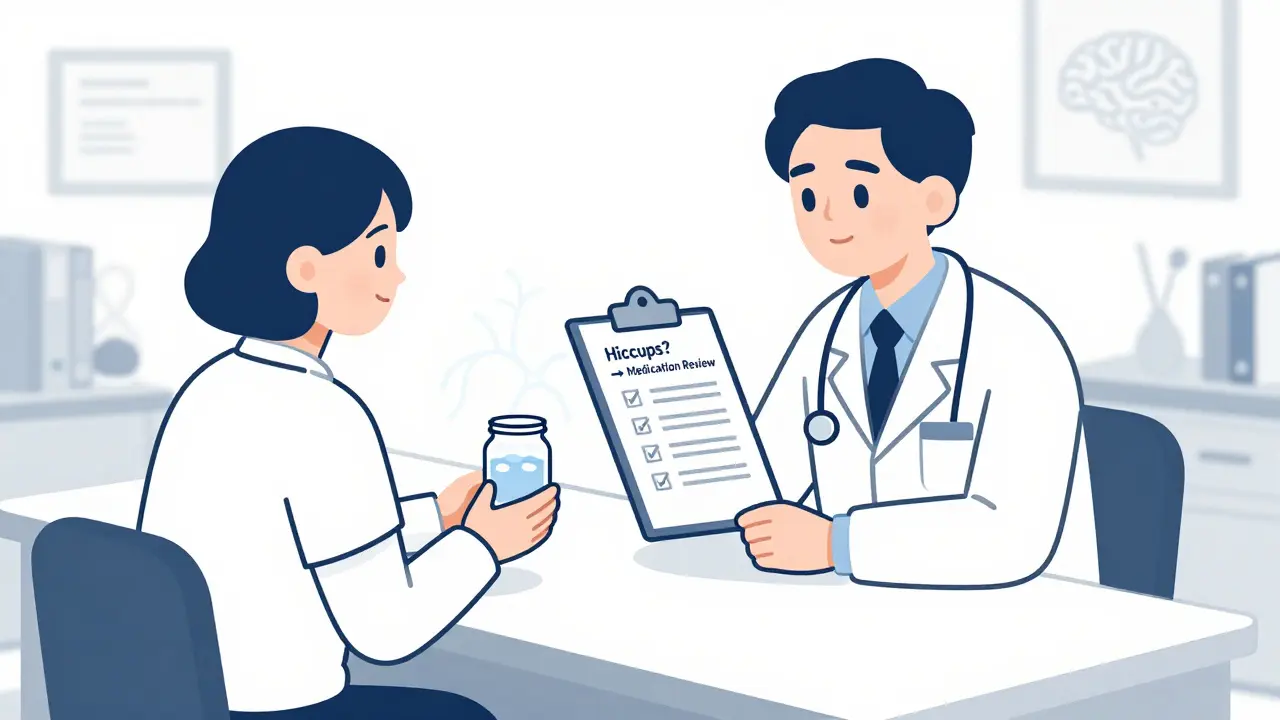
Start by asking yourself: When did the hiccups start? Did they begin right after you took your first dose of a new drug? If yes, that’s a strong clue. Talk to your doctor. Don’t assume it’s just "normal." Many providers don’t list hiccups as a side effect on medication sheets, so patients often wait weeks before speaking up.
Before jumping to drugs, try simple, proven home remedies:
- Swallow a teaspoon of granulated sugar-this works in 72% of cases, according to a JAMA study.
- Gargle ice water. The cold shock can reset the nerve reflex.
- Hold your breath for as long as you can, then exhale slowly. Repeat 3 times.
- Drink a glass of water quickly while pinching your nose.
These aren’t just old wives’ tales. They’re backed by clinical data. And they’re safe, cheap, and immediate.
When You Need Medication to Stop the Hiccups
If home tricks don’t work, and the hiccups keep going, your doctor may prescribe something. The only FDA-approved drug for hiccups is chlorpromazine (Thorazine). It’s an antipsychotic, but at low doses (25-50mg daily), it’s effective in about half of patients. The catch? It can cause drowsiness, low blood pressure, and tremors-so it’s not for everyone.
Better options are often off-label but well-studied:
- Baclofen (a muscle relaxant): Starts at 5mg three times a day. Works in 60-70% of steroid-induced cases. Fewer side effects than chlorpromazine.
- Gabapentin: Sometimes used for nerve-related hiccups. Dose: 300-600mg daily.
- Ondansetron: An anti-nausea drug that’s surprisingly effective for hiccups. One patient reported hiccups gone in two hours after switching from dexamethasone to ondansetron.
For patients who can’t stop their main medication-like cancer patients needing dexamethasone-doctors now use prophylactic baclofen. Giving 5mg twice daily before chemo cuts hiccup rates from 41% down to just 13%.
Why This Matters More Than You Think
Medication-induced hiccups aren’t just annoying-they’re costly. A 2022 analysis estimated that properly managing these cases could save the U.S. healthcare system $28.7 million a year by cutting down on unnecessary CT scans, ER visits, and hospitalizations. Right now, about 35% of cases are misdiagnosed because doctors don’t connect the dots between a new drug and the hiccups.
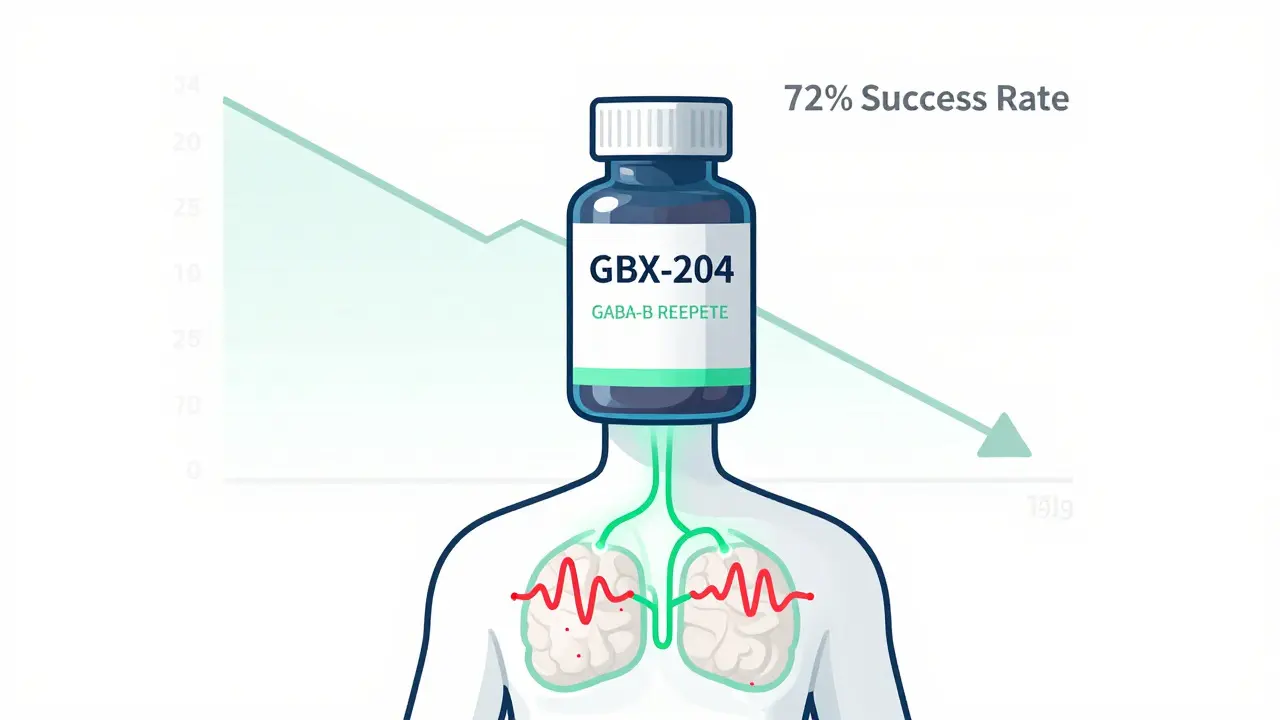
And the problem is growing. Between 2018 and 2022, mentions of hiccups in clinical trial reports jumped 27%. The FDA and European Medicines Agency now require drug makers to report hiccup rates for new CNS-acting drugs and steroids. A new drug called GBX-204, a GABA-B agonist, just got breakthrough status from the FDA in 2023 and is showing an 82% success rate in trials.
This isn’t just about comfort. It’s about quality of life. One Reddit user wrote: "My hiccups lasted 72 hours after my chemo dose. I couldn’t sleep, eat, or talk. I felt like I was losing my mind." That’s not exaggeration. When hiccups last days or weeks, they become a psychological burden.
What to Ask Your Doctor
If you’re on a medication and getting persistent hiccups, here’s what to say:
- "Could this be a side effect of my drug?"
- "Is there an alternative medication with fewer hiccup risks?"
- "Can we try baclofen or ondansetron as a preventive?"
- "Should we check if this is affecting my sleep or nutrition?"
Don’t wait for your doctor to bring it up. Be specific. Mention the drug name, when you started it, and how long the hiccups have lasted. Bring a symptom log if you can.
And if you’re on steroids, opioids, or chemo drugs-know the signs. Hiccups aren’t something you just have to live with. There are real, effective solutions. You just need to speak up.
Can over-the-counter remedies really stop medication-induced hiccups?
Yes, some OTC methods work surprisingly well. Swallowing a teaspoon of granulated sugar has a 72% success rate in stopping hiccups within minutes, according to a 2021 JAMA Internal Medicine study. Gargling ice water and breath-holding techniques also show 65% and 58% effectiveness, respectively. These methods work by stimulating nerves in the throat and diaphragm to reset the hiccup reflex. They’re safe, quick, and worth trying before moving to prescription drugs.
Why isn’t hiccup listed as a side effect on most drug labels?
Hiccups have historically been seen as minor and transient, so drug manufacturers didn’t prioritize listing them. But that’s changing. The FDA added hiccups to dexamethasone’s label in 2021 after reviewing hundreds of reports. Still, many drugs-especially those used for pain or cancer-don’t mention hiccups in their official inserts. This gap leads to underreporting and misdiagnosis. Patients often assume it’s unrelated, and doctors may overlook it unless specifically prompted.
How long do medication-induced hiccups usually last?
Most last less than 48 hours and go away on their own. But about 30% become persistent-lasting more than two days-and 5% turn into intractable hiccups that last over a month. The duration depends on the drug, dose, and individual sensitivity. For example, hiccups from dexamethasone often start within hours and can last 2-4 days unless treated. Opioid-induced hiccups may linger as long as the drug is active in the system. If hiccups last longer than 48 hours, medical evaluation is recommended.
Is it safe to stop a medication just because it causes hiccups?
Never stop a medication without talking to your doctor. For some patients-like those on chemotherapy or steroids for autoimmune conditions-stopping the drug could be dangerous. The goal isn’t always to quit the drug, but to manage the side effect. Doctors can often prescribe an additional medication like baclofen or ondansetron to block the hiccups while keeping the primary treatment going. In fact, prophylactic baclofen reduces hiccup rates by over 70% in cancer patients on dexamethasone.
Are there any new treatments on the horizon?
Yes. In 2023, the FDA granted breakthrough therapy designation to GBX-204, a new GABA-B receptor agonist specifically designed for intractable hiccups. Phase 3 trials showed an 82% resolution rate at 10mg daily-better than baclofen’s 63%. This drug targets the exact neurological pathway involved in medication-induced hiccups. It’s expected to be available by late 2026. Meanwhile, standardized tools like the Hiccup Symptom Score (HSS) are now used in 67% of major cancer centers, helping doctors track severity and treatment response more accurately.


Gregory Parschauer
January 14, 2026 AT 23:11