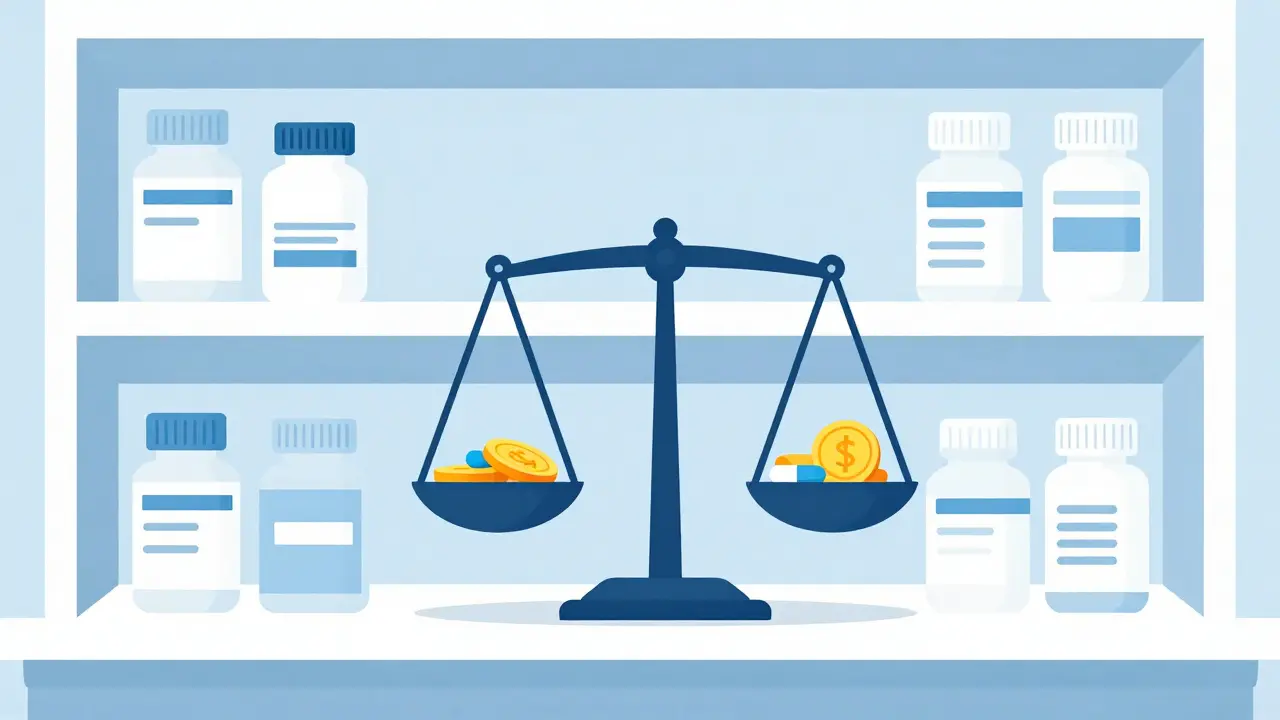
In 2025, generic drugs saved US Medicare $142 billion-enough to cover healthcare costs for 4.3 million seniors annually. The rise of global generics has transformed healthcare access worldwide, with countries adopting vastly different approaches to balance affordability and quality. These policies aren’t just about cost-cutting; they’re complex systems shaped by regulatory frameworks, market dynamics, and healthcare priorities.
The Global Generic Drug Landscape
Generic drugs are identical copies of brand-name medications, approved after patents expire. They contain the same active ingredients and deliver the same therapeutic effects. But how countries regulate them varies wildly. The FDAthe U.S. federal agency responsible for regulating drugs and medical devices oversees the U.S. system, while the European Medicines Agencythe EU agency responsible for evaluating and supervising medicines handles approvals across Europe. Meanwhile, China’s Volume-Based Procurementa centralized procurement policy for drugs (VBP) and India’s Compulsory Licensinga legal mechanism allowing generic production without patent holder consent laws create entirely different market conditions.
Global data shows staggering differences. The Medicare Savingsthe $142 billion saved by U.S. Medicare from generic drugs in 2025 program alone cut costs by $2,643 per beneficiary. In Europe, generics account for 65% of prescriptions but only 22% of pharmaceutical spending. Meanwhile, India produces 20% of the world’s generic drugs by volume but represents just 2% of global pharmaceutical revenue. These numbers highlight how policy choices shape real-world outcomes.
| Country | Policy Approach | Key Metric | Savings | Challenges |
|---|---|---|---|---|
| United States | High generic utilization + strong negotiation | 90.1% of prescriptions generic | $142B Medicare savings (2025) | High branded drug costs offset savings |
| European Union | Fragmented pricing despite centralized approval | 65% of prescriptions generic, 22% of expenditure | Varies by country | Price variations up to 300% between nations |
| South Korea | 1+3 Bioequivalence Policy + differential pricing | Generics at 38.69%-53.55% of originator price | Reduced redundant entries by 41% | Lower new generic launches (-29%) |
| China | Volume-Based Procurement (VBP) | Average 54.7% price reduction | 63% lower out-of-pocket costs | Manufacturing shortages due to razor-thin margins |
| India | Compulsory Licensing | 20% of global supply by volume | Critical affordability for developing nations | Quality concerns in some local manufacturers |
How the United States Balances Affordability and Innovation
The U.S. system relies on high generic penetration-90.1% of prescriptions are filled with generics-but still faces high drug costs overall. The FDAthe U.S. federal agency responsible for regulating drugs and medical devices approves generics through the Abbreviated New Drug Application (ANDA) pathway. As of December 2024, the FDA’s Orange Book listed 11,342 approved generic products, including 1,842 Competitive Generic Therapya designation that grants 180 days of marketing exclusivity (CGT) designations that fast-track approval for drugs with limited competition.
Despite these efforts, U.S. public-sector prescription net prices remain 18% lower than peer countries. This paradox happens because branded drugs dominate spending. For example, a single new cancer drug might cost $100,000 annually, while its generic version costs $5,000. The Medicare savings from generics are massive, but they don’t offset the high costs of novel therapies. This tension between affordability for existing drugs and incentives for innovation defines the U.S. approach.
Europe’s Fragmented Approach: Harmonized Regulation, Divergent Pricing
The European Medicines Agency (EMA) provides centralized drug approvals across all 27 EU member states. But when it comes to pricing, each country sets its own rules. This creates a fragmented market where identical generics can cost 300% more in one country versus another. A common blood pressure medication might cost €2.50 in Germany but €7.80 in Italy, as documented in the OECD Health at a Glance 2025 report.
Germany leads in generic utilization with 88.3% of prescriptions filled with generics, thanks to mandatory substitution laws. Italy lags at 67.4%, despite similar economic conditions. This inconsistency frustrates patients and manufacturers alike. The European Commission’s proposed Pharmaceutical Package, expected in late 2025, aims to harmonize pricing and reimbursement rules to reduce these disparities. But until then, Europe’s patchwork system remains a major challenge for cross-border drug access.
South Korea’s Precision Pricing Model
South Korea’s 2020 1+3 Bioequivalence Policya regulation limiting generic approvals to three products per drug restricts market approvals to a maximum of three generic products using previously submitted bioequivalence data. Combined with the 2021 Differential Generic Pricing Systema tiered pricing structure for generics, this policy creates precise price tiers: generics meeting both quality and price criteria are set at 53.55% of the originator price, single-criteria products at 45.52%, and non-qualifying generics at 38.69%.
These measures reduced redundant generic entries by 41% between 2020-2024. But they also decreased new generic launches by 29% compared to the 2015-2019 period, according to Frontiers in Public Health 2025. This trade-off between market efficiency and competition highlights the challenge of balancing affordability with innovation incentives. South Korea’s model shows how strict regulations can cut costs but may also stifle new entrants.
China’s Volume-Based Procurement Revolution
China’s Volume-Based Procurement (VBP) policy, launched as a pilot in 2018 and expanded nationwide by 2020, uses centralized bulk procurement tenders. This approach has driven average price reductions of 54.7% for selected medications, with some therapeutic categories seeing cuts up to 93%, according to IQVIA’s 2025 Global Use of Medicines report.
While patients appreciate dramatically reduced out-of-pocket costs-average 63% lower for chronic disease medications-manufacturers face razor-thin margins. In 2024, 23% of surveyed manufacturers reported negative margins on VBP-contracted products, leading to shortages. For example, Amlodipine besylate shortages affected 12 provincial healthcare systems for 6-8 weeks. China’s National Medical Products Administration (NMPA) has accelerated approvals to 10-12 months but requires manufacturers to participate in VBP tenders. This creates a high-risk environment where quality and supply chain resilience are increasingly threatened.
India’s Role as the "Pharmacy of the Developing World"
India produces 20% of global generic drugs by volume, supplying affordable medicines to developing nations. Its Compulsory Licensinga legal mechanism allowing generic production without patent holder consent policy under Section 84 of the Patents Act 1970 enables rapid generic entry. This has made India a critical player in global health, especially for HIV/AIDS and malaria treatments.
However, quality concerns persist. FDA warning letters to Indian generic manufacturers increased by 17% between 2022-2024 due to data integrity issues. Indian healthcare providers report inconsistent bioavailability in locally manufactured generics, particularly for antiepileptics and anticoagulants. While India’s model delivers massive affordability benefits, it also faces pressure to improve quality control to maintain global trust.
Challenges and Trade-offs in Global Generic Policies
Every country struggles to balance affordability with innovation incentives. The DrugPatentWatch 2025 analysis notes that excessive price controls in markets like China and South Korea have reduced new generic launches by 22-37% compared to pre-reform periods. This threatens future competition and could delay access to newer generics.
Quality is another major concern. The FDA’s import alerts for quality issues rose from 1,247 in 2020 to 2,183 in 2024. In emerging markets, regulatory oversight remains inconsistent, leading to substandard products. Meanwhile, patients in the U.S. report frustration with inconsistent insurance formulary designs, where generics sometimes cost more than branded drugs due to Pharmacy Benefit Manager (PBM) practices.
Supply chain vulnerabilities also pose risks. China’s VBP policy caused shortages for critical medications like Amlodipine besylate. Europe’s fragmented pricing system creates bottlenecks when manufacturers choose to supply only high-paying markets. These challenges show that generic drug policies must address not just price but also quality and reliability.
Future Trends Shaping Generic Drug Access
The Inflation Reduction Act’s Medicare drug price negotiation provisions, fully implemented by 2028, will subject 10-20 high-expenditure drugs annually to government-negotiated prices. This could reduce originator revenues by 25-35%, accelerating generic substitution for affected products. Meanwhile, the European Union’s proposed Pharmaceutical Package aims to harmonize pricing rules and strengthen incentives for "first generic" entrants, potentially reducing market entry timelines by 12-15%.
China’s Phase 4 VBP expansion, scheduled for January 2026, will include 150 additional products with winning bidders committing to supply 80% of hospital demand at prices averaging 65% below current levels. This will further squeeze manufacturer margins, potentially leading to more shortages. The WHO Global Health Sector Strategy 2024-2030 warns that "excessively aggressive price competition threatens manufacturing quality and supply chain resilience," while McKinsey predicts global generic manufacturers will consolidate from 3,500 to 2,200 by 2030.
Despite these challenges, the future looks promising. The International Generic and Biosimilars Association advocates for harmonized global bioequivalence standards, which could accelerate generic entry by 18-24 months in developing markets. With 68 countries implementing reference pricing systems and 42 adopting mandatory generic substitution, the global push for affordable medicines continues to evolve.
Are generic drugs as effective as brand-name drugs?
Yes. Regulatory agencies like the FDA require generics to meet the same rigorous standards for quality, safety, and efficacy as brand-name drugs. They must demonstrate bioequivalence-meaning they deliver identical amounts of active ingredients into the bloodstream at the same rate. This ensures therapeutic equivalence without compromising patient outcomes. For example, generic versions of common medications like metformin or lisinopril perform identically to their branded counterparts in clinical studies.
Why do generic drug prices vary so much between countries?
Price variations stem from differences in regulatory frameworks, negotiation power, and market competition. In the U.S., Medicare’s strong negotiating power keeps generic prices low. In Europe, fragmented national pricing systems create disparities where identical drugs cost up to 300% more in some countries. China’s VBP policy uses bulk purchasing to slash prices, while India’s compulsory licensing allows local production at minimal costs. Each country’s approach reflects its healthcare priorities and economic realities.
How do regulatory agencies ensure generic drug quality?
Regulators like the FDA and EMA require extensive testing before approving generics. Manufacturers must prove bioequivalence through clinical studies showing absorption rates within 80-125% of the original drug. They also undergo rigorous facility inspections and must maintain strict quality control systems. Despite this, some emerging markets face challenges with oversight, leading to quality issues. The FDA’s import alerts for quality concerns rose from 1,247 in 2020 to 2,183 in 2024, highlighting ongoing vigilance needs.
What challenges do manufacturers face in producing generics?
Manufacturers face tight margins, especially under policies like China’s VBP where winning bids often result in prices below manufacturing costs. In the U.S., development costs for generics average $5.9 million per product, with approval timelines of 18-24 months. Europe adds 6-18 months of delays navigating national pricing systems. Emerging markets also struggle with inconsistent regulatory oversight and raw material shortages. These pressures threaten supply chain stability and innovation incentives for new generics.
How does the U.S. system compare to other countries?
The U.S. has the highest generic utilization rate globally at 90.1% of prescriptions, but it also pays more for branded drugs than other developed nations. Medicare savings from generics total $142 billion annually, yet public-sector prescription net prices remain 18% lower than peer countries. This paradox exists because the U.S. system relies on high generic penetration for existing drugs but lacks price controls for new innovations. In contrast, Germany uses mandatory substitution laws to achieve 88.3% generic utilization, while China’s VBP policy drives sharper price cuts but risks shortages.


Lana Younis
February 6, 2026 AT 19:22