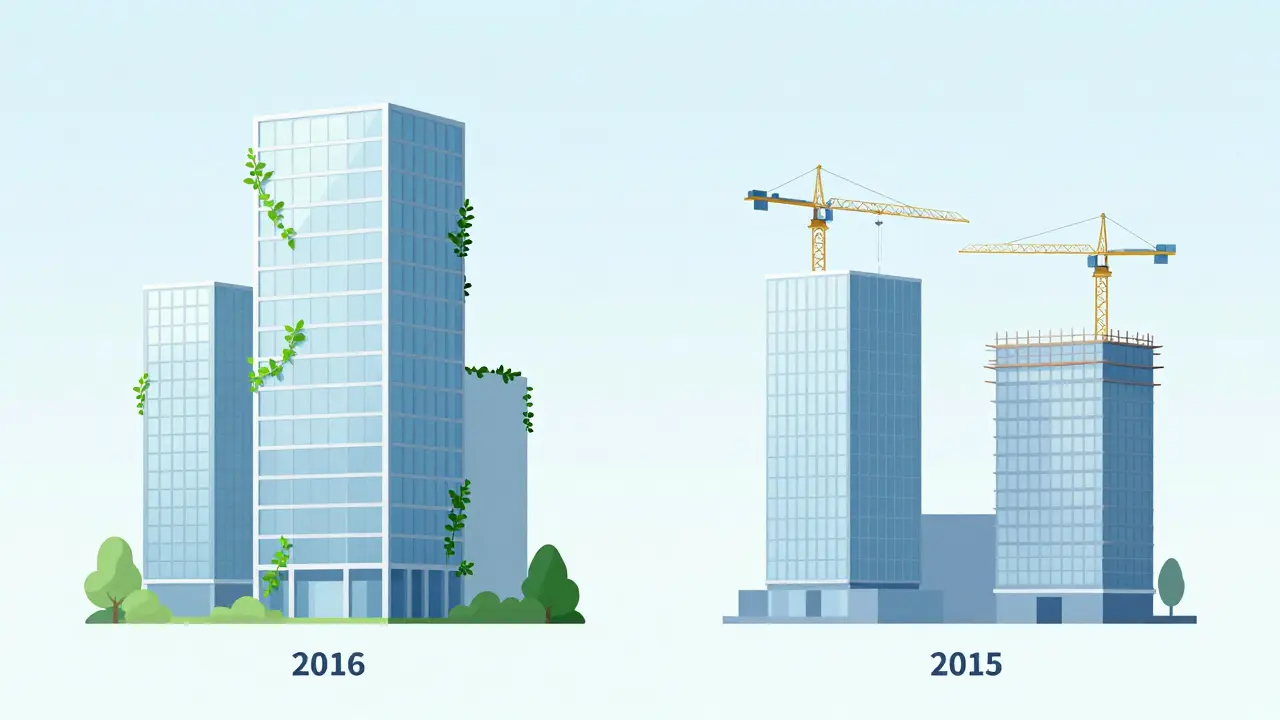
Imagine two identical-looking buildings. One was built in 1995 with blueprints that have been refined over three decades. The other started construction in 2015, faced lawsuits during the foundation phase, but is now pouring concrete at a frantic pace to catch up. This is the current state of the biosimilar market when you compare Europe and the United States.
Biosimilars are not generics. If you’ve ever taken an aspirin, you know what a generic is: it’s chemically identical to the brand-name drug, molecule for molecule. Biosimilars deal with biologics-large, complex proteins made by living cells. Because these molecules are huge and intricate, they can never be exact copies. They are, however, highly similar with no clinically meaningful differences in safety or efficacy. Understanding this distinction is crucial because it explains why the regulatory paths in Europe and the US diverged so sharply for nearly two decades.
The Timeline Gap: Why Europe Got a Head Start
To understand where we are in 2026, we have to look at where we started. The European Medicines Agency (EMAthe regulatory body for medicines in the EU) established the first clear regulatory framework for biosimilars in 2006. That same year, Europe approved Omnitrope, the world’s first biosimilar. By the time the US even had a law on the books-the Biologics Price Competition and Innovation Act (BPCIA) passed in 2009 as part of the Affordable Care Act-Europe had already normalized the concept.
The US didn’t approve its first biosimilar, Zarxio, until March 2015. That nine-year gap wasn’t just about speed; it was about philosophy. The EMA used a "totality-of-evidence" approach. They asked: does the data show similarity? If yes, approve it. The US Food and Drug Administration (FDAthe US federal agency responsible for protecting public health through regulation) initially demanded more extensive clinical trials, creating a higher barrier to entry. Dr. Michael Reilly from Alira Health noted that Europe’s early clarity created a "virtuous cycle" of physician familiarity and payer support. In the US, doctors were hesitant to switch patients to something they hadn’t seen before, and insurers weren’t pushing them hard enough to overcome that hesitation.
Market Maturity: The Numbers Behind the Scenes
By 2024, the financial landscape showed a mature European market and a rapidly accelerating US one. According to Alira Health’s 2025 Global Biosimilars Report, the European market generated roughly USD 13.16 billion in revenue in 2024, growing at a compound annual growth rate (CAGR) of 13% since 2020. The US market reached USD 10.9 billion in the same year, with an 11% CAGR. While Europe leads in total volume today, the US growth trajectory is steeper.
| Metric | Europe | United States |
|---|---|---|
| Market Revenue (2024) | ~USD 13.16 Billion | ~USD 10.9 Billion |
| CAGR (2020-2024) | 13% | 11% |
| Approved Biosimilars (Total) | Over 100 | Over 20 |
| First Approval Year | 2006 | 2015 |
| Key Regulatory Body | EMA | FDA |
The disparity in approvals is stark. As of 2024, Europe had approved over 100 biosimilars. The US had launched only 12 commercially, despite having a larger underlying biologics market. IQVIA called this the "biosimilar void." Why such a gap? It wasn’t science; it was strategy. Originator companies in the US filed massive patent thickets-layers of overlapping patents designed to delay competition. This forced biosimilar developers into a legal maze known as the "patent dance," draining resources and delaying launches for years.
Regulatory Shifts: Closing the Gap in 2024-2026
If you thought the US would stay behind, you’d be wrong. The last two years have seen seismic shifts. The biggest change came in June 2024, when the FDA proposed new guidelines eliminating the requirement for switching studies to achieve "interchangeable" designation. Previously, developers had to prove that swapping between the reference biologic and the biosimilar multiple times didn’t cause adverse effects. These studies were expensive, ethically complex, and scientifically unnecessary according to many experts. Dr. Rachel Sherman of the FDA acknowledged that these requirements created "unnecessary barriers."
This move aligns the US closer to the European model. In Europe, substitution is often handled at the pharmacy or hospital level based on trust in the regulatory assessment, not extra clinical trials. The removal of this hurdle in the US is expected to accelerate the launch of interchangeable biosimilars significantly.
Another major driver is the Inflation Reduction Act of 2022. This legislation eliminated the Medicare Part D coverage gap (the "donut hole") and provided direct incentives for biosimilar adoption. For the first time, payers like Medicare had a financial reason to push biosimilars rather than sticking with high-cost originators. Dr. Sarah Toner of the IQVIA Institute highlighted this as a critical catalyst. Suddenly, the economic engine of the US healthcare system was aligned with biosimilar uptake.

Therapeutic Differences: Oncology vs. Supportive Care
The types of drugs driving growth also differ between the regions. Europe has achieved remarkable penetration in complex therapeutic areas like oncology and rheumatology. In some European countries, biosimilars hold over 80% market share in these sectors. Germany, France, and the UK led this charge through structured hospital tenders. Hospitals bid for contracts, and biosimilars won because they offered significant savings without compromising care.
In contrast, the US market initially saw success in supportive care products, particularly filgrastim (used to boost white blood cell counts in chemotherapy patients). These are simpler molecules with well-understood safety profiles. However, the tide is turning. With the patent cliff for blockbuster drugs like Humira (adalimumab), the US is now seeing a flood of biosimilars for autoimmune diseases. As of 2024, the FDA had approved 14 Humira biosimilars, though only six were commercially available due to patent settlements. This pattern is changing as litigation strategies evolve and courts become less sympathetic to originator delays.
Future Projections: Who Wins in 2035?
Looking ahead, both markets are poised for explosive growth, but the dynamics are shifting. Coherent Market Insights projects North America will lead regional market revenue by 2027, reaching approximately USD 17.2 billion. Europe is projected to grow to USD 64.8 billion by 2034, while the US is expected to hit USD 30.2 billion by 2033. Wait, those numbers seem off? They reflect different scopes and methodologies, but the trend is clear: the US is catching up fast.
The opportunity size in the US is massive. IQVIA estimates that 118 biologics will lose patent protection between 2025 and 2034, representing a $232 billion opportunity. Europe has already harvested much of its low-hanging fruit. The US is just beginning to pick. Major players like Pfizer, Merck, and Samsung Bioepis are ramping up US operations, while European giants like Sandoz and Fresenius Kabi continue to dominate manufacturing.
Germany remains a manufacturing powerhouse, attracting global developers with its skilled workforce and strategic position in the value chain. But the US advantage lies in its sheer market size and the high price points of its biologics. A 15-30% discount on a $100,000/year drug saves far more money than the same discount on a lower-priced European equivalent. This creates stronger incentives for US payers to enforce substitution.

Challenges Ahead: Complexity and Education
Despite the optimism, hurdles remain. Next-generation biologics are becoming increasingly complex. Bispecific antibodies, cell therapies, and gene therapies present new challenges for biosimilar development. Demonstrating similarity for these molecules requires advanced analytical techniques and potentially new regulatory frameworks. Both the EMA and FDA are working on harmonizing standards, but progress is slow.
Physician and patient education is another persistent issue. Many clinicians still worry about immunogenicity-the risk that the immune system will react differently to a biosimilar. While data shows biosimilars are safe, fear persists. In Europe, mandatory substitution policies helped normalize use. In the US, where physician autonomy is highly valued, education must be more persuasive. Programs that provide real-world evidence and easy-to-use comparison tools are essential.
Manufacturing capacity is also a constraint. Biologics require sterile, controlled environments and specialized equipment. Scaling up production for new biosimilars takes time and capital. Companies that secure reliable supply chains early will have a competitive edge.
Conclusion: Convergence, Not Competition
The story of biosimilars in 2026 isn’t about Europe beating the US or vice versa. It’s about convergence. The US is adopting European-style regulatory efficiencies, while Europe continues to innovate in complex therapeutics. Both regions benefit from lower costs and increased access to life-saving treatments. For patients, this means more choices and less financial burden. For the industry, it means a maturing market where innovation and accessibility go hand in hand.
What is the main difference between a biosimilar and a generic drug?
Generic drugs are chemically identical copies of small-molecule drugs, like aspirin. Biosimilars are highly similar versions of large, complex biologic drugs made from living cells. Because biologics are too complex to copy exactly, biosimilars must demonstrate no clinically meaningful differences in safety, purity, and potency, rather than being identical.
Why did Europe approve biosimilars earlier than the US?
Europe established its regulatory framework in 2006, approving the first biosimilar that same year. The US didn't pass the relevant law (BPCIA) until 2009, and the first US biosimilar wasn't approved until 2015. Europe's earlier framework allowed for faster developer entry and physician familiarity.
How did the FDA's June 2024 guideline change affect the US biosimilar market?
The FDA eliminated the requirement for switching studies to achieve interchangeable designation. This removed a costly and time-consuming barrier, allowing more biosimilars to be labeled as interchangeable, which facilitates automatic substitution at pharmacies and accelerates market adoption.
Which therapeutic areas have the highest biosimilar adoption in Europe?
Oncology and rheumatology lead biosimilar adoption in Europe, with some countries seeing over 80% market share for biosimilars in these fields. This was driven by hospital tender systems and strong support from healthcare providers.
What is the projected market size for biosimilars in the US by 2033?
IMARC Group projects the US biosimilar market to reach USD 30.2 billion by 2033, growing at a CAGR of 18.5%. This rapid growth is driven by patent expirations of high-revenue biologics and improved regulatory pathways.
Are biosimilars safe and effective compared to original biologics?
Yes. Regulatory agencies like the EMA and FDA require rigorous testing to ensure biosimilars have no clinically meaningful differences in safety, purity, and potency. Real-world data from Europe supports their long-term safety and efficacy.
How do patent thickets impact biosimilar availability in the US?
Patent thickets involve layers of overlapping patents filed by originator companies to delay biosimilar competition. This forces developers into lengthy legal battles, delaying market entry and keeping prices high for longer periods.
What role does the Inflation Reduction Act play in biosimilar adoption?
The Inflation Reduction Act provides incentives for biosimilar adoption by eliminating the Medicare Part D coverage gap and encouraging payers to prefer lower-cost biosimilars, thereby driving market uptake.
Which companies are key players in the European biosimilar market?
Major players include Sandoz (Novartis), Fresenius Kabi, and Amgen. These companies have extensive portfolios and manufacturing capabilities, particularly in Germany, which is a hub for biosimilar production.
Will the US market overtake Europe in biosimilar revenue?
Projections suggest North America may lead in regional revenue by 2027 due to faster growth rates and a larger pool of high-value biologics losing patent protection. However, Europe remains the largest single market in terms of current revenue and approval volume.