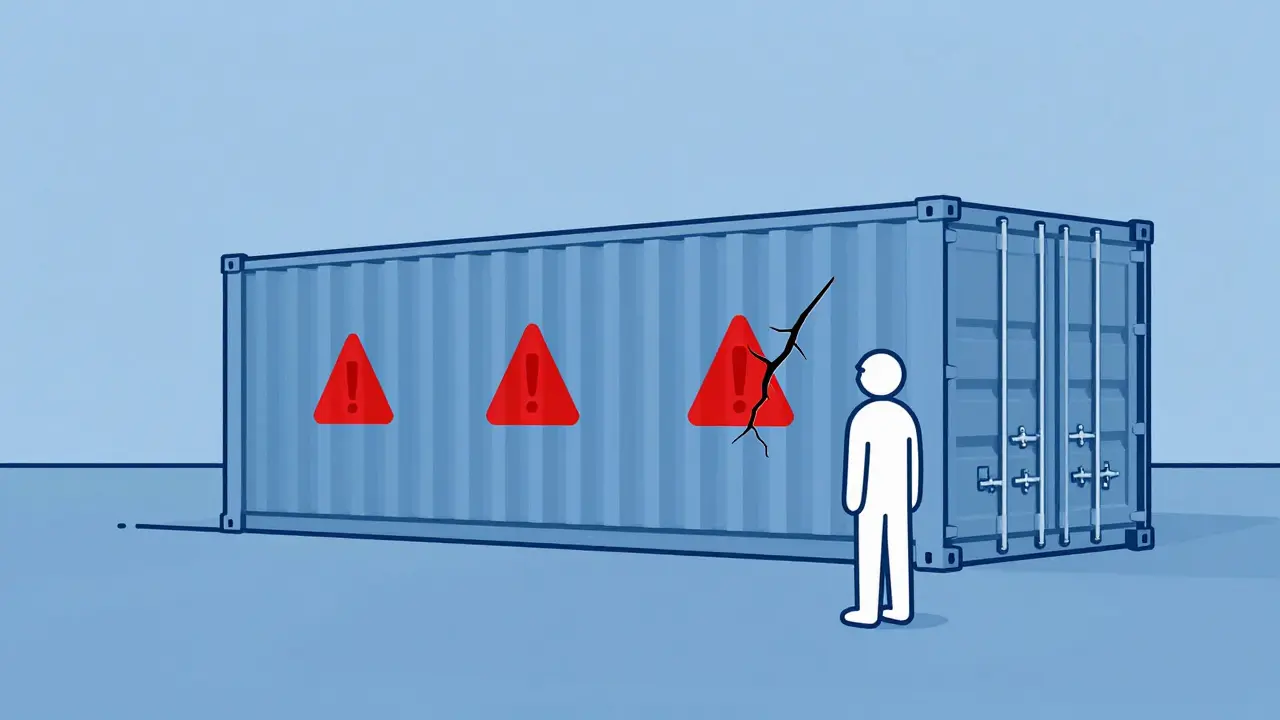
You saved money by moving production overseas. Then the shipments arrived, and something was wrong. Maybe it was a subtle material swap that failed testing later. Maybe it was a batch of contaminated pharmaceuticals that triggered a recall. In 2025 and heading into 2026, these aren't just bad luck stories-they are systemic failures happening at scale. The gap between what your contract says and what actually leaves the factory door is widening.
The era of trusting a supplier’s word is over. With regulatory bodies like the U.S. Food and Drug Administration (FDA) tightening the screws and manufacturers facing financial pressure to cut corners, you need a new approach. This isn't about finding the cheapest vendor anymore. It's about building a safety net that catches fraud, contamination, and negligence before it hits your brand or your customers.
The New Reality of Overseas Quality Failures
Let's look at the hard numbers. According to data from late 2025, quality failures in foreign manufacturing are no longer simple mistakes. They have evolved into sophisticated survival tactics for suppliers struggling with economic pressures. Harris Sliwoski, a legal expert tracking China manufacturing risks, noted in May 2025 that risks have become "worse than ever," creating existential threats for businesses that rely on traditional oversight methods.
In the pharmaceutical sector, the stakes are life-and-death. FDA inspection data from early 2025 highlighted specific cases where facilities like Wuhu Nuowei Chemistry Co., Ltd. failed to meet impurity standards, allowing contaminated batches into the supply chain. The impact? These quality failures contributed to 37% of drug shortages in the United States during 2024. That is not a statistic; that is patients missing their medication because a factory overseas cut a corner.
Why are quality issues getting worse despite initiatives like 'Made in China 2025'?
While government initiatives aim to improve high-tech manufacturing, economic pressures on smaller suppliers lead to desperate cost-cutting measures. Experts report a rise in "sophisticated survival tactics" such as material substitution and falsified documentation, which bypass standard checks.
Where the Breakdown Happens: Common Failure Modes
To fix the problem, you first need to know exactly how things break. Analysis of FDA inspections reveals three primary ways overseas quality collapses:
- Material Substitution: This is the most common issue, found in 68% of inspected non-compliant Chinese facilities. A supplier might promise medical-grade silicone but ship industrial-grade plastic because it costs less. You won't see the difference until biocompatibility testing fails months later.
- Inadequate Process Validation: Occurring in 42% of problematic facilities, this means the factory doesn't consistently follow its own recipes. Temperature, pressure, or timing varies between batches, leading to inconsistent product performance.
- Falsified Documentation: Detected in 29% of sites, this is outright fraud. The paperwork says the test was done and passed, but the test never happened. This makes remote auditing nearly impossible because you are reviewing lies.
Consider the horror story shared by importers in early 2025: a Shenzhen supplier replaced specified materials in a medical device, causing 12,000 units to fail testing. The client lost not only the product cost but also faced massive reputational damage and delayed market entry.
The Inspection Gap: Why Traditional Audits Fail
You might think regular audits solve this. Unfortunately, the current system has a major flaw: predictability. Brookings Institution analysis showed that through 2024, 78% of FDA inspections in China were announced in advance. Compare that to only 5% for domestic U.S. facilities. When a factory knows an inspector is coming next Tuesday, they clean up, hire temporary staff, and hide the non-compliant lines. By Wednesday, they go back to business as usual.
This "double standard" creates a false sense of security. If you are relying on scheduled visits, you are seeing the factory's best face, not its daily reality. The FDA recognized this danger. In May 2025, Commissioner Marty Makary announced a shift toward "parity inspections," aiming for unannounced visits to match domestic rigor. The goal is to have 40% of foreign inspections be unannounced by late 2025, rising to 75% by 2027.
For private companies, this means you cannot wait for regulators to do your job. You must implement your own unannounced audit rights in your contracts. Without them, you are flying blind.

Technology as Your Safety Net
Human eyes miss things. Fatigue, bias, and even bribery can compromise manual inspections. Technology is changing the game, but adoption is slow. Only 22% of Chinese manufacturers had fully integrated AI quality control systems as of mid-2025, according to Deloitte.
However, the results for those who do adopt are striking. AI-powered visual inspection systems now achieve 99.2% defect detection accuracy, compared to 85-90% for human inspectors. Imagine catching a microscopic crack in a component or a slight color variation indicating chemical instability every single time. That is the power of computer vision.
Blockchain is another emerging tool. By logging every step of the production process onto an immutable ledger, you create a trail that cannot be easily faked. One Minnesota medical device company combined local management, blockchain traceability, and third-party verification, dropping their defect rate from 12.7% to 0.8% between 2023 and 2025. This is the benchmark you should be aiming for.
Regional Differences: Not All Overseas Factories Are Equal
It is easy to generalize about "foreign manufacturing," but the risks vary significantly by region. Understanding these nuances helps you allocate your resources wisely.
| Region | Key Risk Factor | Regulatory Observation Rate | Trend |
|---|---|---|---|
| China | Sophisticated fraud, material substitution | 47% of sites received Form 483 observations | Bifurcating: High-end improving, low-end deteriorating |
| India | Systemic quality management gaps | 34% of FDA drug import alerts | Struggling with consistency |
| Vietnam | Infrastructure limitations | Data insufficient for direct comparison | Improving: 18% quality metric gain since 2022 |
| European Union | High compliance costs | Low failure rates due to QP system | Stable, high reliability |
Note the EU's Qualified Person (QP) system. Every batch of medicine must be certified by a locally based professional who takes personal legal responsibility. This reduces quality failures by 22% compared to imports from countries without such strict personal liability. While you may not be able to replicate the QP system globally, you can demand similar accountability clauses in your contracts.

Building a Bulletproof Oversight Strategy
So, what do you actually do? Here is a practical checklist for securing your overseas supply chain in 2026:
- Vet Deeply: Spend 8-12 weeks on supplier vetting. Don't just look at certificates. Interview management, check references with three previous clients, and visit the facility yourself if possible.
- Draft Specific Contracts: Vague standards cause 58% of recoverable losses. Define exact metrics, tolerances, and penalties. Include explicit rights for unannounced audits.
- Invest in Local Presence: Remote management is risky. Successful companies invest around $18,500 per year per facility in quality assurance training and local staffing. Having boots on the ground changes the dynamic entirely.
- Adopt Digital Tools: Push suppliers to use AI inspection and blockchain traceability. If they resist, ask why. Transparency is a feature, not a bug.
- Plan for "Friend-Shoring": Consider shifting some production to allied nations with stronger regulatory alignment. 41% of manufacturers plan to move to allied countries by 2027. Vietnam and India offer alternatives, though each comes with its own learning curve.
The hidden cost of ignoring these steps is staggering. Unaddressed quality issues add 15-25% to total manufacturing costs through rework, recalls, and lost sales. That "cheap" overseas factory is likely costing you more than a local one when you factor in the risk premium.
Looking Ahead: The 2026 Landscape
The regulatory environment is accelerating. President Trump’s May 2025 executive order mandated increased user fees and inspections for foreign manufacturers, raising compliance costs by 18-25%. This will push out weak players and force serious manufacturers to invest in quality.
At the same time, the global manufacturing quality assurance market is projected to reach $14.3 billion by 2027. Companies that implement "digital quality ecosystems" combining AI, IoT, and blockchain are expected to achieve over 95% compliance by 2028. Those who cling to outdated paper-based checks will find themselves stranded.
The choice is clear. You can continue to hope your supplier does the right thing, or you can build a system that ensures they have no choice but to do it right. In overseas production, trust is good. Verification is essential.
What is the biggest risk in foreign manufacturing right now?
The biggest risk is sophisticated fraud, particularly material substitution and falsified documentation. Unlike simple errors, these are intentional acts driven by economic pressure, making them harder to detect through standard audits.
How can I verify quality without being on-site?
Use technology. Implement AI-powered visual inspection systems that provide real-time data. Require blockchain traceability for raw materials. Hire third-party verification agencies that conduct unannounced spot checks.
Is it worth moving production back to the US or EU?
For high-risk products like pharmaceuticals, yes. The EU's Qualified Person system and stricter FDA parity inspections make domestic/EU production safer. However, labor costs remain higher. Many companies choose a hybrid model: high-risk items locally, lower-risk items overseas with enhanced controls.
What should my contract include to protect against quality failures?
Your contract must define specific quality metrics, allow for unannounced audits, require full transparency in documentation, and outline clear penalties for non-compliance. Avoid vague terms like "industry standard." Be precise.
How much should I budget for quality assurance overseas?
Expect to invest around $18,500 per year per facility for comprehensive QA training and oversight. Additionally, budget for third-party audits and technology integration. Remember, poor quality costs 15-25% more in hidden expenses than preventing it.


Cecilia McGuinness
June 9, 2026 AT 13:46