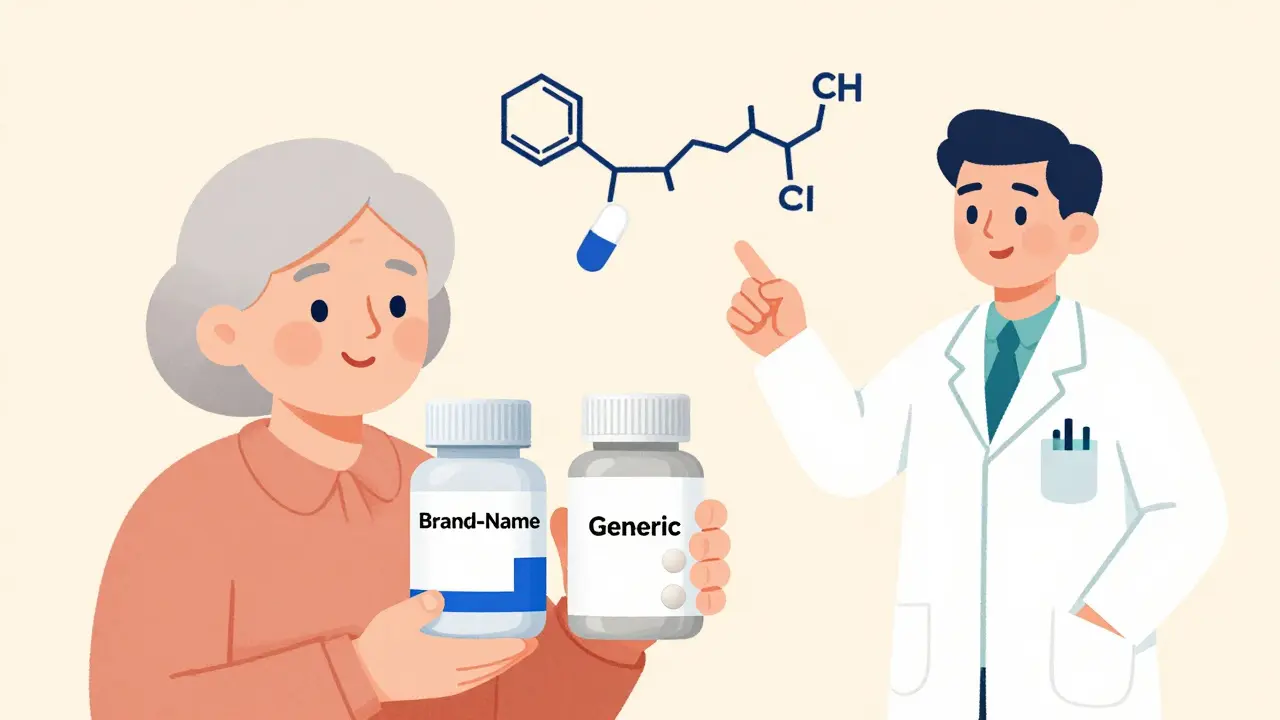
When older adults switch from brand-name medications to generics, it’s not just a cost-saving move-it’s a decision that can make or break their health. For many seniors, the switch saves hundreds a year. But for others, it triggers confusion, anxiety, or even dangerous side effects. The truth? Generics are legally required to work the same as brand-name drugs. Yet, nearly half of elderly patients still believe they’re less effective. Why? And what should you watch out for?
Why Generics Are Safe-But Not Always Simple
Generic drugs must meet the same strict standards as brand-name pills. The FDA requires them to have the same active ingredient, strength, dosage form, and route of administration. They must also be bioequivalent-meaning they get into the bloodstream at the same rate and amount, within a tight 80-125% range. That’s not a guess. It’s science. And it’s backed by data from over 500 million prescriptions filled by Medicare beneficiaries in 2022, 89% of which were generics. But here’s the catch: older bodies don’t process medicine the same way younger ones do. Kidney function drops sharply after age 80. Liver blood flow slows. Body fat increases, muscle mass declines. These changes mean even tiny differences in how a drug is absorbed can matter more in seniors. For most medications, it doesn’t. But for some, it might.High-Risk Medications: When Switching Needs Extra Care
Not all drugs are created equal when it comes to switching. Some have what’s called a narrow therapeutic index. That means the difference between a helpful dose and a harmful one is very small. Warfarin, used to prevent blood clots, is one of them. Studies show that when elderly patients switch from brand-name Coumadin to generic warfarin, emergency visits go up by 18.3% in the first 30 days. Why? Because small changes in how the body absorbs the drug can throw off blood thinning levels. That’s why the American Geriatrics Society says: don’t automatically swap warfarin without close INR monitoring. Other high-risk drugs include levothyroxine (for thyroid), digoxin (for heart rhythm), and some seizure medications. Patients on these often report feeling different after switching-even if labs show no change. One Reddit thread from June 2024 had 147 elderly users describing fatigue, heart palpitations, and brain fog after switching from Synthroid to generic levothyroxine. While no large study proves generics are less effective here, the pattern is real enough that doctors now recommend sticking with one brand unless changes are carefully tracked.What Seniors Actually Feel-And Why It Matters
A 2023 study of 315 Medicare patients found fewer than half believed generics were as safe or effective as brand-name drugs. That’s not because they’re wrong-it’s because they’ve been told they are. Pills look different. The shape, color, or imprint changes. To someone who’s been taking the same blue pill for 15 years, a new white capsule feels like a mistake. And if they’ve heard stories about someone who got sick after switching, doubt grows. Health literacy plays a big role. About 36% of adults over 65 struggle to understand basic health information. For them, a pill change isn’t just a switch-it’s a mystery. One study found that half of these patients thought generics were less effective. That’s not ignorance. It’s lack of clear explanation. And then there’s the cost factor. Seniors on fixed incomes often choose generics to save money. But if they start skipping doses because they’re afraid the pill won’t work, they end up in the ER anyway. A 2022 AARP report showed that switching to generics saves seniors an average of $327 per year. But noncompliance rates among elderly patients range from 21% to 55%. Savings mean nothing if the medicine isn’t taken.
How to Make the Switch Work
Switching to generics doesn’t have to be risky. It just needs planning. Here’s what works:- Ask for a trial period. Don’t switch all meds at once. Change one at a time and wait two weeks to see how you feel.
- Use the teach-back method. Ask your pharmacist: “Can you explain why this pill is the same as the one I used to take?” Then repeat it back. Studies show this boosts adherence by 42%.
- Keep a pill log. Write down what you’re taking, when, and how you feel. Bring it to every appointment.
- Ask about appearance changes. If your new pill looks different, ask: “Is this the same medicine?” Pharmacists can show you the active ingredient on the label.
- Check for OTC risks. Many seniors take multiple over-the-counter meds-ibuprofen, acetaminophen, diphenhydramine. These often hide in multi-symptom products. One in four seniors accidentally double-dose on acetaminophen. Generics don’t cause this, but confusion does.
What Providers Can Do Better
Doctors and pharmacists are on the front lines. The best outcomes happen when teams work together. A 2024 study found that when clinical pharmacists joined care teams, they cut inappropriate prescriptions by 37%. That’s huge. They don’t just check for drug interactions-they sit down with patients, explain why generics are safe, and use pictures to show how the same active ingredient works in different-looking pills. Computerized systems that flag high-risk switches also help. One hospital system saw a 30% improvement in prescribing accuracy after adding alerts for warfarin and levothyroxine switches. But tech alone isn’t enough. It takes time. Real time. Fifteen to twenty minutes per patient during medication reviews. That’s not always available. But when it is, the results speak for themselves.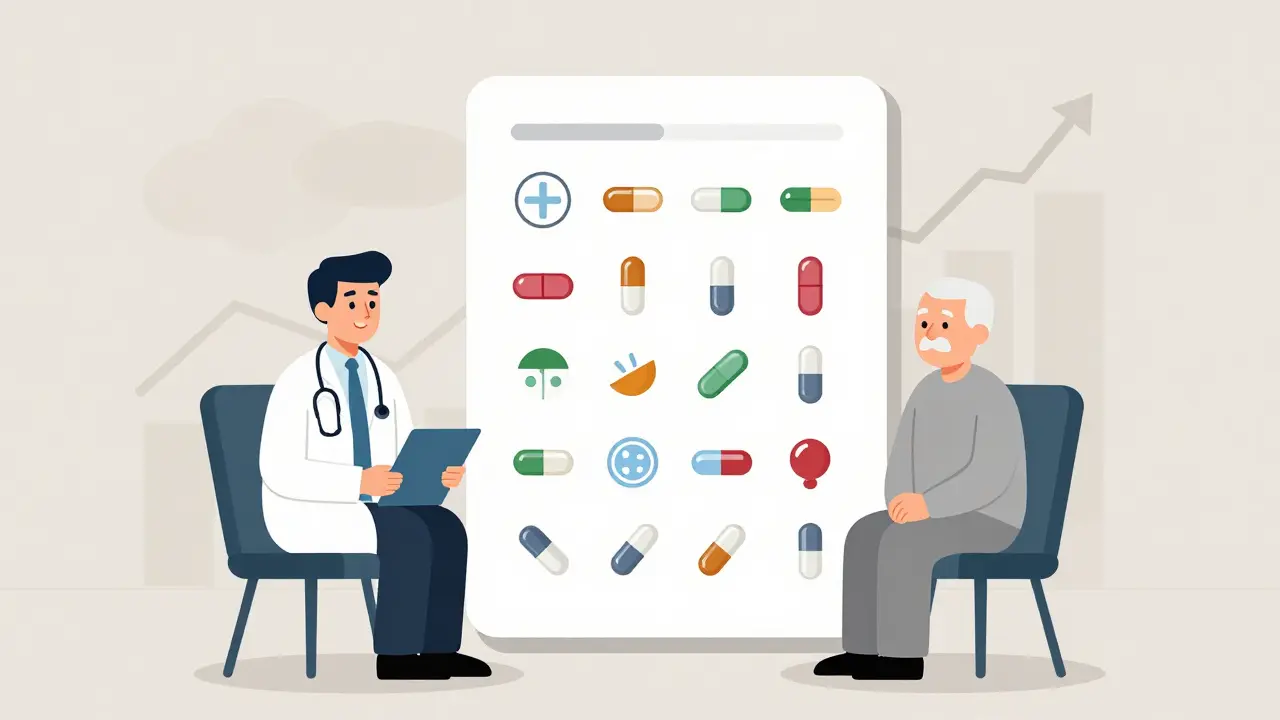
The Bigger Picture: Cost, Compliance, and Care
The U.S. spends $61.7 billion a year on generic drugs. Medicare Part D saved beneficiaries $602 per person in 2023 thanks to generics. That’s money back into food, heating, and rent. But if patients stop taking their meds because they don’t trust them, those savings vanish. Future research is underway. Three NIH trials are now tracking elderly patients on polypharmacy to compare brand versus generic outcomes over time. Early results won’t be in until 2027. But for now, the evidence says this: for most seniors, generics are just as safe and effective. For a small group-those on narrow therapeutic index drugs, with low health literacy, or with complex conditions-the switch needs more attention.What You Should Do Today
If you or a loved one is on multiple medications:- Ask your pharmacist: “Which of my pills are generics? Are any high-risk ones?”
- Don’t assume all generics are the same. If you feel different after a switch, speak up.
- Use a pill organizer with labels that say the drug’s active ingredient, not just the brand.
- Bring all your meds-including vitamins and OTCs-to every doctor visit.
- If you’re worried about cost, ask: “Is there a generic version? Can I try it?”
Are generic drugs really as good as brand-name ones for elderly patients?
Yes, for most medications, generics are just as effective and safe. The FDA requires them to contain the same active ingredient, work the same way, and be absorbed into the body at the same rate as brand-name drugs. However, for a small number of high-risk drugs-like warfarin, levothyroxine, or digoxin-small differences in how the body absorbs the drug can matter more in older adults. These cases need close monitoring, but they’re the exception, not the rule.
Why do some elderly patients feel worse after switching to generics?
It’s often not the drug itself. Many seniors report feeling different because the pill looks different-color, shape, or size changes. This triggers anxiety, especially if they’ve been on the same brand for years. In some cases, switching multiple meds at once or stopping a medication that was masking symptoms (like a diuretic) can cause temporary side effects. For narrow therapeutic index drugs like levothyroxine, even minor absorption differences may cause symptoms in sensitive individuals. Always report changes to your doctor.
Can I switch all my medications to generics at once?
No, it’s safer to switch one at a time. Changing multiple drugs at once makes it hard to know which one caused a side effect or change in how you feel. Start with the least critical medication-like a blood pressure pill-then wait two weeks before switching another. Keep a simple log: what you took, when, and how you felt. This helps your doctor spot patterns quickly.
What if I can’t afford my brand-name medicine?
Talk to your pharmacist or doctor. Most brand-name drugs have a generic version that costs 80-90% less. For example, generic lisinopril costs under $4 a month, while the brand version can be $50 or more. If you’re on Medicare Part D, you may qualify for extra help paying for prescriptions. Don’t skip doses to save money-ask for alternatives instead.
Do I need to get my blood tested every time I switch a generic?
Only for certain drugs. If you’re on warfarin, levothyroxine, digoxin, or some seizure medications, yes-your doctor will want to check levels (INR, TSH, blood concentration) within a few weeks of switching. For most other medications-like statins, antidepressants, or common antibiotics-routine blood tests aren’t needed. Your doctor will let you know which ones require monitoring.
Are over-the-counter (OTC) generics safe for seniors?
They can be, but they’re also where many seniors get hurt. OTC painkillers like ibuprofen and acetaminophen are often hidden in multi-symptom cold and sleep aids. One in four seniors accidentally take too much acetaminophen, which can damage the liver. Always read the “Active Ingredients” list, not just the brand name. Ask your pharmacist to help you avoid dangerous combinations.


John Ross
January 4, 2026 AT 12:47