When we talk about these diets, we aren't talking about temporary fads. We are talking about "Tier 1" eating patterns-the gold standard recognized by the American Heart Association. These approaches don't just target one thing; they tackle the trifecta of cardiovascular danger: high blood pressure, bad cholesterol, and chronic inflammation.
The Mediterranean Approach: A Lifestyle, Not a Diet
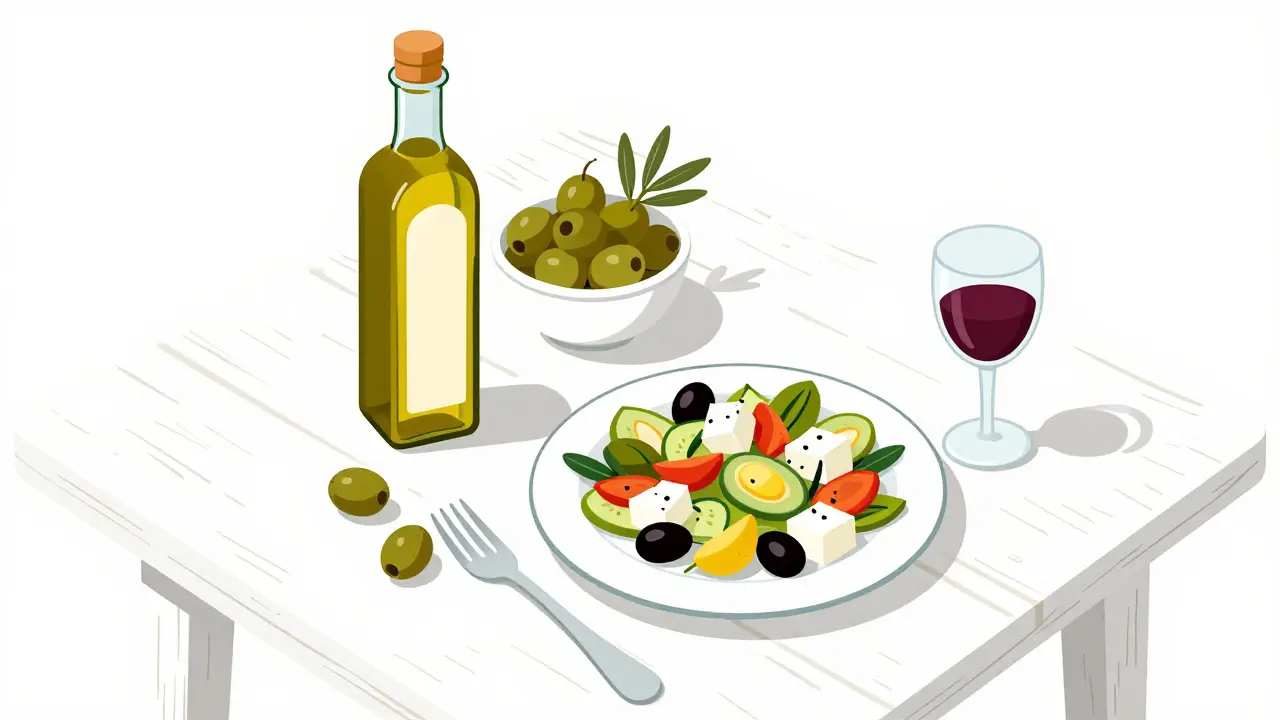
If you're looking for something that feels less like a restriction and more like a way of life, this is it. Mediterranean Diet is a nutritional pattern based on the traditional eating habits of people living in countries bordering the Mediterranean Sea. It isn't about counting every calorie; it's about the quality of the fats and the abundance of plants.
The magic here lies in the healthy fats. Instead of butter or margarine, the primary fat source is extra-virgin olive oil. This provides monounsaturated fats that help keep your arteries flexible. You'll eat plenty of fruits, vegetables, legumes, and nuts, while keeping red meat to a minimum-ideally just once or twice a month. Fish and poultry are enjoyed in moderation, and some people include a glass of red wine with dinner.
Why does it work? Because it's naturally high in fiber and low in saturated fats, which prevents low-density lipoprotein (LDL) cholesterol from reaching dangerous levels. In fact, a 10-year study of over 2,000 people showed that sticking to this diet significantly lowered the risk of fatal cardiovascular events. For many, it's the most sustainable option because the food simply tastes better.
The DASH Diet: Precision for Blood Pressure
While the Mediterranean diet is a broad lifestyle, DASH Diet is the Dietary Approaches to Stop Hypertension, a specific plan developed by the National Institutes of Health to lower blood pressure without medication. If your doctor has told you your numbers are too high, DASH is often the first line of defense.
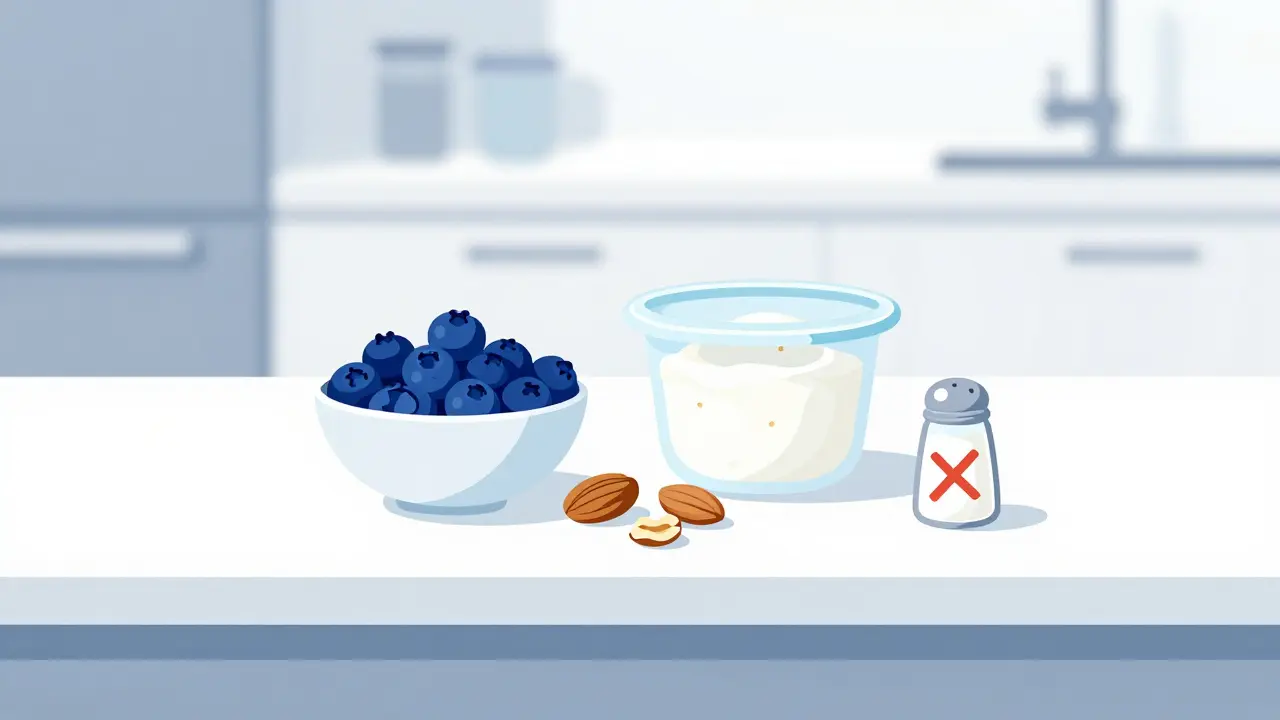
The core of DASH is the aggressive reduction of sodium. While the average person might eat over 3,400 mg of salt a day, DASH pushes you toward 1,500 to 2,300 mg. It balances this by loading up on potassium, calcium, and magnesium-minerals that help your blood vessels relax. You'll focus on low-fat dairy, lean proteins, and a very specific number of servings of grains and vegetables daily.
The results are often fast. Some people see their systolic blood pressure drop by 5 to 11 mm Hg in just a few weeks. However, the learning curve is steeper here. Tracking servings and hunting for low-sodium alternatives can feel like a chore, which is why some find it harder to maintain than the Mediterranean style.
Plant-Forward Eating: The Flexible Middle Ground
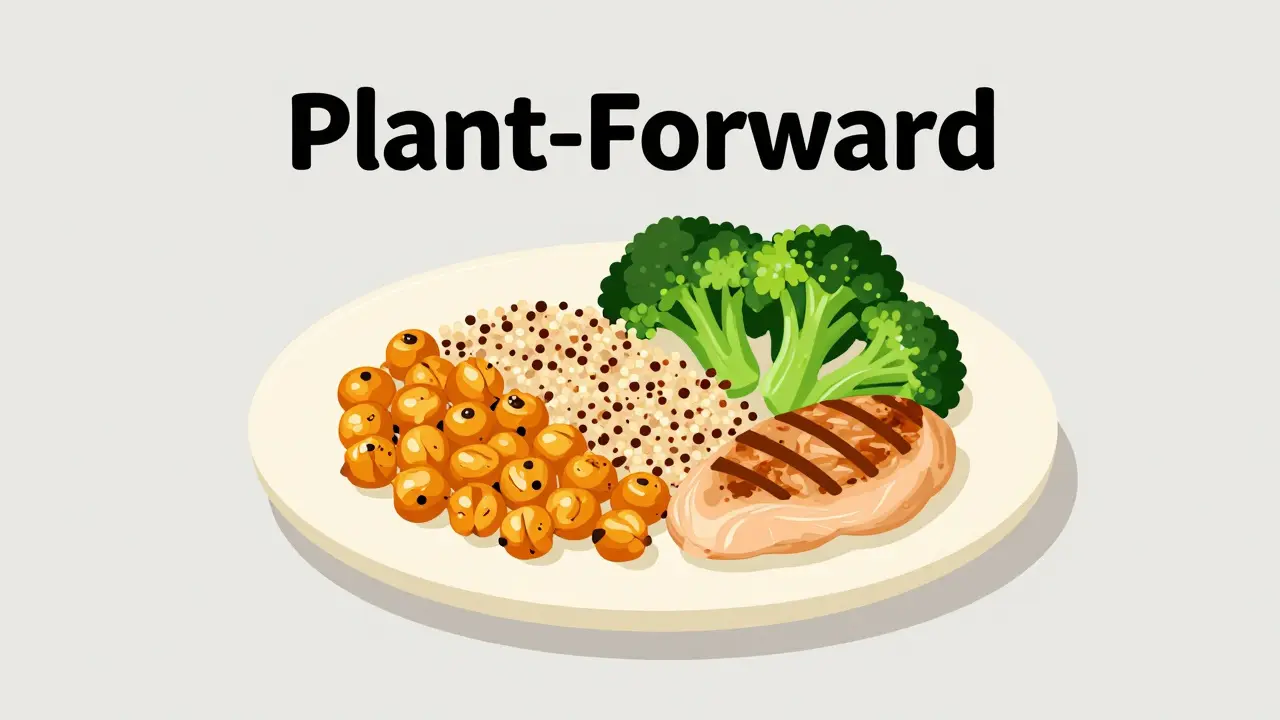
You don't have to go full vegan to get the benefits of plants. Plant-Forward Eating is an approach that prioritizes plant-based foods-like legumes, grains, and vegetables-while allowing for the flexible inclusion of animal products. It's more of a philosophy than a strict set of rules.
The goal here is to shift the center of your plate. Instead of the meat being the star and the vegetables being the side dish, the plants take the lead. Research shows that even modest shifts toward plant-based proteins can lower the risk of cardiovascular disease. This is largely because plant proteins don't come with the saturated fats found in steak or bacon, and they provide the fiber necessary to scrub cholesterol from your bloodstream.
This approach is perfect for people who aren't ready to give up cheese or chicken but want the heart-protective benefits of a vegan diet. It's the fastest-growing trend in heart health because it fits into almost any social situation.
Comparing the Big Three: Which One Fits You?
Choosing a diet depends on your specific health goals. If your main struggle is hypertension, DASH is the powerhouse. If you want a long-term, sustainable lifestyle that reduces overall mortality, the Mediterranean path is proven. If you want flexibility and a lower environmental footprint, go plant-forward.
| Feature | Mediterranean | DASH | Plant-Forward |
|---|---|---|---|
| Primary Goal | Overall Longevity | Lower Blood Pressure | General Wellness |
| Key Fat Source | Extra-Virgin Olive Oil | Low-fat Dairy/Nuts | Avocados/Nuts/Seeds |
| Sodium Focus | Moderate | Strict (1,500-2,300mg) | General Reduction |
| Animal Protein | Fish/Poultry (Mod) | Lean Meat/Fish (Low) | Flexible/Minimal |
| Ease of Adoption | High | Medium | Very High |
Practical Tips for Getting Started
Switching your entire diet overnight is a recipe for failure. Instead, try these small, concrete shifts to transition your kitchen into a heart-healthy zone:
- Swap your fats: Replace the butter in your pantry with a high-quality extra-virgin olive oil. Use it for sautéing and as a base for salad dressings.
- Rethink your protein: Try "Meatless Mondays." Replace one beef meal per week with a lentil stew or a chickpea salad.
- Tame the salt shaker: Instead of salt, use lemon juice, balsamic vinegar, or fresh herbs like cilantro and parsley to flavor your food. This is the hardest part of the DASH diet, but the most rewarding.
- Focus on whole grains: Switch from white rice and white bread to quinoa, farro, or brown rice. These keep you full longer and manage blood sugar spikes.
If you're feeling ambitious, you can try a "Medi-DASH" approach. This combines the healthy fats of the Mediterranean diet with the strict sodium limits of DASH. Early trials show this hybrid can lead to even better results, including significant drops in LDL cholesterol and blood pressure.
Common Pitfalls to Avoid
Not every "plant-based" or "Mediterranean" food is actually healthy. Be careful of these traps:
First, beware of "vegan junk food." Just because a burger is made of plants doesn't mean it's heart-healthy if it's loaded with processed coconut oil and sodium. Stick to whole, unprocessed plants.
Second, don't overdo the wine. While the Mediterranean diet mentions moderate red wine, this isn't a license to drink heavily. If you don't already drink, don't start just for the heart benefits.
Finally, don't get discouraged by the cost. Some people find these diets more expensive because of fresh produce and quality oils. To save money, buy frozen vegetables-they are often just as nutritious as fresh ones-and buy legumes like dried beans and lentils in bulk.
Can I follow the DASH diet if I don't have high blood pressure?
Yes. In fact, research shows that people without hypertension often see an even greater relative drop in blood pressure when starting DASH compared to those who already have high blood pressure. It's an excellent preventative measure.
Is the Mediterranean diet better than the DASH diet for heart attacks?
It depends on the goal. DASH is superior for rapidly lowering blood pressure. However, the Mediterranean diet has stronger evidence for reducing overall cardiovascular mortality and long-term death rates from heart disease.
Do I have to stop eating meat entirely for plant-forward eating?
No. Unlike veganism, plant-forward eating is about prioritization. You can still eat meat, but it becomes a side dish or a garnish rather than the main event of the meal.
How long does it take to see results from these diets?
Blood pressure improvements from DASH can happen in as little as 2 to 6 weeks. Improvements in cholesterol and inflammation typically take a few months of consistent adherence to become measurable in blood work.
What is the most important part of the Mediterranean diet?
The use of extra-virgin olive oil as the primary fat source and a high intake of fiber-rich plant foods. These two factors combined are what drive the reduction in inflammation and LDL cholesterol.


Rupert McKelvie
April 8, 2026 AT 00:00