
For people living with moderate to severe COPD, frequent flare-ups-called exacerbations-are more than just a bad cough or shortness of breath. They can mean hospital visits, lost days of work, and a steady decline in quality of life. That’s why treatment isn’t just about relieving symptoms anymore. It’s about stopping flare-ups before they start. One of the biggest advances in COPD care over the last few years is triple inhaler therapy: a single treatment that combines three powerful medications to tackle the disease from multiple angles.
What Is Triple Inhaler Therapy?
Triple inhaler therapy brings together three types of drugs in one regimen: an inhaled corticosteroid (ICS), a long-acting muscarinic antagonist (LAMA), and a long-acting beta-agonist (LABA). Each one does something different:
- ICS reduces inflammation in the airways.
- LAMA relaxes the muscles around the airways to keep them open.
- LABA also helps open the airways and improves airflow.
When used together, they work better than any two alone. This isn’t just theory-it’s backed by real data from large clinical trials like IMPACT and ETHOS. These studies showed that for certain patients, triple therapy can cut the number of moderate-to-severe flare-ups by up to 25% compared to dual therapy.
Two Ways to Take It: One Inhaler or Three?
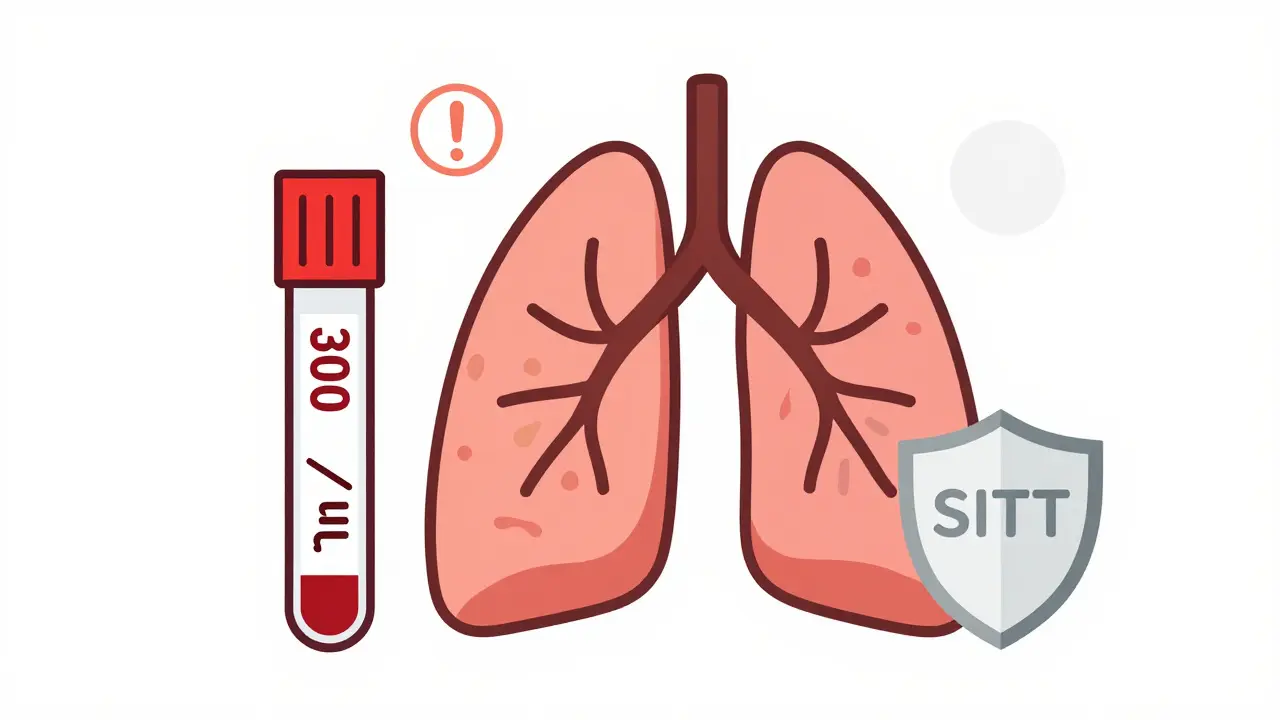
There are two main ways to get triple therapy. The first is multiple-inhaler triple therapy (MITT), where you use three separate inhalers-one for each drug. The second is single-inhaler triple therapy (SITT), where all three medications are packed into one device.
Most experts now recommend SITT. Why? Because it’s easier to stick with. Real-world studies show that patients using a single inhaler are 15-20% more likely to take their medicine as prescribed. In the TARGET study, 78.4% of patients on SITT stayed consistent after a year, compared to just 62.1% on MITT. When people switch from multiple inhalers to one, they report fewer flare-ups and better daily function. One patient told researchers, “I used to have three devices in my bag. Now I just grab one. It’s like going from juggling to walking.”
Which Triple Inhalers Are Available?
There are three main single-inhaler options on the market, each with different dosing and delivery methods:
- Trelegy Ellipta (fluticasone furoate/umeclidinium/vilanterol): Once-daily, 100/62.5/25 mcg per puff.
- Trimbow (budesonide/glycopyrronium/formoterol): Twice-daily, 320/18/9 mcg per puff.
- QBreva (beclomethasone/glycopyrronium/formoterol): Twice-daily, similar dosing to Trimbow.
One key difference is particle size. Trimbow and QBreva use extrafine particles that reach deeper into the lungs, which may improve effectiveness and reduce throat irritation. Trelegy uses a slightly larger particle size but is still highly effective and much more convenient because of once-daily dosing.

Who Benefits Most? It’s Not Everyone
This is the most important part: triple therapy isn’t for every COPD patient. It’s targeted. According to the 2024 GOLD guidelines, you’re a good candidate if:
- You’ve had two or more moderate flare-ups in the past year, or one severe flare-up (like a hospital stay or ICU visit).
- Your blood eosinophil count is 300 cells/µL or higher.
Eosinophils are a type of white blood cell that signals inflammation. High levels mean your airways are more inflamed-and more likely to respond to the steroid component of the inhaler. Studies show patients with counts below 100 cells/µL get little to no benefit from triple therapy and may even face higher risks, especially pneumonia.
That’s why doctors now check your eosinophil count before starting triple therapy. It’s not optional. If you’re on it and your count drops below 100, your doctor may consider stepping down to dual therapy to avoid unnecessary side effects.
The Pneumonia Risk You Can’t Ignore
Every benefit comes with a cost. The biggest concern with triple therapy is pneumonia. Inhaled steroids suppress local immune responses in the lungs. This helps reduce inflammation-but it also makes it easier for bacteria to take hold.
Fluticasone-based inhalers like Trelegy carry a higher risk. One study found users had an 83% higher chance of pneumonia compared to those on budesonide-based inhalers like Trimbow. That’s why experts recommend using the lowest effective dose and monitoring closely. If you develop a new cough, fever, or increased mucus-especially if it’s yellow or green-contact your provider right away. Early treatment makes all the difference.
Real-World Data vs. Clinical Trials
Here’s where things get tricky. In clinical trials, triple therapy looks amazing. But in real life, results are mixed. A UK study of over 31,000 COPD patients found no major difference in first-time exacerbations between triple therapy and dual bronchodilators (LAMA/LABA). Why?
One theory: many patients in the trials were already on triple therapy and were switched to dual therapy for comparison. When you suddenly stop steroids, your inflammation can spike, making dual therapy look worse than it really is. In other words, the advantage might not be triple therapy itself-but the fact that stopping steroids can trigger flare-ups.
This doesn’t mean triple therapy doesn’t work. It means it works best when used correctly: for the right patient, with the right biomarker, and with ongoing monitoring.
Cost, Adherence, and Daily Life
Even if triple therapy is right for you, it’s not always easy to get. In the U.S., brand-name SITT inhalers can cost $75 to $150 per month out-of-pocket. For Medicare beneficiaries, 22% admitted skipping doses because of cost. That’s why many clinics now offer medication synchronization programs-where you get all your prescriptions on the same day each month-or help with patient assistance programs.
Adherence isn’t just about cost. Technique matters too. Studies show 50-70% of people who seem to “not respond” to inhalers are actually just using them wrong. The Ellipta device, for example, requires 7.2 minutes of instruction to use properly. That’s longer than most MDIs. If you’re not sure you’re getting the full dose, ask your nurse or pharmacist to watch you use it. A quick check can save you from unnecessary treatment changes.
What’s Next? The Future of COPD Treatment
The field is moving fast. Researchers are now testing whether other biomarkers-like fractional exhaled nitric oxide (FeNO)-can predict steroid response better than eosinophils. Early results from the EXACT study suggest it might. By 2027, doctors may use a combination of blood tests, breathing tests, and symptom tracking to personalize treatment even further.
Meanwhile, new biologic drugs like dupilumab are showing promise in phase 3 trials for patients with high eosinophils. These injectables target specific inflammatory pathways and may eventually replace steroids for some. But for now, triple inhalers remain the most effective option for those with frequent flare-ups and elevated eosinophils.
Key Takeaways
- Triple inhaler therapy (ICS/LAMA/LABA) reduces COPD exacerbations by up to 25% in the right patients.
- Single-inhaler devices improve adherence by 15-20% compared to multiple inhalers.
- Only use triple therapy if you’ve had frequent flare-ups AND your blood eosinophil count is ≥300 cells/µL.
- Pneumonia risk is real-especially with fluticasone. Watch for fever, new cough, or green mucus.
- Cost and technique are major barriers. Ask about patient support programs and get your inhaler technique checked.
- Triple therapy is not a one-size-fits-all solution. It’s a precision tool for a specific group.
Is triple inhaler therapy right for everyone with COPD?
No. Triple therapy is only recommended for people with moderate-to-severe COPD who have had two or more moderate flare-ups or one severe flare-up in the past year, and whose blood eosinophil count is 300 cells/µL or higher. For patients with low eosinophil counts or infrequent exacerbations, the risks-especially pneumonia-outweigh the benefits. Always get tested before starting.
Can I switch from two inhalers to one triple inhaler?
Yes, and many patients benefit from the switch. Switching from multiple-inhaler therapy to a single-inhaler triple device improves adherence and reduces confusion. Studies show a 37% drop in exacerbations after switching. But this should be done under medical supervision. Your doctor may adjust doses or monitor for side effects, especially if you’ve been on steroids for a long time.
Why does my doctor check my blood eosinophil count?
Eosinophils are a type of white blood cell that indicate airway inflammation. High counts (≥300 cells/µL) mean your lungs are more likely to respond to inhaled steroids, which are part of triple therapy. If your count is below 100, steroids won’t help much-and may increase your risk of pneumonia without giving you any benefit. Testing helps avoid unnecessary treatment.
What are the main side effects of triple inhalers?
The most serious side effect is pneumonia, especially with fluticasone-based inhalers like Trelegy. Other common side effects include sore throat, hoarseness, and oral thrush (a fungal infection in the mouth). To reduce risk, rinse your mouth with water after each use and don’t swallow the rinse. If you develop a fever, new cough, or increased mucus, contact your provider right away.
How do I know if my inhaler technique is correct?
Many people think they’re using their inhaler right-but they’re not. Up to 70% of patients have poor technique. Ask your doctor or pharmacist to watch you use it. For devices like Trelegy Ellipta, you need to breathe in slowly and deeply, hold your breath for 5-10 seconds, and not exhale into the device. A simple checklist can catch errors before they affect your health.


Sandy Wells
March 21, 2026 AT 01:00