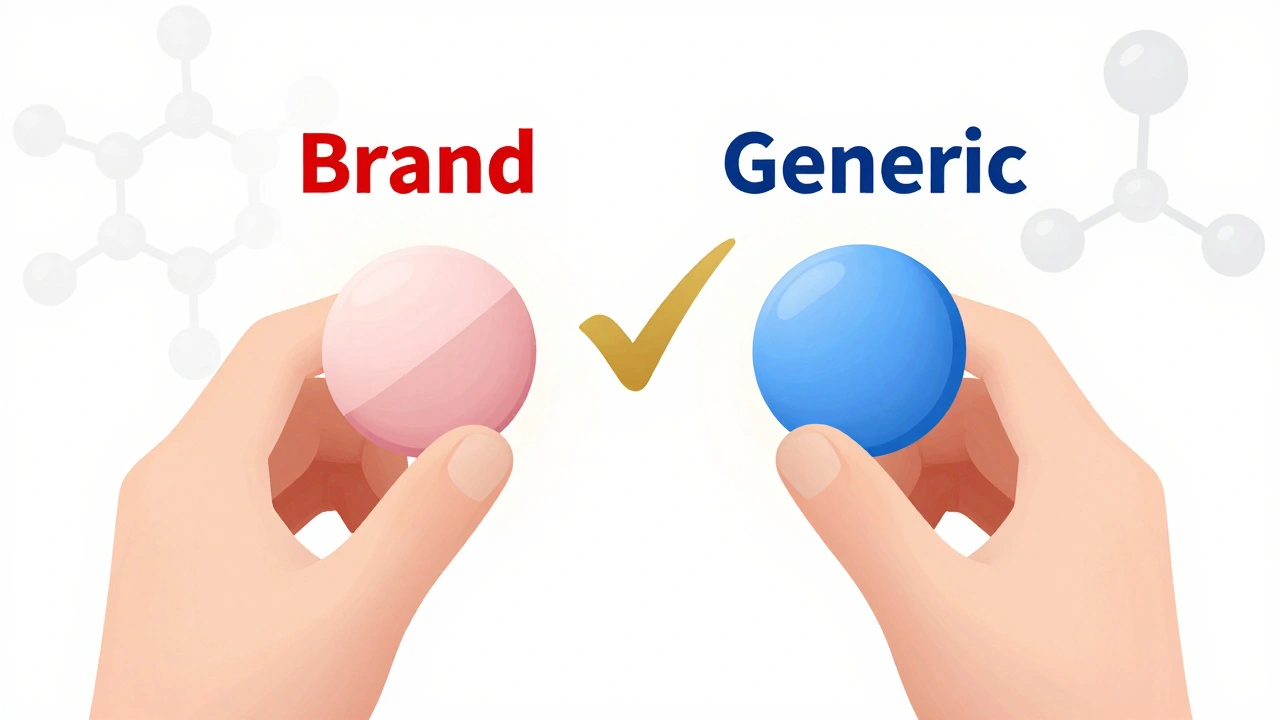
When a patient asks why you’re switching them from a brand-name pill to a generic, what do you say? Not the textbook answer. Not the insurance company’s script. But the real truth - the kind backed by data, not just theory. Here’s what the evidence actually shows: generic drugs work just as well as brand-name ones for nearly every condition you treat.
They’re not cheaper because they’re worse
It’s easy to assume generics are lower quality because they cost so much less. But that’s not how it works. A generic drug has the exact same active ingredient, strength, and dosage form as the brand-name version. The FDA requires it. And it’s not just a formality - they test it. Bioequivalence studies involve healthy volunteers, blood draws, and precise measurements of how the drug moves through the body. The standard? The generic must deliver between 80% and 125% of the brand’s absorption rate. For most drugs, that’s tight enough to guarantee the same effect. For tricky ones like warfarin or tacrolimus, the standards are even stricter.What does that mean in practice? A 2019 study in PLOS Medicine looked at over 1.3 million patients across 14 different conditions. For drugs like amlodipine, quinapril, and alendronate, the outcomes were identical. Hospitalizations, heart attacks, fracture rates - no difference. Even better, in some cases, generics performed slightly better. Patients on generic amlodipine had fewer cardiovascular events than those on the brand. Not because the generic was stronger, but because more people stayed on it. Cost matters. If a pill costs $3 instead of $30, people take it.
What about the scary stories?
You’ve heard them. "My patient had a seizure after switching to generic levetiracetam." "My elderly woman got confused after switching to generic sertraline." These cases get talked about. But they’re outliers. The same PLOS Medicine study found that for psychiatric drugs like escitalopram and sertraline, there was a tiny uptick in hospitalizations with generics - but only when comparing generics to the brand. When they compared authorized generics (made by the brand company itself) to the brand, the same pattern showed up. That’s not a drug problem. That’s a perception problem.Patients see a different color pill. A different shape. A different label. They assume it’s weaker. They stop taking it. Or they tell their doctor it’s "not working." The drug hasn’t changed. The patient’s belief has. The FDA tracked this for years. In their switch-back analysis, patients were no more likely to return to the brand after starting a generic than they were to stay on it. That’s a powerful signal: the system works. The issue isn’t the drug - it’s the fear around it.
There are exceptions - but they’re rare
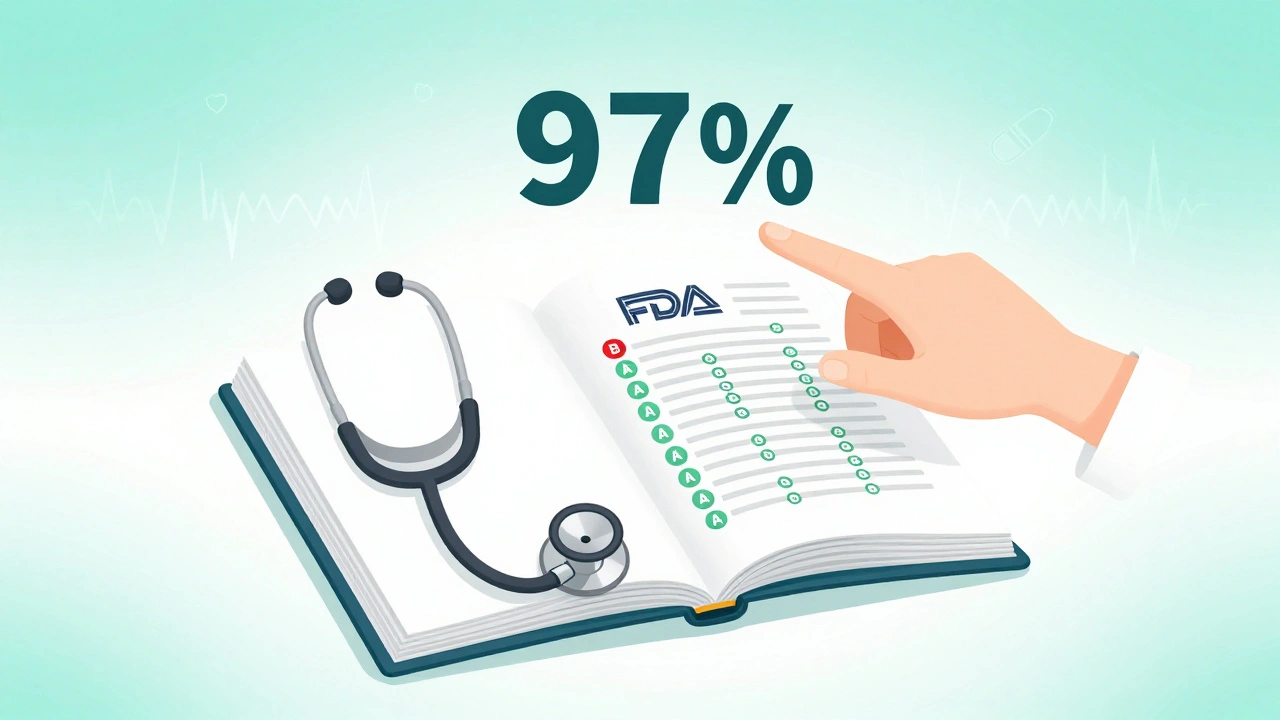
Yes, there are drugs where switching needs extra care. These are called narrow therapeutic index (NTI) drugs. A small change in blood level can mean the difference between no effect and toxicity. Think: thyroid meds, seizure drugs, blood thinners, immunosuppressants. The FDA tracks these in the Orange Book. If a generic is rated "A," it’s considered therapeutically equivalent. If it’s "B," you should be cautious. But here’s the key: only about 3% of all generics fall into the "B" category. That’s 3 out of every 100. For the other 97%, you can prescribe with confidence.And even for NTI drugs, the data doesn’t support blanket warnings. A 2020 study in Nature Scientific Reports followed transplant patients switching between brand and generic tacrolimus over 42 days. No increase in rejection. No drop in blood levels. No safety signals. The same pattern showed up in a 2023 study of 2.1 million diabetic patients on generic metformin - identical HbA1c control compared to the brand. The science is clear: for the vast majority of patients, switching is safe.
Real-world savings, real-world impact
Let’s talk numbers. In the U.S., 90% of all prescriptions are filled with generics. But they make up only 23% of total drug spending. That means for every $100 spent on prescriptions, $77 goes to brand-name drugs - even though most people are taking generics. The Congressional Budget Office estimates generics saved the U.S. healthcare system over $1.6 trillion between 2008 and 2017. In 2021 alone, they saved $377 billion. That’s not just money in patients’ pockets. That’s money that keeps clinics open, lets hospitals afford better equipment, and lets more people get the care they need.And it’s not just America. A 2021 review across Europe found 92% of studies showed equivalent outcomes between generic and brand-name cardiovascular drugs. This isn’t a U.S.-only phenomenon. It’s global science.
What should you do differently?
Stop treating generics as second-tier. Start treating them as the standard. Here’s how:- Prescribe generics first - unless there’s a clear, documented reason not to.
- Don’t wait for patients to ask. Proactively explain: "This generic has the same active ingredient and has been tested to work just like the brand. It’s been used by millions with the same results."
- Address appearance changes. If the pill looks different, say so: "I know it’s a different color, but it’s the same medicine. The color change is just because the manufacturer uses different inactive ingredients."
- Use the Orange Book. It’s free. It tells you which generics are rated "A" (therapeutically equivalent). You don’t need to memorize them - just check when you’re unsure.
- Don’t blame the drug if a patient reports side effects after switching. Ask: "Did you stop taking it for a few days? Did you notice any other changes?" Often, it’s timing, stress, or a new medication - not the generic.
What the data doesn’t say
Some say, "But what about long-term effects?" The data covers 10, 15, even 20 years. The FDA’s Adverse Event Reporting System shows only 0.02% of all drug-related adverse events from 2015 to 2020 were linked to generics. For brand-name drugs, it was 3.2%. That’s not a coincidence. It’s because generics are used by so many more people - and if they were unsafe, we’d know by now.And here’s something else: the people who make brand-name drugs also make generics. Many "brand" companies have generic divisions. The same factory. The same quality controls. The same inspectors. The only difference? The label.
Bottom line
The science isn’t close. It’s settled. Generic drugs are not a compromise. They’re the standard of care. For 97% of prescriptions, they deliver the same clinical outcomes at a fraction of the cost. The occasional patient who struggles after a switch? That’s rarely about the drug. It’s about fear, perception, or miscommunication.As a provider, your job isn’t to protect patients from generics. It’s to protect them from misinformation - including the kind you might unintentionally reinforce by hesitating to prescribe them. The data is clear. The guidelines are clear. The savings are real. It’s time to prescribe with confidence.
Are generic drugs really as effective as brand-name drugs?
Yes. For nearly all medications, generic drugs are clinically equivalent to their brand-name counterparts. The FDA requires them to have the same active ingredient, strength, dosage form, and route of administration. Bioequivalence studies prove they are absorbed into the body at the same rate and to the same extent. Large studies involving millions of patients show no meaningful differences in outcomes like hospitalizations, disease control, or death rates.
Why do some patients say generics don’t work for them?
Most often, it’s not the drug - it’s perception. Generic pills often look different in color, shape, or size, which can make patients think they’re weaker. Some stop taking them, or blame the new pill for side effects they’d have had anyway. Studies show that when patients are switched to authorized generics (made by the original brand company), they report the same issues - proving it’s not the manufacturer, but the change itself that triggers concern.
Are there any generics I should avoid?
Only a small percentage - about 3% - of generics are rated "B" by the FDA, meaning they’re not automatically considered therapeutically equivalent. These are mostly narrow therapeutic index drugs like warfarin, levothyroxine, or tacrolimus. For these, you should check the FDA’s Orange Book and consider patient history. But even for these, most studies show no difference in outcomes when switching between approved generics and brands. Don’t avoid them unless there’s a documented issue with a specific product.
Do generics have more side effects?
No. The FDA’s adverse event database shows that only 0.02% of all drug-related side effect reports from 2015 to 2020 were linked to generics. Brand-name drugs accounted for 3.2%. That’s because generics are used far more often - over 5 billion prescriptions annually in the U.S. - so any real safety issue would show up quickly. The data confirms generics are as safe as brand-name drugs.
Why do some doctors still prefer brand-name drugs?
Some doctors were trained during a time when generics had less oversight. Others may have seen a single patient react poorly after a switch and generalize from that. Marketing from pharmaceutical companies also plays a role. But the evidence has been consistent for over a decade: 89% of studies on cardiovascular drugs showed no difference. The American College of Physicians, the FDA, and Harvard Medical School all agree - generics are the standard. The hesitation is outdated.


Reshma Sinha
December 12, 2025 AT 02:04