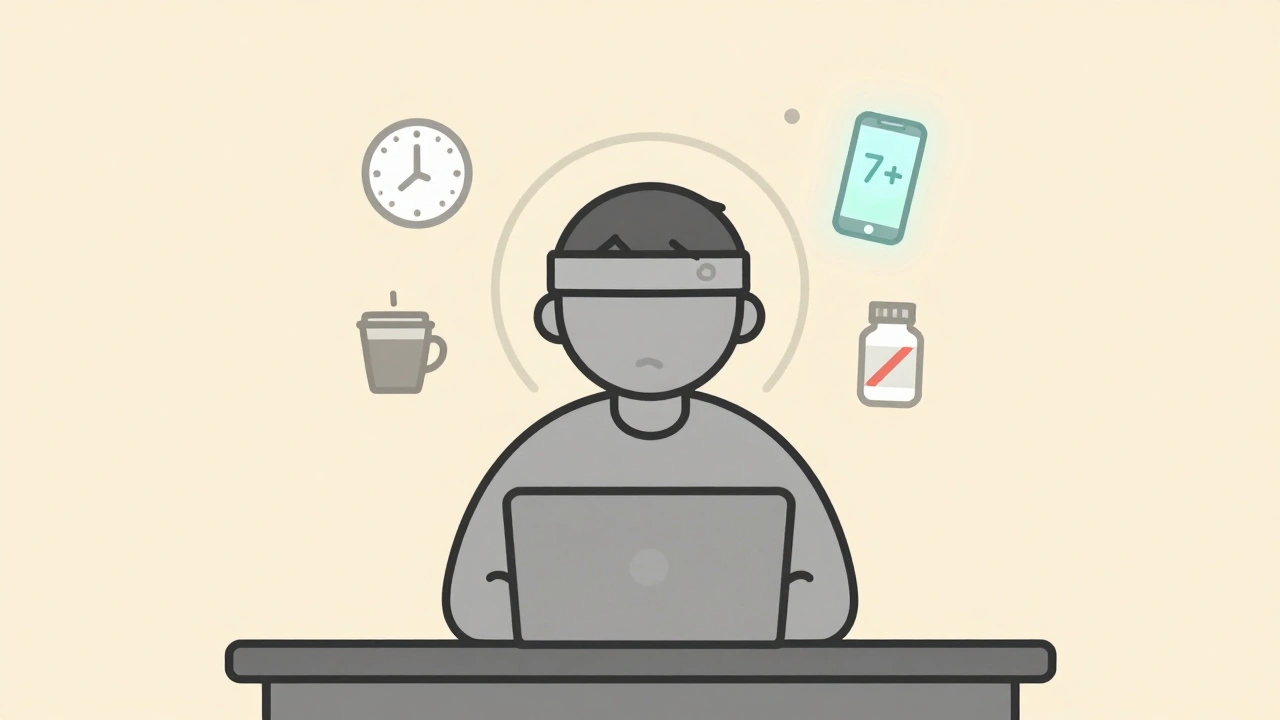
Chronic tension headaches aren’t just bad days. They’re chronic tension headaches - happening 15 or more days a month, for three months straight. No pounding, no nausea, no light sensitivity. Just a constant, dull pressure around your head, like a band tightening. It’s not in your head - it’s in your nervous system. And most people get it wrong.
What Chronic Tension Headaches Really Are
Chronic tension headaches (CTH) are defined by the International Headache Society as headaches occurring on at least 15 days per month for three months or longer. At least eight of those days must meet the criteria for tension-type headaches: bilateral pain, a pressing or tightening sensation (not throbbing), mild to moderate intensity, and no nausea or vomiting. Unlike migraines, you won’t feel sick to your stomach or need to hide in a dark room. But you will feel worn out. A 2022 Mayo Clinic study found people with CTH lose nearly 37% of their work productivity - not because they’re lazy, but because their brain is stuck in pain mode.
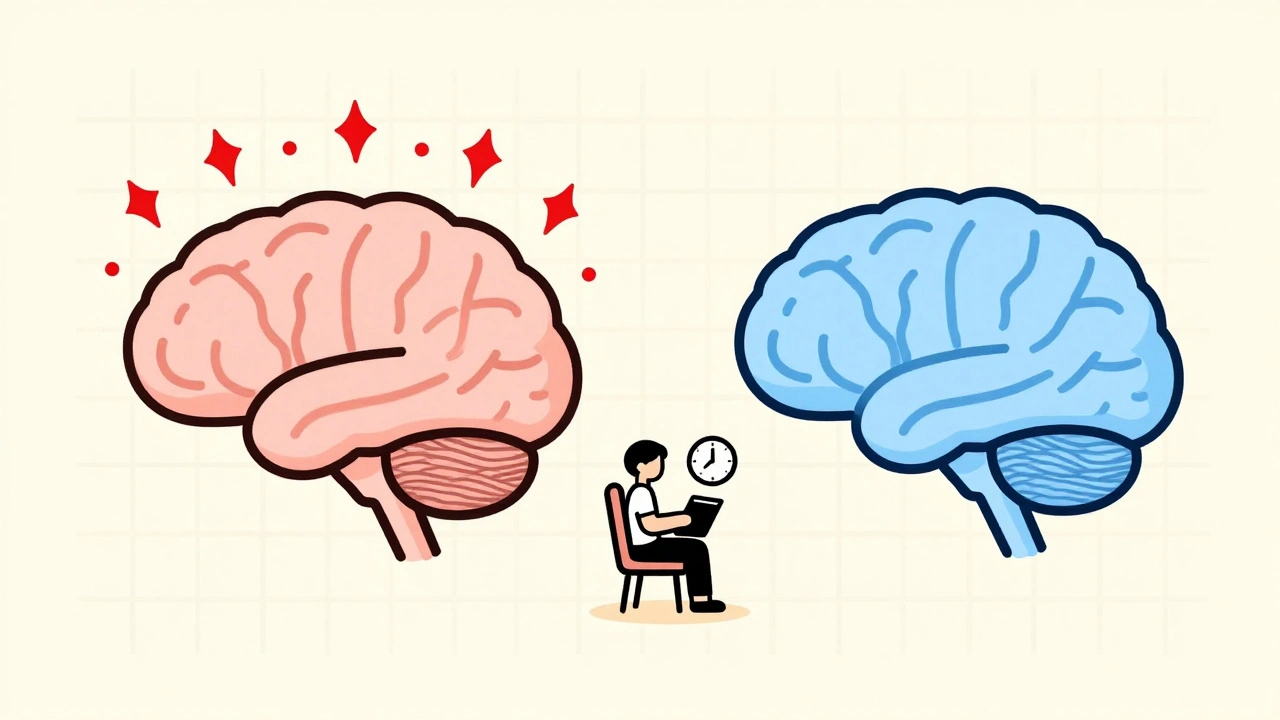
For decades, doctors blamed tight muscles in your neck and scalp. That’s what you still hear on TV and in wellness blogs. But modern science says otherwise. Muscle tension is a side effect, not the cause. The real problem is central sensitization - your brain and spinal cord become hyper-sensitive to pain signals. Think of it like a thermostat turned way up. Even normal sensations, like the weight of your hair or the pressure of your glasses, now feel painful. This shift in understanding changed everything about how we treat it.
What Triggers These Headaches - And What Doesn’t
Not all stress causes headaches. Surprisingly, only 22% of tension headaches are triggered by acute stress. The bigger culprit? Stress recovery. When your body finally relaxes after days of high cortisol, your nervous system flips into overdrive. That’s why you get the worst headache on Sunday night after a busy week.
Here are the real, measurable triggers backed by data:
- Sleep disruption: Getting less than six hours of sleep raises your risk 4.2 times. Even inconsistent sleep - going to bed 30 minutes later on weekends - can trigger attacks.
- Caffeine swings: If you drink more than 200mg of caffeine daily (about two cups of coffee) and then skip it, withdrawal hits hard. It’s not the caffeine itself - it’s the drop.
- Screen time: More than seven hours a day in front of a screen increases your chance of CTH by 63%. It’s not the blue light. It’s the posture. Leaning forward 4.5cm beyond your spine doubles tension in your suboccipital muscles.
- Medication overuse: Taking painkillers like ibuprofen or acetaminophen more than 10 days a month can turn episodic headaches into chronic ones. This isn’t a myth - it’s a diagnostic criterion.
- Jaw clenching: If you grind your teeth at night or clench during the day, your masseter muscles fire 3.1 times harder during a headache. A dental guard can help.
Weather changes? Weak link. Poor vision? Only if you have uncorrected astigmatism over 1.5D and read too close for too long. And no, dehydration isn’t a direct trigger - unless your serum osmolality hits 295 mOsm/kg, which is rare unless you’re running a marathon in the desert.
Why Most Treatments Fail - And What Actually Works
Over-the-counter painkillers feel like a quick fix. But here’s the catch: ibuprofen works for about 68% of people - but only if you take it early and limit it to 14 days a month. Beyond that, you risk rebound headaches. Aspirin at 900mg helps too, but it’s less effective and harder on your stomach.
For chronic cases, you need prevention - not just relief. And there are two proven paths: medication and non-drug therapies.
Amitriptyline is still the gold standard. A low dose - 10mg at night - slowly increased to 25-50mg, can reduce headache days by 50-70% in six weeks. But 28% of people quit because of side effects: dry mouth, weight gain (average 2.3kg), and grogginess. It’s not glamorous, but it works.
There’s a better-tolerated alternative: mirtazapine. In a 2022 trial with 187 patients, it was just as effective as amitriptyline - but only 35% dropped out versus 62% on amitriptyline. The trade-off? Increased appetite. Some people gain weight, but many say the sleep improvement makes it worth it.
Botulinum toxin (Botox)? It’s approved for migraines. For tension headaches? The FDA says no. Studies show no benefit. Don’t waste your money.
Non-Drug Treatments That Actually Change Outcomes
Medication isn’t the only answer. In fact, the best results come from combining drugs with behavior change.
- Cognitive Behavioral Therapy (CBT): This isn’t just talking. It’s learning how your thoughts and habits feed pain. A 2021 JAMA Neurology study showed CBT reduced headache days by 41% in just 12 weeks. It teaches you to break the cycle of pain-fear-pain.
- Physical therapy: Not your average massage. Targeted craniocervical flexion exercises - done 12 times over six weeks - cut headache frequency by 53%. You need a therapist trained in cervicogenic headaches. Only 12% of U.S. physical therapists have this certification.
- Mindfulness: Just 15 minutes a day of focused breathing lowers cortisol by 29% in eight weeks. You don’t need an app. Sit quietly. Breathe in for four. Hold for four. Out for six. Repeat.
- Acupuncture: It’s not placebo. The Cochrane Review found it reduces headache days by 3.2 per month compared to sham acupuncture. It’s modest, but it adds up.
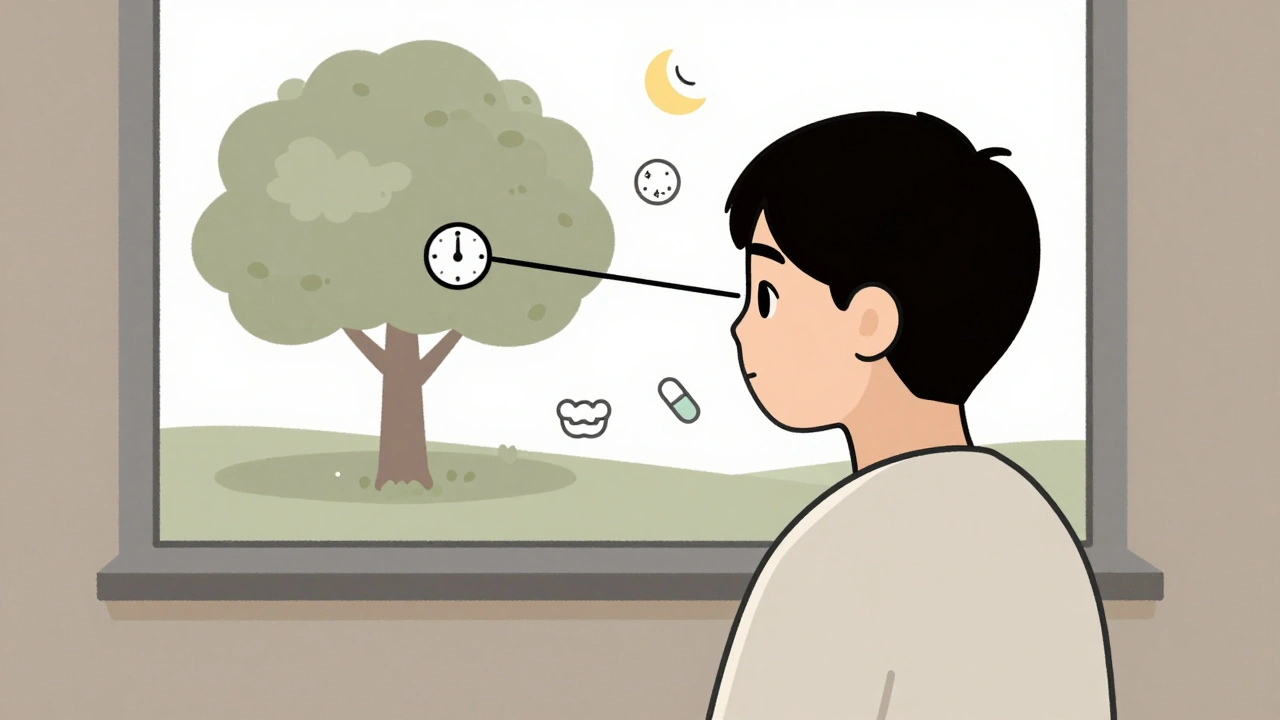
And yes - the 20-20-20 rule is real. Every 20 minutes, look at something 20 feet away for 20 seconds. It’s not about your eyes. It’s about resetting your neck posture. People who do this report fewer headaches than those who don’t.
The Biggest Mistake People Make
Getting misdiagnosed. A staggering 38% of people with chronic tension headaches are told they have chronic migraines - or worse, told it’s “just stress.” That delay averages 2.7 years. During that time, they try migraine meds, avoid triggers they don’t actually have, and feel blamed for their pain.
Here’s how to know the difference:
- Chronic tension headache: Both sides of head, pressing/tightening, no nausea, no light/sound sensitivity (or very mild). Normal neurological exam.
- Chronic migraine: Often one-sided, throbbing, with nausea, vomiting, light or sound sensitivity. May have aura. Neurological exam still normal, but symptoms are more intense.
Doctors need to see your headache diary - not your word. Track every day for three months. Note the time, duration, intensity (1-10), triggers, and meds taken. Apps like Migraine Buddy help. People who use them have 76% adherence after three months.
What’s Coming Next
The science is moving fast. The FDA just gave atogepant - a drug approved for migraines - Fast Track status for chronic tension headaches. Early trials show it cuts headache days by over five per month. That’s huge.
Researchers are also looking at the gut-brain connection. People with CTH have 40% less of a beneficial gut bacteria called Faecalibacterium prausnitzii. Could probiotics help? Maybe. Trials are underway.
And in 2027, the next version of the headache classification (ICHD-4) will likely rename chronic tension headache to “primary headache with central sensitization.” That’s not just a name change. It’s a recognition that this isn’t a muscle problem - it’s a brain problem.
What to Do Right Now
You don’t need to wait for a miracle drug. Start here:
- Get a headache diary - paper or app. Track for 30 days.
- Limit painkillers to 10 days a month. No more.
- Fix your sleep. Go to bed and wake up within 20 minutes of the same time every day.
- Try the 20-20-20 rule. Set a timer on your phone.
- If you’re on painkillers daily, talk to your doctor about amitriptyline or mirtazapine.
- If you’re still stuck, ask for a referral to a headache specialist or a physical therapist trained in cervicogenic disorders.
This isn’t about willpower. It’s about rewiring your nervous system. It takes time. But with the right approach, most people cut their headache days in half - or more.
Are chronic tension headaches dangerous?
Chronic tension headaches themselves aren’t dangerous or life-threatening. They don’t cause brain damage or stroke. But they’re a major red flag for underlying issues like chronic stress, depression, or sleep disorders. People with chronic tension headaches are 2.1 times more likely to develop depression. Treating the headache means also addressing your mental and emotional health - not ignoring it.
Can I take ibuprofen every day for my headaches?
No. Taking ibuprofen or other NSAIDs more than 10 days a month can cause medication-overuse headaches, which make your condition worse. Even acetaminophen can do this if used too often. The limit is 14 days per month for NSAIDs, but the goal is to get below 10. If you’re relying on painkillers daily, you need a prevention plan - not more pills.
Why does my doctor say it’s stress, but I’m not stressed?
Stress isn’t always obvious. You might not feel anxious, but your body is still in fight-or-flight mode from poor sleep, caffeine crashes, or prolonged screen time. The real trigger isn’t the moment you feel overwhelmed - it’s the recovery period after. Your nervous system stays on high alert even when you think you’re relaxed. That’s why headaches often hit on weekends or after a big project ends.
Is Botox effective for chronic tension headaches?
No. Botox is FDA-approved for chronic migraine, not chronic tension headaches. Multiple studies have shown no significant benefit for tension-type headaches. If your doctor recommends Botox for this, they’re confusing it with migraine. It’s a common mistake - and it wastes time and money.
How long does it take for amitriptyline to work?
It takes 4 to 6 weeks to see results, and sometimes up to 12 weeks for full effect. Start low - 10mg at night - and increase slowly. Don’t quit if you don’t feel better in a week. Side effects like dry mouth or drowsiness often fade after a few weeks. If you can’t tolerate it, mirtazapine is a good alternative with fewer side effects for most people.
Should I get an MRI or CT scan?
Not unless your doctor finds red flags - like sudden severe headaches, vision changes, weakness, or confusion. For chronic tension headaches, imaging is almost always normal. The diagnosis is clinical: based on your symptoms, history, and neurological exam. Unnecessary scans add cost, anxiety, and radiation - with zero benefit.
Can I cure chronic tension headaches?
You can’t always ‘cure’ them, but you can control them - often completely. Many people reduce their headache days by 70% or more with the right mix of prevention, therapy, and lifestyle changes. Some stop having them altogether. It’s not about finding a magic pill. It’s about rebuilding your nervous system’s tolerance to pain. That takes time, but it’s possible.


Webster Bull
December 12, 2025 AT 18:49