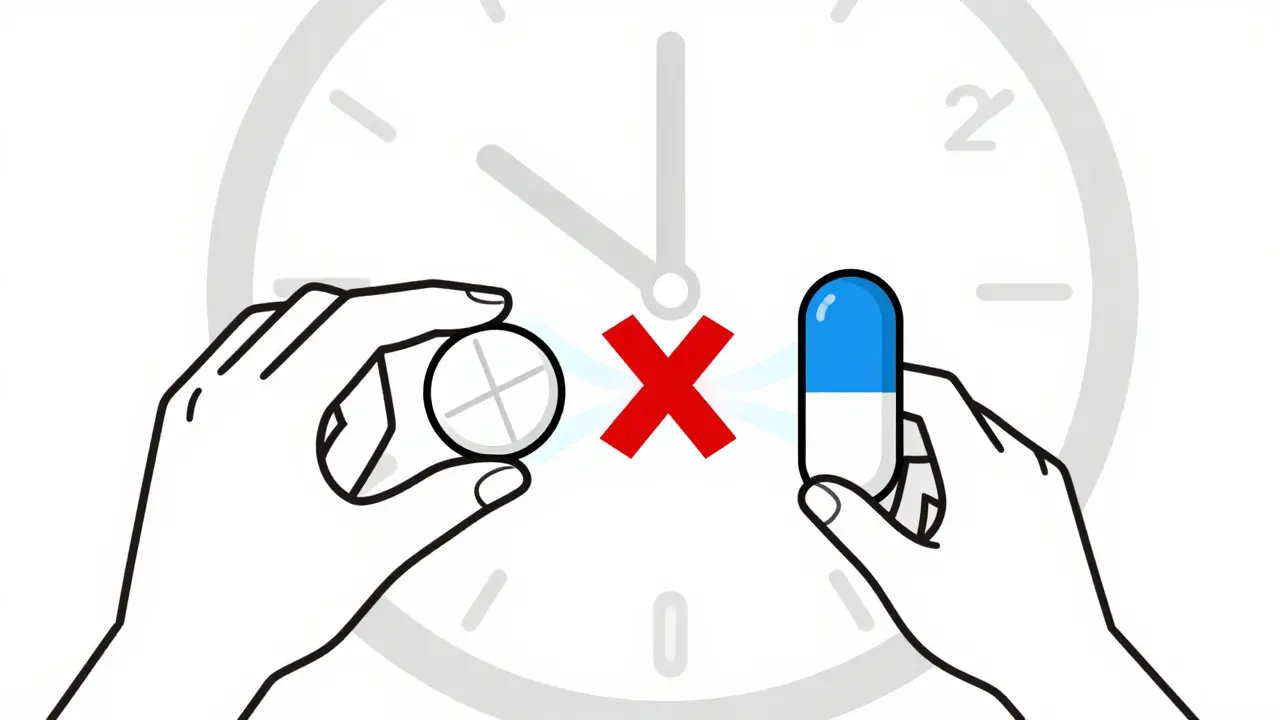
Many people take calcium and iron supplements without realizing they could be making their medications less effective-sometimes dangerously so. You might be popping a calcium pill for your bones, an iron tablet for fatigue, or a heartburn med for comfort, but if you’re not spacing them out right, you could be fighting a silent battle inside your body. The result? Infections that won’t clear, thyroid levels that stay low, or anemia that doesn’t improve-even when you’re doing everything "right." Calcium and iron don’t just sit quietly in your gut. They bind to certain drugs like glue, forming complexes your body can’t absorb. This isn’t a minor inconvenience. It’s a real risk to your health. And it’s more common than you think. About 67% of women and 25% of men regularly take calcium supplements. Iron supplements are just as widespread, especially among women, children, and older adults with anemia. Meanwhile, antibiotics, thyroid meds, and acid reducers are among the most prescribed drugs in the country. When these collide without proper timing, the consequences add up. Let’s break down exactly what happens, which drugs are affected, and how to fix it.
Calcium and Antibiotics: A Dangerous Pair
Calcium, whether from dairy, fortified foods, or supplements like calcium carbonate or citrate, interferes with two major classes of antibiotics: tetracyclines (like doxycycline and tetracycline) and fluoroquinolones (like ciprofloxacin and levofloxacin). The mechanism is simple: calcium binds to these drugs in your stomach and intestines, creating an insoluble compound your body can’t absorb. The numbers don’t lie. One study showed calcium carbonate reduces the absorption of ciprofloxacin by up to 40%. That means if you take a calcium supplement two hours before your antibiotic, you might as well have skipped the dose. The infection doesn’t get treated. It lingers. It spreads. Complications follow. The fix? Don’t take calcium within two hours before or after these antibiotics. For safety, many pharmacists recommend waiting four to six hours. If you’re on a short course-say, seven days for a sinus infection-just skip the calcium pill during that time. Your bones won’t suffer. Your infection will.Iron and Antibiotics: The Same Problem, Different Timing
Iron supplements-especially ferrous fumarate, ferrous sulfate, and ferrous gluconate-do the exact same thing to tetracyclines and fluoroquinolones. Iron binds to these antibiotics just like calcium does. The result? Same outcome: ineffective treatment. The recommended gap here is slightly tighter: take iron at least two hours before or four hours after your antibiotic. If you take your antibiotic in the morning, wait until after lunch to take your iron. If you take your iron at night, make sure your last antibiotic dose was at least four hours earlier. This is especially tricky for teens and young adults taking doxycycline for acne while also needing iron for heavy periods or low ferritin. Parents often don’t realize the timing matters. Kids take both at breakfast with milk. And then wonder why the acne isn’t improving.Calcium and Thyroid Medication: A Silent Saboteur
If you’re on levothyroxine (Synthroid, Levoxyl, or generic thyroid hormone), calcium is one of your biggest enemies. Calcium blocks the absorption of thyroid hormone in the gut. Even if you take your thyroid pill first thing in the morning on an empty stomach, a calcium supplement taken later that day can still interfere. Research from the South Medical Journal found that calcium reduces levothyroxine absorption by up to 30% if taken within four hours. That’s enough to throw your TSH levels out of whack. You’ll feel tired, gain weight, or get depressed-even if your dose seems "correct." The rule? Take levothyroxine on an empty stomach, at least 30 to 60 minutes before breakfast. Then wait at least four hours before taking any calcium supplement. That means if you take your thyroid pill at 6 a.m., don’t touch your calcium until after 10 a.m. Many people take calcium at night to avoid this-but that’s fine too, as long as it’s not within four hours of your thyroid dose.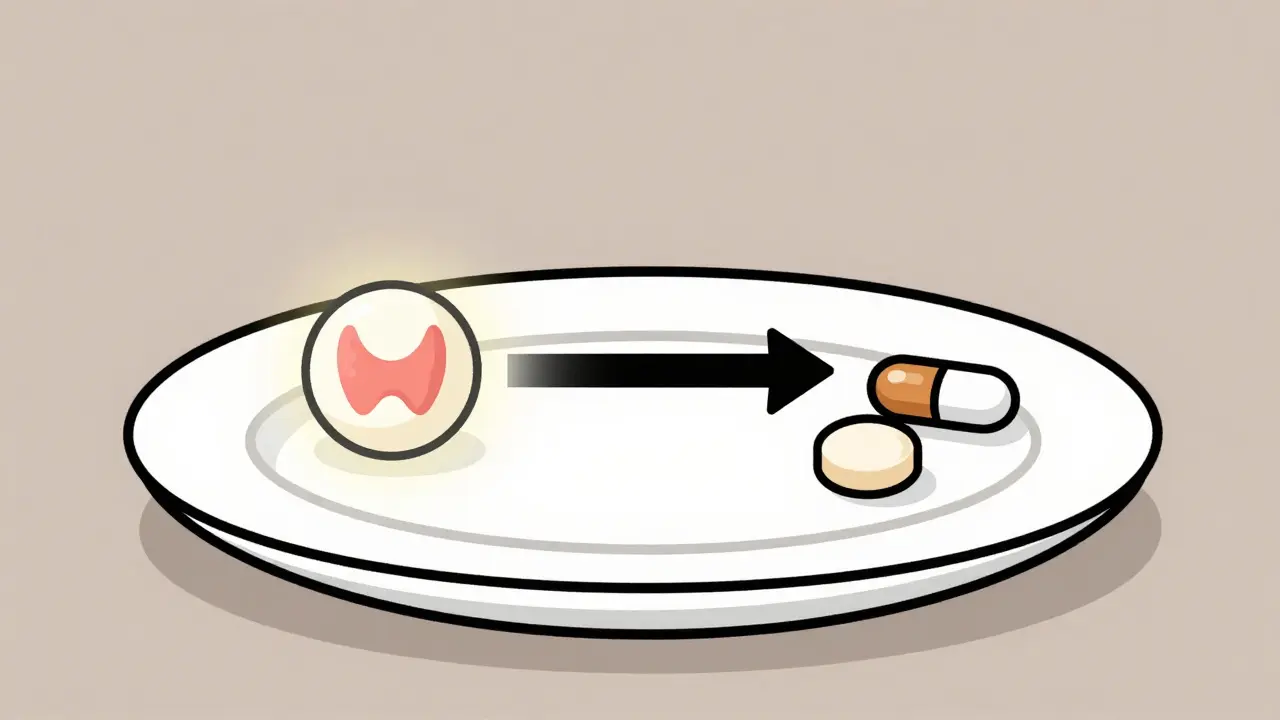
Iron and Heartburn Meds: A pH Problem
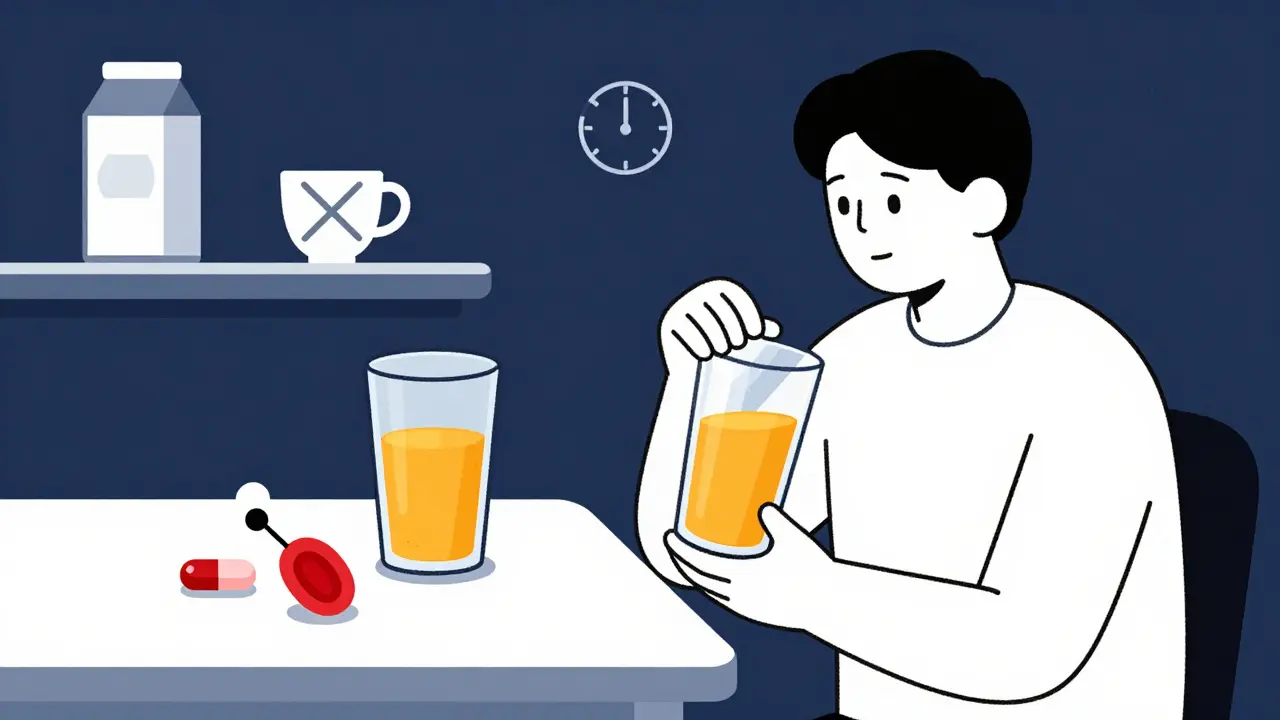
Iron needs acid to be absorbed. Your stomach acid dissolves iron pills so your body can pick them up. But if you’re on a proton pump inhibitor (PPI) like omeprazole (Prilosec) or pantoprazole (Protonix), or an H2 blocker like famotidine (Pepcid), your stomach acid is suppressed. That means your iron doesn’t dissolve properly. The result? Your iron levels stay low. Your fatigue doesn’t go away. Your ferritin stays stuck at 12 when it should be over 50. The solution isn’t to stop your heartburn med-it’s to time your iron right. Take your iron supplement at least two hours before your PPI or H2 blocker. That gives your stomach acid time to do its job. If you take your heartburn pill at night, take your iron at lunch. If you take your iron at night, skip the heartburn pill until the next morning. And here’s a simple trick: take your iron with orange juice. The vitamin C helps your body absorb it better. Avoid milk. The calcium in milk binds to the iron and blocks it.Why Timing Isn’t Just a Suggestion
You might think, "I took my calcium and antibiotic together once. Nothing happened." But that’s the problem. These interactions aren’t always obvious. They don’t cause vomiting or dizziness. They cause silent failures: your UTI comes back, your TSH creeps up, your hemoglobin doesn’t budge. Pharmacists are trained to ask about supplements. But most patients don’t think calcium pills or iron gummies count as "medications." They say, "I just take a vitamin." But these aren’t vitamins. They’re active substances with real drug interactions. The FDA requires interaction warnings on both supplement and prescription labels. But if you’re juggling five pills a day, you’re not reading every tiny print. That’s why spacing matters more than ever.What to Do: A Simple Plan
Here’s a practical guide to avoid these interactions:- Calcium: Avoid within 4-6 hours of tetracyclines, fluoroquinolones, and levothyroxine.
- Iron: Take at least 2 hours before or 4 hours after tetracyclines, fluoroquinolones. Take 2 hours before PPIs or H2 blockers.
- Levothyroxine: Take on empty stomach, 30-60 minutes before food. Wait 4 hours before calcium or iron.
- Iron + Absorption Boost: Take with orange juice or vitamin C. Avoid milk, coffee, tea, or calcium-rich foods.
- When in doubt: Ask your pharmacist. They have interaction checkers built into their systems. Don’t guess.
Special Cases: Kids, Seniors, and Chronic Conditions
Children on antibiotics for strep throat or acne often also need iron for anemia. Parents struggle to fit both into a school schedule. The fix? Give the antibiotic at breakfast, iron at dinner. Simple. Seniors on multiple meds are the most at risk. They take calcium for bones, levothyroxine for thyroid, a PPI for reflux, and an antibiotic for a UTI. All in one day. The chance of a bad interaction? High. If you’re on more than three medications, keep a written schedule. Note the time, the drug, and the gap needed. Stick it on your fridge. Use a pill organizer with labeled compartments.What You Shouldn’t Do
- Don’t assume "natural" means safe. Calcium from food can interfere too-especially if you’re drinking fortified milk or eating calcium-fortified cereal with your antibiotic.
- Don’t take your supplements with coffee, tea, or milk. These all block absorption.
- Don’t rely on memory. Use alarms or phone reminders.
- Don’t skip your meds because you’re worried about interactions. Talk to your doctor or pharmacist. There’s always a safe way.
Final Thought: It’s Not About Avoiding Supplements
You don’t need to stop taking calcium or iron. You just need to take them at the right time. These minerals are essential. Your meds are essential too. The goal isn’t to choose one over the other. It’s to make them work together. A 68-year-old woman on levothyroxine and calcium was told her thyroid dose needed to be doubled. But when she spaced her calcium to after lunch, her TSH dropped back to normal-and she didn’t need a higher dose. That’s the power of timing. Your health isn’t about taking more pills. It’s about taking them right.Can I take calcium and iron together?
No. Calcium and iron compete for absorption in your gut. Taking them together reduces how much of each your body can use. Space them at least 2-4 hours apart. If you need both, take one in the morning and the other at night.
Does milk interfere with iron supplements?
Yes. Milk contains calcium, which binds to iron and blocks its absorption. Avoid drinking milk, eating cheese, or having yogurt within two hours of taking an iron supplement. Instead, take iron with orange juice or a vitamin C supplement to boost absorption.
Can I take calcium with my thyroid medication?
Not within four hours. Calcium reduces the absorption of levothyroxine by up to 30%, which can make your thyroid medication ineffective. Take your thyroid pill on an empty stomach in the morning, and wait until after lunch or dinner to take calcium.
Do proton pump inhibitors affect iron absorption?
Yes. PPIs like omeprazole and pantoprazole reduce stomach acid, which your body needs to absorb iron properly. If you take a PPI, take your iron supplement at least two hours before your heartburn pill. If you take iron at night, skip the PPI until the next morning.
What should I do if I accidentally took calcium with my antibiotic?
If you took calcium and an antibiotic together once, don’t panic. One missed dose won’t ruin your treatment. But don’t do it again. If you’re on a short course (5-7 days), skip calcium for the duration. If you’re on long-term antibiotics, talk to your doctor about adjusting your timing or switching to a different antibiotic that doesn’t interact with calcium.
Are there calcium or iron supplements that don’t interact with medications?
Not really. All forms of calcium (carbonate, citrate, gluconate) and iron (fumarate, sulfate, gluconate) interact the same way. The issue isn’t the form-it’s the mineral itself. The only workaround is timing. Some newer formulations claim to be "non-interfering," but there’s no strong evidence they’re safer. Stick to spacing.


Vinayak Naik
January 7, 2026 AT 05:17