
Imagine being handed a prescription that requires you to inject yourself with complex medication derived from living organisms. For millions of people managing conditions like rheumatoid arthritis, psoriasis, or Crohn's disease, this is their reality. Biologic therapies are large-molecule drugs produced in living systems that target specific parts of the immune system to reduce inflammation and pain. While these treatments can be life-changing, they come with a steep learning curve. The biggest hurdle isn't just the needle-it's the risk of infection and error when patients are left to figure it out alone.
You might think getting trained on how to use your new device is straightforward. It’s not. A 2022 study published in PubMed by Hawthorne et al. found that while 91.7% of patients reported receiving some form of training, most of it was rushed. The average training session lasted only about 37 minutes according to patients, and even less-around 30 minutes-according to healthcare providers. That’s barely enough time to unbox the pen, let alone master the sterile technique required to keep infections at bay. When training is condensed into a single, hurried session, mistakes happen. And when mistakes happen, infection risks rise.
The Gap Between Prescribing and Teaching
Regulatory bodies like the FDA and the American College of Rheumatology mandate that training occur before a patient starts self-injecting. Yet, the gap between policy and practice is wide. A 2021 study in Dove Medical Press involving 27 patients revealed a startling statistic: approximately one-third received no formal training or only verbal instructions. Worse still, 11.5% of participants received absolutely no training despite having never used a biologic before. This lack of preparation creates immediate anxiety and sets the stage for technical errors.
Why does this matter? Because inadequate training directly impacts whether you stay on the treatment. Discontinuation rates for biologics can reach 45% within the first year, according to the Drug Delivery Business Journal (2023). A significant portion of this drop-off isn’t due to side effects or cost, but rather fear and confusion about the injection process itself. If you don’t feel confident holding the device, you’re less likely to use it correctly. Incorrect usage compromises the sterile field, which is the primary defense against skin and soft tissue infections.
Anatomy of Effective Injection Training
Effective training isn’t just about showing you where to poke. It involves three distinct components: 'tell,' 'show,' and 'try.' Research indicates that only 27% of patients receive all three elements. Here is what each step entails:
- Tell (Verbal Instruction): Healthcare providers explain the steps, site rotation, and hygiene requirements. This is often done quickly and lost in the noise of a busy clinic visit.
- Show (Demonstration): The provider demonstrates the technique using a training device. Modern devices mimic the weight and click mechanism of real pens but contain no drug, allowing for safe repetition.
- Try/Do (Practice): You practice with the trainer device under supervision. This is the critical missing link for many patients. Without hands-on practice, muscle memory doesn’t form.
The CDC’s 2022 injection safety guidelines emphasize that improper technique can increase infection risk by 37%. This spike in risk usually stems from compromised sterile fields-touching the injection site after cleaning it, failing to wash hands properly, or reusing needles. Training must explicitly cover these hygiene protocols, not just the mechanics of the pen.
Single Session vs. Distributed Learning
Think back to learning to drive. Would you feel comfortable behind the wheel after just one 30-minute lesson? Probably not. Yet, that is the model used for most biologic injections. Comparative analysis shows that distributing training over multiple short sessions increases patient retention of critical steps by 62% compared to traditional single-event methods.
'Just-in-time' resources are another game-changer. These are quick-reference guides or videos accessible immediately before an injection. According to Hawthorne et al. (2022), having these resources available reduced technique errors by 48% during the crucial first six months of therapy. Why the first six months? Because that is when anxiety is highest and routine hasn’t yet been established. Errors peak here, particularly in home settings where distractions abound and no professional is watching.
The Emotional Component of Safety
We often treat medical training as purely mechanical. But experts argue that neglecting the emotional aspect is a major safety oversight. Dr. Marty Coyne, co-author of the 2022 PubMed study, noted that current paradigms fail to meet patient expectations. James Hawthorne highlighted that emotional factors contribute to 57% of early treatment discontinuations, even when patients know mechanically how to inject.
Anxiety leads to rushing. Rushing leads to skipping steps. Skipping hand washing or site cleaning leads to infection. To combat this, successful patients often develop 'rituals.' The Dove Medical Press study found that 100% of patients who maintained therapy had a set routine anchoring time, place, and process. Rituals serve as emotional coping strategies, reducing the panic that causes fumbling. Teaching patients to create a calm, dedicated space for injection is as important as teaching them how to rotate sites.
| Training Approach | Retention Rate | Error Reduction | Infection Risk Impact |
|---|---|---|---|
| Single-Session (Standard) | Baseline | Low | Higher risk due to forgotten steps |
| Distributed Sessions | +62% Retention | Moderate | Reduced risk via reinforced habits |
| Teach-Back Method | High | 3.2x more effective than passive instruction | Significantly lower due to verified understanding |
| Ritual-Based Training | High | -53% anxiety-related errors | Lower risk through calm, deliberate execution |
Practical Steps to Minimize Infection Risk
If you are starting a biologic therapy, you have the power to control your safety outcomes. Here is a concrete checklist based on CDC guidelines and expert recommendations:
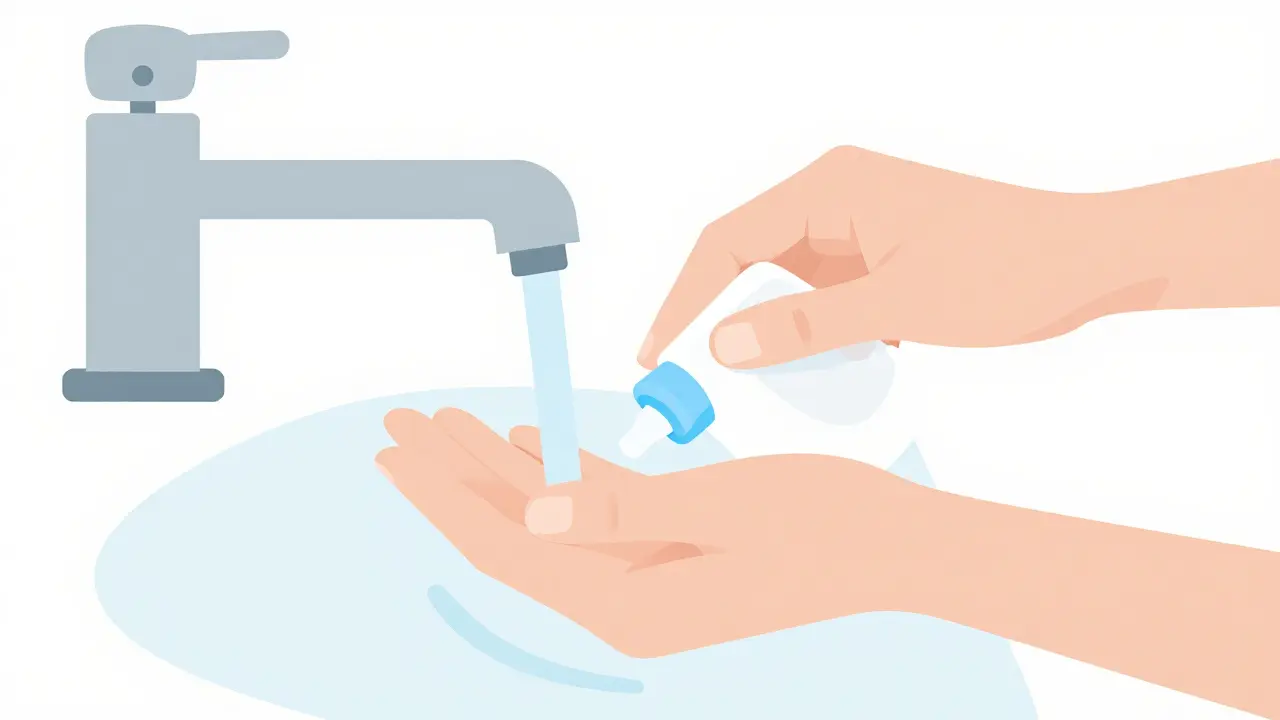
- Hand Hygiene First: Wash hands with soap and water for at least 20 seconds. Alcohol sanitizers are okay if soap isn’t available, but they don’t remove dirt as effectively. Dry hands thoroughly with a clean towel.
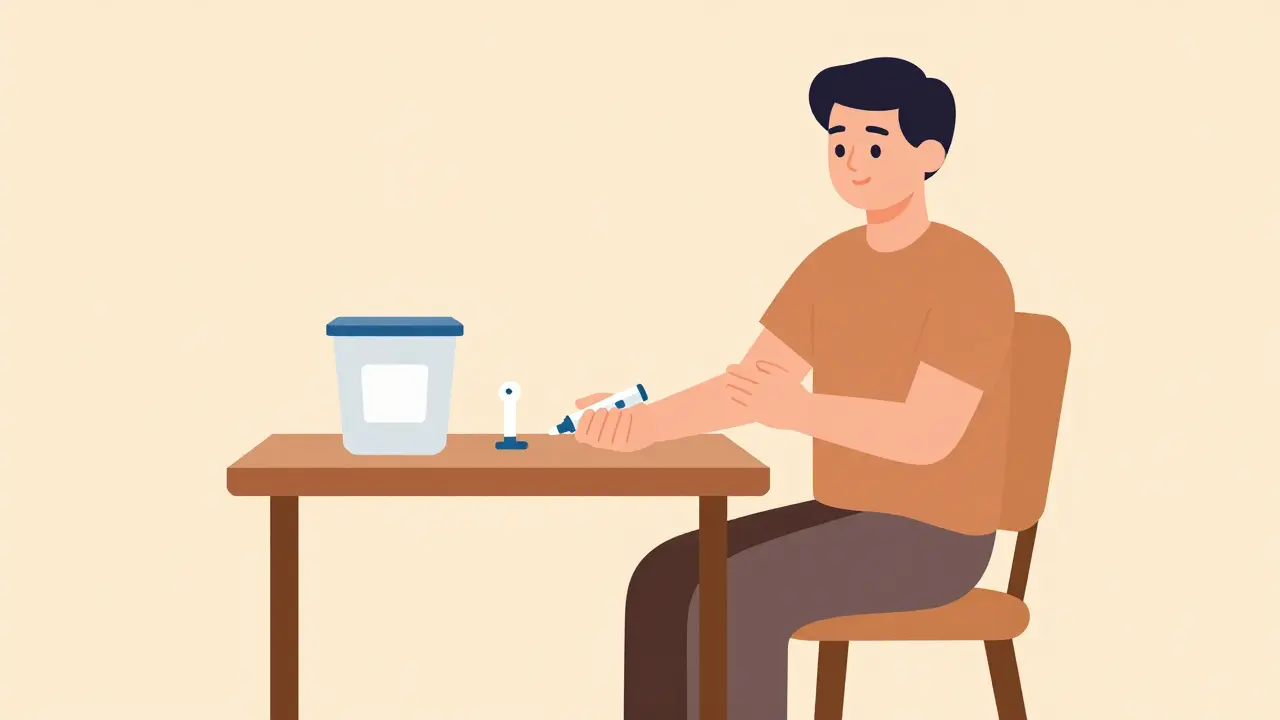
- Prepare the Site: Choose an injection site (abdomen, thigh, or upper arm) and clean it with an alcohol swab. Let it air dry completely. Do not blow on it or wave your hand over it, as this introduces bacteria.
- Site Rotation: Never inject into the same spot twice in a row. Keep at least one inch of distance between injection sites to prevent tissue damage and localized infection.
- The 'Breathing Room' Technique: If you are anxious, ask a partner or caregiver to gently place their hand over yours during the injection. This physical anchor prevents premature removal of the device, ensuring the full dose is delivered and the needle stays in long enough to avoid leakage, which can irritate the skin.
- Disposal: Use an FDA-cleared sharps container immediately. Never recap needles or throw them in household trash. Improper disposal can lead to accidental sticks and potential bloodborne pathogen exposure.
Recognizing early signs of infection is equally vital. Contact your provider if you notice redness exceeding 2cm in diameter, warmth at the site, or a fever above 100.4°F (38°C). These are not normal reactions and require prompt attention.
The Role of Pharmacists and Follow-Up
Your doctor prescribes the drug, but your pharmacist knows the device. Allan Osiemo, PharmD, BCPS, developed the 'TEACH' framework to address biologic hesitancy, noting that pharmacists are often underutilized resources. They spend more time counseling on medication mechanics than physicians do during brief consultations. Ask your pharmacist to demonstrate the device again. Many pharmacies offer private consultation rooms specifically for this purpose.
Follow-up visits are non-negotiable for safety. Data shows that patients receiving three or more supervised practice opportunities demonstrated 94% proper technique retention at six months, compared to just 52% for those with only initial training. Don’t skip the return demonstration. Bring your actual medication to the appointment if possible; handling the real device reduces anxiety by 65% compared to using trainers alone.
Looking Ahead: Standardization and Digital Tools
The industry is waking up to these issues. In March 2023, the FDA released draft guidance emphasizing the need for structured, consistent patient training resources. Pharmaceutical companies are responding with digital platforms featuring video demonstrations, virtual coaching, and injection tracking tools. For example, Adbry’s 2023 resource portal offers comprehensive support that mimics the distributed learning model.
As the global market for self-administered biologics grows toward $331.3 billion by 2027, the pressure is on manufacturers to ensure patients are safe. Companies that integrate both mechanical and emotional training aspects are seeing 28% higher patient retention rates. This shift suggests that future training will be less about 'here is a pen' and more about 'here is how to live safely with this therapy.'
Your health depends on the precision of your administration. By demanding thorough training, utilizing teach-back methods, and establishing a calm ritual, you protect yourself from infection and ensure your biologic therapy works as intended. Don’t settle for a 30-minute overview. Your safety requires more.
How long should biologic injection training take?
While many clinics rush training into 30-37 minutes, research indicates optimal training requires 90-120 minutes distributed across multiple sessions. Single-session training leads to higher error rates and anxiety. Aim for at least two follow-up demonstrations to ensure proper technique retention.
What are the signs of an injection site infection?
Watch for redness larger than 2cm in diameter, increased warmth at the injection site, swelling that persists beyond 24 hours, pus discharge, or a fever above 100.4°F (38°C). Mild bruising or slight itching is common, but spreading redness or heat indicates potential infection requiring medical attention.
Can I use an alcohol wipe instead of washing my hands?
Washing hands with soap and water for 20 seconds is the gold standard recommended by the CDC. Alcohol wipes are acceptable only if soap and water are unavailable. However, alcohol sanitizers do not remove visible dirt or grease as effectively as soap, which can compromise the sterile field.
Why is site rotation important?
Rotating injection sites (e.g., abdomen, thighs, arms) prevents tissue damage, lipodystrophy (fat loss under the skin), and localized inflammation. Injecting into the same spot repeatedly can also increase the risk of infection and reduce the absorption efficacy of the biologic drug. Maintain at least one inch of distance between sites.
What is the 'teach-back' method?
The teach-back method involves the patient demonstrating the injection procedure back to the healthcare provider using a training device. This confirms understanding and identifies gaps in knowledge immediately. Studies show this method is 3.2 times more effective at ensuring proper technique than passive listening alone.


Sharon O’Mahonh
May 23, 2026 AT 01:07