
What Is an Authorized Generic?
You pick up your prescription. The pharmacist hands you a bottle that looks different from what you expected. It’s not the fancy box with the bright logo you saw in ads. Instead, it has a plain label, maybe a different color pill, and a price tag that looks like a generic. But here is the twist: this isn’t just any generic. This is an authorized generic.
An authorized generic is exactly what it sounds like on paper but often confuses patients in practice. It is a drug manufactured by the same company that makes the brand-name version. The active ingredients are identical. The inactive ingredients are identical. The manufacturing facility is often the same. The only thing that changes is the label. The brand name disappears, replaced by the chemical name of the drug.
Think of it like buying a designer handbag. Now imagine the designer decides to sell the exact same bag, made in the same factory, with the same leather and stitching, but they remove the gold logo plate and put it in a plain cardboard box. You get the same quality product for a lower price because you aren't paying for the marketing hype attached to the logo. That is the essence of an authorized generic.
How Are They Different From Regular Generics?
Most people assume all non-brand drugs are created equal. They are not. Understanding the difference between an authorized generic and a traditional generic (often called a "generic competitor") is crucial for understanding why prices fluctuate and how the market works.
| Feature | Brand-Name Drug | Authorized Generic | Traditional Generic |
|---|---|---|---|
| Manufacturer | Original Brand Company | Original Brand Company (or subsidiary) | Different Third-Party Company |
| Ingredients | Specific Formula | Identical to Brand | Same Active; Inactive May Differ |
| FDA Approval Path | New Drug Application (NDA) | Uses Brand's Existing NDA | Abbreviated New Drug Application (ANDA) |
| Bioequivalence Testing | Full Clinical Trials Required | Not Required (It IS the brand) | Required to Prove Equivalence |
| Appearance | Unique Shape/Color/Marking | May Differ Slightly from Brand | Often Different Shape/Color |
| Price | Highest | Lower than Brand, Higher than Traditional | Lowest |
The key distinction lies in the regulatory pathway. A traditional generic manufacturer must file an Abbreviated New Drug Application (ANDA) with the FDA. They have to prove their version is bioequivalent to the brand-that it works the same way in the body. Because they don't have to repeat expensive clinical trials, they save money and pass those savings to you.
An authorized generic skips the ANDA process entirely. Since it is the exact same product as the brand, the FDA considers it therapeutically equivalent by definition. It rides on the back of the brand's original New Drug Application (NDA). This means the brand company can launch its own generic version without spending millions on new approvals or proving safety again.
Why Do Pharmaceutical Companies Do This?
If you were a brand-name drug maker, you spent billions developing your medication. Then, after years of exclusivity, patents expire. Suddenly, competitors flood the market with cheap copies. Your revenue plummets. What do you do?
This strategy emerged as a direct response to the Hatch-Waxman Act of 1984. This law was designed to balance innovation with access. It gave brand companies patent protection but also created a fast-track for generics. Crucially, it offered a 180-day market exclusivity period to the first generic company that successfully challenged a brand's patent. During those 180 days, that first generic could charge higher prices because they had no competition.
Brand manufacturers realized they could disrupt this model. By launching their own authorized generic, they could enter the market immediately, even during that protected 180-day window. Why? Because they didn't need to challenge the patent-they owned the patent. They could undercut the first generic challenger on price while still keeping the profit margin much higher than a true generic would allow.
Companies like Pfizer (through its subsidiary Greenstone) and Procter & Gamble (through Prasco) became pioneers in this space. They established separate entities to market these authorized generics. This allows them to capture some of the generic market share that would otherwise go to third-party competitors. It is a defensive move to protect revenue streams when blockbuster drugs lose their patent shields.
Are They Safe and Effective?
Yes. Absolutely yes. If you are worried about whether an authorized generic works as well as the brand, you can rest easy. It is not just "as good"; it is the same.
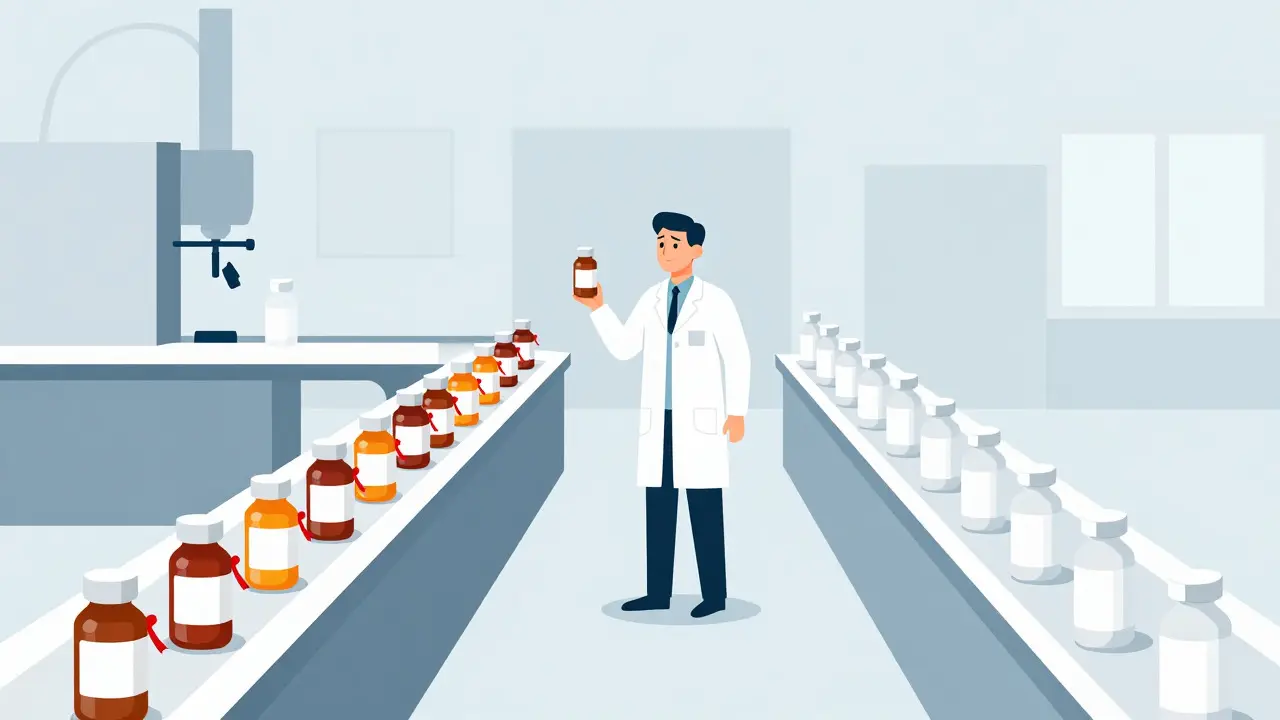
The FDA requires that authorized generics contain the exact same active and inactive ingredients as the brand-name drug. There is no reformulation. There is no shortcutting of quality control. The pills might look slightly different-perhaps a different shade of blue or a different imprint code-to distinguish them from the branded version, but chemically, there is zero difference.
In fact, many experts argue that authorized generics are more consistent than traditional generics. Traditional generics must meet strict bioequivalence standards, meaning the drug concentration in your blood must fall within a specific range compared to the brand. However, because authorized generics are literally the brand drug in a different box, they bypass this comparison step. They offer the same reliability and consistency you expect from the original manufacturer.
Impact on Patients and Pharmacists
For patients, the main impact is confusion. You might be used to taking a white, round tablet. One day, the pharmacy hands you a yellow, oval one. The name on the bottle is different. The price is lower. Naturally, you might wonder if something changed.
Pharmacists face unique challenges too. The FDA maintains an Orange Book, which lists approved drug products and their therapeutic equivalence. Traditional generics appear here with specific codes indicating how comparable they are to the brand. Authorized generics, however, do not always appear in the Orange Book in the same way because they are marketed under the brand's NDA. Pharmacists must verify therapeutic equivalence through other means, such as checking the FDA's List of Authorized Generic Drugs.
This lack of clear labeling can lead to dispensing errors or patient anxiety. Healthcare providers often remain unaware that an authorized generic is chemically identical to the brand. Education is a major hurdle. When a doctor prescribes a brand-name drug, they may not anticipate the pharmacy substituting an authorized generic unless specifically instructed. Unlike traditional generics, where substitution is automatic and regulated by state laws, authorized generics require clearer communication between prescriber, pharmacist, and patient.
The Controversy: Fair Play or Market Manipulation?
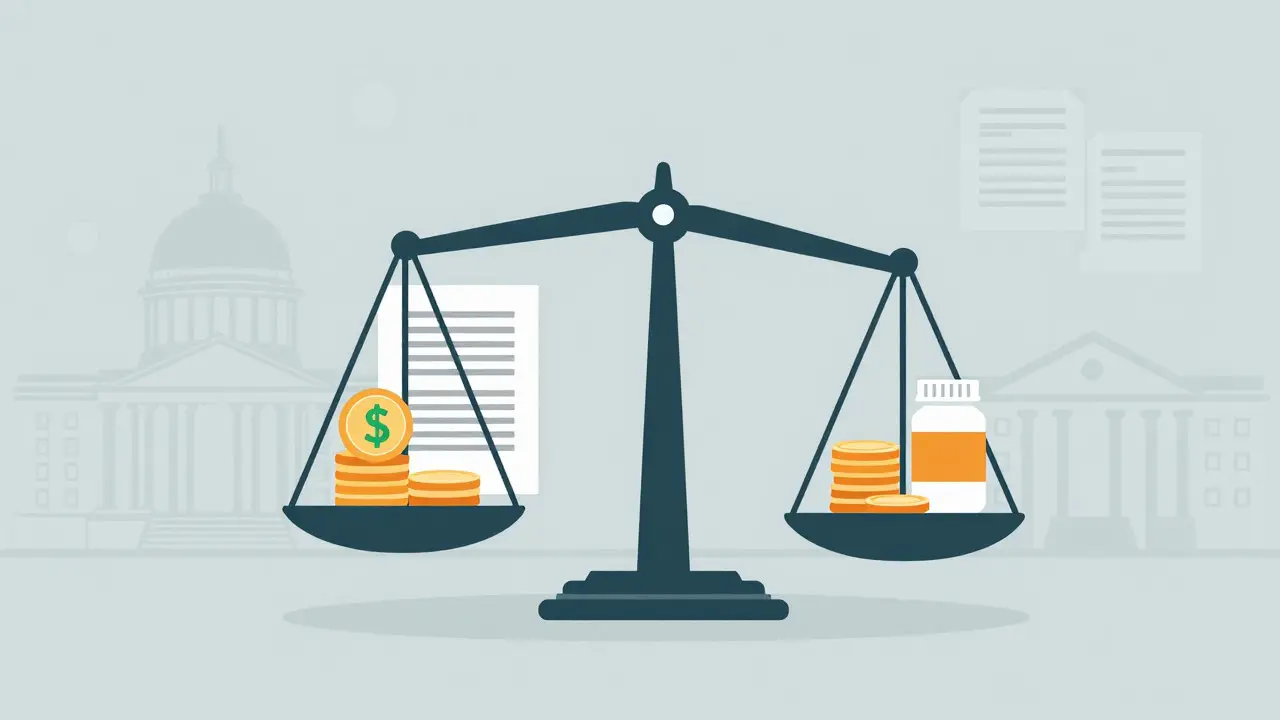
While authorized generics benefit consumers with lower prices, they are controversial within the industry. Critics argue they undermine the spirit of the Hatch-Waxman Act. The act was meant to incentivize generic companies to take the risk of challenging weak patents. If a brand company can jump into the market with its own generic before the challenger gets their 180-day exclusivity, the financial reward for that risky legal battle diminishes.
Research published in Health Affairs highlights that authorized generics can distort the market. When a brand launches an authorized generic during the exclusivity period, it directly competes with the first generic applicant. This can reduce the profits for the generic challenger, potentially discouraging future patent challenges. If fewer companies challenge patents, brand monopolies might last longer, ultimately hurting consumers in the long run.
However, supporters argue that increased competition is always good for prices. Even if the competition comes from the brand itself, the consumer pays less. The debate continues among policymakers, but for now, authorized generics remain a legal and accepted part of the pharmaceutical landscape.
How to Identify an Authorized Generic
Since they don't carry the brand name, how do you know if you're getting one? Look closely at the packaging. The label will list the drug's chemical name (e.g., "Metformin Hydrochloride" instead of "Glucophage"). The manufacturer listed on the bottle might be a subsidiary you don't recognize, such as Greenstone or Prasco.
You can also check the FDA's official List of Authorized Generic Drugs. While not every pharmacy software integrates this list, knowing it exists helps you ask informed questions. If your pharmacist hands you a pill that looks different from usual but claims it's the same manufacturer as the brand, it's likely an authorized generic.
Don't hesitate to ask your pharmacist. A quick question like, "Is this an authorized generic from the brand company, or a traditional generic?" can clarify things. Most pharmacists appreciate engaged patients and will explain the sourcing clearly.
Future Outlook
As more blockbuster drugs face patent expiration, we can expect to see more authorized generics entering the market. Brand manufacturers are increasingly using subsidiaries specifically for this purpose. Unless Congress amends the Hatch-Waxman Act to restrict this practice, authorized generics will remain a permanent feature of the US pharmaceutical system.
For patients, this means more options for affordable medication. For the industry, it means a complex dance of competition and regulation. Understanding this dynamic empowers you to make better decisions about your healthcare costs and treatments. You are not just buying a pill; you are navigating a sophisticated market designed to balance innovation, profit, and access.
Is an authorized generic cheaper than a brand-name drug?
Yes, authorized generics are typically priced lower than brand-name drugs. However, they may be slightly more expensive than traditional generics produced by third-party manufacturers. The price drop reflects the removal of brand marketing costs, but the manufacturer still retains a higher margin than a pure generic competitor.
Can my doctor specify that I want the brand-name drug instead of an authorized generic?
Yes. If you prefer the brand-name version, your doctor can write "Dispense as Written" or "Brand Medically Necessary" on your prescription. This prevents the pharmacist from substituting either a traditional generic or an authorized generic, though insurance coverage may vary.
Do authorized generics appear in the FDA Orange Book?
Not in the same way traditional generics do. Because authorized generics are marketed under the brand's existing New Drug Application (NDA), they do not have a separate entry in the Orange Book's therapeutic equivalence section. The FDA maintains a separate List of Authorized Generic Drugs for verification purposes.
Are authorized generics available in countries outside the United States?
The concept exists globally, but the specific regulatory framework described here is unique to the U.S. due to the Hatch-Waxman Act. Other countries have different patent and generic approval laws, so the term "authorized generic" is primarily a U.S. phenomenon, though similar strategies exist elsewhere under different names.
Why does the pill look different if it's the same drug?
To avoid confusion and potential dispensing errors, authorized generics often have slight differences in color, shape, or markings compared to the brand-name version. This visual distinction helps pharmacists and patients identify that it is a different product listing, even though the chemical composition is identical.