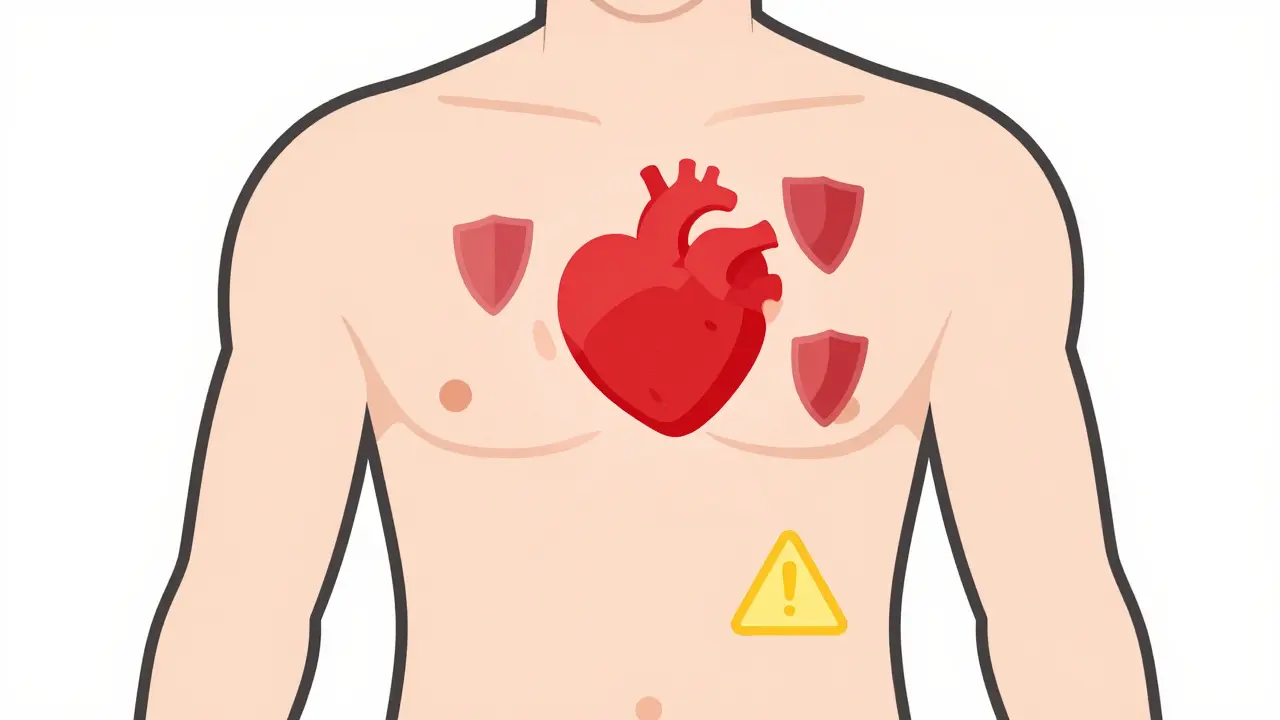
If you are taking medication to protect your heart after a procedure or surgery, you know the stakes. Antiplatelet medicationsare drugs that prevent blood clots by stopping platelets from sticking together do wonders for preventing strokes and heart attacks, but they come with a hidden danger. Studies show that roughly 1 out of every 100 patients starting these drugs experiences severe gastrointestinal bleedinga serious condition where bleeding occurs in the stomach or intestines within the first month. It feels like a trade-off you never signed up for: saving your heart while risking your gut.
Why does this happen, and how do modern doctors balance the scales? By 2026, we have clearer answers thanks to updated guidelines from major health bodies released in 2023. You don't have to guess if your medicine is hurting you. You need to know exactly what you're taking, why the risk exists, and what strategies actually work to protect your stomach lining without canceling out the benefits of your heart medicine.
Understanding the Meds That Save Lives
To manage risk, you first need to know the players involved. When doctors prescribe clot-prevention therapy, they usually reach for two main types of drugs. You likely recognize one of them immediately. AspirinAcetylsalicylic Acida common pain reliever that thins the blood at low doses has been around since the 1970s for heart care. It works by permanently stopping an enzyme called cyclooxygenase-1, which means your platelets stay 'sticky-resistant' for their entire lifespan, usually about 7 to 10 days. Because it damages cells directly, taking enteric-coated versions helps your stomach but doesn't erase the systemic risk.
The second group is newer and acts differently. These are known as P2Y12 Inhibitorsdrugs that block a specific receptor on platelets to stop aggregation. This category includes names you might see on your prescription bottle: Clopidogrel, Prasugrela potent P2Y12 inhibitor often used after stent placement, and Ticagrelora reversible P2Y12 inhibitor associated with lower cardiovascular events but higher bleeding rates. Unlike aspirin, these don't just damage the cell surface; they change how the platelet signals its neighbors. While this makes them more effective at preventing dangerous clots inside stents, the mechanism also interferes with how your body heals ulcers naturally.
The Hidden Cost of Clot Prevention
It isn't just about having a sensitive stomach. The risk is measurable and significant, especially when you combine drugs. If you are on dual therapy-taking aspirin plus a P2Y12 inhibitor-the risk of bleeding shoots up by 30 to 50 percent compared to taking just one. Recent data tracked over 2,000 patients who had no history of high bleeding risk, yet nearly half of them showed signs of progressive injury in their gastrointestinal tract after six months of treatment.
Here is where the distinction matters. Clopidogrela widely used generic antiplatelet medication is often the go-to choice, but studies indicate it might carry a higher hazard ratio for developing high-risk gut injuries compared to aspirin alone. Specifically, patients on Clopidogrel face a risk increase with a hazard ratio of 1.8. This happens because the drug suppresses platelet-derived growth factors needed for healing. So, while it stops big clots, it stops tiny repairs too. Newer agents like Ticagrelor offer superior protection against clots-reducing stent thrombosis by 50% compared to older options-but clinical trials like PLATO noted they increase overall bleeding complications by about 30% compared to Clopidogrel.
| Medicament | Bleeding Risk Level | Gut Injury Potential | Typical Indication |
|---|---|---|---|
| Aspirin | Baseline | Moderate | Primary prevention, CAD maintenance |
| Clopidogrel | Moderate-High | High (impairs ulcer healing) | Post-stent, Stroke prevention |
| Ticagrelor | High | High | Acute Coronary Syndrome, High-risk PCI |
| Prasugrel | Very High | Very High | PCI with complex stenting |

How Doctors Protect Your Stomach Now
Knowing the risk leads to the solution. The gold standard for protection is acid suppression. Most cardiologists and gastroenterologists agree that adding a Proton Pump Inhibitor (PPI) creates a necessary buffer. Drugs like esomeprazole reduce acid production significantly, allowing the mucosal lining to withstand the antiplatelet pressure. In fact, data shows that 92% of patients achieved ulcer healing within eight weeks using daily esomeprazole while continuing their clopidogrel regimen.
This brings us to a tricky detail that confuses many people. There has been long-standing debate about whether PPIs interfere with the heart drugs themselves. Years ago, there were concerns that some PPIs blocked the activation of Clopidogrel, potentially making it less effective against clots. However, recent analysis by the FDA clarified that the clinical relevance of this interaction remains uncertain in practice. More importantly, observational studies suggest that skipping the PPI carries a greater risk. Patients who didn't get stomach protection saw a 20-30% higher rate of cardiovascular events in some cohorts, largely due to interruptions in therapy caused by bleeding episodes.
When Bleeding Occurs: Don't Stop Everything
What if you start vomiting blood or have black stools? The instinct is to throw away the heart medicine immediately. However, the 2023 guidelines from the American College of Gastroenterology say something counter-intuitive: keep taking the Aspirin. Stopping aspirin during a bleeding event can actually increase mortality by 25% because it allows the heart vessels to become vulnerable to sudden clots again. Instead, experts recommend holding the P2Y12 inhibitor (like Clopidogrel or Ticagrelor) for 5 to 7 days while aggressively treating the bleed, then restarting it as soon as possible.
There is another critical warning in the guidelines that contradicts old habits. Transfusing platelets to patients who are actively bleeding while on antiplatelet therapy appears to backfire. Evidence suggests transfusion increases mortality in these specific cases. It seems that the transfused platelets might re-trigger the clotting cascade in a way that harms the patient. Therefore, conservative management focused on acid suppression and endoscopic control is preferred over aggressive blood product replacement unless the situation is catastrophic.
Risk Stratification: Who Needs Extra Help?
Not everyone needs the highest level of protection. Doctors now use scoring systems to decide who gets intensive treatment. The AIMS65 Scorea clinical tool assessing Acute Physiology, Albumin, Mental Status, BP, and Age helps identify patients facing the highest danger. If your albumin levels drop below 3.0 g/dL or your systolic blood pressure falls below 90 mmHg alongside other age factors, your mortality risk skyrockets. For those individuals, indefinite continuation of PPIs is recommended, even years after the initial bleed resolves.
Also, before starting long-term therapy, check for H. pylori. This bacteria causes most ulcers, and combining it with blood thinners is a recipe for disaster. Treating the infection eliminates a massive source of risk and allows you to stay on your heart medicine safely.
Looking Ahead in Cardiac Care
We aren't static in our approach. Emerging research focuses on personalized medicine. We know now that genetic factors affect how well you metabolize Clopidogrel. If your liver enzymes (CYP2C19) don't process the drug efficiently, you are left unprotected against clots. Testing for this genotype helps doctors choose alternatives that bypass the issue entirely. Future drugs like selatogrel are already in trials, aiming to provide the same heart protection with 35% less injury to the gut lining seen in preclinical models. Within five years, routine biomarker screening could become standard before any patient starts a lifetime course of antiplatelet therapy.
Can I take aspirin if I have a history of stomach ulcers?
Yes, but strictly under medical supervision with protective co-therapy. Using a Proton Pump Inhibitor is essential if you have a history of complicated ulcers, and eradicating H. pylori infection beforehand drastically reduces the risk of recurrence.
Does ticagrelor cause more bleeding than clopidogrel?
Clinical trials indicate ticagrelor carries approximately a 30% higher risk of major bleeding events compared to clopidogrel. This increased potency translates to better heart protection but requires stricter monitoring and GI protection strategies.
Should I stop my heart medication if I suspect a stomach bleed?
Do not stop aspirin abruptly without consulting your doctor, as this may increase the risk of stent thrombosis. Typically, P2Y12 inhibitors are held temporarily, but aspirin is continued to maintain cardiac stability.
Is there a better time to take my proton pump inhibitor?
Taking the PPI at least 30 minutes before your morning meal ensures maximum acid suppression. Some specialists recommend separating this dose from Clopidogrel intake by several hours, though recent evidence suggests concurrent use is generally safe.
What symptoms should I watch for with these medications?
Watch for tarry black stools (melena), bright red rectal bleeding, unexplained dizziness, or fatigue. These are signs of gastrointestinal hemorrhage requiring immediate medical evaluation.


Philip Wynkoop
March 29, 2026 AT 08:09